- Home
- Sandwich Panel Line
- Roll Forming Machine
- CZ Purlin Roll Forming Machine
- Door Window Curtain Partition Roll Forming Machine
- Gutter Roll Forming Machine
- Clean Partition Panel Machine
- Corrugated Panel Roll Forming Machine
- Double Layer Roof Roll Forming Machine
- High Speed Keel Roll Forming Machine
- Light Steel-Frame Structure Production Line
- C Channel Roll Forming Machine
- Insulated Panels
- Steel Profiles
- About
- Contact
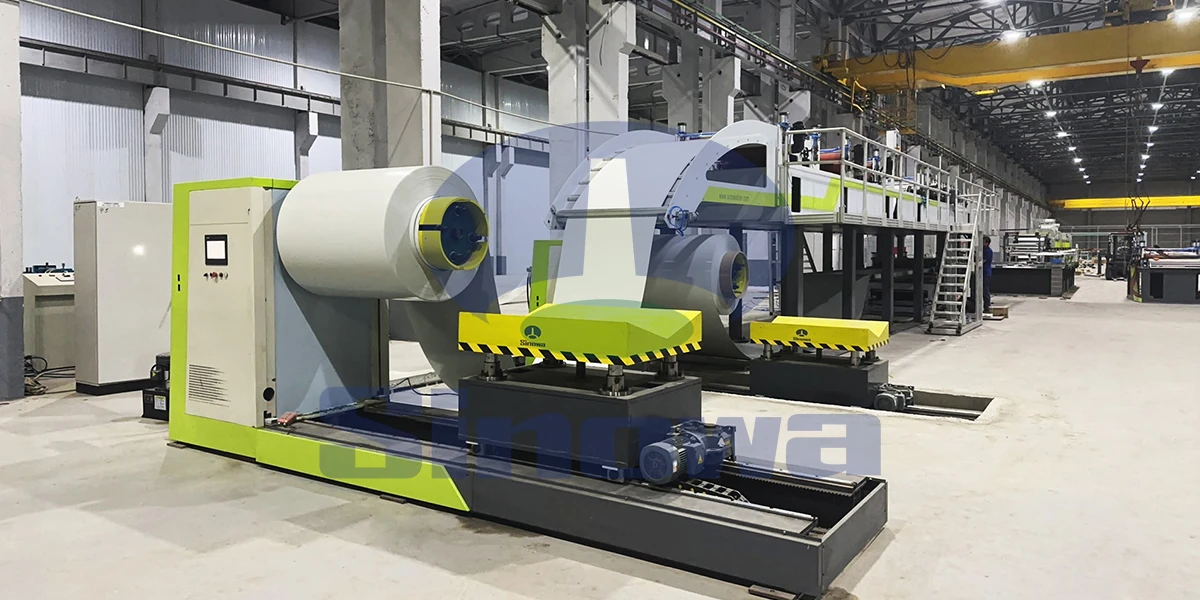
Automatic Sandwich Panel Line
Sinowa is a supplier and manufacturer of Automatic Sandwich Panel Line in china, customization on demand width a reasonable price.
The automatic sandwich panel line stands as a cornerstone of modern industrial manufacturing, engineered to streamline the mass production of sandwich panels—composite materials that merge rigid outer facings with a lightweight, functional core to deliver exceptional performance across multiple sectors. Unlike manual or semi-automated production setups, this fully integrated line eliminates inconsistencies, reduces labor dependency, and elevates output efficiency, making it indispensable for businesses seeking scalable, high-quality composite panel solutions. Every aspect of the line, from its structural design to operational performance, is tailored to balance precision, durability, and adaptability, while its diverse classifications cater to distinct material specifications and end-use requirements. By examining the intricate structure, core performance metrics, varied types, and wide-ranging applications of the automatic sandwich panel line, one can fully grasp its pivotal role in shaping contemporary construction, logistics, manufacturing, and infrastructure development.
At its core, the automatic sandwich panel line features a modular, interconnected structural framework that orchestrates a seamless, end-to-end production workflow, with each component working in tandem to transform raw materials into finished sandwich panels. The foundational structure begins with the raw material handling and uncoiling system, designed to accommodate rolled metal facings—typically steel or aluminum alloys—that serve as the outer layers of the sandwich panel. This unit is equipped with precision leveling and deviation correction mechanisms to ensure the facings remain flat and aligned throughout processing, preventing warping, misalignment, or surface damage that could compromise panel integrity. Following uncoiling, the material moves to the roll forming section, a critical structural segment that shapes the flat facings into predefined profiles, ranging from smooth flat sheets to corrugated or ribbed designs, based on the intended panel function. This section utilizes precision-engineered rollers and adjustable dies, allowing for flexible profile modification without extensive retooling, enhancing the line’s versatility.
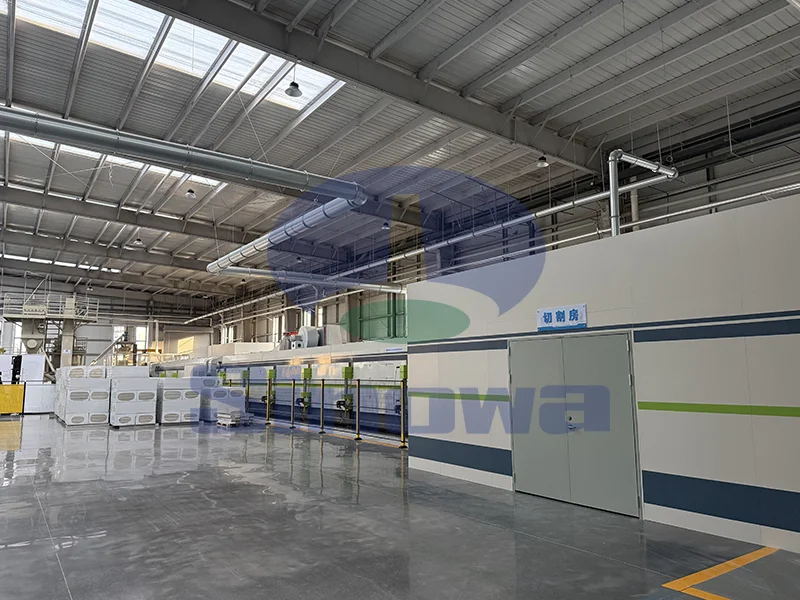
The heart of the automatic sandwich panel line lies in the core material feeding and composite bonding structure, where the outer facings are fused with the core material to create the signature sandwich structure. This unit is designed to handle various core materials seamlessly, with controlled feeding mechanisms that ensure uniform core thickness and consistent distribution across the entire panel surface. Adjacent to the bonding station is the pressing and curing system, a robust structural component that applies calibrated pressure and controlled heat to solidify the adhesive bond between the facings and core. This system eliminates air gaps, enhances bond strength, and accelerates curing time, ensuring the panel achieves optimal structural stability and dimensional accuracy. Downstream, the automated cutting and trimming unit features high-precision cutting tools that slice the continuous panel strip into custom lengths and widths, guided by advanced sensing and control systems to minimize material waste and maintain tight tolerances. The final structural segment is the stacking and packaging system, which automatically collects finished panels, arranges them in neat stacks, and prepares them for storage or shipment, completing the fully automated production cycle without manual intervention.
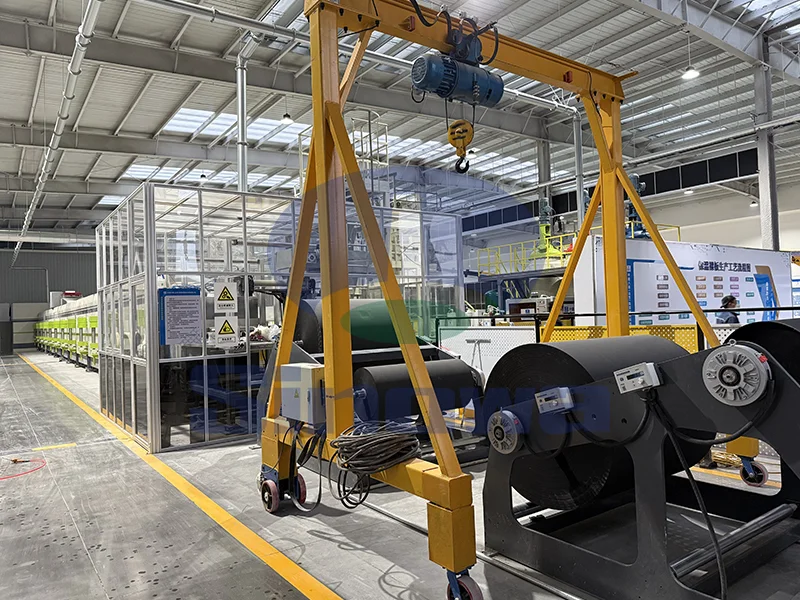
Beyond its structural sophistication, the automatic sandwich panel line delivers exceptional operational performance that sets it apart from conventional production methods, with key metrics centered on precision, efficiency, reliability, and adaptability. One of the most prominent performance attributes is production consistency, as the line’s automated control systems eliminate human error, ensuring every panel meets uniform standards for thickness, width, bond strength, and surface quality. This consistency is critical for large-scale projects where material uniformity directly impacts assembly efficiency and structural performance. In terms of production efficiency, the line operates at continuous, high speeds without prolonged downtime, significantly boosting daily output compared to semi-automated or manual processes. The modular structure also minimizes changeover time between different panel specifications, allowing manufacturers to quickly shift production runs and respond to dynamic market demands.
Durability and operational reliability are equally vital performance features of the automatic sandwich panel line. Built with heavy-duty, wear-resistant materials, the line is engineered to withstand continuous, high-intensity operation in industrial environments, reducing the frequency of maintenance and component replacements. Critical moving parts are designed for low friction and long service life, while built-in diagnostic systems detect potential issues early, preventing costly unplanned downtime. Additionally, the line exhibits strong adaptability to varying production conditions, maintaining stable performance across different temperature and humidity levels, and accommodating a wide range of raw material thicknesses and grades. Energy efficiency is another key performance highlight, with optimized power usage across all operational units, reducing overall production costs and aligning with sustainable manufacturing practices. Unlike fragmented production setups, the integrated design also minimizes material waste, as precise cutting, controlled feeding, and accurate bonding reduce scrap generation, further enhancing operational sustainability.
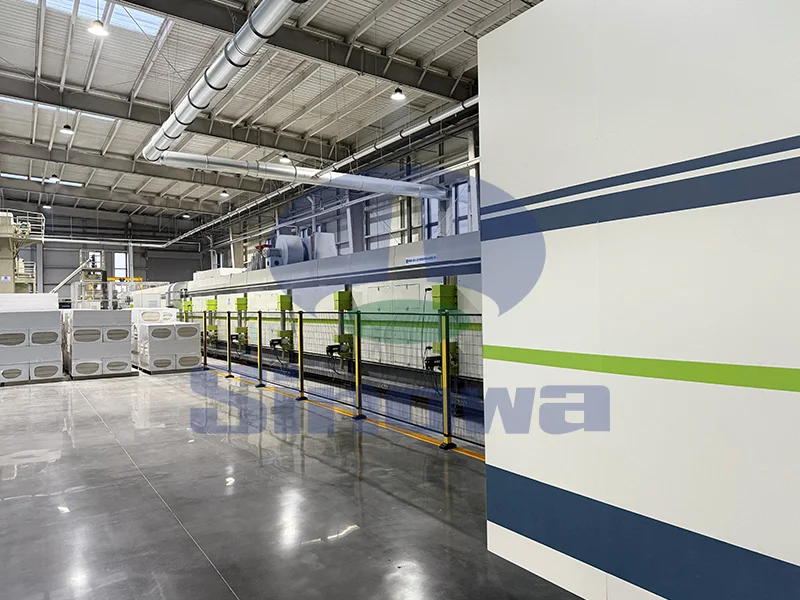
The automatic sandwich panel line is available in a diverse array of types, each engineered to accommodate specific core materials, panel specifications, and production requirements, ensuring compatibility with diverse industry needs. The primary classification of these lines is based on the type of core material they are designed to process, as each core material demands unique handling, bonding, and curing parameters. One of the most common variants is the EPS (expanded polystyrene) core sandwich panel line, optimized for lightweight, cost-effective core materials that offer reliable thermal insulation and shock absorption. This line features gentle feeding and bonding mechanisms to preserve the cellular structure of EPS, preventing compression or damage that would diminish its insulating properties, making it ideal for high-volume production of general-purpose insulation panels.
Another widely used type is the PU (polyurethane) and PIR (polyisocyanurate) core sandwich panel line, engineered for high-performance thermal insulation applications. This line is equipped with advanced foaming and bonding systems that facilitate the in-situ foaming of PU/PIR materials, ensuring a tight, seamless bond with the outer facings and maximizing thermal resistance. The curing system is calibrated to support the rapid, uniform foaming of these materials, resulting in panels with superior insulation efficiency, structural rigidity, and moisture resistance. For applications requiring enhanced fire resistance and structural strength, the mineral wool core sandwich panel line is the preferred variant. This line features robust handling systems to process dense, fibrous mineral wool cores, with specialized bonding mechanisms that ensure secure adhesion between the brittle core and metal facings without compromising core integrity. Mineral wool lines are designed to maintain the fire-retardant and sound-absorbing properties of the core material, making them suitable for high-safety industrial and commercial applications.
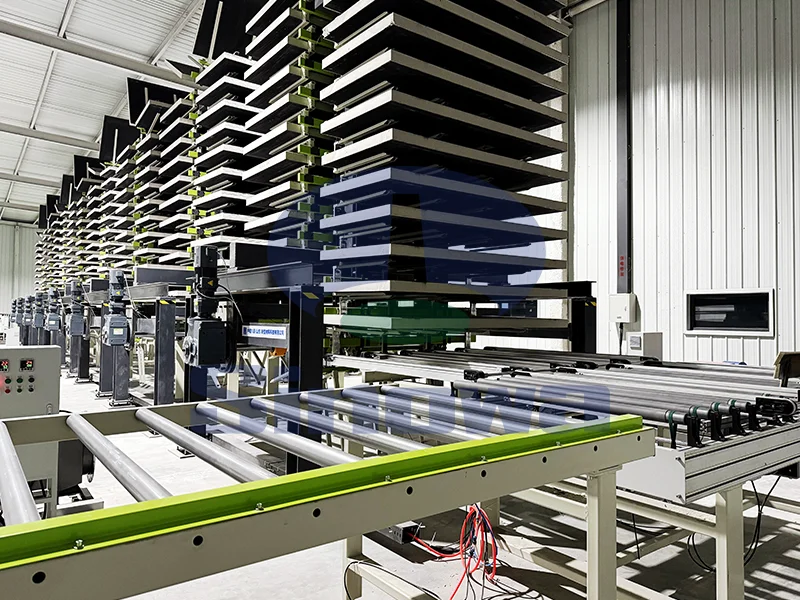
Additional specialized types of automatic sandwich panel lines include those designed for phenolic foam cores, rock wool cores, and composite hybrid cores, each tailored to address unique performance demands. Phenolic foam core lines prioritize fire resistance and low smoke emission, with controlled curing processes to preserve the material’s fire-retardant characteristics; rock wool core lines focus on extreme temperature resistance and sound insulation, ideal for industrial facilities and noise barrier applications; hybrid core lines combine multiple core materials to deliver a balanced mix of insulation, strength, and fire resistance, catering to highly specialized project requirements. Beyond core material-based classifications, lines are also categorized by production scale—compact lines for small to medium-scale operations, and heavy-duty high-capacity lines for large industrial manufacturing facilities—and by panel type, including wall panel lines, roof panel lines, and cold storage panel lines, each with customized structural components to match the unique profile and performance needs of the final panel.
The versatility of the automatic sandwich panel line, coupled with the high-performance panels it produces, translates to an extensive range of applications across countless industries, driving innovation and efficiency in modern construction and manufacturing. The most prominent application sector is the construction industry, where sandwich panels are a staple for both residential and commercial building projects. Wall and roof panels produced by these lines are widely used in the construction of warehouses, factories, shopping malls, and residential complexes, offering a lightweight alternative to traditional building materials that reduces structural load, speeds up construction timelines, and improves thermal efficiency. The panels’ quick-installation design minimizes on-site labor and construction time, making them a top choice for rapid construction projects and prefabricated building solutions.
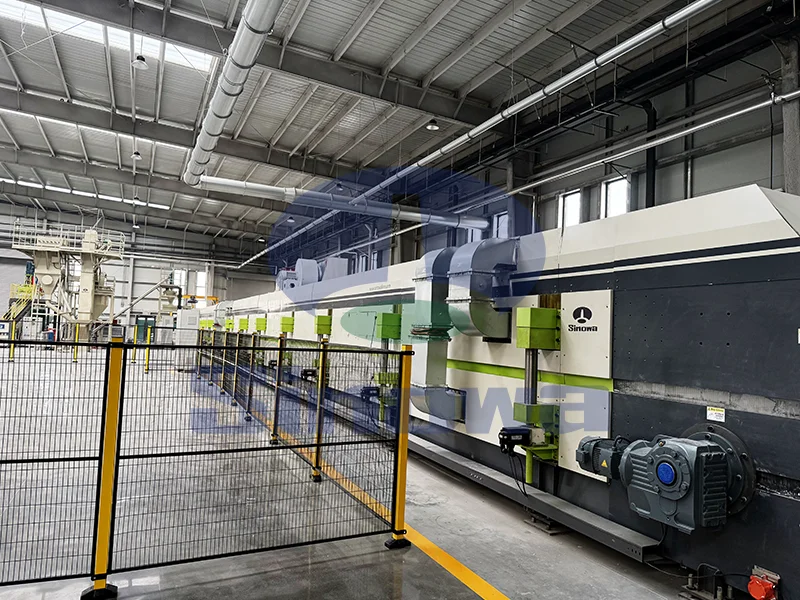
In the cold chain and refrigeration industry, the automatic sandwich panel line plays an irreplaceable role, producing specialized insulated panels that are critical for maintaining temperature-controlled environments. Panels manufactured by PU/PIR and EPS core lines are used to construct cold storage warehouses, refrigerated trucks, walk-in freezers, and food processing facilities, providing exceptional thermal insulation that prevents temperature fluctuations, reduces energy consumption for cooling, and preserves the quality of perishable goods. The airtight, moisture-resistant properties of these panels also prevent condensation and mold growth, ensuring compliance with strict hygiene and food safety standards. This application is vital for global logistics and food supply chains, enabling the safe storage and transportation of food, pharmaceuticals, and other temperature-sensitive products.
The line also serves the prefabricated and modular construction sector, producing panels for portable cabins, temporary offices, construction site dormitories, and modular housing units. The lightweight yet durable nature of sandwich panels makes these modular structures easy to transport, assemble, and disassemble, offering a flexible housing solution for remote work sites, disaster relief zones, and temporary residential needs. Additionally, the panels’ weather resistance and thermal insulation ensure comfortable living and working conditions in diverse environmental settings, further expanding their utility in modular construction.
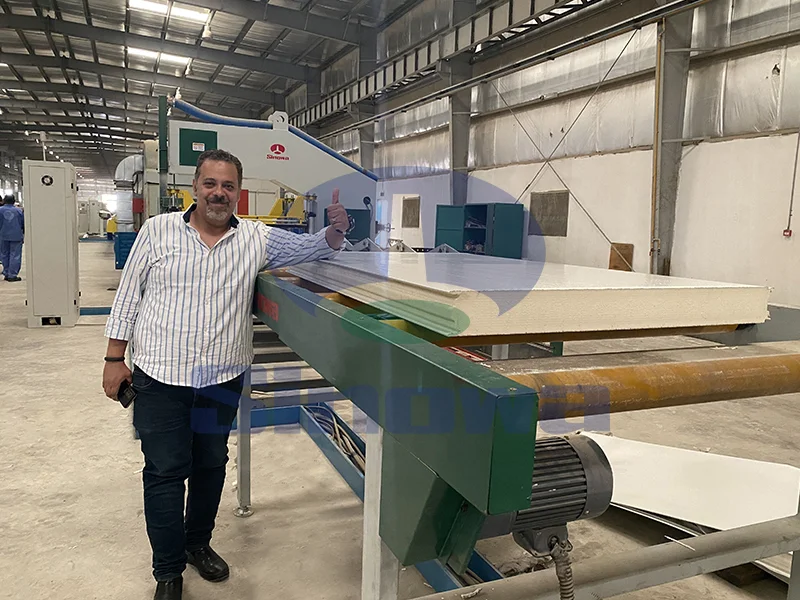
Other key applications include infrastructure and industrial projects, where sandwich panels are used for noise barriers along highways and railways, industrial partition walls, clean room facilities in pharmaceutical and electronics manufacturing, and agricultural buildings such as greenhouses and livestock barns. In noise barrier applications, mineral wool and hybrid core panels deliver exceptional sound absorption, reducing traffic and industrial noise pollution to improve urban and rural environmental quality. In clean room construction, the smooth, non-porous surface of sandwich panels prevents dust accumulation and enables easy cleaning, meeting the stringent cleanliness requirements of sensitive manufacturing processes. For agricultural buildings, the panels’ thermal insulation helps maintain stable internal temperatures, supporting optimal crop growth and livestock welfare.
As manufacturing and construction industries continue to evolve toward automation, sustainability, and efficiency, the automatic sandwich panel line remains at the forefront of technological advancement, with ongoing design enhancements focused on greater precision, wider material compatibility, and reduced environmental impact. Its robust structural design, reliable operational performance, diverse type variations, and far-reaching applications collectively solidify its status as a key asset in modern industrial production. Whether supporting large-scale commercial construction, maintaining cold chain integrity, enabling modular housing solutions, or enhancing infrastructure sustainability, the automatic sandwich panel line delivers consistent, high-quality results that address critical industry needs. As demand for lightweight, durable, energy-efficient composite materials continues to rise, the role of the automatic sandwich panel line will only grow more significant, driving progress across multiple sectors and shaping the future of efficient, sustainable manufacturing and construction.
« Automatic Sandwich Panel Line » Update Date: 2026/4/15
URL: https://m.sinowa.cn/blog/automatic-sandwich-panel-line.html
A pu sandwich panel line stands as a highly efficient and automated production solution dedicated to manufacturing high-performance insulated panels, playing a vital role in modern construction and industrial engineering sectors. This integrated production system streamlines the entire manufacturing process, starting with the uncoiling and leveling of outer facing materials, which are carefully treated to ensure flat, smooth surfaces free of defects and suitable for subsequent bonding. Next comes the core production step: precise mixing and uniform distribution of polyurethane raw materials, where specialized equipment controls the ratio and flow rate strictly to guarantee consistent foam density and stable bonding performance between the core and facings. The pu sandwich panel machine features a controlled curing and forming system that maintains stable temperature and pressure conditions, allowing the polyurethane foam to fully expand, solidify and bond tightly with the upper and lower layers, forming a rigid, durable sandwich structure. Post-forming, the panels go through accurate cutting and finishing processes to meet diverse size specifications demanded by different projects. Designed for continuous operation, this pu sandwich panel production line boosts manufacturing efficiency remarkably while ensuring uniform product quality across batches, reducing manual errors and material waste effectively. The finished PU sandwich panels deliver outstanding thermal insulation, sound absorption and structural strength, making them widely applicable in building roofs, walls, cold storage facilities and industrial workshops, adapting to various environmental and functional needs with reliable performance and long service life.