- Home
- Sandwich Panel Line
- Roll Forming Machine
- CZ Purlin Roll Forming Machine
- Door Window Curtain Partition Roll Forming Machine
- Gutter Roll Forming Machine
- Clean Partition Panel Machine
- Corrugated Panel Roll Forming Machine
- Double Layer Roof Roll Forming Machine
- High Speed Keel Roll Forming Machine
- Light Steel-Frame Structure Production Line
- C Channel Roll Forming Machine
- Insulated Panels
- Steel Profiles
- About
- Contact
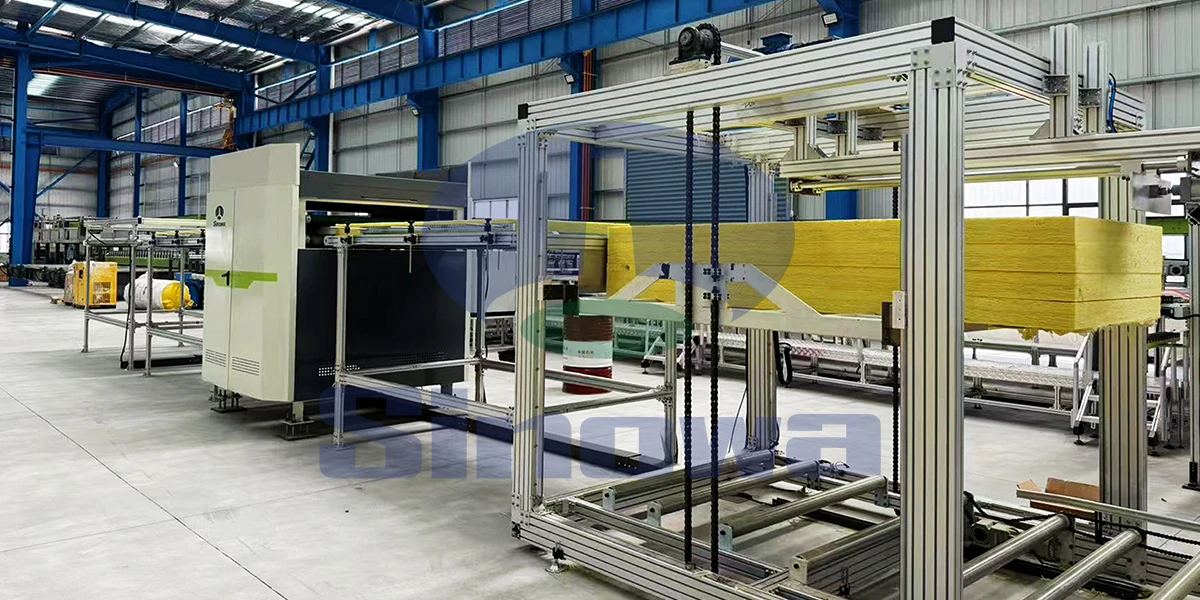
Rockwool Sandwich Panel Making Machine
Sinowa is a supplier and manufacturer of Rockwool Sandwich Panel Making Machine in china, customization on demand width a reasonable price.
Rockwool sandwich panel making machines stand as core industrial equipment dedicated to the mass production of rockwool sandwich panels, a high-performance building material widely valued for its exceptional fire resistance, thermal insulation, sound absorption and structural stability. These machines integrate mechanical, electrical, hydraulic and adhesive bonding technologies, streamlining the entire production process from raw material feeding to finished panel output, and catering to the evolving demands of modern construction, cold chain logistics, industrial manufacturing and other sectors. Unlike manual or semi-automatic production modes, fully integrated rockwool sandwich panel making machines deliver consistent product quality, high production efficiency and flexible adaptability to diverse specification requirements, making them indispensable in the supply chain of high-performance building envelope materials. Below is an in-depth exploration of the machine’s structural composition, operational performance, classification standards and practical application scenarios, unveiling its core value in industrial production.
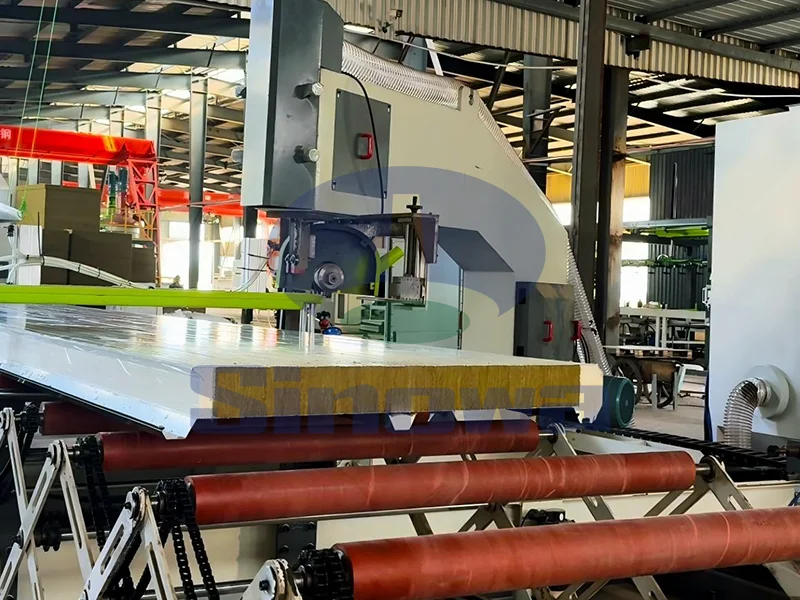
In terms of structural composition, rockwool sandwich panel making machines feature a modular, integrated design, with each functional module working in synergy to complete the sequential processing of raw materials, ensuring smooth and efficient production. The entire equipment system mainly consists of several key components, each undertaking unique and irreplaceable tasks. First is the raw material handling and feeding module, which includes uncoilers for metal face sheets, rockwool core material conveying and cutting devices, and auxiliary material storage units. The uncoilers are designed to stably unwind coiled metal sheets, commonly galvanized steel, aluminum alloy and other durable metal materials, with adjustable tension control to prevent sheet deformation or misalignment during unwinding. Rockwool core material processing devices are equipped with precision cutting and edge trimming mechanisms, capable of cutting bulk rockwool boards into specified sizes and adjusting the fiber orientation of rockwool to enhance the overall strength and insulation performance of the finished sandwich panels. Dust removal facilities are often integrated into this module to collect fine rockwool particles, maintaining a clean production environment and protecting the health of operators.
Next is the surface treatment and pre-processing module, which is critical for ensuring the bonding strength between metal face sheets and rockwool core materials. This module includes surface cleaning, degreasing, and adhesive spraying units. Surface cleaning mechanisms remove oil stains, dust and impurities on metal sheets, eliminating barriers to adhesion; adhesive spraying devices adopt precision metering and uniform spraying technology, applying a layer of high-performance adhesive evenly on the inner surface of metal sheets, with controllable coating thickness to avoid excessive adhesive accumulation or insufficient bonding. Some advanced models are also equipped with pre-heating components, which moderately heat the metal sheets and adhesive layer to optimize the bonding activity, accelerate the curing speed of the adhesive, and improve the firmness of the composite structure.
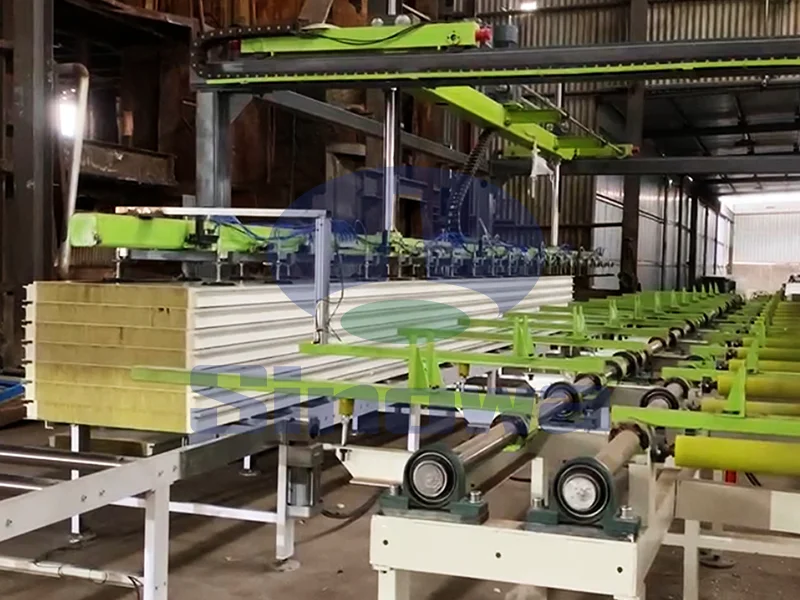
The core composite forming module is the heart of the entire rockwool sandwich panel machine, responsible for laminating the upper and lower metal face sheets with the rockwool core material into a unified whole. This module mainly includes a double-belt pressing system, positioning fixtures and pressure control devices. The double-belt pressing system applies stable and uniform pressure to the three-layer structure of the sandwich panel, adjusting pressure intensity and holding time according to the thickness of the panel and the performance of the adhesive, ensuring tight fit and complete bonding between the rockwool core and metal face sheets without gaps, delamination or hollowing. The positioning fixtures precisely fix the relative position of the metal face sheets and rockwool core, preventing offset during pressing and ensuring the dimensional accuracy of the finished panels. Meanwhile, this module is designed with temperature control functions, maintaining a constant temperature environment during composite forming to adapt to the curing requirements of different adhesives and further enhance the structural stability of the panels.
Subsequent modules include precision cutting, shaping and post-processing units, as well as automatic stacking and conveying systems. The precision cutting device adopts advanced cutting technology, capable of cutting the continuously formed sandwich panels into fixed lengths or custom sizes according to production needs, with smooth cuts and no burrs, ensuring the panels meet the dimensional standards of engineering applications. The post-processing module may include edge sealing, trimming and surface polishing functions, optimizing the appearance and sealing performance of the panels, preventing moisture penetration into the rockwool core and extending the service life of the panels. The automatic stacking and conveying system efficiently transports the finished panels to the designated storage area, realizing automatic sorting and stacking, reducing manual handling and improving the overall automation level of the production line. Additionally, the electrical control system serves as the brain of the entire machine, integrating programmable logic control and human-machine interaction interfaces, enabling centralized control of production parameters such as speed, pressure, temperature and cutting size, with real-time monitoring and fault alarm functions to ensure stable and safe operation of the equipment.
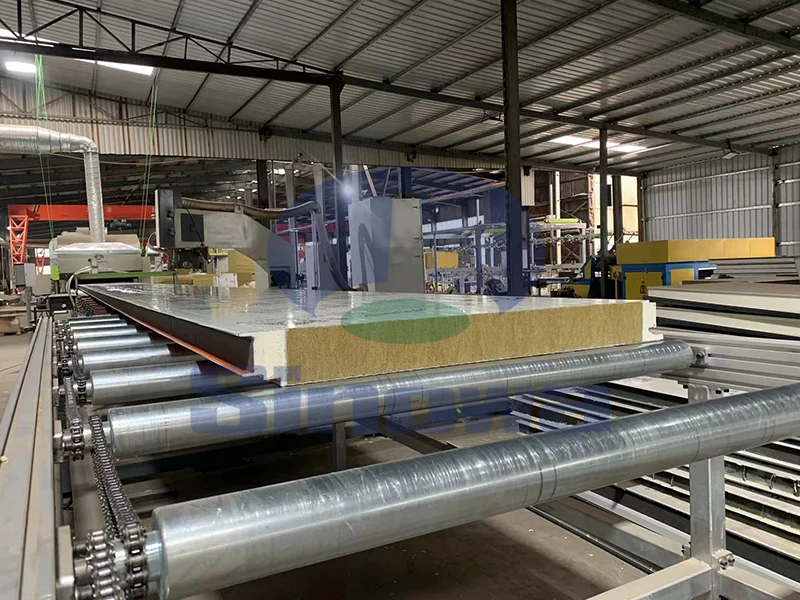
When it comes to operational performance, rockwool sandwich panel making machines boast multiple outstanding advantages that meet the high standards of industrial batch production. First and foremost is high automation, with most models realizing fully automatic operation from raw material feeding to finished product output, requiring only a small number of operators to set parameters and conduct routine inspections. This high degree of automation not only reduces labor input and human errors caused by manual operation but also ensures the consistency of product quality, with each batch of panels maintaining uniform specifications, bonding strength and performance indicators. Secondly, the equipment features high production efficiency, with adjustable production line speed to match different production capacities; continuous production mode eliminates frequent downtime for manual operation, greatly improving output efficiency and meeting the supply needs of large-scale construction projects and bulk orders.
Stability and reliability are also core performance highlights of these machines. The structural components are made of high-strength, wear-resistant materials, with sturdy frame design to resist deformation during long-term high-intensity operation, reducing the failure rate and ensuring continuous and stable production. The control system has strong anti-interference ability, adapting to various industrial production environments and maintaining stable operation of electrical components. Meanwhile, the equipment supports long-term continuous operation, with good heat dissipation performance to avoid overheating damage to key components, effectively prolonging the service life of the machine. In terms of processing accuracy, the machine achieves high precision in sheet conveying, adhesive spraying, composite pressing and size cutting, controlling dimensional errors within a very small range, which is crucial for ensuring the smooth installation and tight splicing of sandwich panels in engineering projects.
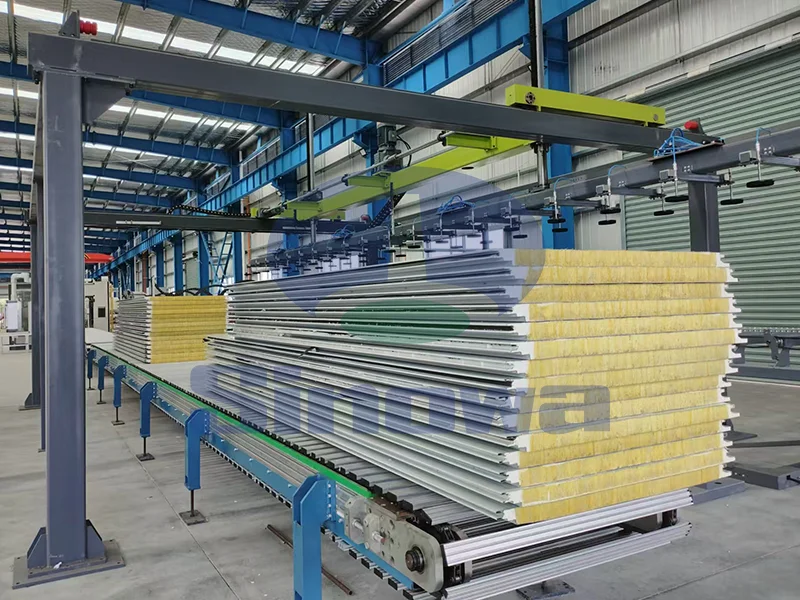
Flexibility and adaptability are additional remarkable performance traits. Rockwool sandwich panel making machines can produce panels of different thicknesses, widths and lengths by adjusting relevant parameters and replacing individual components, catering to diversified market demands. They are compatible with various types of metal face sheets and rockwool core materials of different densities, adapting to the production of sandwich panels for different application scenarios, such as high-strength industrial panels, high-insulation cold storage panels and sound-absorbing building partition panels. Furthermore, the equipment has good energy-saving performance, with optimized power distribution and energy-efficient components to reduce energy consumption during operation, lowering production costs for manufacturers. The maintenance of the machine is also convenient, with modular design allowing for quick disassembly and replacement of vulnerable parts, and routine maintenance operations being simple and efficient, reducing downtime caused by maintenance and improving overall production efficiency.
Rockwool sandwich panel making machines can be classified into different types based on multiple standards, each with unique characteristics and applicable production scenarios, meeting the differentiated needs of manufacturers. According to the degree of automation, they are divided into fully automatic rockwool sandwich panel making machines and semi-automatic models. Fully automatic machines integrate all functional modules, realizing unmanned continuous production, with high efficiency, high precision and high stability, suitable for large-scale manufacturing enterprises with high output requirements and standardized production demands. Semi-automatic machines require certain manual assistance in individual links such as raw material handling and parameter adjustment, with a more compact structure, lower space occupation and more flexible operation, making them ideal for small and medium-sized manufacturers with limited production scale and budget.
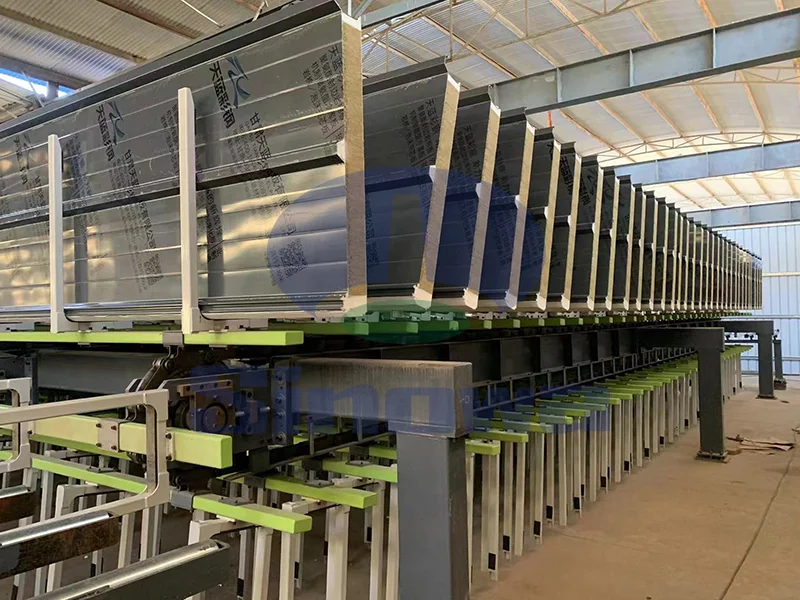
Based on production technology and structural form, the machines are categorized into continuous production type and discontinuous production type. Continuous production rockwool sandwich panel making machines adopt a linear continuous operation mode, with raw materials entering the production line continuously and finished panels being output uninterruptedly, featuring ultra-high production efficiency and suitable for mass, standardized production of fixed-specification panels. Discontinuous production machines operate in a batch mode, completing the production of one batch of panels before proceeding to the next, with stronger flexibility in parameter adjustment, more suitable for small-batch, multi-variety customized production, meeting the personalized needs of special engineering projects.
In addition, classification can be made according to the application of finished panels, including general building type rockwool sandwich panel making machines, cold chain dedicated type and industrial fireproof type. General building type machines focus on the production of conventional wall and roof sandwich panels, balancing insulation performance and structural strength to meet the needs of ordinary industrial plants, warehouses and commercial buildings. Cold chain dedicated type machines emphasize ultra-high thermal insulation performance in the production process, with optimized composite technology and edge sealing design to minimize heat transfer, perfectly adapting to the production of cold storage, fresh-keeping warehouses and other low-temperature environment panels. Industrial fireproof type machines prioritize the fire resistance of finished panels, with strict control over rockwool core material selection and composite structure design, producing high-fireproof-grade sandwich panels suitable for petrochemical plants, high-temperature workshops and other places with high fire safety requirements.
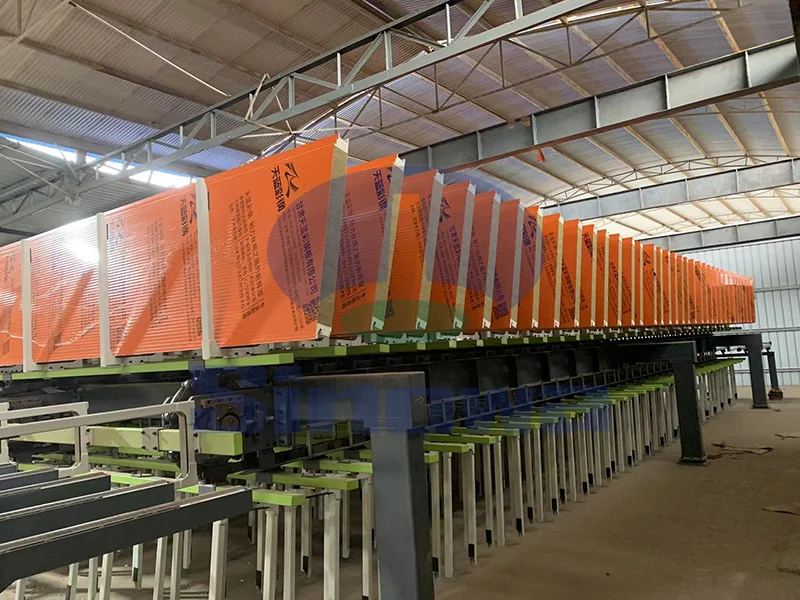
The applications of rockwool sandwich panels produced by these machines are extremely extensive, covering multiple key industries and becoming a preferred building material for modern engineering construction. In the construction industry, the panels are widely used in the walls and roofs of steel structure factories, warehouses, logistics centers, exhibition halls and large shopping malls. Relying on excellent fire resistance, thermal insulation and sound insulation properties, they not only improve the safety and comfort of buildings but also reduce the energy consumption of heating and air conditioning, aligning with the development trend of green and energy-saving buildings. For temporary buildings such as prefabricated houses and mobile homes, rockwool sandwich panels are lightweight, high-strength, easy to install and disassemble, greatly shortening the construction period and meeting the needs of rapid construction and relocation.
In the cold chain logistics industry, rockwool sandwich panels are the core material for constructing cold storage, refrigerated trucks and fresh-keeping workshops. The low thermal conductivity of rockwool effectively blocks heat exchange, maintaining a stable low-temperature environment inside the storage space, reducing energy loss of refrigeration equipment and ensuring the quality and safety of food, medicine and other perishable products. The panels also have good moisture resistance and sealing performance, preventing condensation and moisture penetration, protecting the stability of the rockwool core and extending the service life of cold storage facilities.
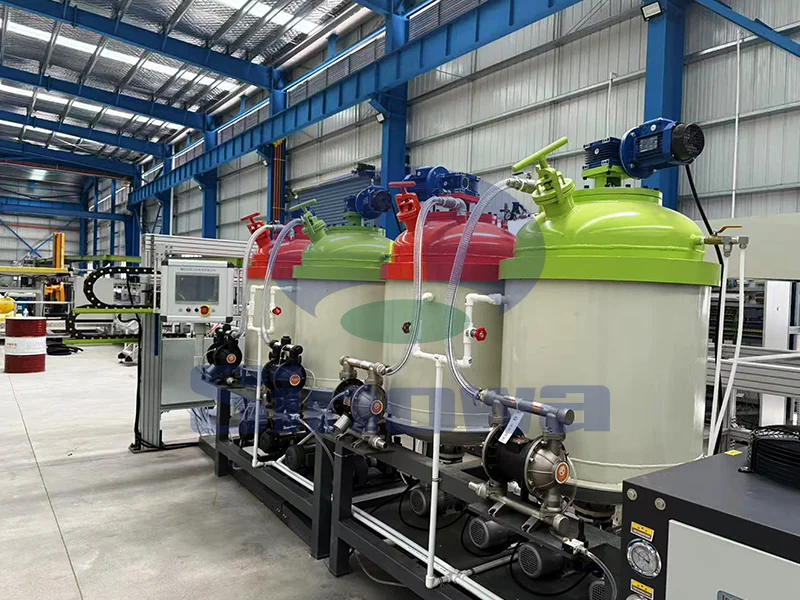
In the field of industrial purification and special environments, such as pharmaceutical clean rooms, electronic chip workshops, food processing plants and laboratories, rockwool sandwich panels are favored for their dense structure, dust-proof and anti-pollution characteristics. They can effectively isolate external dust and impurities, maintain the cleanliness of the internal space, and meet the strict environmental requirements of high-precision production and experimental scenarios. At the same time, their sound insulation performance reduces noise interference, creating a quiet and stable working environment.
Moreover, rockwool sandwich panels produced by these machines are widely used in fireproof partition engineering, high-temperature workshop insulation and other scenarios. Their non-combustible rockwool core material can effectively block the spread of fire, improving the fire safety level of buildings; in high-temperature industrial environments, they resist high temperature and heat insulation, protecting the building structure and reducing the impact of high temperature on the internal working environment. With the continuous advancement of construction technology and the increasing emphasis on building safety, energy conservation and environmental protection, the application scope of rockwool sandwich panels is further expanding, which in turn drives the technological upgrading and market demand of rockwool sandwich panel making machines.
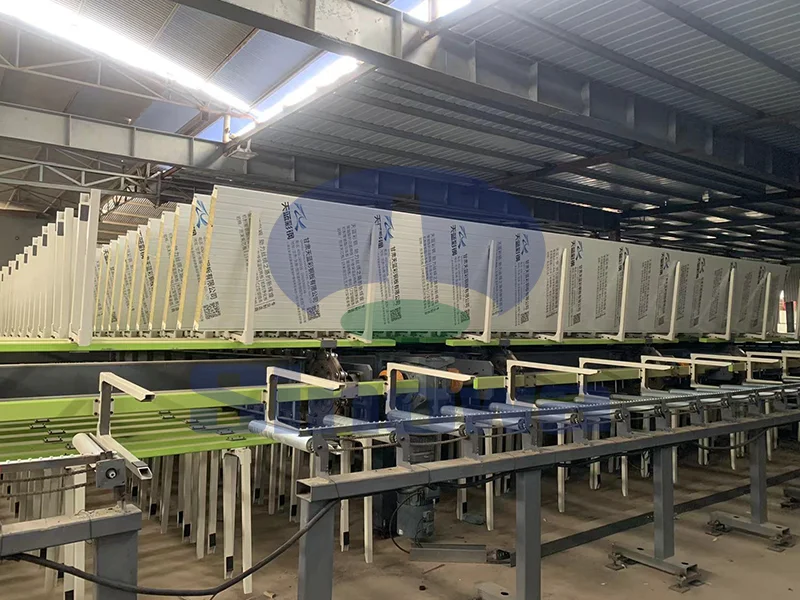
In summary, rockwool sandwich panel making machines are pivotal equipment supporting the large-scale production of high-performance rockwool sandwich panels, with a scientific and reasonable structural design, stable and efficient operational performance, diverse and flexible classification options, and the finished products serving numerous key industries. As the global construction industry moves towards greening, industrialization and intelligence, and the demand for high-performance building materials continues to rise, rockwool sandwich panel making machines will carry greater production responsibilities. The continuous optimization of their structural technology, performance improvement and category enrichment will further promote the upgrading of the rockwool sandwich panel manufacturing industry, inject new impetus into the development of modern construction, cold chain logistics and industrial manufacturing, and meet the market's higher requirements for building safety, energy conservation and environmental protection.
« Rockwool Sandwich Panel Making Machine » Update Date: 2026/4/15
URL: https://m.sinowa.cn/blog/rockwool-sandwich-panel-making-machine.html
Rockwool Sandwich Panel Making Machine Manufacturer
2026-08-06Rockwool sandwich panel making machines are advanced integrated production systems tailored for the automated manufacturing of high-performance composite building panels, which combine durable metal outer layers and heat-…High-tech Rockwool Sandwich Panel Making Machine
2026-07-10The continuous advancement of modern construction and industrial manufacturing has raised higher standards for building envelope materials, thermal insulation components, and fireproof structural panels. Rockwool sandwich…Rockwool Sandwich Panel Making Machine Supplier
2026-05-25The continuous evolution of modern construction and industrial insulation sectors has driven growing demand for high-performance composite building materials, among which rockwool sandwich panels stand out for their excep…Low Price Rockwool Sandwich Panel Making Machine
2024-06-13Rockwool Sandwich Panel Making Machine For House
2024-06-11Rockwool Sandwich Panel Making Machine On Sales
2024-06-06Rockwool Sandwich Panel Making Machine For Wall
2024-06-05Rockwool Sandwich Panel Making Machine Design
2024-06-04Cheap Rockwool Sandwich Panel Making Machine
2024-06-03High-quality Rockwool Sandwich Panel Making Machine
2024-05-22
A pu sandwich panel line stands as a highly efficient and automated production solution dedicated to manufacturing high-performance insulated panels, playing a vital role in modern construction and industrial engineering sectors. This integrated production system streamlines the entire manufacturing process, starting with the uncoiling and leveling of outer facing materials, which are carefully treated to ensure flat, smooth surfaces free of defects and suitable for subsequent bonding. Next comes the core production step: precise mixing and uniform distribution of polyurethane raw materials, where specialized equipment controls the ratio and flow rate strictly to guarantee consistent foam density and stable bonding performance between the core and facings. The pu sandwich panel machine features a controlled curing and forming system that maintains stable temperature and pressure conditions, allowing the polyurethane foam to fully expand, solidify and bond tightly with the upper and lower layers, forming a rigid, durable sandwich structure. Post-forming, the panels go through accurate cutting and finishing processes to meet diverse size specifications demanded by different projects. Designed for continuous operation, this pu sandwich panel production line boosts manufacturing efficiency remarkably while ensuring uniform product quality across batches, reducing manual errors and material waste effectively. The finished PU sandwich panels deliver outstanding thermal insulation, sound absorption and structural strength, making them widely applicable in building roofs, walls, cold storage facilities and industrial workshops, adapting to various environmental and functional needs with reliable performance and long service life.