- Home
- Sandwich Panel Line
- Roll Forming Machine
- CZ Purlin Roll Forming Machine
- Door Window Curtain Partition Roll Forming Machine
- Gutter Roll Forming Machine
- Clean Partition Panel Machine
- Corrugated Panel Roll Forming Machine
- Double Layer Roof Roll Forming Machine
- High Speed Keel Roll Forming Machine
- Light Steel-Frame Structure Production Line
- C Channel Roll Forming Machine
- Insulated Panels
- Steel Profiles
- About
- Contact
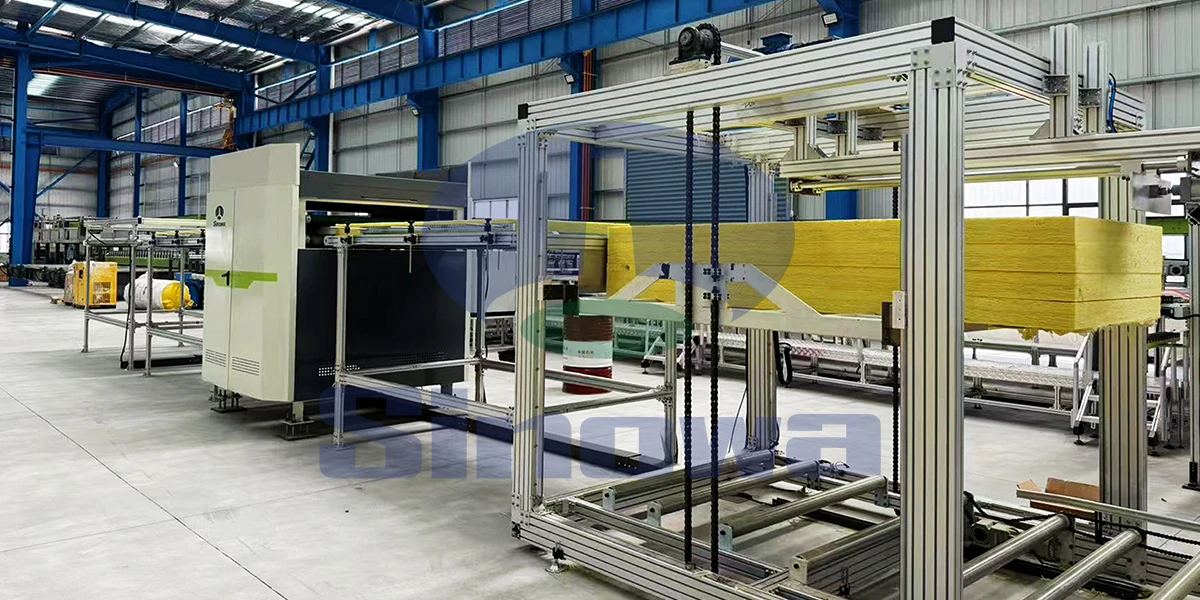
Machinery For Mineral Wool Panel Production
Sinowa is a mineral wool panel machine supplier from china, design and custom-made mineral wool panel machine, know more about machinery for mineral wool panel production, pls contact us, we will contact you as soon as possible!
Mineral wool panel production machinery represents a sophisticated integrated mechanical system designed to transform natural silicate mineral raw materials into high-performance thermal insulation and fireproof building panels. As a core pillar of modern energy-saving building material manufacturing, this set of equipment realizes fully continuous, automated, and standardized production through the precise coordination of multiple functional modules, covering the entire process from raw material pretreatment, fiber forming, wool mat molding, adhesive curing to finished panel shaping and finishing. Different from discrete processing equipment, mineral wool panel production machinery focuses on streamlined operation and structural integration, ensuring the consistency of fiber structure, panel density, and overall performance of finished products, while adapting to the large-scale production demands of the construction industry. The systematic design of the machinery effectively solves the problems of uneven product quality, low production efficiency, and unstable structural performance existing in traditional manual and semi-mechanized mineral wool panel processing, laying a solid equipment foundation for the popularization and application of mineral wool panels in industrial buildings, civil construction, and special thermal insulation engineering.
The Rock Wool Panel Line includes cement mortar cloth (cement-based cloth) anti-rolling pressure for up and down bidirectional anti-rolling, polyurethane drenching area, up and down bidirectional drenching area which is fully automatic, vertical silk rock wool sliver area, composite board lamination, automatic lifting which can be adjust the required thickness of the insulation board. The Rockwool Panel Machine is used for building exterior wall insulation, fire isolation belt, structural insulation integration, strong bonding performance, fireproof, waterproof, and anti-falling. This Mineral Wool Sandwich Panel Line solves the difficulty of the previous construction of ordinary rock wool board and it is difficult for workers to find the drawbacks.
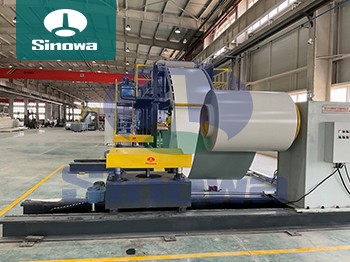
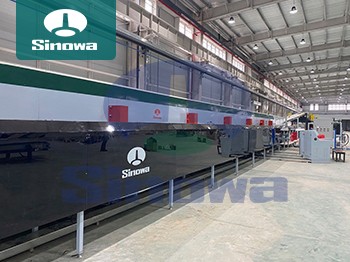
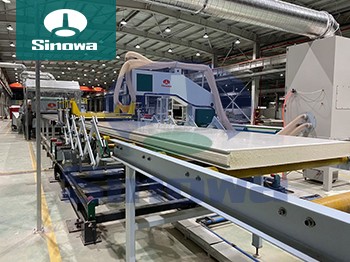
Sinowa is a well-known manufacturer and technical service provider of high-end PU Sandwich Panel Machines and various high-performance Cold Roll Forming Machine in China. Our main products include polyurethane double-sided color steel Sandwich Panel Production Line, polyurethane and phenolic soft facing insulation panel production line and high-efficiency roll forming lines.
Sinowa is committed to the development and manufacturing of high-end and high-efficiency Sandwich Panel Lines. Our production lines are leading the way in efficiency, automatic control, human-computer interaction, environmental protection and energy consumption. Using system integration and bus control technology, it realizes the automatic integrated linkage control of the entire production line, and can achieve remote interactive communication, which has the world-class level and a comprehensive leading high-performance production line in the market.
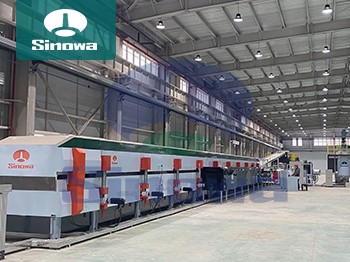
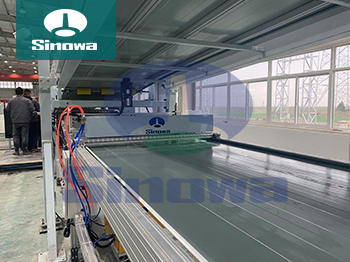
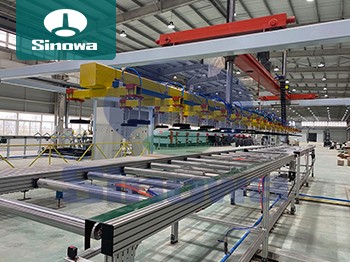
For more than ten years, we have never deliver two same lines to our client, there are all the crystallization of continuous improvement, we have been trying to surpass ourselves, create better products to serve our customers, and also accumulate our brand value, become a unique Chinese enterprise, we are no longer synonymous with low price and mediocre quality.
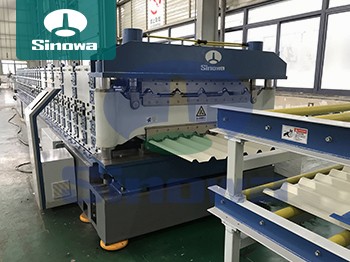
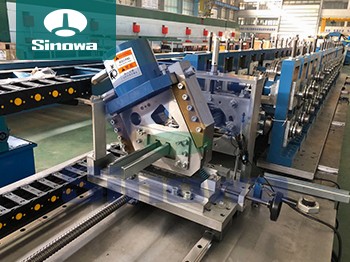
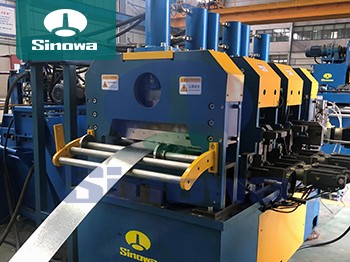
Since 2014, we have established our Cold Forming Machine design and manufacturing department, started our R&D and production of high-end cold forming equipment. Base on our innovative and high-end and efficient product concepts,In just a few years, we have created our own impressive achievements in this field. Whether ordinary construction products of Roll Forming Machine, or precision steel pipe equipment, elevator profile equipment, automotive profile equipment, precision door and window profile equipment, we are the leader of Chinese equipment with high efficiency, high quality and beautiful appearance design.
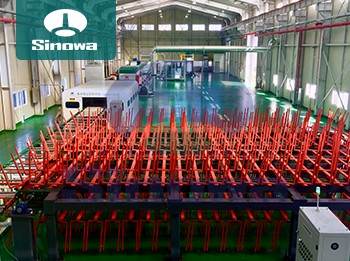
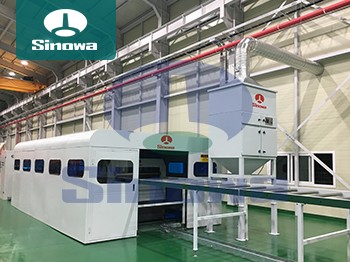
For more than ten years, relying on our innovative manufacturing concept and excellence in quality, reliable and trustworthy service to customers, we cooperate with customers all over the world, exported products to Canada, South Korea, Israel, Australia, the Middle East and other more than 20 countries and regions. contributed to building energy conservation and low-carbon production and have won widespread praise.
Sinowa has invested outstanding efforts in both the Continuous Insulated PU Sandwich Panel Production Line and the Roll Forming Line, This is why our products are more efficiency, quality, automatic control technology, environmental protection, energy consumption indicators and the appearance and safety protection are comprehensively leading, Some subversive design changes in many major technical points,these major innovations make our products excellent in price/performance and user experience.
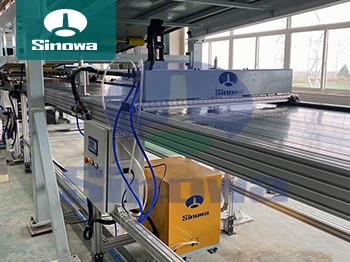
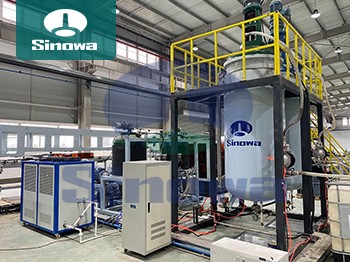
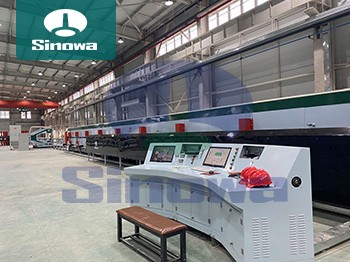
We always position our PU Sandwich Panel Line in a very high standard, strictly optimize every design for more progress. Our continuous innovation, continuous improvement of the technical design principles make us improved product updates and always pay attention to high efficiency, energy saving and stability, reduce customer worries, become their reliable business partners.
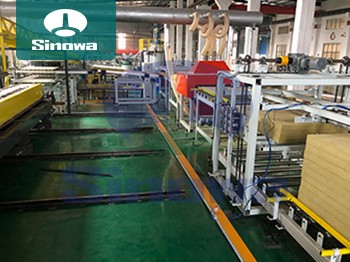
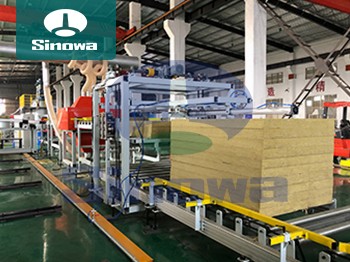
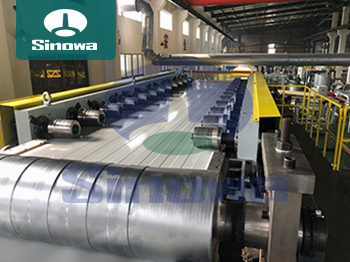
Sinowa Engineering Technology Research Center has always focused on technology research and development. we achieved a large number of scientific research results and unique patented process technology in related product research and development t every year, we continuously improve our products to have high precision and high stability in practical applications, and provide high quality for customers all over the world. Excellent technical personnel, continuous R&D investment and the technical concept of "continuous innovation and continuous improvement" are the strong guarantee for Sinowa to stand out from competitors.
Our focus is not on cost, we always pay attention to the quality of the product and how to do it better!
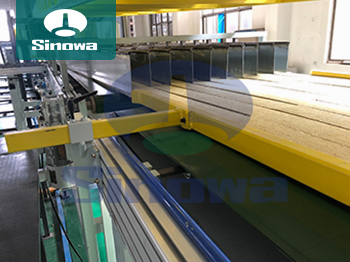
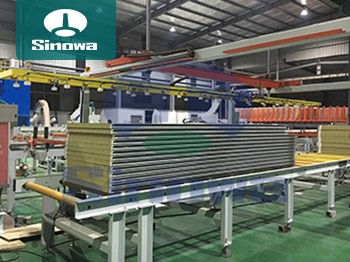
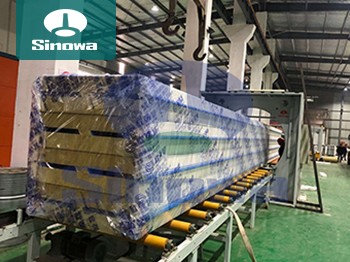
Production process control is a core part of implementing product planning and implementing quality control, which we establish A full range of production management processes and product logistics systems. We firmly believe that production without control and rules will only produce garbage products, so we pay more attention to first-class production control training while establishing a first-class production workshop, strictly follow the 5S management concept, establish systems and standards, ensure that our Sandwich Panel Machines are qualified throughout the process, achieve the technical goals of the company's products to achieve our brand value.
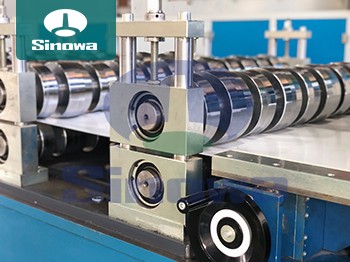
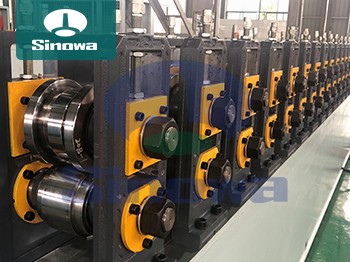
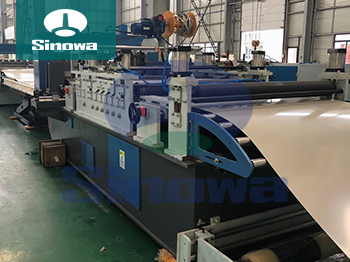
Sinowa has a very comprehensive quality control system, has a group of professional quality control personnel, familiar with almost all testing methods and standards in the field of machining, established a complete mechanical and chemical laboratory with which can fully control all quality links and ensure that all data are accurate, timely optional and available.
Relying on our good Sandwich Panel Machine quality and trustworthy service, our products are exported to more than a dozen countries in the world, and the service field continues to expand, winning more and more praise. Every customer will be our best friend!
The overall composition of mineral wool panel production machinery follows a progressive production logic, with each functional module closely connected and operating in a synchronous linkage state. The entire production line can be divided into raw material processing system, high-temperature melting system, fiberization forming system, wool collecting and laying system, adhesive spraying and compounding system, constant-temperature curing system, precision pressing and shaping system, and final cutting and finishing system. Each module is equipped with independent transmission, regulation, and protection devices, which can adjust operating parameters according to raw material characteristics and production requirements, so as to produce mineral wool panels with different thicknesses, densities, and structural strengths. The core design concept of the machinery is to maintain the stability of the fiber network structure while realizing efficient production, because the thermal insulation, sound absorption, and fire resistance of mineral wool panels are fundamentally determined by the uniformity and compactness of the internal fiber distribution, and all mechanical operations are optimized around this core performance indicator.
The raw material processing system is the initial functional unit of the entire production machinery, undertaking the sorting, crushing, screening, and quantitative conveying of bulk mineral raw materials. Natural minerals such as basalt, dolomite, and other silicate raw materials are the main production materials for mineral wool panels, which often contain particle impurities and uneven block sizes after mining. The mechanical equipment in this link includes crushing units, vibrating screening devices, automatic batching mechanisms, and sealed conveying equipment. The crushing unit processes large mineral blocks into uniform fine particles with controllable particle size, eliminating large-particle impurities that may affect subsequent melting and fiber forming. The vibrating screening device further classifies the crushed raw materials to ensure the consistency of raw material particle size, which is a key prerequisite for stable melting quality. The automatic batching mechanism accurately proportionates different mineral raw materials and a small amount of functional auxiliary materials through weight sensing and intelligent regulation, optimizing the physical and chemical properties of subsequent mineral fibers. All raw material conveying links adopt fully sealed mechanical structures, which not only avoid raw material loss and waste but also reduce dust diffusion during production, realizing clean and environmentally friendly production operation. The entire raw material processing process is automatically controlled by the system, with real-time monitoring of particle size, proportion, and conveying speed, providing stable and qualified raw material conditions for the subsequent high-temperature melting process.
The high-temperature melting system is the core energy conversion unit of mineral wool panel production machinery, responsible for converting solid mineral particles into homogeneous molten silicate liquid. This system relies on special high-temperature thermal equipment with stable temperature control performance, which can create a continuous high-temperature environment sufficient to melt silicate minerals. During operation, the quantitatively proportionated mineral raw materials are continuously sent into the melting cavity through sealed conveying machinery, and the raw materials are gradually heated, softened, and completely melted under the action of continuous high temperature to form a smooth and uniform molten slurry. The mechanical temperature control system can maintain a constant temperature range in the melting cavity, avoiding quality defects such as incomplete melting of raw materials or excessive oxidation of molten slurry caused by temperature fluctuations. At the same time, the internal circulating air pressure balancing device of the melting equipment ensures the stability of the molten slurry state, preventing the generation of bubbles and impurities in the molten liquid. The continuous feeding and melting mechanical design realizes uninterrupted production, effectively improving production continuity compared with traditional intermittent melting equipment, and ensuring the consistency of the molten slurry state in each production cycle, which directly determines the fineness and uniformity of subsequent mineral fibers.
The fiberization forming system is the key functional module that determines the basic structure of mineral wool, and it is also the most technically sophisticated part of the entire production machinery. The molten silicate slurry flows out stably from the melting system and enters the high-speed centrifugal fiberization equipment. This set of mechanical equipment uses high-speed rotating roller sets to generate strong centrifugal force, which stretches and breaks the flowing molten slurry into fine and uniform mineral fibers. The internal structure of the fiberization equipment is precisely optimized, with adjustable rotating speed and roller gap parameters, which can produce mineral fibers of different fineness and length according to production needs. During the fiber forming process, the supporting air cooling and shaping mechanical device works synchronously, rapidly cooling the high-temperature molten fibers to a stable solid state in a short time, preventing fiber adhesion and deformation, and maintaining the fluffy and independent state of single fibers. The entire fiberization process is completed mechanically and automatically, with no manual intervention, ensuring that the fiber fineness, length distribution, and curling degree of each batch of products remain stable. These finely formed mineral fibers form the basic raw material for mineral wool panels, and their structural uniformity directly affects the thermal insulation, sound absorption, and mechanical stability of the final panel products.
The wool collecting and laying system undertakes the task of gathering dispersed mineral fibers and forming a preliminary continuous wool mat structure. After fiberization, the mineral fibers are in a dispersed floating state under the action of air flow. The special air duct circulation and wool collecting mechanical device in this system uniformly collects dispersed fibers on the continuous moving conveyor mesh belt through balanced negative pressure adsorption. The internal air flow regulation mechanism of the equipment can precisely control the adsorption strength and air flow direction, ensuring that the fibers are evenly distributed on the mesh belt without local accumulation or sparse gaps. The multi-layer cross-laying mechanical structure enables the fibers to form a staggered and stacked three-dimensional network structure during the laying process, effectively improving the overall structural toughness and pressure resistance of the preliminary wool mat. The running speed of the conveyor belt and the fiber laying density are intelligently matched by the mechanical control system, which can freely adjust the thickness and density of the preliminary wool mat according to the production specifications of mineral wool panels. The wool mat formed by this mechanical laying method has uniform thickness, stable density, and a three-dimensional fiber network that is tightly interwoven, laying a good structural foundation for subsequent bonding and curing molding.
The adhesive spraying and compounding system is an important mechanical unit for realizing fiber bonding and panel structural shaping. Although mineral fibers have excellent fire resistance and thermal insulation properties, the loose fiber mat cannot form a stable plate structure independently. Therefore, uniform and quantitative adhesive spraying is required through professional mechanical equipment. The adhesive spraying machinery is equipped with precision metering and atomizing devices, which can convert the liquid adhesive into fine atomized particles and spray them evenly on the surface and interior of the wool mat. The spraying volume and spraying range are accurately adjusted by the mechanical control system according to the wool mat density and thickness, ensuring that each fiber surface is evenly covered with adhesive without excessive accumulation or missing spraying. After spraying, the auxiliary rolling and compounding machinery carries out preliminary gentle pressing on the wool mat to make the adhesive fully infiltrate between the interwoven fibers, enhance the bonding tightness between fibers, and avoid the problem of insufficient internal bonding of subsequent panels. The entire spraying and compounding process operates synchronously with the wool mat conveying speed, realizing dynamic continuous operation, which not only ensures the uniformity of adhesive distribution but also greatly improves production efficiency compared with traditional manual gluing processes.
The constant-temperature curing system is the key mechanical equipment to realize permanent fiber bonding and stable panel structure. The pre-compounded wool mat with adhesive is continuously sent into the sealed curing oven equipment through the conveying machinery. The curing system adopts a multi-section constant-temperature gradient heating mechanical design, which sets different temperature intervals in the oven according to the curing characteristics of the adhesive, realizing staged heating and constant-temperature curing. The internal circulating hot air device of the oven makes the hot air circulate evenly in the entire curing cavity, ensuring that all parts of the wool mat are heated uniformly, avoiding local incomplete curing or excessive curing aging. The mechanical conveying speed of the curing oven is precisely matched with the curing time required by the adhesive, so that the adhesive can fully react and solidify under the set temperature and time conditions, and the mineral fibers are firmly bonded into an integral stable plate structure. After curing, the internal fiber network structure of the mineral wool panel is fixed, with stable density, uniform structure, and no loose or falling off, and the product has stable mechanical strength and long-term structural durability. The closed mechanical curing structure also avoids the impact of external temperature and humidity on the curing effect, ensuring the consistency of product quality in different production environments.
The precision pressing and shaping system further optimizes the flatness, thickness uniformity and structural compactness of the cured mineral wool panel. After curing, the preliminary panel will have slight thickness deviation and surface unevenness due to fiber stacking errors. The pressing and shaping equipment adopts a double-layer high-temperature resistant non-stick conveyor belt pressing structure, which can apply uniform and adjustable static pressure to the panel surface. The pressure control mechanical device can accurately adjust the pressing force according to the panel thickness and density specifications, ensuring that the entire panel is stressed evenly in the width and length directions. In the process of continuous pressing and conveying, the panel surface becomes flat and smooth, the internal fiber structure is more compact and uniform, and the overall structural stability and compression resistance of the product are further improved. The mechanical positioning and limiting device of the pressing equipment can effectively avoid panel deviation and deformation during pressing, ensuring that the thickness error of the finished panel is controlled within a very small range. This precision shaping process eliminates the structural defects of the preliminary cured panel and makes the product meet the dimensional and structural standard requirements of engineering applications.
The final cutting and finishing system is the terminal processing unit of the production line, responsible for cutting the continuous long strip mineral wool panel into fixed-size finished products and completing edge finishing treatment. The cutting equipment adopts precision servo mechanical cutting structure, which can set arbitrary cutting length and width parameters according to customer application needs. The high-speed stable cutting mechanism ensures smooth and neat cutting sections without burrs, fiber scattering or edge collapse. The synchronous tracking cutting technology enables the cutting equipment to complete accurate cutting operation in the continuous conveying state of the panel, without stopping the machine, ensuring the continuity of production. The edge finishing mechanical device can trim and polish the four edges of the cut panel to eliminate tiny irregularities on the edge surface, improve the overall flatness and appearance quality of the product, and also avoid fiber falling off at the edge during subsequent transportation and application. After finishing, the finished mineral wool panels are conveyed to the stacking area through automatic conveying machinery, realizing orderly stacking and neat arrangement, which is convenient for subsequent storage and transportation.
The intelligent control and linkage system runs through the entire mineral wool panel production machinery, which is the core guarantee for the stable and efficient operation of all mechanical modules. The system integrates data collection, parameter regulation, fault monitoring and synchronous linkage control functions, and can monitor the operating status, temperature, speed, pressure and other core parameters of each equipment module in real time. All production parameters can be adjusted and set through the central control terminal, and the system can automatically match the operating parameters of each module according to the set product specifications, realizing one-key switching of different specification products. The synchronous linkage mechanism ensures that the running speed of feeding, melting, fiberization, laying, curing, pressing, cutting and all other links is completely coordinated, avoiding production stagnation or product quality problems caused by mismatched operating speeds of front and rear equipment. At the same time, the system is equipped with an automatic early warning and protection function, which can timely identify abnormal operating conditions of the equipment and automatically trigger protection measures, effectively reducing equipment failure rate and production loss. The intelligent control design greatly reduces manual operation intervention, improves production automation and standardization level, and ensures the long-term stable and efficient operation of the production line.
The mechanical design of mineral wool panel production line also fully considers energy saving, environmental protection and operational durability. All high-temperature heating equipment adopts optimized thermal insulation and heat recovery mechanical structures, which can effectively reduce heat loss, improve thermal energy utilization efficiency, and reduce overall energy consumption in the production process. The dust collection and waste gas treatment auxiliary mechanical devices are configured in the raw material processing and fiber forming links, which can collect and treat dust and tiny fiber debris generated during production, realize clean production, and reduce environmental impact. The key transmission and wearing parts of the equipment are made of high-strength and wear-resistant materials, with optimized mechanical structure design, which can adapt to long-term continuous high-load operation and extend the service life of the equipment. In addition, the modular assembly design of the entire production machinery facilitates daily maintenance, component replacement and equipment upgrading, reduces maintenance difficulty and cost, and improves the overall operational stability and service life of the production line.
With the continuous upgrading of building energy-saving and fire safety standards, mineral wool panels, as typical high-performance thermal insulation and fireproof building materials, have been widely used in various construction fields, and the performance requirements for supporting production machinery are also constantly improving. Modern mineral wool panel production machinery is developing towards higher automation, higher precision, lower energy consumption and stronger adaptability. The optimized mechanical structure and intelligent control system can produce mineral wool panels with more uniform fiber structure, more stable performance and higher structural strength, which can better meet the complex application needs of modern construction engineering. While improving production efficiency and product quality, the advanced mechanical production equipment also reduces production costs, promotes the standardized and large-scale development of the mineral wool panel industry, and provides reliable equipment support for the development of green energy-saving buildings.
In practical industrial production applications, the coordinated operation of all modules of mineral wool panel production machinery determines the comprehensive performance of finished products. Each mechanical link is interrelated and mutually restricted, and any parameter deviation in a single link will affect the overall quality of the final product. Therefore, the systematic and integrated mechanical design concept is always the core of mineral wool panel production equipment research and development and manufacturing. By continuously optimizing the mechanical structure, transmission mode, control logic and energy-saving design of each functional module, the production machinery can maintain efficient, stable and environmentally friendly operation for a long time, continuously output high-quality mineral wool panel products, and make important contributions to the upgrading of building thermal insulation materials and the development of green construction industry.
« Machinery For Mineral Wool Panel Production » Update Date: 2026/5/25
Tags:
URL: https://m.sinowa.cn/blog/machinery-for-mineral-wool-panel-production.html
A pu sandwich panel line stands as a highly efficient and automated production solution dedicated to manufacturing high-performance insulated panels, playing a vital role in modern construction and industrial engineering sectors. This integrated production system streamlines the entire manufacturing process, starting with the uncoiling and leveling of outer facing materials, which are carefully treated to ensure flat, smooth surfaces free of defects and suitable for subsequent bonding. Next comes the core production step: precise mixing and uniform distribution of polyurethane raw materials, where specialized equipment controls the ratio and flow rate strictly to guarantee consistent foam density and stable bonding performance between the core and facings. The pu sandwich panel machine features a controlled curing and forming system that maintains stable temperature and pressure conditions, allowing the polyurethane foam to fully expand, solidify and bond tightly with the upper and lower layers, forming a rigid, durable sandwich structure. Post-forming, the panels go through accurate cutting and finishing processes to meet diverse size specifications demanded by different projects. Designed for continuous operation, this pu sandwich panel production line boosts manufacturing efficiency remarkably while ensuring uniform product quality across batches, reducing manual errors and material waste effectively. The finished PU sandwich panels deliver outstanding thermal insulation, sound absorption and structural strength, making them widely applicable in building roofs, walls, cold storage facilities and industrial workshops, adapting to various environmental and functional needs with reliable performance and long service life.