- Home
- Sandwich Panel Line
- Roll Forming Machine
- CZ Purlin Roll Forming Machine
- Door Window Curtain Partition Roll Forming Machine
- Gutter Roll Forming Machine
- Clean Partition Panel Machine
- Corrugated Panel Roll Forming Machine
- Double Layer Roof Roll Forming Machine
- High Speed Keel Roll Forming Machine
- Light Steel-Frame Structure Production Line
- C Channel Roll Forming Machine
- Insulated Panels
- Steel Profiles
- About
- Contact
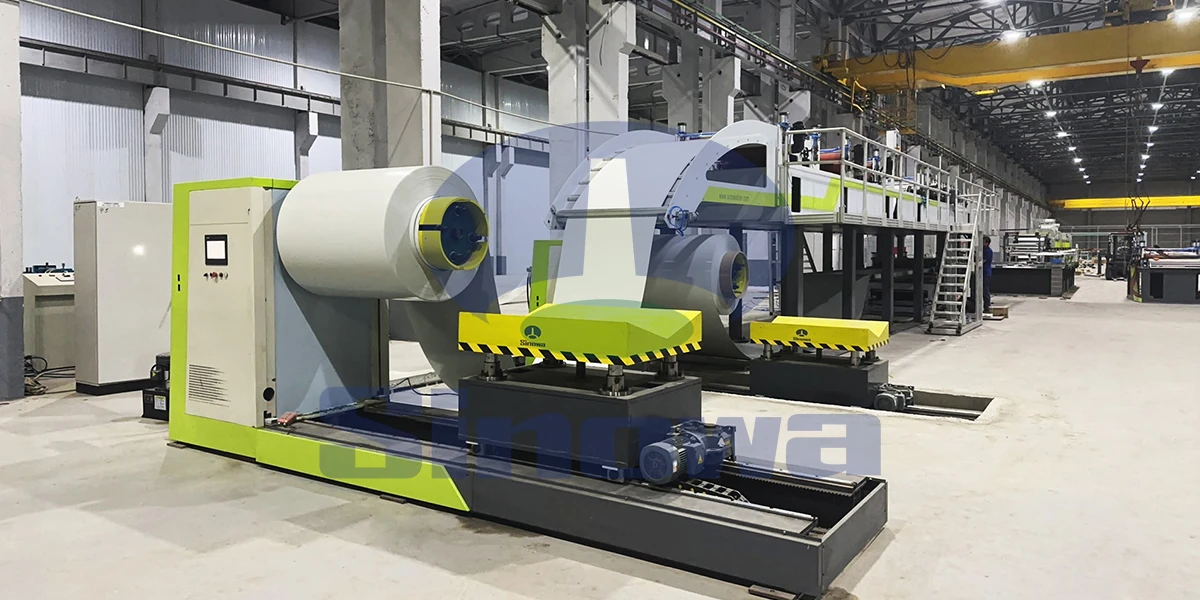
PIR Sandwich Panel Line
Sinowa is a supplier and manufacturer of PIR Sandwich Panel Line in china, customization on demand width a reasonable price.
Polyisocyanurate (PIR) sandwich panels have become an indispensable material in modern construction, industrial, and cold chain fields, thanks to their excellent thermal insulation, fire resistance, and structural stability. The production quality and efficiency of these panels are directly determined by the PIR sandwich panel line, a comprehensive manufacturing system that integrates multiple technologies and processes to realize the continuous and automated production of high-quality PIR sandwich panels. Understanding the structure, performance, types, and applications of the PIR sandwich panel line is crucial for optimizing production processes, improving product quality, and expanding application scenarios.
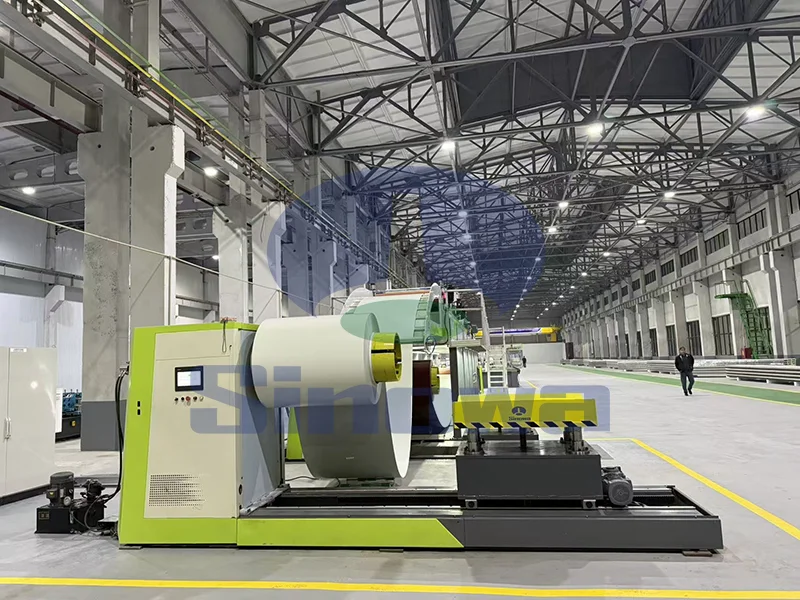
The structure of a PIR sandwich panel line is a sophisticated combination of mechanical, electrical, chemical, and thermal control components, designed to complete the entire production process from raw material preparation to finished product packaging in a continuous and automated manner. The core structure of the production line can be divided into several functional sections, each with a specific role in ensuring the smooth operation and product quality. The first section is the raw material handling and preparation system, which is responsible for storing, conveying, and preprocessing the main raw materials, including the facing materials, PIR foam raw materials, and auxiliary additives. Facing materials commonly used in PIR sandwich panels include galvanized steel, aluminum foil, aluminum sheets, and non-woven fabrics, and the production line is equipped with decoilers to unroll and straighten the coiled facing materials, ensuring a flat and consistent feeding. The PIR foam raw materials mainly consist of isocyanate and polyol, which are stored in dedicated tanks and conveyed to the mixing system through precise metering pumps to ensure the accurate ratio of raw materials, as the ratio directly affects the performance of the foam core. Auxiliary additives such as catalysts, foaming agents, and flame retardants are also added in precise proportions to optimize the foaming process and enhance the performance of the final product.
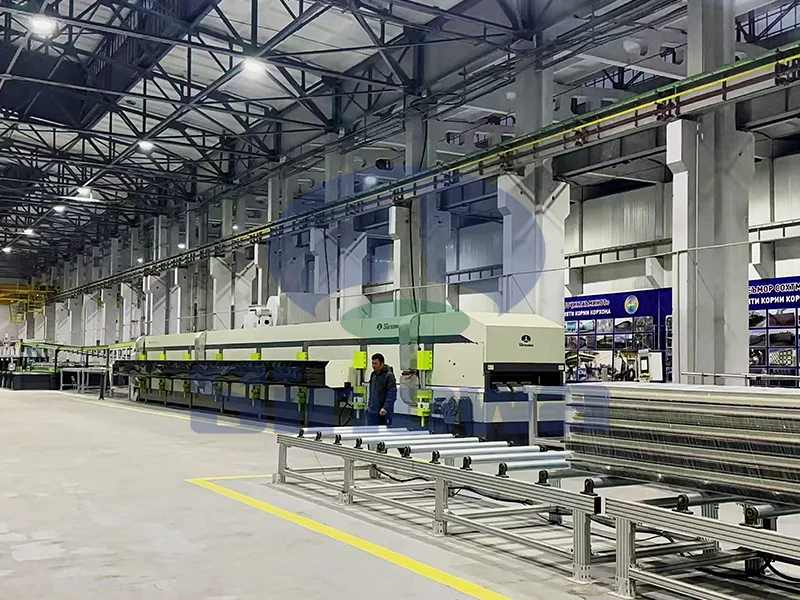
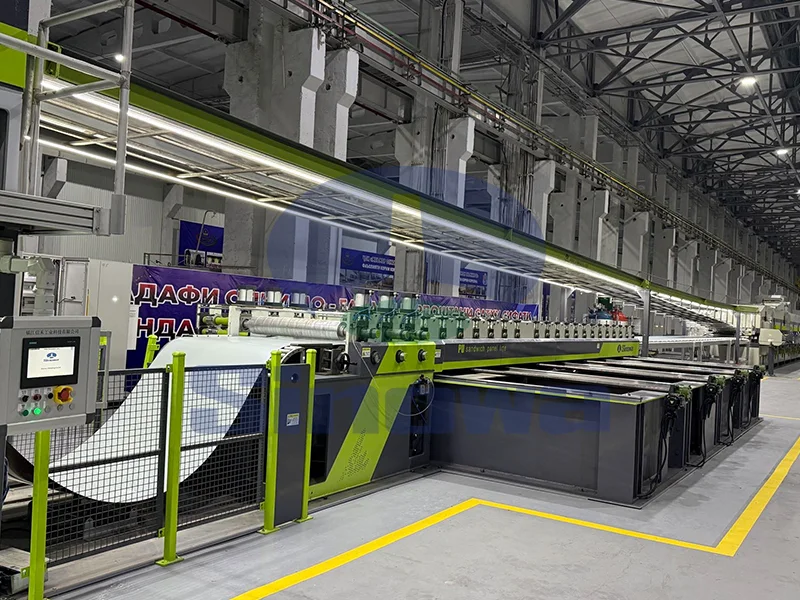
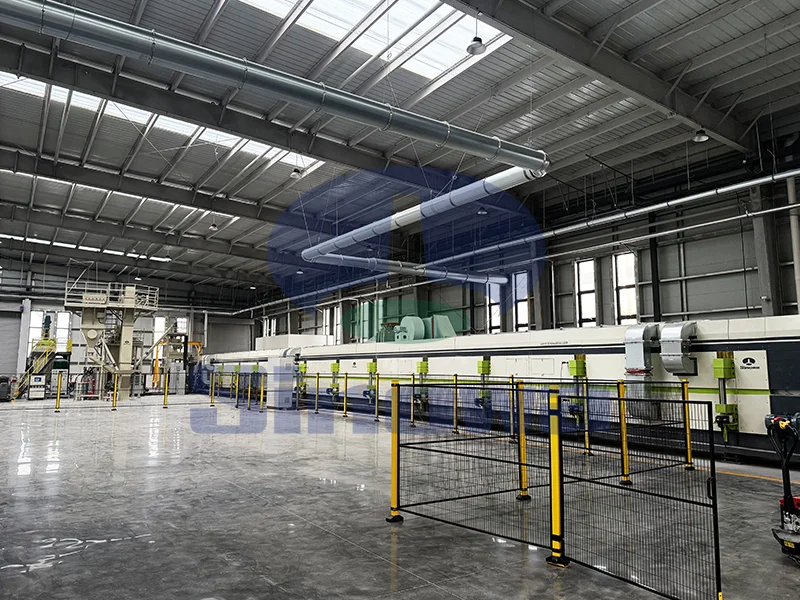
Following the raw material preparation section is the forming and foaming system, which is the core part of the entire production line. This system includes a roll forming machine, a preheating device, a high-pressure foaming machine, and a double belt conveyor. The roll forming machine processes the facing materials into the required profile shapes, such as trapezoidal or corrugated, to enhance the structural strength of the panels. The preheating device heats the facing materials to an appropriate temperature, which helps to improve the adhesion between the facing materials and the foam core and promotes the uniform foaming of the PIR raw materials. The high-pressure foaming machine mixes the isocyanate, polyol, and auxiliary additives at high pressure to form a uniform foaming mixture, which is then sprayed onto the preheated facing material. The double belt conveyor, consisting of two parallel steel belts, clamps the facing materials with the foaming mixture between them and conveys them forward at a constant speed. During the conveying process, the foaming mixture undergoes a chemical reaction, expanding and solidifying to form a dense, closed-cell PIR foam core, which is firmly bonded to the upper and lower facing materials to form a complete sandwich panel structure. The double belt conveyor also applies uniform pressure to the panel during the solidification process, ensuring that the panel has a flat surface, uniform thickness, and consistent density.
The subsequent section is the cutting and cooling system, which is responsible for shaping the continuous sandwich panel into the required length and ensuring the stability of the product performance. After the foam core is fully solidified, the continuous panel enters the cooling zone, where it is cooled to room temperature under controlled conditions to prevent deformation and ensure the structural stability of the panel. The cooling system usually adopts air cooling or water cooling methods, with temperature and humidity control devices to adjust the cooling speed and effect. Once cooled, the panel is conveyed to the cutting device, which uses a band saw or circular saw to cut the continuous panel into fixed-length pieces according to the production requirements. The cutting device is equipped with precise positioning and cutting control systems to ensure the accuracy of the cutting length and the flatness of the cutting surface, avoiding burrs or uneven edges that may affect the installation and use of the panels. Some advanced production lines also include a trimming device to trim the edges of the cut panels, further improving the product quality.
The final section of the PIR sandwich panel line is the stacking and packaging system, which completes the final processing of the finished products. The cut panels are conveyed to the stacking device, which automatically stacks the panels in an orderly manner according to the specified quantity and specifications. The stacking device is equipped with anti-collision and anti-scratch mechanisms to prevent damage to the panel surface during stacking. After stacking, the panels are wrapped with plastic film or packaging paper to protect them from moisture, dust, and damage during transportation and storage. The packaging system can also be adjusted according to the size and quantity of the panels to meet different transportation and storage needs. In addition to these main functional sections, the PIR sandwich panel line also includes a control system, which is the "brain" of the entire production line. The control system adopts PLC (Programmable Logic Controller) technology to realize the automatic control and monitoring of the entire production process, including the speed of the conveyor, the temperature and pressure of the foaming process, the ratio of raw materials, and the cutting length. Operators can set and adjust production parameters through the control panel, and the system will automatically adjust the production process according to the set parameters, ensuring the stability and consistency of product quality. The control system also has fault alarm and diagnosis functions, which can promptly remind operators of equipment failures and provide diagnostic information to facilitate quick maintenance and reduce production downtime.
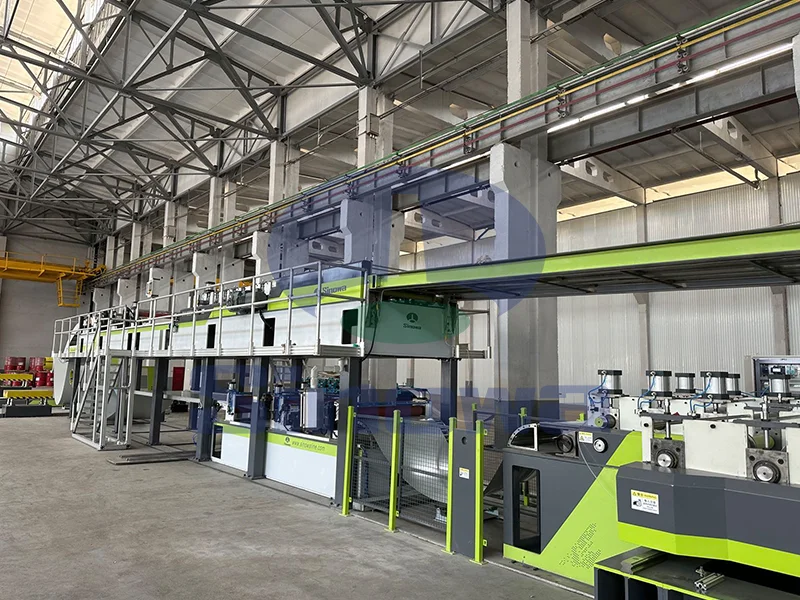
The performance of a PIR sandwich panel line is reflected in its production efficiency, product quality stability, energy conservation, and environmental protection, as well as its adaptability to different production needs. Production efficiency is an important indicator of the performance of the production line, which is mainly reflected in the production speed and annual output. Modern PIR sandwich panel lines adopt continuous production technology, with a production speed that can reach several meters per minute, and the annual output can reach hundreds of thousands or even millions of square meters, which can meet the large-scale production needs of different customers. The stability of product quality is another key performance indicator, which is ensured by the precise control of the production line. The precise metering of raw materials, the uniform control of foaming temperature and pressure, and the accurate cutting and cooling processes all contribute to the consistency of the panel's thickness, density, thermal conductivity, and other key performance indicators. The panels produced by a high-performance PIR sandwich panel line have a uniform foam core density, a closed-cell rate of more than 95%, and a stable thermal conductivity, which can effectively guarantee the insulation effect and structural stability of the panels.
Energy conservation and environmental protection are important performance characteristics of modern PIR sandwich panel lines, in line with the global trend of green development. The production line optimizes the energy consumption links, such as the preheating device and the power system, to reduce energy consumption. For example, the preheating device adopts a heated air recycling system, which recycles the waste heat generated during the production process to heat the facing materials, reducing the energy consumption of the heating system. The power system uses energy-saving motors and frequency conversion control technology to adjust the power output according to the production load, further reducing energy consumption. In terms of environmental protection, the production line uses environmentally friendly foaming agents, such as pentane, instead of traditional fluorinated foaming agents, which are harmful to the ozone layer, reducing the environmental impact of the production process. In addition, the production line is equipped with dust removal and waste gas treatment devices to collect and treat the dust and waste gas generated during the production process, ensuring that the emissions meet environmental protection requirements. The waste materials generated during the production process, such as the edge trimmings, can also be recycled and reused, improving the utilization rate of raw materials and reducing waste.
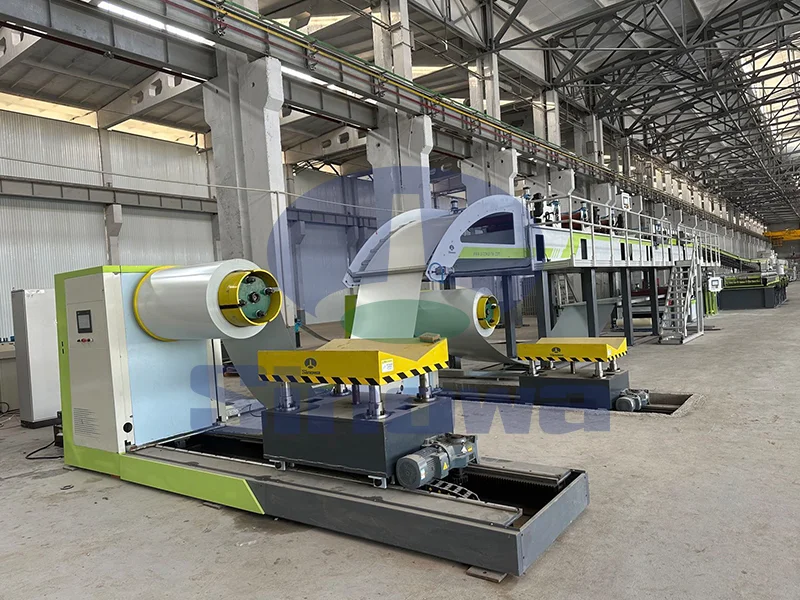
The adaptability of the PIR sandwich panel line is another important performance feature, which refers to the ability of the production line to produce different types and specifications of PIR sandwich panels according to different customer needs. Modern PIR sandwich panel lines adopt a modular design, which allows for flexible combination and adjustment of different functional modules. For example, by replacing the roll forming die, the production line can process facing materials into different profiles, such as trapezoidal, corrugated, or flat, to meet the different structural requirements of walls, roofs, and other applications. By adjusting the ratio of raw materials and the foaming parameters, the production line can produce panels with different foam core densities and thicknesses, adapting to different thermal insulation and structural strength requirements. In addition, the production line can also produce panels with different facing materials, such as galvanized steel, aluminum foil, or non-woven fabrics, to meet the different application environments and aesthetic requirements. This strong adaptability makes the PIR sandwich panel line suitable for a variety of production needs, expanding its application scope.
The types of PIR sandwich panel lines can be divided according to different classification standards, such as production mode, production capacity, and product type. According to the production mode, the production line can be divided into continuous production lines and discontinuous production lines. Continuous production lines are the most common type, which can realize the continuous and automated production of PIR sandwich panels, with high production efficiency and stable product quality, suitable for large-scale mass production. Discontinuous production lines, on the other hand, adopt an intermittent production mode, which is suitable for small-batch production or the production of special-specification panels. The production process of discontinuous production lines is relatively flexible, but the production efficiency is lower than that of continuous production lines.
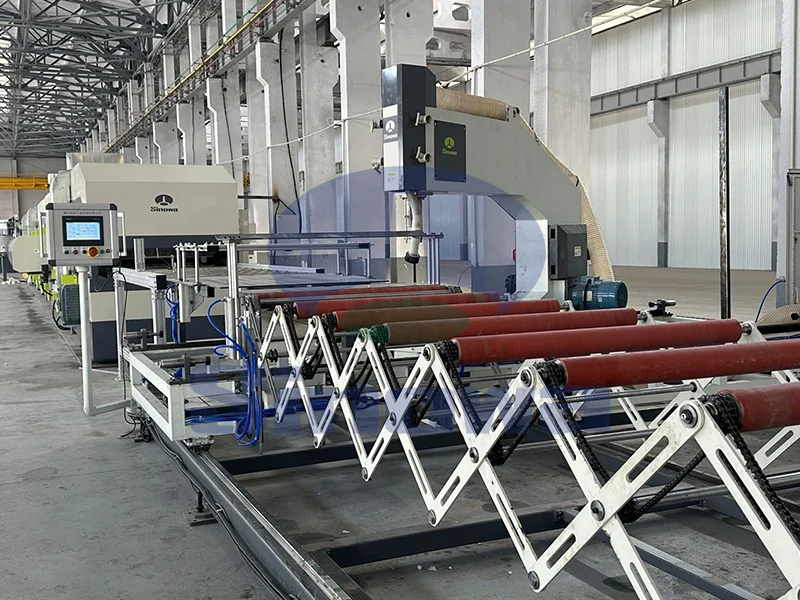
According to the production capacity, PIR sandwich panel lines can be divided into small, medium, and large-scale production lines. Small-scale production lines have a relatively low production speed and annual output, suitable for small enterprises or small-batch production needs. Medium-scale production lines have a moderate production capacity, which can meet the production needs of most enterprises, balancing production efficiency and investment costs. Large-scale production lines have a high production speed and annual output, suitable for large enterprises with large-scale production needs, which can achieve economies of scale and reduce production costs. According to the product type, the production line can be divided into wall panel production lines, roof panel production lines, cold storage panel production lines, and HVAC duct panel production lines. Wall panel production lines are mainly used to produce PIR sandwich panels for building external walls and internal partitions, which have good thermal insulation, fire resistance, and decorative properties. Roof panel production lines are designed to produce panels for building roofs, which have strong structural strength, weather resistance, and waterproof performance. Cold storage panel production lines are specialized in producing panels for cold storage, refrigerated warehouses, and refrigerated transport vehicles, which have excellent low-temperature thermal insulation performance and moisture-proof properties. HVAC duct panel production lines are used to produce panels for HVAC systems, which have good air tightness, thermal insulation, and corrosion resistance.
The applications of PIR sandwich panel lines are closely related to the applications of the PIR sandwich panels they produce, covering a wide range of fields such as construction, industrial, cold chain, and HVAC. In the construction field, PIR sandwich panels produced by the production line are widely used in the construction of industrial warehouses, commercial buildings, office buildings, residential buildings, agricultural buildings, and sports halls. As external wall and internal partition materials, PIR sandwich panels have excellent thermal insulation performance, which can reduce the energy consumption of building heating and cooling, and improve the comfort of the indoor environment. Their lightweight and high structural strength characteristics can also reduce the load of the building structure, shorten the construction period, and reduce construction costs. For example, in industrial warehouses, PIR sandwich panels are used to build walls and roofs, which not only provide good thermal insulation and fire protection but also have a fast installation speed, which can speed up the construction progress of the warehouse. In residential buildings, PIR sandwich panels are used as external wall insulation materials, which can effectively improve the energy efficiency of the building and reduce the energy consumption of air conditioning and heating.
In the industrial field, PIR sandwich panels produced by the production line are used in the construction of industrial plants, workshops, and equipment enclosures. These panels have good corrosion resistance, wear resistance, and high-temperature resistance, which can adapt to the harsh industrial environment. For example, in chemical plants, PIR sandwich panels are used to build equipment enclosures, which can isolate the equipment from the external environment, prevent corrosion and damage to the equipment, and also play a role in thermal insulation and noise reduction. In the manufacturing industry, PIR sandwich panels are used to build clean workshops, which have good air tightness and dust-proof performance, meeting the requirements of clean production.
The cold chain field is another important application area of PIR sandwich panel lines. The PIR sandwich panels produced by the production line have excellent low-temperature thermal insulation performance and moisture-proof properties, which are ideal materials for cold storage, refrigerated warehouses, refrigerated transport vehicles, and other cold chain facilities. The closed-cell structure of the PIR foam core can effectively prevent heat transfer and moisture penetration, ensuring that the internal temperature of the cold chain facilities remains stable. For example, in cold storage warehouses, PIR sandwich panels are used to build walls, roofs, and floors, which can maintain a low and stable temperature inside the warehouse, ensuring the quality and freshness of the stored goods. In refrigerated transport vehicles, PIR sandwich panels are used to build the carriage, which can reduce the energy consumption of the refrigeration system and extend the transportation distance of the goods.
In the HVAC field, PIR sandwich panels produced by the production line are used to manufacture pre-insulated air ducts, which have good thermal insulation, air tightness, and corrosion resistance. These air ducts are widely used in commercial buildings, office buildings, hospitals, and other places, which can reduce the heat loss of the air in the duct, improve the energy efficiency of the HVAC system, and also reduce noise pollution. The lightweight and easy-to-install characteristics of PIR sandwich panels also make the installation of air ducts more efficient, reducing labor costs and construction time.
In addition to these main application fields, PIR sandwich panel lines also have applications in other fields, such as temporary buildings, mobile homes, and disaster relief shelters. The PIR sandwich panels produced by the production line are lightweight, easy to install and disassemble, and have good thermal insulation and fire resistance, which are suitable for the construction of temporary buildings. For example, in disaster-stricken areas, temporary shelters built with PIR sandwich panels can provide a safe and comfortable living environment for the victims in a short time. In construction sites, temporary offices and dormitories built with PIR sandwich panels are convenient to assemble and disassemble, and can be reused, reducing construction waste.
With the continuous development of green building, energy conservation, and environmental protection concepts, the demand for PIR sandwich panels in various fields is constantly increasing, which also promotes the continuous upgrading and development of PIR sandwich panel lines. Future PIR sandwich panel lines will be more intelligent, with higher production efficiency, better product quality stability, and more environmentally friendly performance. The integration of intelligent technologies such as Internet of Things (IoT) and artificial intelligence (AI) will enable the production line to realize real-time monitoring, intelligent adjustment, and predictive maintenance, further improving production efficiency and reducing production costs. At the same time, the development of new raw materials and new processes will also enable the production line to produce panels with better performance, such as higher fire resistance, lower thermal conductivity, and more environmentally friendly properties, expanding the application scope of PIR sandwich panels.
In conclusion, the PIR sandwich panel line is a complex and sophisticated manufacturing system that plays a crucial role in the production of high-quality PIR sandwich panels. Its reasonable structure ensures the smooth operation of the production process, its excellent performance guarantees the stability and efficiency of production, its diverse types adapt to different production needs, and its wide applications cover various fields of social and economic development. Understanding the structure, performance, types, and applications of the PIR sandwich panel line is not only helpful for enterprises to select and use the production line rationally but also contributes to the promotion and development of the PIR sandwich panel industry. As the demand for energy-saving and environmentally friendly materials continues to grow, the PIR sandwich panel line will surely play a more important role in the future, bringing more convenience and benefits to various fields.
« PIR Sandwich Panel Line » Update Date: 2026/4/15
High-tech PIR Sandwich Panel Line
2026-05-25The evolution of modern building and industrial material manufacturing is deeply driven by technological upgrades in automated production equipment, among which the high-tech PIR sandwich panel line stands out as a core s…PIR Sandwich Panel Line Supplier
2026-03-11In the modern construction and industrial insulation sectors, the demand for high-performance, durable, and energy-efficient building materials has surged dramatically, and PIR sandwich panels have emerged as a top-tier s…PIR Sandwich Panel Line Price
2024-04-18Low Price PIR Sandwich Panel Lines
2024-03-07High-quality PIR Sandwich Panel Line
2024-03-04Cheap PIR Sandwich Panel Line
2024-03-02High-end PIR Sandwich Panel Line
2024-02-28PIR Sandwich Panel Line Material
2024-02-20PIR Sandwich Panel Line Manufacturing
2024-02-20PIR Sandwich Panel Lines Manufacturer
2024-02-20
A pu sandwich panel line stands as a highly efficient and automated production solution dedicated to manufacturing high-performance insulated panels, playing a vital role in modern construction and industrial engineering sectors. This integrated production system streamlines the entire manufacturing process, starting with the uncoiling and leveling of outer facing materials, which are carefully treated to ensure flat, smooth surfaces free of defects and suitable for subsequent bonding. Next comes the core production step: precise mixing and uniform distribution of polyurethane raw materials, where specialized equipment controls the ratio and flow rate strictly to guarantee consistent foam density and stable bonding performance between the core and facings. The pu sandwich panel machine features a controlled curing and forming system that maintains stable temperature and pressure conditions, allowing the polyurethane foam to fully expand, solidify and bond tightly with the upper and lower layers, forming a rigid, durable sandwich structure. Post-forming, the panels go through accurate cutting and finishing processes to meet diverse size specifications demanded by different projects. Designed for continuous operation, this pu sandwich panel production line boosts manufacturing efficiency remarkably while ensuring uniform product quality across batches, reducing manual errors and material waste effectively. The finished PU sandwich panels deliver outstanding thermal insulation, sound absorption and structural strength, making them widely applicable in building roofs, walls, cold storage facilities and industrial workshops, adapting to various environmental and functional needs with reliable performance and long service life.