- Home
- Sandwich Panel Line
- Roll Forming Machine
- CZ Purlin Roll Forming Machine
- Door Window Curtain Partition Roll Forming Machine
- Gutter Roll Forming Machine
- Clean Partition Panel Machine
- Corrugated Panel Roll Forming Machine
- Double Layer Roof Roll Forming Machine
- High Speed Keel Roll Forming Machine
- Light Steel-Frame Structure Production Line
- C Channel Roll Forming Machine
- Insulated Panels
- Steel Profiles
- About
- Contact
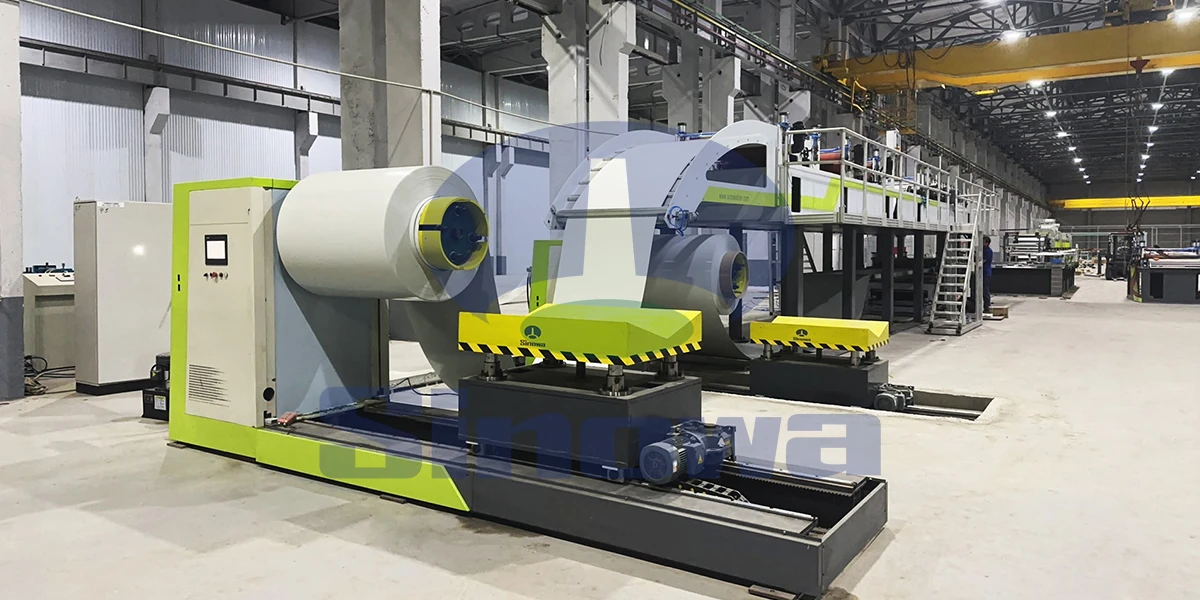
Fully Automatic PU Sandwich Panel Lines
Sinowa is a supplier and manufacturer of Fully Automatic PU Sandwich Panel Lines in china, customization on demand width a reasonable price.
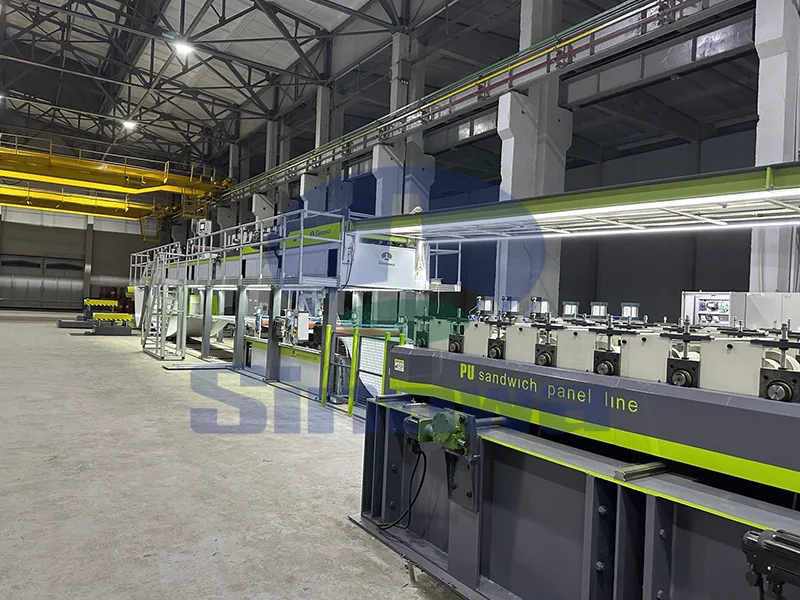
A fully automatic PU sandwich panel line is an integrated and intelligent production system designed specifically for the continuous manufacturing of polyurethane (PU) sandwich panels, which are widely used in modern construction and industrial fields due to their excellent comprehensive performance. This production line realizes a seamless workflow from raw material feeding to finished product stacking, minimizing manual intervention and maximizing production efficiency and product consistency. Unlike traditional semi-automatic or manual production methods that rely heavily on labor and are prone to errors, the fully automatic PU sandwich panel line integrates mechanical precision, electronic control, and chemical technology to form a highly efficient, stable, and reliable production solution, laying a solid foundation for the large-scale application of PU sandwich panels in various scenarios. The core value of this production line lies in its ability to convert raw materials such as metal coils and PU foam components into high-quality composite panels through a series of automated processes, ensuring that each product meets the strict requirements of structural strength, thermal insulation, and durability.
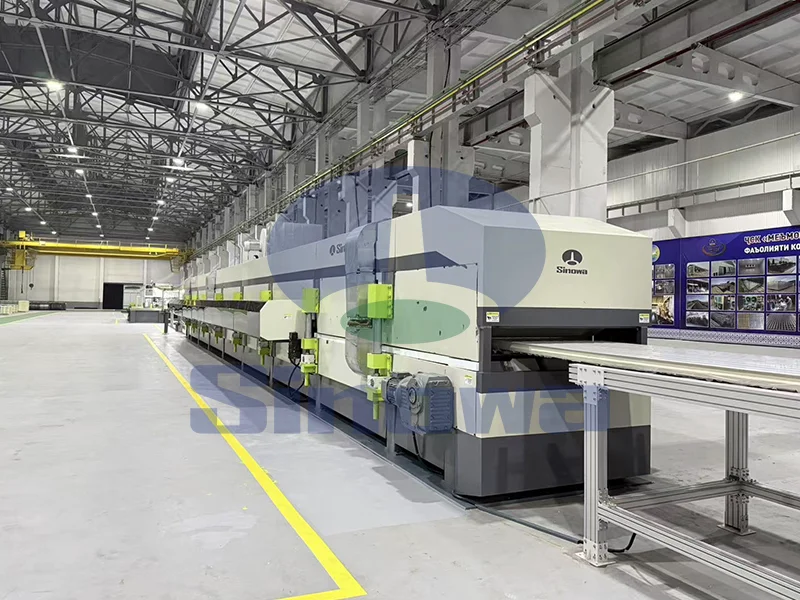
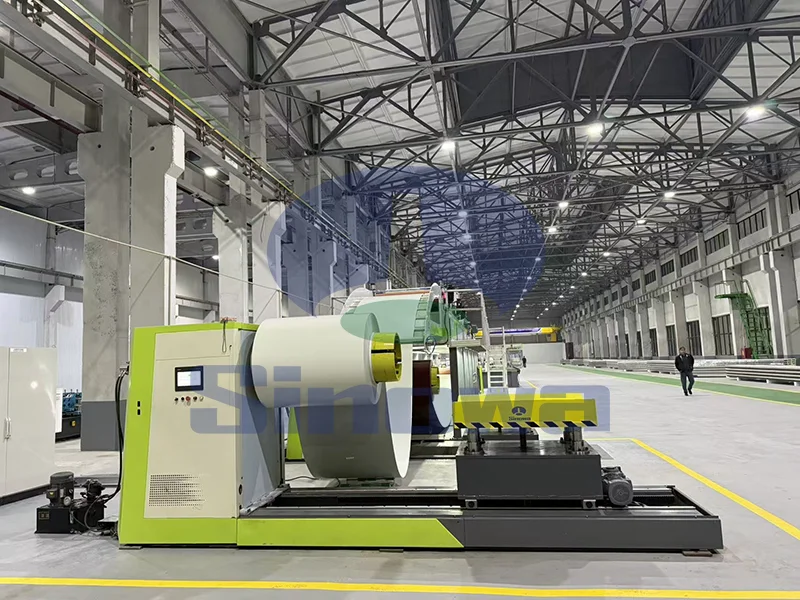
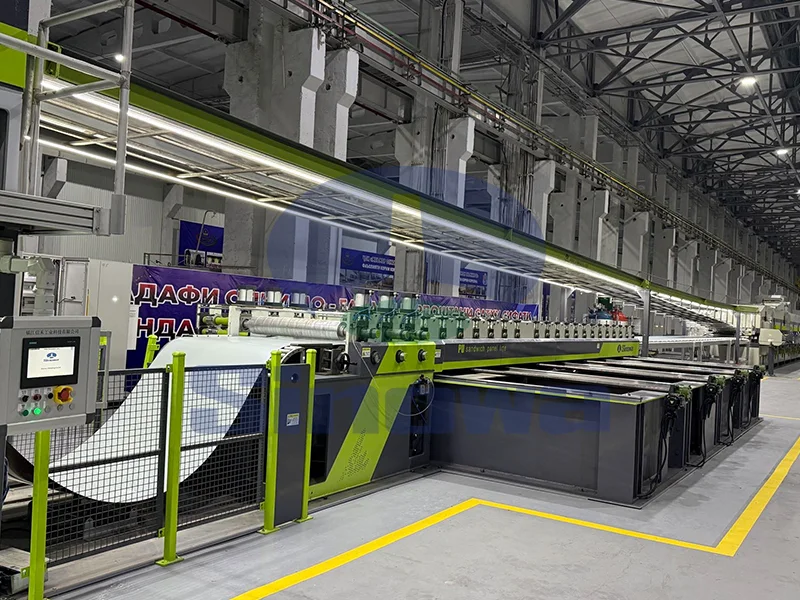
The structure of a fully automatic PU sandwich panel line is composed of multiple functional modules that work in a coordinated and synchronized manner, each undertaking a specific link in the production process to ensure the smooth operation of the entire line. The main structural components include the uncoiling system, preprocessing unit, forming system, PU foam mixing and pouring system, lamination and curing system, cutting system, stacking system, and intelligent control system. These modules are closely connected, forming a continuous production chain that covers all links from raw material preparation to finished product output. The uncoiling system is the starting point of the production line, usually equipped with dual-station uncoiling machines that can handle different types of surface material coils, such as galvanized steel, galvalume, aluminum, non-woven fabrics, and aluminum foil. This system is equipped with an automatic correction device and tension control system to ensure that the metal coils are uncoiled stably and centered accurately, preventing surface material deformation or deviation during the uncoiling process, which would affect the subsequent processing precision. The preprocessing unit is connected to the uncoiling system, responsible for cleaning, passivating, and preheating the surface materials. Cleaning and passivation can remove oil stains, rust, and other impurities on the surface of the metal sheets, enhancing the bonding strength between the surface materials and the PU foam core. Preheating, on the other hand, adjusts the temperature of the surface materials to the optimal range for PU foam bonding, ensuring that the foam can firmly adhere to the surface materials during the subsequent composite process.
The forming system is a key structural part that determines the shape and dimensional accuracy of the PU sandwich panels. It usually consists of multiple roll forming stations equipped with precision-engineered rollers. The flat metal sheets from the preprocessing unit are gradually bent and formed into the desired profiles, such as corrugated, trapezoidal, or standing seam, through a series of incremental pressing by the rollers. The number of forming stations can be adjusted according to the complexity of the profile; more intricate designs require additional stations to ensure smooth and accurate shaping without causing material fatigue or damage. The rollers are typically made of high-grade steel with hard chrome plating, which has excellent wear resistance and corrosion resistance, ensuring long-term stable operation and consistent forming quality. The PU foam mixing and pouring system is the core of the production line, responsible for preparing and evenly pouring the PU foam core between the two layers of surface materials. This system includes material storage tanks, metering pumps, high-pressure mixing heads, and moving pouring devices. The metering pumps can accurately control the ratio of isocyanate and polyether polyol, the main components of PU foam, with a flow accuracy of up to ±1.5%, ensuring the stability of the foam performance. The high-pressure mixing head adopts a self-cleaning design, with a mixing efficiency of over 98%, ensuring that the raw materials are fully mixed and reacted. The moving pouring device can adjust its position and speed according to the width of the panels, ensuring that the PU foam is evenly distributed on the bottom surface material, avoiding local density unevenness that would affect the panel quality.
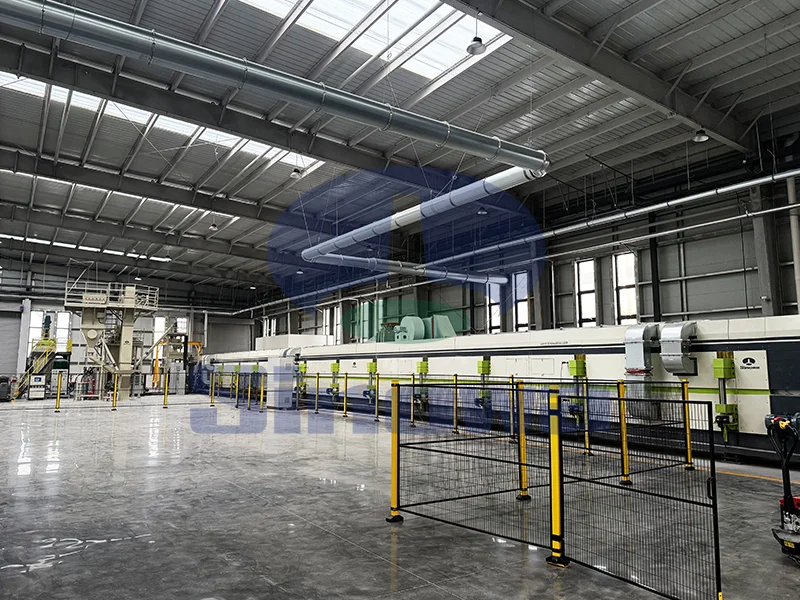
The lamination and curing system is responsible for bonding the surface materials and the PU foam core into an integrated structure. It mainly includes a double-track press and a temperature control platform. The double-track press applies uniform pressure to the composite structure of the surface materials and PU foam, with adjustable pressure ranging from 0.1 to 0.3 MPa, ensuring that the foam and surface materials are closely bonded without gaps. The temperature control platform maintains the optimal foaming and curing temperature environment, usually between 50℃ and 70℃, which promotes the full foaming and curing of the PU foam. During the conveying process of the double-track press, which is usually 20 to 30 meters long, the PU foam undergoes a complete foaming reaction and forms a firm bond with the upper and lower surface materials, forming a complete PU sandwich panel prototype. The cutting system is used to cut the continuous composite panels into fixed lengths according to production requirements. It is equipped with a servo-driven CNC flying saw, which has a cutting accuracy of ±1 mm, ensuring that the length of each panel is consistent and meets the design specifications. The cutting process is fully automated, and the saw blade can move horizontally in synchronization with the moving panels, realizing non-stop cutting without affecting the continuity of production. The stacking system is the end link of the production line, usually equipped with an automatic stacker crane that can stack the cut finished panels neatly according to the set height and quantity. The stacker crane adopts a dual-mode grasping system of vacuum suction cups and mechanical fixtures, which can stably grasp panels of different weights and sizes, with a maximum stacking height of up to 3.5 meters, greatly improving the efficiency of finished product storage and transportation.
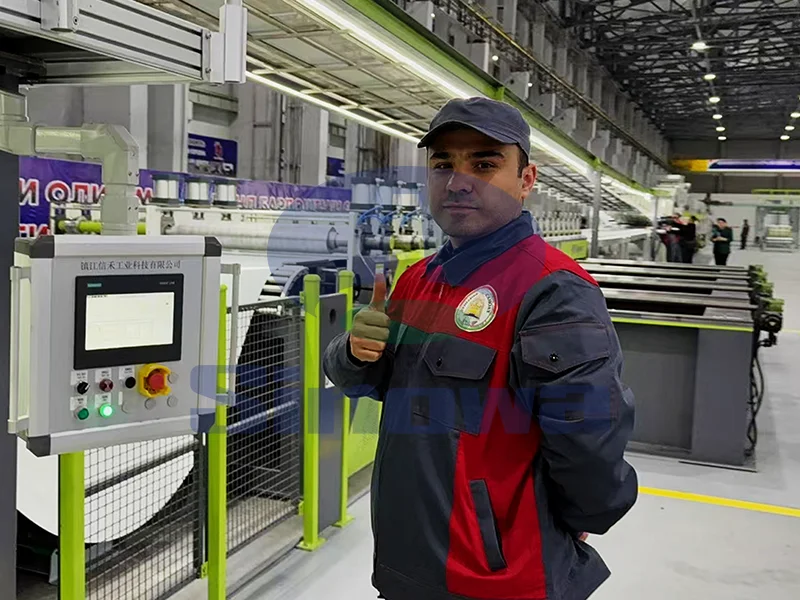
The intelligent control system is the "brain" of the fully automatic PU sandwich panel line, integrating programmable logic controllers (PLC), touch screens, and detection sensors to realize the centralized control and real-time monitoring of the entire production line. Operators can set production parameters such as production speed, panel thickness, and cutting length through the touch screen, and the system will automatically synchronize the operation status of each module to ensure the smooth connection of the entire production process. The detection sensors are installed at various key positions of the production line to monitor parameters such as the thickness of the panels, the temperature of the curing environment, and the ratio of raw materials in real time. If any parameter deviates from the set range, the system will issue an alarm in time and adjust automatically or prompt the operator to handle it, effectively reducing the risk of product defects. In addition, the control system also has functions such as fault self-diagnosis and parameter memory, which can quickly locate fault points and save production parameters for different types of panels, facilitating quick switching between different production tasks.
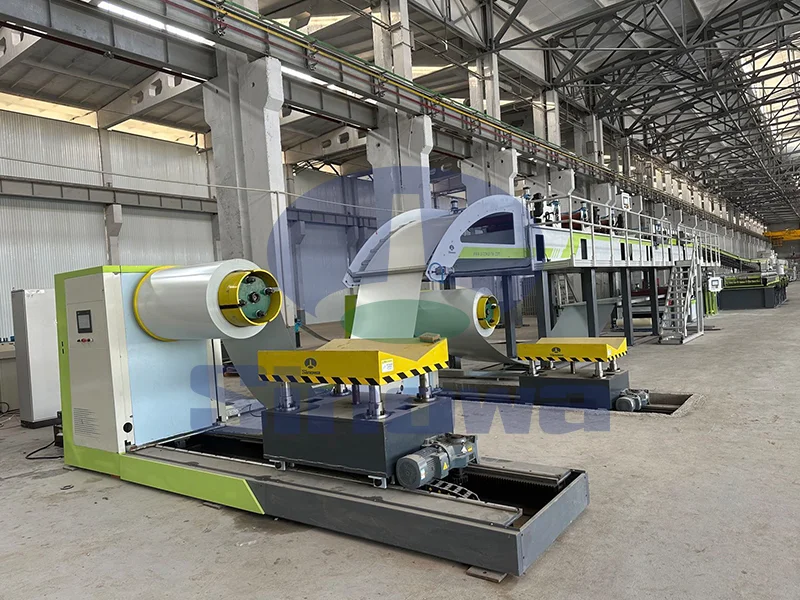
The performance of a fully automatic PU sandwich panel line is reflected in multiple aspects, including production efficiency, product quality stability, operational flexibility, energy conservation and environmental protection, and safety. In terms of production efficiency, the fully automatic production line can achieve continuous operation 24 hours a day, with a production speed of 3 to 12 meters per minute, and a daily output of more than 5,000 square meters (based on 8 hours of operation), which is 10 to 15 times higher than manual production. This high-efficiency production method can effectively meet the large-scale demand for PU sandwich panels in construction projects, shortening the construction cycle. In terms of product quality stability, the automatic control system and precision mechanical components ensure that each link of the production process is carried out with high precision. The density deviation of the PU foam core is less than 3%, the flatness of the panels is within 1 mm per meter, and the bonding strength between the surface materials and the core is significantly higher than the industry average. This consistency ensures that the PU sandwich panels have stable performance in practical applications, avoiding quality problems caused by manual operation errors.
Operational flexibility is another important performance advantage of the fully automatic PU sandwich panel line. The modular design of the production line allows for free combination and adjustment of each functional module, enabling it to produce different types, specifications, and thicknesses of PU sandwich panels. For example, by adjusting the forming rollers and pouring parameters, the production line can switch between wall panels, roof panels, and cold storage panels within 30 minutes, supporting the storage of more than 100 sets of production formulas to meet the diverse needs of different customers and projects. In addition, the production line can also be compatible with different core materials such as rock wool and glass wool, expanding its application range. In terms of energy conservation and environmental protection, the production line adopts a series of energy-saving designs, such as heat recovery utilization technology, which can recover and reuse the heat generated during the curing process, with a heat recovery utilization rate of up to 65%. At the same time, the production line is equipped with a waste recycling device, which can collect and reuse the waste materials generated during the cutting process, with a waste recycling rate of more than 90%. The VOC emissions of the production line are less than 50 mg/m³, meeting the strict environmental protection standards, reducing the impact on the environment.
Safety performance is also an important part of the production line's overall performance. The production line is equipped with multiple safety protection devices, including emergency stop buttons at each operation position, regional laser scanning protection, and overload automatic protection devices. The emergency stop buttons can quickly cut off the power supply of the equipment in case of emergency, ensuring the safety of operators and equipment. The regional laser scanning protection can detect the presence of personnel in the dangerous operation area and stop the equipment operation in time to avoid safety accidents. The overload automatic protection device can prevent the equipment from being damaged due to excessive load, extending the service life of the equipment. In addition, the production line adopts a closed design for key components such as the PU foam mixing and pouring system, reducing the leakage of harmful gases and ensuring the health of operators.
The types of fully automatic PU sandwich panel lines can be divided into different categories according to various standards, mainly including classification by production capacity, classification by product type, and classification by core material type. According to the production capacity, the production lines can be divided into small, medium, and large types. Small production lines have a daily output of less than 3,000 square meters, suitable for small-scale manufacturers or projects with small demand; medium production lines have a daily output of 3,000 to 8,000 square meters, which is the most commonly used type, suitable for most manufacturers with moderate production scale; large production lines have a daily output of more than 8,000 square meters, suitable for large-scale enterprises with large-scale production needs, which can meet the demand for large-volume orders in large construction projects. According to the product type, the production lines can be divided into wall panel production lines, roof panel production lines, cold storage panel production lines, and clean room panel production lines. Wall panel production lines are mainly used to produce PU sandwich panels for building exterior walls and interior walls, focusing on structural strength and thermal insulation performance; roof panel production lines are designed to produce panels with better waterproof and wind pressure resistance, suitable for building roofs; cold storage panel production lines pay more attention to the thermal insulation and moisture-proof performance of the panels, which can maintain a stable low-temperature environment for cold storage facilities; clean room panel production lines require the panels to have good airtightness and cleanliness, suitable for clean rooms in industries such as electronics and medicine.
According to the core material type, the production lines can be divided into pure PU sandwich panel lines, PU-rock wool composite panel lines, and PU-glass wool composite panel lines. Pure PU sandwich panel lines use PU foam as the only core material, which has excellent thermal insulation performance and lightweight characteristics, suitable for general insulation and decoration scenarios; PU-rock wool composite panel lines combine PU foam with rock wool, which not only retains the thermal insulation performance of PU foam but also enhances the fire resistance of the panels, suitable for high-rise buildings and places with strict fire safety requirements; PU-glass wool composite panel lines combine PU foam with glass wool, which has good sound insulation and thermal insulation performance, suitable for buildings that require both thermal insulation and noise reduction, such as workshops and exhibition halls. In addition, some production lines can also be customized according to customer needs, such as adding punching, embossing, or inkjet printing functions to meet the special decorative needs of the panels.
The application of fully automatic PU sandwich panel lines is closely related to the application fields of PU sandwich panels, covering construction, industrial, logistics, agricultural, and other fields, and plays an important role in promoting the development of these industries. In the construction field, which is the main application area of PU sandwich panels, the fully automatic production line provides a large number of high-quality panels for various types of buildings, including industrial workshops, warehouses, commercial complexes, residential buildings, modular buildings, and prefabricated houses. For industrial workshops and warehouses, PU sandwich panels produced by the automatic line have excellent thermal insulation and sound insulation performance, which can maintain a stable indoor temperature, reduce energy consumption for heating and cooling, and create a comfortable working and storage environment. For commercial complexes and residential buildings, the panels have the advantages of lightweight, high strength, and beautiful appearance, which can reduce the self-weight of the building, shorten the construction period, and improve the overall performance and aesthetic effect of the building. Modular buildings and prefabricated houses, which have developed rapidly in recent years, rely heavily on the efficient production of fully automatic PU sandwich panel lines. The panels produced by the line can be prefabricated in the factory and directly installed on-site, greatly improving the construction efficiency and reducing the impact of on-site construction on the environment.
In the industrial field, fully automatic PU sandwich panel lines are widely used in the production of insulation panels for industrial equipment and pipelines. Industrial equipment such as boilers, reactors, and heat exchangers need to be insulated to reduce energy loss and ensure safe operation. The PU sandwich panels produced by the automatic line have excellent thermal insulation performance and corrosion resistance, which can effectively insulate industrial equipment and pipelines, improve energy utilization efficiency, and extend the service life of the equipment. In addition, the production line can also produce panels for industrial clean rooms, which have good airtightness and cleanliness, meeting the strict requirements of industries such as electronics, medicine, and food processing for production environments.
In the logistics field, especially in the cold chain logistics industry, fully automatic PU sandwich panel lines play a crucial role. Cold storage warehouses, refrigerated trucks, and insulated containers all need to use high-performance insulation panels to maintain a low-temperature environment and ensure the quality of perishable goods such as food, medicine, and flowers during storage and transportation. The PU sandwich panels produced by the automatic line have excellent thermal insulation and moisture-proof performance, with low thermal conductivity, which can effectively reduce the loss of cold energy and maintain a stable low-temperature environment inside the cold storage or refrigerated equipment. This not only ensures the quality of the goods but also reduces the energy consumption of the refrigeration system, lowering the operation cost of cold chain logistics enterprises.
In the agricultural field, fully automatic PU sandwich panel lines are used to produce insulation panels for agricultural greenhouses and livestock houses. Agricultural greenhouses need to maintain a stable temperature and humidity environment to promote the growth of crops, especially in cold areas or seasons. The PU sandwich panels produced by the automatic line have excellent thermal insulation performance, which can effectively retain heat in the greenhouse, reduce the energy consumption of heating equipment, and extend the crop growing season. For livestock houses, the panels have good thermal insulation and sound insulation performance, which can create a comfortable living environment for livestock, improve the survival rate and productivity of livestock. In addition, the panels are also corrosion-resistant and easy to clean, which is suitable for the harsh environment of livestock houses.
With the continuous development of the construction industry towards energy conservation, environmental protection, and rapid construction, the demand for fully automatic PU sandwich panel lines is constantly increasing. The production line not only improves the production efficiency and product quality of PU sandwich panels but also promotes the upgrading and development of the entire industry. In the future, with the continuous advancement of technology, fully automatic PU sandwich panel lines will be more intelligent, energy-saving, and flexible, with functions such as remote monitoring, intelligent adjustment, and automatic fault handling, further improving production efficiency and reducing operation costs. At the same time, the production line will also be more environmentally friendly, adopting more green and low-carbon production processes to meet the increasingly strict environmental protection requirements. With its excellent performance and wide application prospects, the fully automatic PU sandwich panel line will continue to play an important role in various fields, providing strong support for the development of modern industry and construction.
« Fully Automatic PU Sandwich Panel Lines » Update Date: 2026/4/15
URL: https://m.sinowa.cn/blog/fully-automatic-pu-sandwich-panel-lines.html
A pu sandwich panel line stands as a highly efficient and automated production solution dedicated to manufacturing high-performance insulated panels, playing a vital role in modern construction and industrial engineering sectors. This integrated production system streamlines the entire manufacturing process, starting with the uncoiling and leveling of outer facing materials, which are carefully treated to ensure flat, smooth surfaces free of defects and suitable for subsequent bonding. Next comes the core production step: precise mixing and uniform distribution of polyurethane raw materials, where specialized equipment controls the ratio and flow rate strictly to guarantee consistent foam density and stable bonding performance between the core and facings. The pu sandwich panel machine features a controlled curing and forming system that maintains stable temperature and pressure conditions, allowing the polyurethane foam to fully expand, solidify and bond tightly with the upper and lower layers, forming a rigid, durable sandwich structure. Post-forming, the panels go through accurate cutting and finishing processes to meet diverse size specifications demanded by different projects. Designed for continuous operation, this pu sandwich panel production line boosts manufacturing efficiency remarkably while ensuring uniform product quality across batches, reducing manual errors and material waste effectively. The finished PU sandwich panels deliver outstanding thermal insulation, sound absorption and structural strength, making them widely applicable in building roofs, walls, cold storage facilities and industrial workshops, adapting to various environmental and functional needs with reliable performance and long service life.