- Home
- Sandwich Panel Line
- Roll Forming Machine
- CZ Purlin Roll Forming Machine
- Door Window Curtain Partition Roll Forming Machine
- Gutter Roll Forming Machine
- Clean Partition Panel Machine
- Corrugated Panel Roll Forming Machine
- Double Layer Roof Roll Forming Machine
- High Speed Keel Roll Forming Machine
- Light Steel-Frame Structure Production Line
- C Channel Roll Forming Machine
- Insulated Panels
- Steel Profiles
- About
- Contact
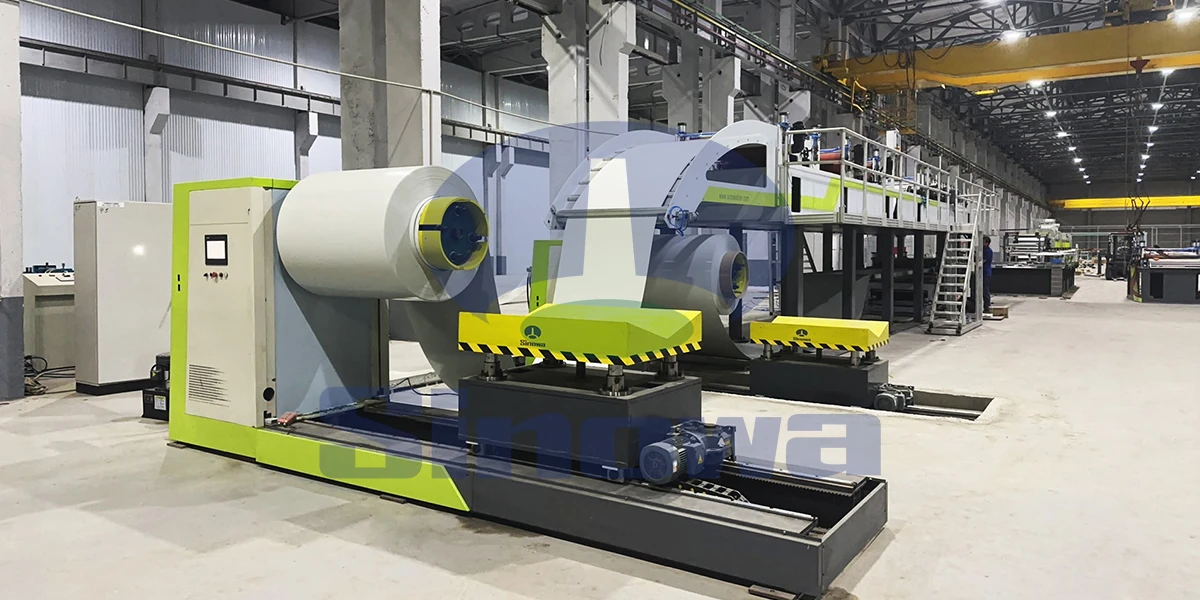
Polyurethane Sandwich Panel Machine
Sinowa is a supplier and manufacturer of Polyurethane Sandwich Panel Machine in china, customization on demand width a reasonable price.
Polyurethane sandwich panel machines stand as core industrial equipment dedicated to the mass manufacturing of polyurethane sandwich panels, a high-performance composite building material widely valued across global construction, cold chain logistics, industrial manufacturing and other sectors. These machines integrate mechanical transmission, chemical foaming, precision control and automated processing technologies, forming a complete production system that transforms raw materials into finished sandwich panels with stable quality and consistent specifications. Unlike fragmented processing equipment, polyurethane sandwich panel machines are designed as integrated production lines, with each component working in synergy to realize continuous, efficient and standardized production, adapting to diverse market demands for panel specifications, performance indicators and application scenarios.
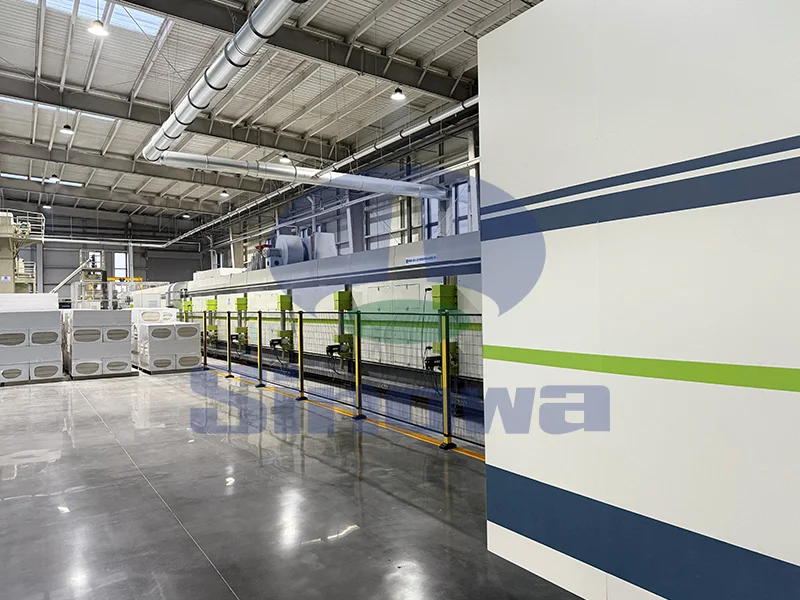
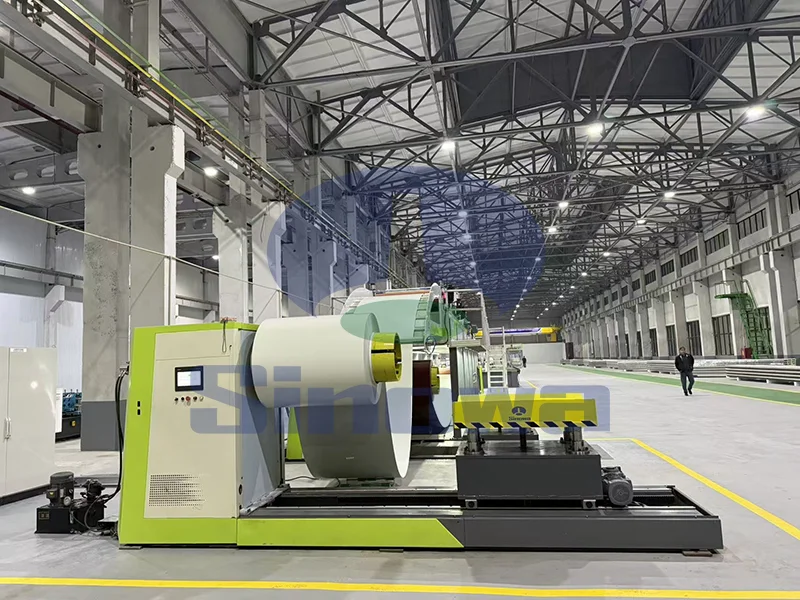
Starting with the structural composition of polyurethane sandwich panel machines, the entire equipment is divided into several interconnected functional modules, each undertaking unique production tasks and forming a closed-loop production process from raw material feeding to finished product output. The first core module is the raw material handling and feeding system, which mainly includes coil uncoilers, leveling devices, cutting mechanisms and conveying components for surface layer materials, as well as storage tanks, metering pumps and conveying pipelines for polyurethane raw materials. Surface layer materials, typically metal sheets or other rigid/flexible panels, are uncoiled from large coils, leveled to eliminate warping and deformation, and then accurately conveyed to the subsequent processing section at a fixed speed; this module ensures the smooth and stable supply of surface materials, avoiding material jams, deviations or uneven feeding that would affect panel forming. For polyurethane raw materials, which are usually two-component reactive fluids, the metering and conveying system adopts high-precision piston pumps or gear pumps to achieve proportional delivery of raw materials, with strict control over flow rate and pressure to ensure the uniformity of the foaming system and lay the foundation for stable panel core performance.
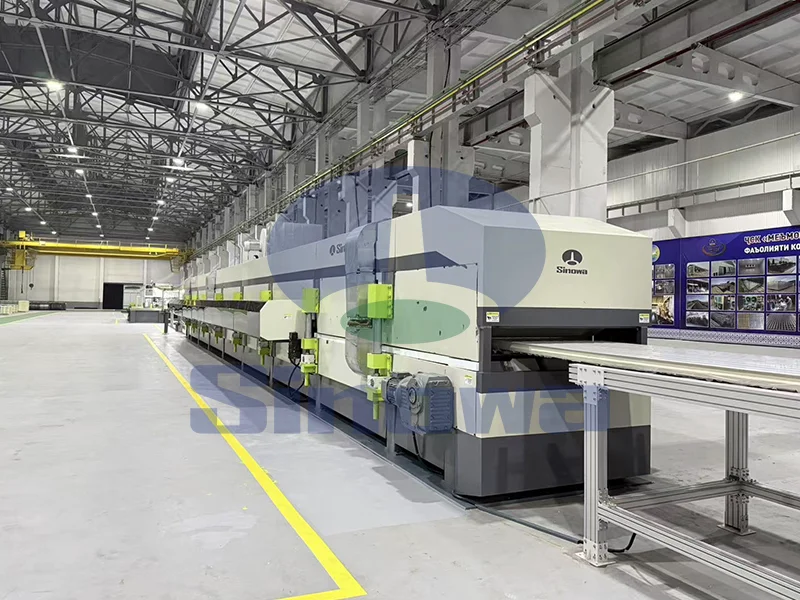
Following the feeding system is the surface layer pretreatment and profiling module, a critical part that determines the appearance and structural strength of the sandwich panels. This module is equipped with surface cleaning devices, primer coating machines and profiling molds, which can remove impurities and oil stains from the surface of the material, apply adhesive or primer to enhance the bonding fastness between the surface layer and the polyurethane core, and press the surface material into specific shapes such as flat, corrugated or tongue-and-groove structures through profiling rollers. The profiling molds are precisely processed and can be replaced flexibly to meet the production needs of panels with different widths, thicknesses and edge structures, expanding the versatility of the machine. Next is the central foaming and laminating module, the core of the entire polyurethane sandwich panel machine, where the chemical foaming reaction of polyurethane and the composite forming of sandwich panels take place. This module mainly consists of a mixing head, a foaming chamber, a double-belt laminator and a temperature control device; the two-component polyurethane raw materials are fully mixed in the mixing head and then evenly injected between the two layers of surface materials, and under controlled temperature and pressure conditions, the polyurethane undergoes rapid foaming, curing and bonding, tightly combining with the upper and lower surface layers to form a rigid sandwich structure. The double-belt laminator adopts continuous transmission design, with adjustable spacing between the upper and lower belts to adapt to panels of different thicknesses, and its stable pressure and speed control ensure the uniform density of the polyurethane core and the flatness of the panel surface, avoiding defects such as hollowing, delamination or uneven thickness.
The rear end of the machine is equipped with a post-processing and finished product handling module, including cutting machines, edge trimming devices, cooling conveyors and stacking systems. After the polyurethane core is fully cured, the continuous sandwich panel is cut into fixed lengths according to production requirements by high-precision cutting equipment, with smooth and burr-free cuts; the edge trimming mechanism removes excess edges to ensure the dimensional accuracy of the finished panel, and the cooling conveyor cools the panel to room temperature to prevent deformation during stacking. The automatic stacking system can neatly stack the finished panels, facilitating subsequent storage and transportation, and some advanced models are also equipped with turnover and packaging components to further improve production automation and reduce manual labor. In addition, the electrical control system is the nerve center of the entire machine, integrating PLC control, touch screen operation, sensor monitoring and other technologies to realize automatic control of the entire production process, including speed adjustment, temperature control, pressure regulation, raw material metering and fault alarm. Operators can set production parameters through the touch screen, and the system can monitor the operating status of each module in real time, automatically adjust deviations and stop for alarm in case of abnormalities, ensuring the stability and safety of the production process, while also improving the accuracy of parameter control and reducing the impact of human factors on product quality.
The operational performance of polyurethane sandwich panel machines is a key indicator reflecting their technical level and practical value, covering production efficiency, stability, precision, energy efficiency and adaptability. In terms of production efficiency, advanced polyurethane sandwich panel machines adopt continuous production design, with high transmission speed and fast polyurethane foaming and curing speed, enabling high-volume continuous output; the coordinated operation of each module reduces downtime and auxiliary time, and the automatic feeding, automatic cutting and automatic stacking functions further improve production efficiency, meeting the large-scale production needs of manufacturers. Production stability is another core performance highlight, as the machine is built with heavy-duty steel structures, with high rigidity and torsion resistance of key components such as racks and laminating belts, ensuring stable operation even under long-term high-load working conditions without obvious vibration or deformation. The high-precision metering system and temperature control system maintain the consistency of raw material ratio and foaming environment, ensuring that each batch of panels has uniform performance and stable quality, reducing the defective rate and improving production benefits.
Processing precision is also a crucial performance indicator, as polyurethane sandwich panels have strict requirements on dimensional accuracy, thickness deviation and surface flatness for practical applications. The machine’s high-precision profiling molds, servo-driven conveying systems and laser-guided cutting devices control the dimensional error of panels within a small range, with uniform thickness and flat surface, fully meeting the installation and use standards of various engineering projects. Energy efficiency performance has become increasingly important in recent years, with modern machines optimizing the structural design of heating systems, foaming chambers and transmission components, reducing energy consumption such as electricity and heat during operation; some models are also equipped with waste heat recovery devices to reuse excess heat, lowering production costs and conforming to the development trend of green and low-carbon industrial production. In terms of adaptability, polyurethane sandwich panel machines can adjust production parameters and replace molds quickly to adapt to the production of panels with different thicknesses (ranging from tens of millimeters to hundreds of millimeters), widths and surface materials, whether it is rigid metal surface layers, flexible fiber surface layers or other special materials, and can also produce panels with different core densities and performance levels by adjusting the polyurethane foaming formula, meeting the diversified needs of different industries and scenarios.
In terms of classification, polyurethane sandwich panel machines are mainly divided into two major categories: continuous production machines and discontinuous production machines, with obvious differences in structural design, production mode and application scenarios, each with unique advantages. Continuous production polyurethane sandwich panel machines are the mainstream models in large-scale production, adopting a fully automatic continuous operation mode, from raw material feeding, profiling, foaming, laminating to cutting and stacking, the entire process is completed continuously without interruption. This type of machine has a long production line layout, high degree of automation, fast production speed and large output, suitable for manufacturers with large-scale, standardized and mass production needs, and can stably produce high-quality sandwich panels for a long time, with high production efficiency and low unit production cost. However, due to its complex structure and large floor space, it has higher requirements on the production workshop area and infrastructure, and is more suitable for large and medium-sized manufacturing enterprises with stable order volume.
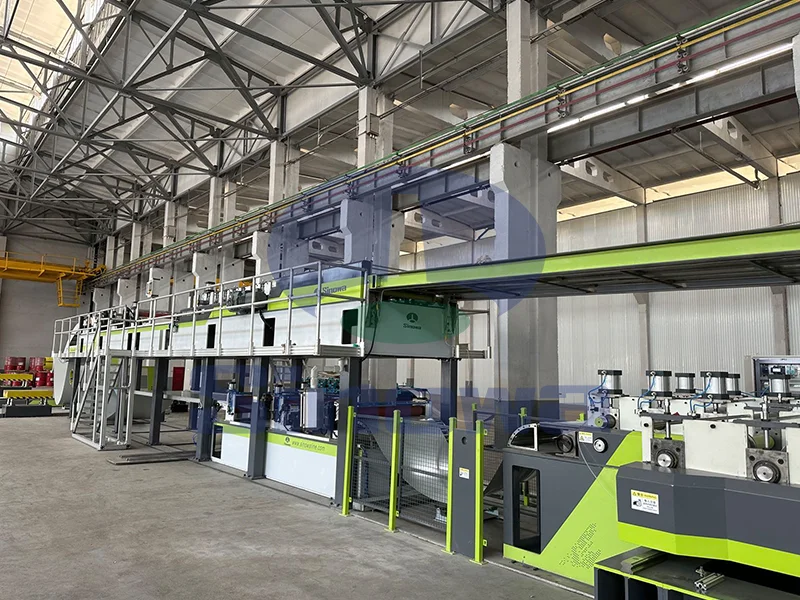
Discontinuous production polyurethane sandwich panel machines, also known as batch production machines, adopt a cyclic production mode of single-batch feeding, forming, curing and unloading. This type of machine has a more compact structure, smaller floor space, lower investment cost and more flexible operation, suitable for small-scale production, customized production or manufacturers with limited workshop space. It can quickly adjust production specifications and produce small batches of special-sized, special-performance sandwich panels according to order needs, with strong adaptability to personalized and diversified demands. In addition, according to the type of polyurethane core, the machines can be divided into ordinary polyurethane foaming panel machines and rigid polyurethane modified foaming panel machines, the latter can produce panels with better fire resistance, thermal insulation and compressive strength by optimizing the foaming formula and process parameters, adapting to high-demand application scenarios; according to the type of surface layer materials, they can be divided into metal surface sandwich panel machines and non-metal surface sandwich panel machines, corresponding to the production of panels for different use environments and performance requirements.
The wide application of polyurethane sandwich panel machines is closely linked to the excellent performance of the panels they produce, and the finished panels have outstanding characteristics such as lightweight high strength, excellent thermal insulation, good waterproof and moisture resistance, and convenient installation, making them widely used in multiple key industries. In the construction industry, polyurethane sandwich panels are widely used in the construction of industrial plants, warehouses, exhibition halls, sports venues and temporary buildings; as wall and roof enclosure materials, they reduce the overall weight of the building, speed up the construction progress, and provide good thermal insulation and sound insulation effects, improving the comfort and energy efficiency of the building. For public buildings with high thermal insulation requirements such as cold storages, fresh-keeping warehouses and constant temperature workshops, polyurethane sandwich panels are the preferred insulation materials, and the panels produced by professional machines have dense core structure, low thermal conductivity, and can effectively block heat transfer, maintaining stable indoor temperature, reducing energy consumption of refrigeration and heating equipment, and playing a vital role in the cold chain logistics system for food, medicine and other perishable goods.
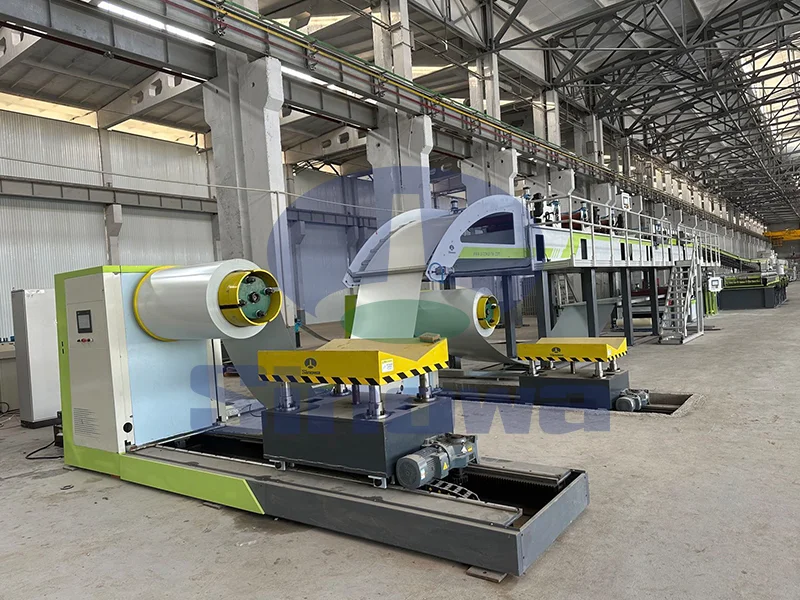
In the transportation industry, polyurethane sandwich panel machines produce lightweight and high-strength panels that are widely used in the manufacturing of carriages, refrigerated trucks, ship compartments and container bodies; the panels reduce the dead weight of transportation tools, improve loading capacity, and provide excellent thermal insulation and sealing effects, meeting the transportation needs of refrigerated goods and special materials. In the agricultural field, these panels are used to build greenhouses, breeding farms and grain storage warehouses, with good thermal insulation and moisture resistance creating a suitable growth and storage environment for crops, poultry and grains, and the corrosion resistance of the panels adapts to the humid and corrosive agricultural production environment, extending the service life of agricultural facilities. In addition, with the development of prefabricated buildings and energy-saving buildings, polyurethane sandwich panel machines are constantly upgrading and innovating, and the panels they produce are also used in residential building partitions, exterior wall insulation and other fields, promoting the transformation of the construction industry to industrialization, greening and high efficiency.
With the continuous development of global industrialization and urbanization, the demand for high-performance, energy-saving and environment-friendly building materials is rising year by year, and polyurethane sandwich panel machines are constantly evolving in terms of technical performance and functional design. In the future, with the deep integration of intelligent manufacturing technology, polyurethane sandwich panel machines will develop towards higher automation, intelligence and precision, with functions such as automatic parameter adjustment, remote monitoring, fault self-diagnosis and production data statistics becoming more complete, further improving production efficiency and product quality, reducing labor costs and energy consumption. Meanwhile, the structural optimization of the machine will further enhance its adaptability to new materials and new processes, enabling the production of sandwich panels with more excellent performance such as higher fire resistance, stronger environmental adaptability and longer service life, to meet the upgrading needs of various industries. As the core equipment supporting the production of high-quality polyurethane sandwich panels, polyurethane sandwich panel machines will continue to play an important role in promoting the development of energy-saving construction, cold chain logistics and other industries, and their structural perfection, performance improvement and category expansion will always be driven by market demand, injecting continuous power into the development of related manufacturing and construction fields.
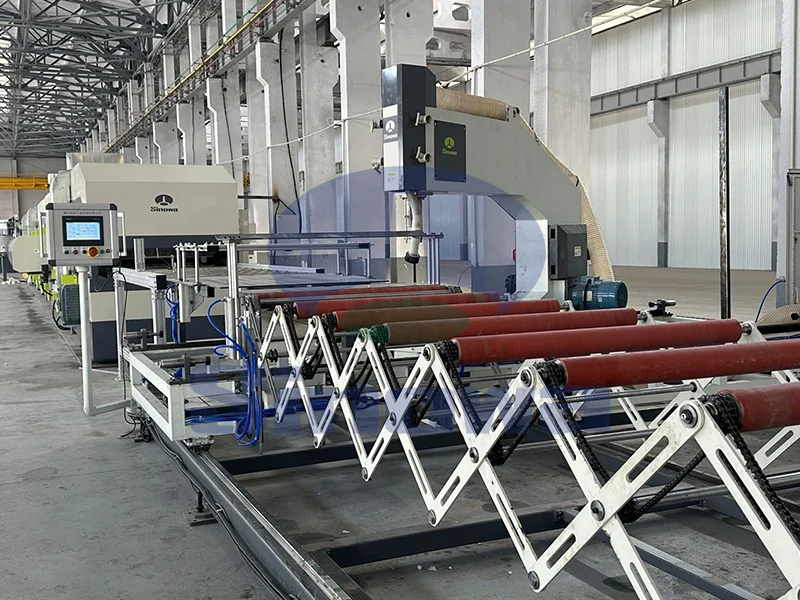
In summary, polyurethane sandwich panel machines are highly integrated industrial equipment with reasonable structural design, stable and reliable performance, diverse classifications and wide application coverage, which not only meet the production needs of high-quality polyurethane sandwich panels but also drive the technological progress of the composite building material industry. The coordinated cooperation of each structural module ensures the smooth progress of the production process, the excellent operational performance guarantees production efficiency and product quality, the differentiated classification meets the production needs of different scales and scenarios, and the wide application fields reflect the practical value of the equipment and its products. With the continuous advancement of technology and the expanding market demand, polyurethane sandwich panel machines will continue to optimize and upgrade, further highlighting their core position in the manufacturing industry and making greater contributions to the development of energy-saving, efficient and sustainable modern industries.
« Polyurethane Sandwich Panel Machine » Update Date: 2026/4/14
URL: https://m.sinowa.cn/blog/polyurethane-sandwich-panel-machine.html
Continuous Polyurethane Sandwich Panel Machine Manufacturing
2026-08-06Continuous polyurethane sandwich panel machines represent advanced integrated manufacturing equipment dedicated to the automated and uninterrupted production of high-performance polyurethane composite panels, widely appli…Insulated Polyurethane Sandwich Panel Machine
2026-05-25The insulated polyurethane sandwich panel machine stands as a core piece of industrial manufacturing equipment dedicated to the continuous and automated production of high-performance composite insulation panels. Tailored…Continuous Polyurethane Sandwich Panel Machine
2026-04-15The continuous polyurethane sandwich panel machine stands as a cornerstone of modern industrial manufacturing, integrating mechanical engineering, chemical processing, electrical automation and temperature control technol…Continuous Polyurethane Sandwich Panel Machine Manufacturer
2026-04-09In the era of rapid industrialization and increasing emphasis on energy conservation and environmental protection, the demand for high-performance building and industrial insulation materials has been growing steadily. Po…Fully Automatic Polyurethane Sandwich Panel Machine
2026-03-20The fully automatic polyurethane sandwich panel machine stands as a cornerstone of modern building material manufacturing, integrating precision mechanical engineering, automated control systems, and advanced material pro…Discontinuous Polyurethane Sandwich Panel Machine Design
2024-08-07Cheap Discontinuous Polyurethane Sandwich Panel Machine
2024-07-29Discontinuous Polyurethane Sandwich Panel Machine For Wall
2024-07-23Discontinuous Polyurethane Sandwich Panel Machine For House
2024-07-15Discontinuous Polyurethane Sandwich Panel Machine For Roof
2024-07-08
A pu sandwich panel line stands as a highly efficient and automated production solution dedicated to manufacturing high-performance insulated panels, playing a vital role in modern construction and industrial engineering sectors. This integrated production system streamlines the entire manufacturing process, starting with the uncoiling and leveling of outer facing materials, which are carefully treated to ensure flat, smooth surfaces free of defects and suitable for subsequent bonding. Next comes the core production step: precise mixing and uniform distribution of polyurethane raw materials, where specialized equipment controls the ratio and flow rate strictly to guarantee consistent foam density and stable bonding performance between the core and facings. The pu sandwich panel machine features a controlled curing and forming system that maintains stable temperature and pressure conditions, allowing the polyurethane foam to fully expand, solidify and bond tightly with the upper and lower layers, forming a rigid, durable sandwich structure. Post-forming, the panels go through accurate cutting and finishing processes to meet diverse size specifications demanded by different projects. Designed for continuous operation, this pu sandwich panel production line boosts manufacturing efficiency remarkably while ensuring uniform product quality across batches, reducing manual errors and material waste effectively. The finished PU sandwich panels deliver outstanding thermal insulation, sound absorption and structural strength, making them widely applicable in building roofs, walls, cold storage facilities and industrial workshops, adapting to various environmental and functional needs with reliable performance and long service life.