- Home
- Sandwich Panel Line
- Roll Forming Machine
- CZ Purlin Roll Forming Machine
- Door Window Curtain Partition Roll Forming Machine
- Gutter Roll Forming Machine
- Clean Partition Panel Machine
- Corrugated Panel Roll Forming Machine
- Double Layer Roof Roll Forming Machine
- High Speed Keel Roll Forming Machine
- Light Steel-Frame Structure Production Line
- C Channel Roll Forming Machine
- Insulated Panels
- Steel Profiles
- About
- Contact
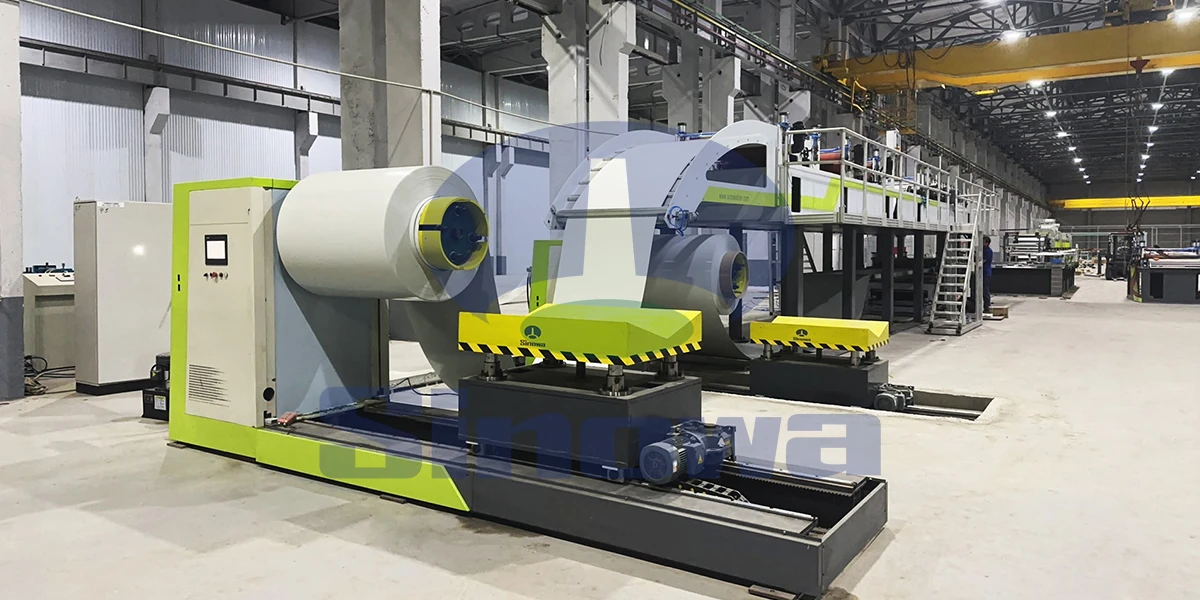
Polyurethane Sandwich Panel Production Line
Sinowa is a supplier and manufacturer of Polyurethane Sandwich Panel Production Line in china, customization on demand width a reasonable price.
A polyurethane sandwich panel production line is a sophisticated and integrated manufacturing system designed to produce high-quality composite panels with a polyurethane foam core sandwiched between two layers of facing materials. This production line combines mechanical engineering, chemical processing, electrical control, and thermal management technologies to achieve continuous, automated, and standardized production, making it a crucial equipment system in the modern building materials and industrial insulation sectors. Unlike traditional manual or semi-automatic production methods, this production line ensures consistent product quality, high production efficiency, and strong adaptability to different product specifications, meeting the diverse needs of various industries for high-performance insulation and structural materials. The structure of a polyurethane sandwich panel production line is composed of multiple functional units that work in coordination to complete the entire production process from raw material input to finished product output, each unit playing a vital role in ensuring the stability and reliability of the production process and the final product performance.
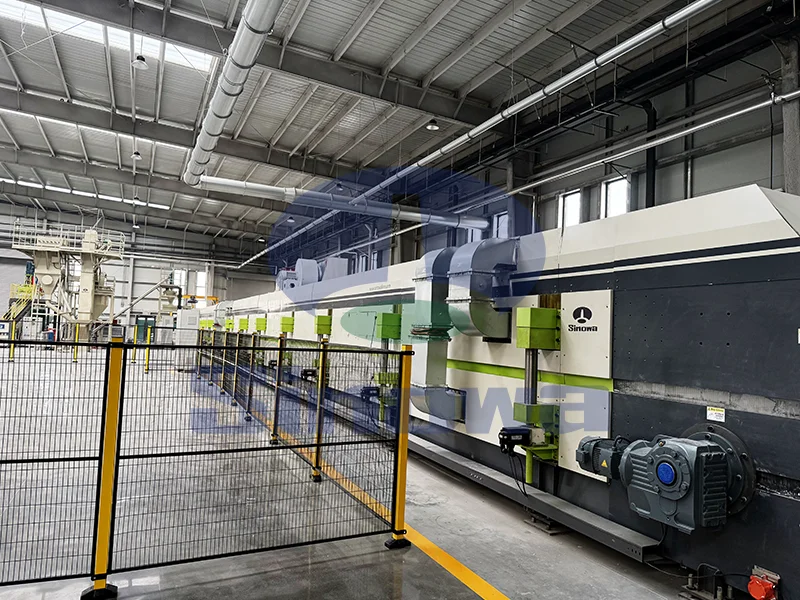
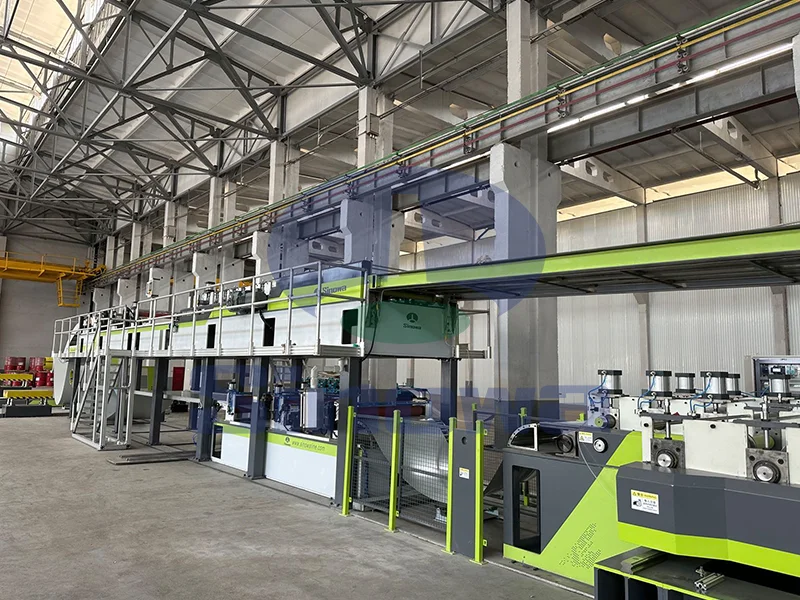
The core structure of a polyurethane sandwich panel production line can be divided into several key functional sections, including the raw material handling unit, the facing material processing unit, the foaming and composite forming unit, the curing unit, the cutting and trimming unit, and the auxiliary and control unit. Each section is composed of specialized equipment that is closely connected to form a continuous production flow. The raw material handling unit is responsible for the storage, transportation, and precise metering of polyurethane raw materials and auxiliary agents. Polyurethane raw materials mainly include polyol and isocyanate, which need to be stored in constant-temperature tanks to maintain their chemical stability and reaction activity. The unit is equipped with precision metering pumps that can accurately control the ratio of the two main raw materials, as well as additives such as catalysts, blowing agents, and flame retardants, ensuring that the foaming reaction is sufficient and stable. The metering system is equipped with real-time monitoring devices to detect and adjust the flow rate and ratio of raw materials at any time, avoiding quality defects caused by inaccurate proportioning. In addition, the raw material handling unit is also equipped with pipeline cleaning and recycling devices to reduce raw material waste and ensure the cleanliness of the production system.
The facing material processing unit is used to process various facing materials into the required shape and size to match the composite forming process. Common facing materials include metal sheets (such as galvanized sheets, aluminum sheets), non-woven fabrics, kraft paper, and cement-based cloth, and the production line can be flexibly adjusted according to the type of facing material. The unit is mainly composed of uncoilers, leveling machines, and profiling devices. The uncoiler is used to stably unroll the coiled facing material, and the tension control system ensures that the material does not deviate or wrinkle during the unrolling process. The leveling machine corrects the unevenness of the facing material to ensure its flatness, which is crucial for the bonding effect between the facing material and the polyurethane core. The profiling device can process the facing material into different shapes according to the application needs, such as trapezoidal, corrugated, or flat surfaces, to enhance the structural strength and decorative performance of the final sandwich panel. For some special facing materials, such as non-woven fabrics or kraft paper, the unit is also equipped with preheating devices to improve the adhesion between the facing material and the polyurethane foam core.
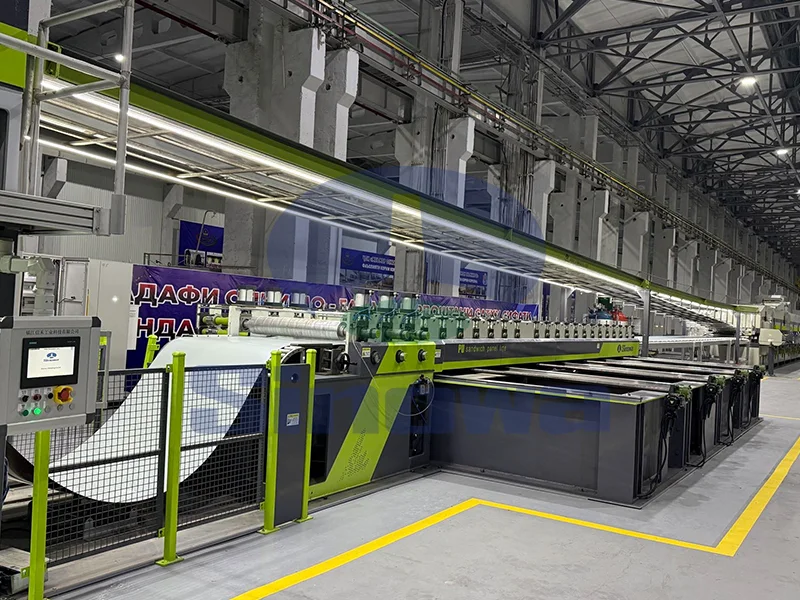
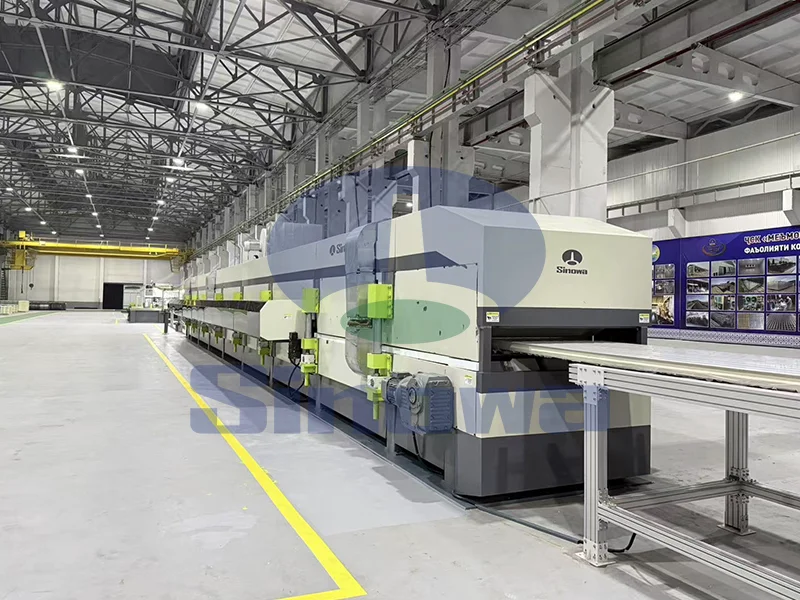
The foaming and composite forming unit is the core part of the entire production line, where the polyurethane raw materials react and foam, and are combined with the processed facing materials to form the sandwich panel structure. This unit mainly includes a mixing head, a foaming platform, and a laminating machine. The mixing head is responsible for fully mixing the metered polyol, isocyanate, and additives at high speed to initiate the foaming reaction. The mixed raw materials are evenly sprayed or poured onto the lower facing material that has been conveyed to the foaming platform. The upper facing material is then covered on the foaming raw materials, and the entire composite structure is conveyed to the laminating machine. The laminating machine applies uniform pressure and temperature to the composite structure, promoting the full foaming and curing of the polyurethane core, and ensuring that the upper and lower facing materials are closely bonded to the core without gaps. The temperature and pressure parameters of the laminating machine are precisely controlled to adapt to different types of polyurethane raw materials and facing materials, ensuring the density and structural stability of the foam core.
The curing unit is used to further solidify the composite sandwich panel after foaming and forming, ensuring that the polyurethane core reaches the required hardness and performance. The curing process can be divided into primary curing and secondary curing. The primary curing is completed in the laminating machine, where the polyurethane foam core is initially solidified under the action of temperature and pressure. The secondary curing is carried out in a dedicated curing chamber or curing tunnel, where the sandwich panel is kept at a constant temperature for a certain period of time to ensure that the foaming reaction is complete and the core structure is stable. The curing unit is equipped with a temperature control system that can adjust the curing temperature and time according to the product specifications and raw material characteristics, avoiding quality problems such as insufficient curing or over-curing. After curing, the sandwich panel has stable mechanical properties and insulation performance, which can meet the requirements of subsequent processing and application.
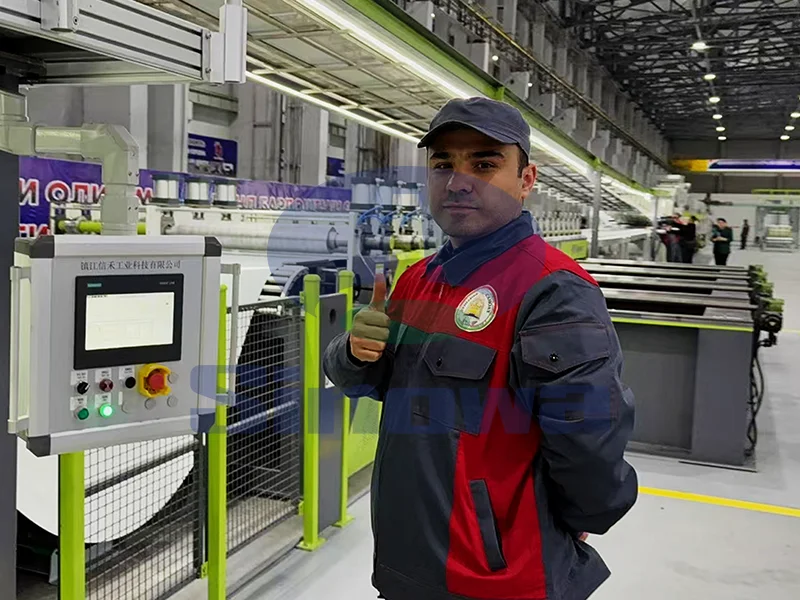
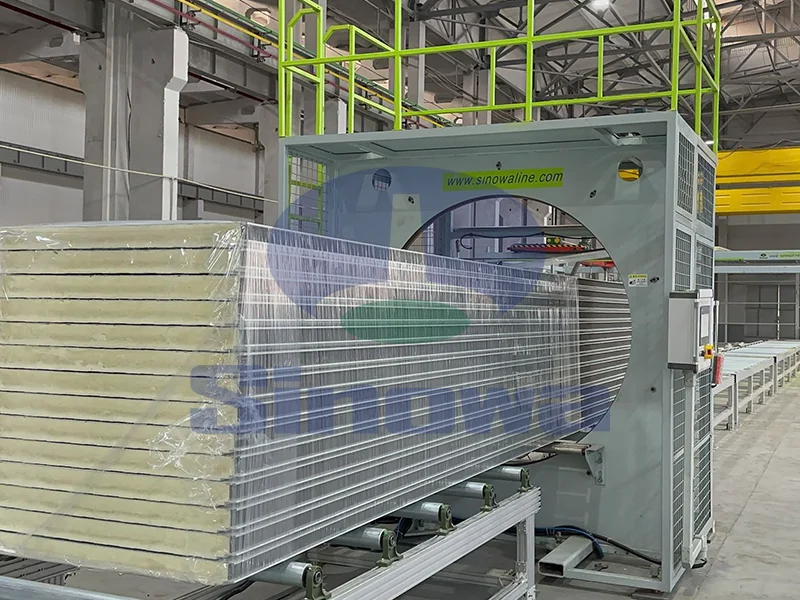
The cutting and trimming unit is responsible for cutting the continuous sandwich panel into standard sizes and trimming the irregular edges to ensure the dimensional accuracy of the finished product. This unit is mainly composed of a longitudinal cutting machine, a transverse cutting machine, and a trimming machine. The longitudinal cutting machine cuts the continuous panel along the length direction according to the required width, while the transverse cutting machine cuts the panel into sections of specified length. The trimming machine removes the irregular edges generated during the foaming and forming process, making the surface of the panel smooth and the edges neat. The cutting and trimming equipment is equipped with high-precision cutting tools and positioning systems to ensure that the dimensional error of the finished product is within the allowable range. In addition, the unit is also equipped with a waste recycling device to collect and crush the cutting waste, which can be reused as raw materials in the foaming process, realizing resource recycling and reducing production costs.
The auxiliary and control unit is the "brain" of the entire production line, responsible for coordinating the operation of all functional units and ensuring the stability and automation of the production process. The control system is composed of a programmable logic controller (PLC), a human-machine interface (HMI), and various sensors. The PLC is used to set and execute production parameters, such as raw material ratio, foaming temperature, curing time, and cutting size, and can automatically adjust the operation status of each equipment according to the feedback from the sensors. The HMI allows operators to monitor the production process in real time, view production data, and adjust parameters as needed. The auxiliary system includes a power supply system, a cooling system, a dust removal system, and a safety protection system. The power supply system provides stable power for the entire production line; the cooling system cools the equipment and raw materials to ensure normal operation; the dust removal system collects dust and harmful gases generated during the production process to protect the environment and the health of operators; the safety protection system is equipped with emergency stop buttons, safety doors, and alarm devices to prevent accidents and ensure production safety.
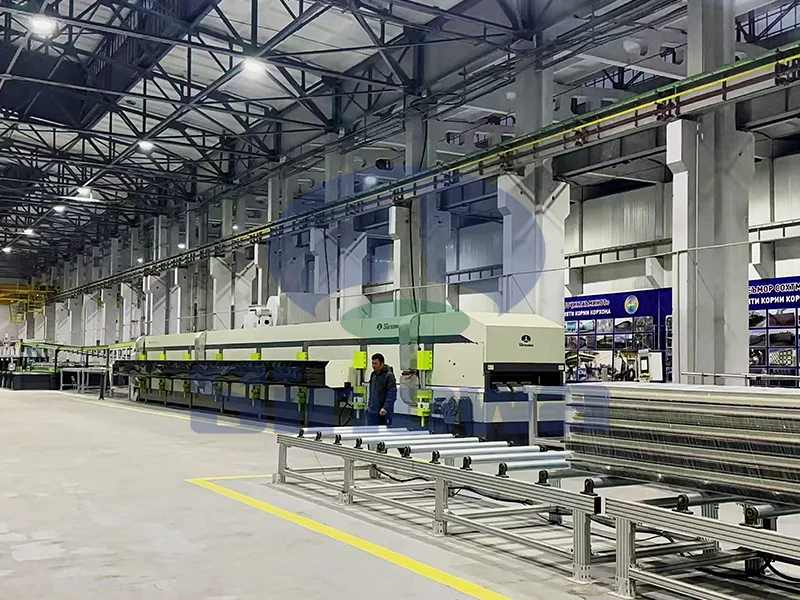
The performance of a polyurethane sandwich panel production line is mainly reflected in production efficiency, product quality stability, adaptability, energy conservation and environmental protection, and operational reliability. Production efficiency is an important indicator of the performance of the production line, which is usually measured by the production speed and annual output. Modern polyurethane sandwich panel production lines can achieve a continuous production speed of 3 to 12 meters per minute, and the annual output can reach hundreds of thousands to millions of square meters, which is far higher than traditional production methods. The high production efficiency is due to the full automation of the production line, which reduces manual intervention and shortens the production cycle. Product quality stability is another key performance indicator. The production line uses precise metering, temperature control, and pressure control systems to ensure that the proportion of raw materials, the foaming process, and the curing process are strictly controlled, so that the performance parameters of each batch of sandwich panels, such as density, thermal conductivity, compressive strength, and bonding strength, are consistent. This avoids the quality fluctuations caused by manual operation and ensures that the products meet the application requirements.
Adaptability is an important feature of modern polyurethane sandwich panel production lines. The production line can be flexibly adjusted according to the type of facing material, the thickness of the sandwich panel, the density of the foam core, and other parameters to produce different types of sandwich panels. For example, by changing the type of facing material, the production line can produce metal-faced, non-woven-faced, or cement-based-faced sandwich panels; by adjusting the metering ratio of raw materials and the foaming parameters, the density of the polyurethane core can be adjusted between 30 and 80 kg/m³ to meet different insulation and structural requirements. In addition, the production line can also produce sandwich panels with special functions, such as fire-retardant, waterproof, and sound-insulating panels, by adding special additives or modifying the production process. This strong adaptability enables the production line to meet the diverse needs of different industries and application scenarios.
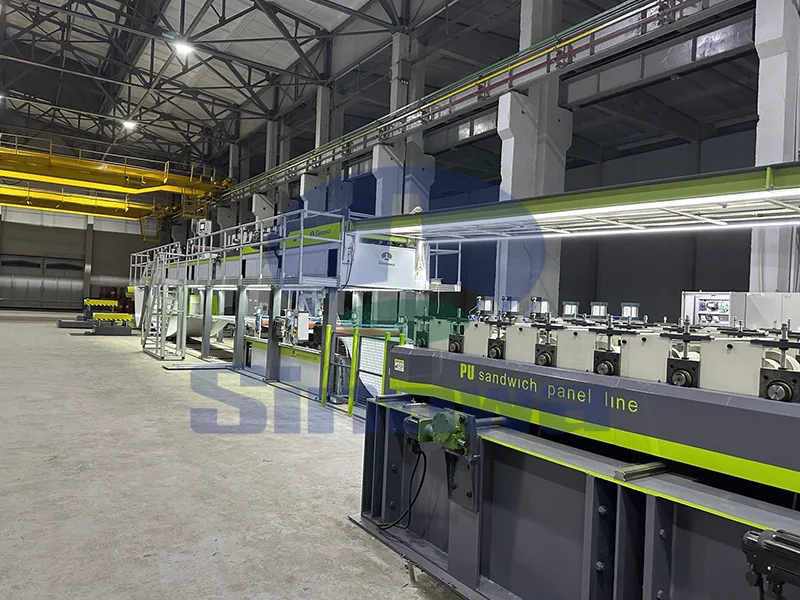
Energy conservation and environmental protection are important performance requirements of modern production lines. Polyurethane sandwich panel production lines adopt energy-saving technologies, such as heat recovery systems, which recover the waste heat generated during the curing process and reuse it for preheating raw materials or heating the curing chamber, reducing energy consumption. In addition, the production line uses environment-friendly raw materials and additives, such as CFC-free blowing agents, to avoid environmental pollution. The waste recycling system collects and reuses the cutting waste and raw material residues, reducing resource waste and environmental pressure. Operational reliability is also an important performance indicator of the production line. The equipment of the production line is made of high-quality materials and components, and the structure is reasonable, which can ensure long-term stable operation. The control system has fault diagnosis and alarm functions, which can timely detect equipment failures and remind operators to handle them, reducing the downtime of the production line and improving production efficiency.
Polyurethane sandwich panel production lines can be divided into different types according to production mode, product specifications, and functional characteristics. According to the production mode, they can be divided into continuous production lines and discontinuous production lines. Continuous production lines are suitable for large-scale mass production, with high production efficiency and stable product quality. The entire production process is continuous, from raw material input to finished product output, without interruption, which is suitable for producing standard-sized sandwich panels in large quantities. Discontinuous production lines, also known as batch production lines, are suitable for small-batch production or the production of special-sized and special-functional sandwich panels. The production process is carried out in batches, and the equipment can be flexibly adjusted according to the product requirements, which has strong adaptability but lower production efficiency than continuous production lines. Discontinuous production lines are often used in scenarios where the production volume is small, the product specifications are diverse, or special process requirements are needed, such as the production of curved sandwich panels or panels with special embedded parts.
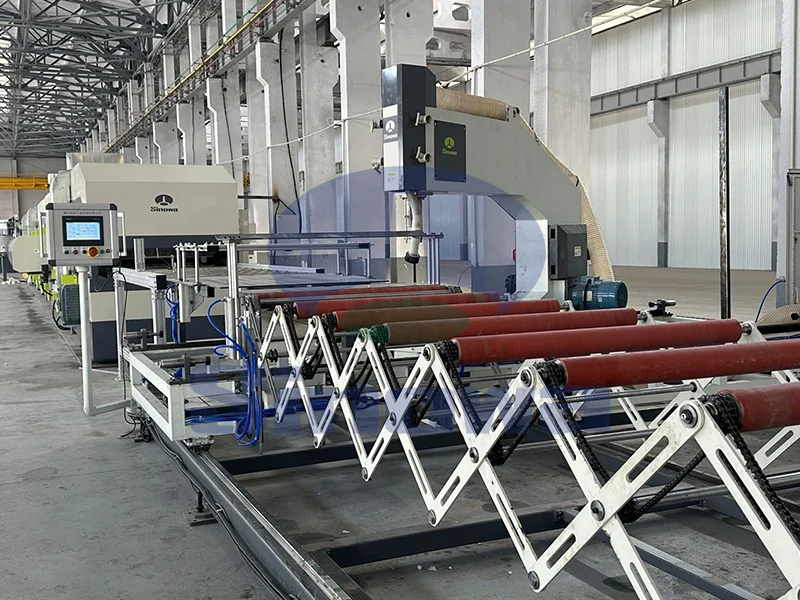
According to the type of facing material, polyurethane sandwich panel production lines can be divided into metal-faced production lines, non-metal-faced production lines, and mixed-faced production lines. Metal-faced production lines are the most common type, which use metal sheets such as galvanized sheets, aluminum sheets, or color steel sheets as facing materials. These production lines are equipped with specialized metal processing equipment, such as profiling machines and welding machines, to process the metal facing materials into the required shape. Metal-faced sandwich panels have high structural strength, good weather resistance, and strong decorative performance, which are widely used in industrial buildings, commercial buildings, and cold storage facilities. Non-metal-faced production lines use non-woven fabrics, kraft paper, cement-based cloth, or glass fiber cloth as facing materials. These production lines are suitable for producing lightweight, flexible, or environmentally friendly sandwich panels, which are widely used in indoor decoration, pipeline insulation, and agricultural buildings. Mixed-faced production lines can produce sandwich panels with different facing materials on the upper and lower surfaces, such as metal sheets on the upper surface and non-woven fabrics on the lower surface, to meet specific application requirements.
According to the functional characteristics of the products, polyurethane sandwich panel production lines can be divided into ordinary insulation production lines, fire-retardant production lines, waterproof production lines, and sound-insulating production lines. ordinary insulation production lines are used to produce standard polyurethane sandwich panels with basic insulation performance, which are suitable for general insulation scenarios, such as building exterior walls and roofs. Fire-retardant production lines add flame-retardant additives to the polyurethane raw materials or use fire-retardant facing materials to produce fire-retardant sandwich panels. These panels have good fire resistance and can delay the spread of fire, which are suitable for high-temperature environments or buildings with strict fire protection requirements, such as industrial workshops, warehouses, and public buildings. Waterproof production lines are equipped with waterproof processing equipment to treat the facing materials or the surface of the sandwich panels, making the products have good waterproof performance. These panels are suitable for outdoor applications, such as roofs, exterior walls, and cold storage facilities, to prevent water penetration and damage to the panels. Sound-insulating production lines optimize the foaming process and the structure of the sandwich panel to improve the sound insulation performance of the products. These panels are suitable for buildings that require high sound insulation, such as residential buildings, hospitals, and concert halls.
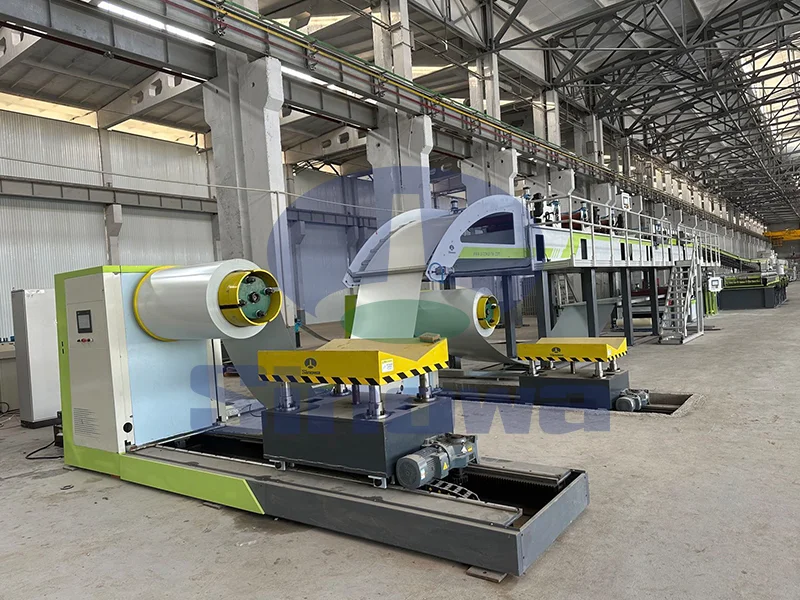
The application of polyurethane sandwich panel production lines is closely related to the performance and types of the sandwich panels they produce, covering a wide range of fields such as building construction, cold chain logistics, industrial insulation, agricultural buildings, and special facilities. In the field of building construction, polyurethane sandwich panels produced by the production line are widely used as exterior wall panels, roof panels, and internal partition panels. Due to their excellent thermal insulation performance, lightweight structure, and quick installation, they can effectively reduce building energy consumption, shorten the construction period, and reduce construction costs. In residential buildings, these panels can improve the thermal comfort of the interior environment and reduce heating and air conditioning costs; in commercial and industrial buildings, they can be used to construct large-span workshops, warehouses, and shopping malls, providing good insulation and structural support. In addition, the decorative performance of metal-faced sandwich panels can also enhance the aesthetic appearance of buildings, making them widely used in modern architectural design.
In the field of cold chain logistics, polyurethane sandwich panels are an important material for the construction of cold storage, refrigerated trucks, and refrigerated containers. The polyurethane core has extremely low thermal conductivity and good thermal insulation performance, which can effectively maintain the internal low temperature of the cold storage or refrigerated equipment, reduce energy consumption, and ensure the quality of stored goods. The production line can produce cold storage panels with different thicknesses and densities according to the temperature requirements of the cold storage (such as ultra-low temperature cold storage, low temperature cold storage, and fresh-keeping cold storage), and the panels have good sealing performance and structural strength, which can adapt to the harsh working environment of cold chain logistics. In addition, the production line can also produce lightweight sandwich panels for refrigerated trucks and containers, which can reduce the weight of the equipment and improve transportation efficiency while ensuring thermal insulation performance.
In the field of industrial insulation, polyurethane sandwich panels produced by the production line are widely used in the insulation of industrial pipelines, equipment, and workshops. Industrial pipelines and equipment often work in high-temperature or low-temperature environments, and effective insulation is crucial to ensure their normal operation and reduce energy loss. Polyurethane sandwich panels have good thermal insulation performance and corrosion resistance, which can be used to wrap industrial pipelines and equipment to reduce heat or cold loss. In industrial workshops, especially those with high-temperature or high-noise environments, the sandwich panels can be used as wall and roof materials to achieve thermal insulation and sound insulation, improving the working environment of operators. In addition, the production line can also produce special insulation panels for petrochemical, power, and other industries, which have good chemical resistance and high-temperature resistance, adapting to the special working conditions of these industries.
In the field of agricultural buildings, polyurethane sandwich panels are used to construct greenhouses, barns, stables, and other agricultural facilities. The panels have good thermal insulation performance, which can maintain a stable internal temperature in the greenhouse, extending the growing period of crops; in barns and stables, the panels can provide a warm and dry environment for livestock, improving their survival rate and production performance. In addition, the lightweight and quick installation characteristics of the sandwich panels can reduce the construction cost and time of agricultural facilities, which is suitable for the construction needs of rural areas. The production line can produce agricultural panels with different specifications and functions according to the needs of different agricultural scenes, such as waterproof panels for greenhouses and corrosion-resistant panels for barns.
In the field of special facilities, polyurethane sandwich panels produced by the production line are used in the construction of portable shelters, emergency rescue facilities, clean rooms, and other special buildings. Portable shelters and emergency rescue facilities require lightweight, portable, and quick installation characteristics, and polyurethane sandwich panels meet these requirements, which can be quickly assembled into temporary buildings in disaster-stricken areas or construction sites. Clean rooms are widely used in electronics, pharmaceuticals, food, and other industries, requiring high airtightness, dustproof, and antibacterial performance. The production line can produce clean room panels with special surface treatment, which have good airtightness and antibacterial performance, meeting the strict requirements of clean room construction. In addition, the production line can also produce sandwich panels for military facilities, which have good impact resistance and camouflage performance, adapting to the special needs of military applications.
With the continuous development of building energy conservation and environmental protection policies, and the increasing demand for high-performance insulation materials in various industries, the polyurethane sandwich panel production line is constantly optimizing and upgrading. The future development trend of the production line will focus on higher automation, intelligence, energy conservation, and environmental protection. The integration of intelligent technologies such as artificial intelligence and the Internet of Things will make the production line more intelligent, realizing real-time monitoring, automatic adjustment, and remote operation of the production process, improving production efficiency and product quality. The development of new energy-saving technologies and environment-friendly raw materials will further reduce the energy consumption and environmental impact of the production line, meeting the requirements of green development. In addition, the production line will be more flexible and adaptable, able to produce more types of special-functional sandwich panels to meet the increasingly diverse application needs of various industries.
In conclusion, the polyurethane sandwich panel production line is a highly integrated and sophisticated manufacturing system, whose structure, performance, and types are closely related to its application fields. The reasonable structure ensures the stability and continuity of the production process; the excellent performance guarantees the efficiency and quality of production; the diverse types meet the diverse needs of different industries. With its wide application in building construction, cold chain logistics, industrial insulation, and other fields, the polyurethane sandwich panel production line plays an important role in promoting the development of related industries and realizing energy conservation and environmental protection. In the future, with the continuous progress of technology, the polyurethane sandwich panel production line will continue to innovate and develop, bringing more high-quality, efficient, and environmentally friendly products to various industries, and making greater contributions to the sustainable development of society.
« Polyurethane Sandwich Panel Production Line » Update Date: 2026/4/14
URL: https://m.sinowa.cn/blog/polyurethane-sandwich-panel-production-line.html
Polyurethane Sandwich Panel Production Line In China
2026-05-25The construction and industrial insulation sectors across the globe have witnessed steady transformation over the past two decades, with lightweight, high-insulation, and durable building materials gradually replacing tra…Manufacturer Of Polyurethane Sandwich Panel Production Line
2026-04-15A polyurethane sandwich panel production line is a highly integrated and automated manufacturing system designed to produce high-quality composite panels with a polyurethane foam core sandwiched between two facing materia…Customized Polyurethane Sandwich Panel Production Line
2026-04-14A customized polyurethane sandwich panel production line is a highly integrated and flexible manufacturing system designed to meet the diverse and specific needs of different industries for polyurethane sandwich panels. U…Discontinuous Polyurethane Sandwich Panel Production Line
2024-09-20High-quality Polyurethane Sandwich Panel Production Line
2024-01-06Low Price Polyurethane Sandwich Panel Production Line
2024-01-06Reliable Polyurethane Sandwich Panel Production Line
2024-01-06High Efficiency Polyurethane Sandwich Panel Production Line
2024-01-06High-end Polyurethane Sandwich Panel Production Line
2024-01-06Cheap Polyurethane Sandwich Panel Production Line
2024-01-06
A pu sandwich panel line stands as a highly efficient and automated production solution dedicated to manufacturing high-performance insulated panels, playing a vital role in modern construction and industrial engineering sectors. This integrated production system streamlines the entire manufacturing process, starting with the uncoiling and leveling of outer facing materials, which are carefully treated to ensure flat, smooth surfaces free of defects and suitable for subsequent bonding. Next comes the core production step: precise mixing and uniform distribution of polyurethane raw materials, where specialized equipment controls the ratio and flow rate strictly to guarantee consistent foam density and stable bonding performance between the core and facings. The pu sandwich panel machine features a controlled curing and forming system that maintains stable temperature and pressure conditions, allowing the polyurethane foam to fully expand, solidify and bond tightly with the upper and lower layers, forming a rigid, durable sandwich structure. Post-forming, the panels go through accurate cutting and finishing processes to meet diverse size specifications demanded by different projects. Designed for continuous operation, this pu sandwich panel production line boosts manufacturing efficiency remarkably while ensuring uniform product quality across batches, reducing manual errors and material waste effectively. The finished PU sandwich panels deliver outstanding thermal insulation, sound absorption and structural strength, making them widely applicable in building roofs, walls, cold storage facilities and industrial workshops, adapting to various environmental and functional needs with reliable performance and long service life.