- Home
- Sandwich Panel Line
- Roll Forming Machine
- CZ Purlin Roll Forming Machine
- Door Window Curtain Partition Roll Forming Machine
- Gutter Roll Forming Machine
- Clean Partition Panel Machine
- Corrugated Panel Roll Forming Machine
- Double Layer Roof Roll Forming Machine
- High Speed Keel Roll Forming Machine
- Light Steel-Frame Structure Production Line
- C Channel Roll Forming Machine
- Insulated Panels
- Steel Profiles
- About
- Contact
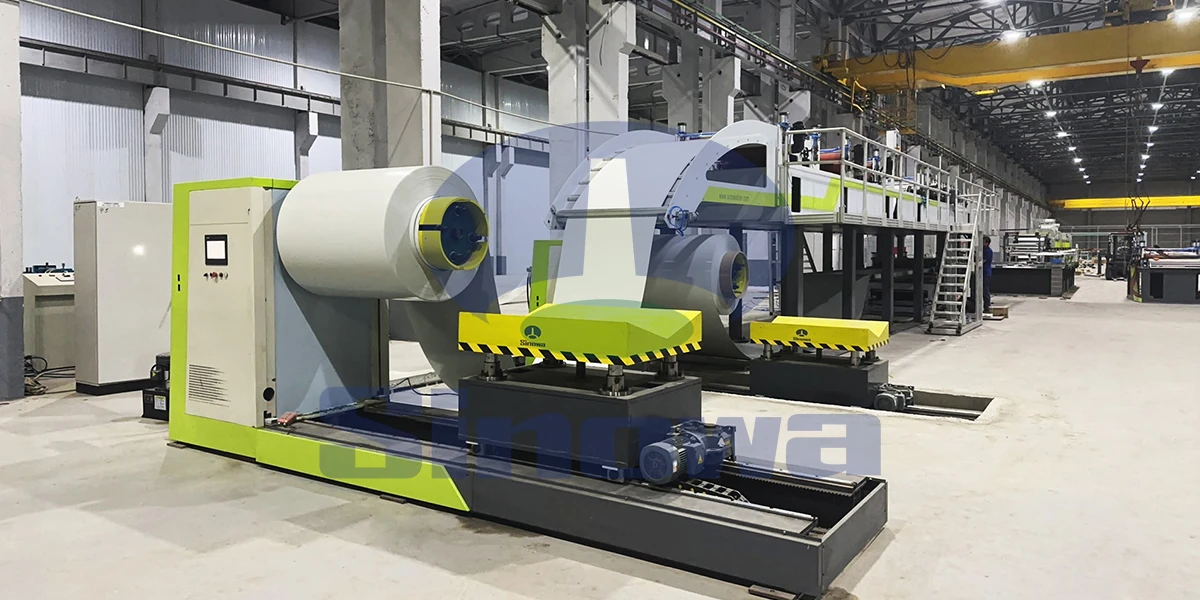
Glass Wool Sandwich Panel Production Line
Sinowa is a supplier and manufacturer of Glass Wool Sandwich Panel Production Line in china, customization on demand width a reasonable price.
A glass wool sandwich panel production line is a specialized and integrated equipment system designed for the continuous manufacturing of glass wool sandwich panels, which are widely used in various industrial and construction fields due to their excellent thermal insulation, sound absorption, and structural performance. This production line combines multiple mechanical, electrical, and control systems to achieve the automated and efficient production of glass wool sandwich panels, integrating raw material processing, core material forming, panel composite, cutting, and packaging into a seamless workflow. Unlike traditional manual or semi-mechanical production methods, the modern glass wool sandwich panel production line minimizes human intervention, ensures consistent product quality, and meets the large-scale production needs of different application scenarios. The structure of the production line is scientifically designed to adapt to the physical and chemical properties of glass wool and surface materials, ensuring that each production link is closely connected and coordinated, thus improving production efficiency and reducing energy consumption.
The structure of a glass wool sandwich panel production line is composed of several core functional systems, each undertaking specific production tasks and working together to complete the entire production process from raw material input to finished product output. The unwinding system is the starting part of the production line, mainly responsible for the automatic unfolding and leveling of surface materials, which are usually color steel plates, aluminum plates, or other metal sheets. Modern unwinding systems adopt hydraulic tensioning technology and are equipped with automatic centering devices to ensure that the metal coils are unfolded smoothly without surface scratches or deviations. Some advanced unwinding systems are also equipped with weld seam detection and automatic splicing functions, which can realize seamless connection between different coils, avoiding production interruptions caused by coil replacement and ensuring the continuity of the production line. After unwinding, the surface materials enter the preprocessing system, which is used to clean and treat the surface of the metal plates to enhance their bonding performance with the glass wool core material. The preprocessing system usually includes a cleaning unit to remove oil stains, dust, and other impurities on the surface of the metal plates, a passivation treatment unit to improve the corrosion resistance of the plates, and a primer coating unit (optional) to further enhance the adhesion between the surface material and the adhesive. This preprocessing step is crucial to ensuring the bonding strength and service life of the final glass wool sandwich panels, as any impurities or defects on the surface of the metal plates may lead to poor bonding and even delamination of the panels during use.
The glass wool processing system is the core part of the entire production line, responsible for the forming and processing of the glass wool core material, which directly determines the thermal insulation and sound absorption performance of the final product. The glass wool processing system usually includes a cotton laying machine, a cotton layer preheating device, and an online density detector. The automatic cotton laying machine can precisely control the laying thickness and density of the glass wool, ensuring that the core material has uniform density and consistent performance. The laying thickness can be flexibly adjusted according to the requirements of different products, ranging from a few millimeters to several centimeters, to meet the thermal insulation needs of different application scenarios. The cotton layer preheating device is used to preheat the glass wool before composite processing, which can optimize the bonding effect between the glass wool and the surface material, making the adhesive cure faster and the bonding more firm. The online density detector monitors the density of the glass wool core material in real time during the production process, and feeds back the data to the control system. If the density deviates from the set standard, the system will automatically adjust the parameters of the cotton laying machine to ensure the stability of the core material quality. In addition, some advanced glass wool processing systems are also equipped with waste recycling devices, which can collect and reuse the excess glass wool generated during the production process, reducing material waste and meeting the requirements of environmental protection and energy conservation.
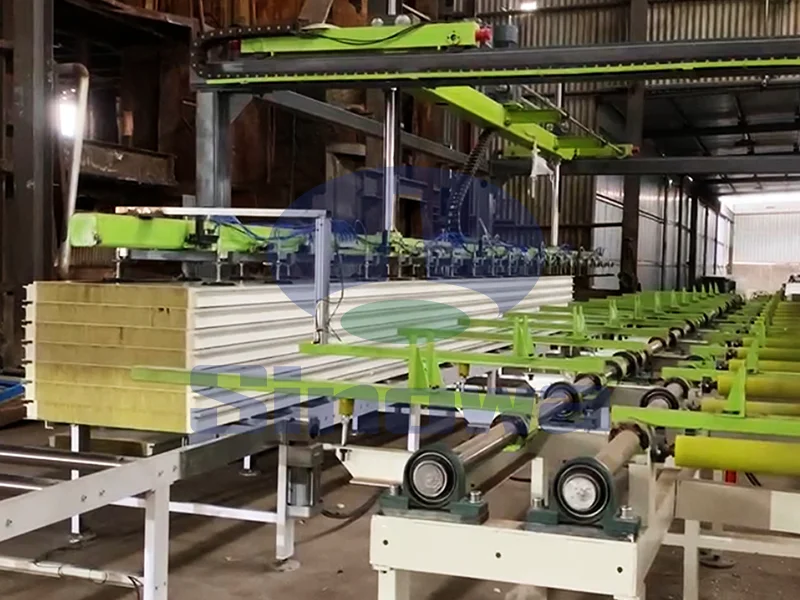
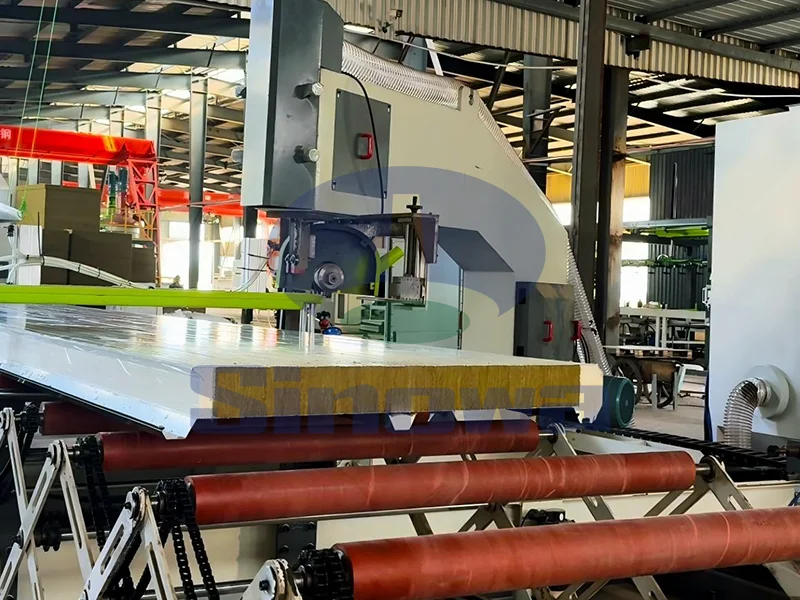
The composite system is another key part of the glass wool sandwich panel production line, which is responsible for bonding the upper and lower surface materials with the glass wool core material to form an integrated sandwich panel. The composite system usually adopts advanced hot pressing composite technology, equipped with a double belt press that can apply synchronous pressure to the upper and lower surfaces of the panel. The pressure of the press can be adjusted according to the type of surface material and the thickness of the core material, generally ranging from 5 to 15 tons, ensuring that the surface materials and the core material are closely bonded without gaps. The composite system also has a temperature zone control function, with independent temperature control for different zones, and the temperature can be adjusted between 80 and 200 ℃ according to the type of adhesive used. This precise temperature control ensures that the adhesive is fully cured during the composite process, improving the bonding strength and durability of the sandwich panel. The composite system is usually equipped with a long conveying pressure section, which provides sufficient curing time for the adhesive, ensuring that the bonding effect is stable and reliable. After composite processing, the sandwich panel enters the cutting system, which is used to cut the continuously produced composite panel into the set length according to the customer's requirements. The cutting system is equipped with a servo-controlled automatic tracking cutting device, which has high cutting accuracy, and the error can be controlled within ±0.1 mm, ensuring that the length of each finished product is consistent. The cutting device can also be flexibly adjusted according to different cutting lengths, adapting to the production needs of various specifications of sandwich panels. After cutting, the finished products are conveyed to the packaging system, which is responsible for cleaning, stacking, and packaging the sandwich panels to prevent damage during transportation and storage. The packaging system can be adjusted according to the size and quantity of the finished products, adopting appropriate packaging materials to ensure the integrity of the products when they leave the factory.
In addition to the above core systems, the glass wool sandwich panel production line also includes a control system and a conveying system. The control system is the "brain" of the entire production line, adopting a PLC control system with a human-machine interface, which can realize the automatic control and monitoring of the entire production process. Operators can set production parameters such as production speed, laying thickness, composite temperature, and cutting length through the human-machine interface, and monitor the operation status of each equipment in real time. The control system has an automatic alarm function. If any equipment fails or the production parameters deviate from the standard, the system will issue an alarm in time, and operators can take corresponding measures to solve the problem, ensuring the normal operation of the production line. The conveying system is responsible for the transportation of materials between different production links, including the transportation of surface materials from the unwinding system to the preprocessing system, the transportation of glass wool core material from the processing system to the composite system, and the transportation of finished products from the cutting system to the packaging system. The conveying system usually adopts roller conveyors or belt conveyors, which have stable conveying speed and high reliability, ensuring that the materials are transported smoothly between different links without jamming or damage.
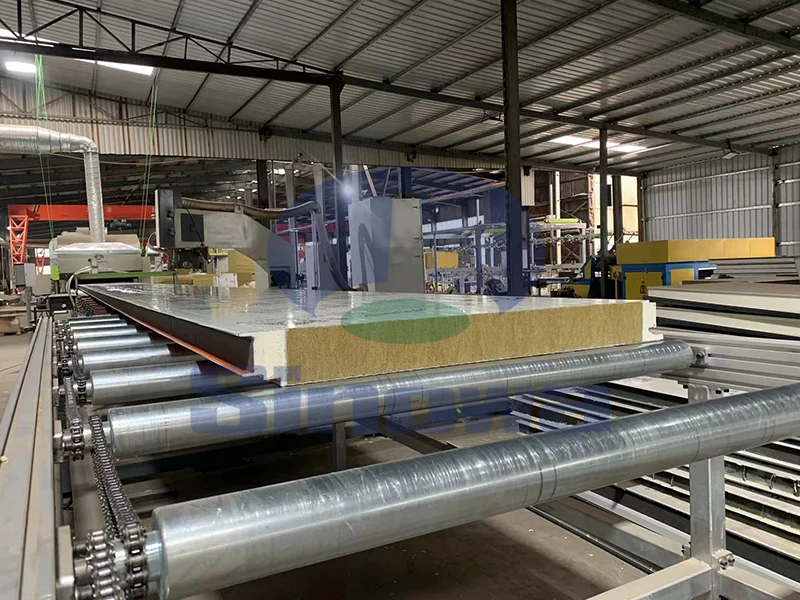
The performance of the glass wool sandwich panel production line is reflected in multiple aspects, including production efficiency, product quality stability, energy conservation and environmental protection, and operational flexibility. In terms of production efficiency, the modern glass wool sandwich panel production line adopts a continuous production design, which can realize 24-hour uninterrupted production, greatly improving the production output. The production speed can be flexibly adjusted according to the production needs, generally ranging from 1 to 6 meters per minute, and the annual production capacity can reach hundreds of thousands of square meters, which can meet the large-scale production needs of manufacturers. In terms of product quality stability, the production line adopts automated control and precise detection equipment, which can effectively avoid the influence of human factors on product quality. The surface flatness, thickness deviation, bonding strength, and core material density of the produced glass wool sandwich panels all meet the relevant standards, ensuring that each batch of products has consistent performance. The production line also has strict quality inspection links, which can detect unqualified products in time and remove them from the production line, ensuring the qualification rate of the finished products.
Energy conservation and environmental protection are important performance indicators of modern glass wool sandwich panel production lines. The production line adopts advanced energy-saving technologies, such as frequency conversion speed regulation, which can adjust the power consumption of the equipment according to the production load, reducing unnecessary energy waste. The glass wool processing system is equipped with waste recycling devices, which can reuse the excess glass wool, reducing material consumption and environmental pollution. In addition, the production process of the production line does not produce harmful gases or pollutants, and the noise and dust generated during the production process are controlled within the national standard range, meeting the requirements of green production. Operational flexibility is another important performance of the production line. The production line can be flexibly adjusted according to the needs of different products, including the adjustment of surface material types, core material thickness, and product specifications. It can produce glass wool sandwich panels with different surface materials (such as color steel plates, aluminum plates), different core material densities, and different thicknesses, adapting to the diverse needs of different application scenarios. At the same time, the production line has a simple operation interface, and operators can master the operation skills after simple training, reducing the difficulty of operation and maintenance.
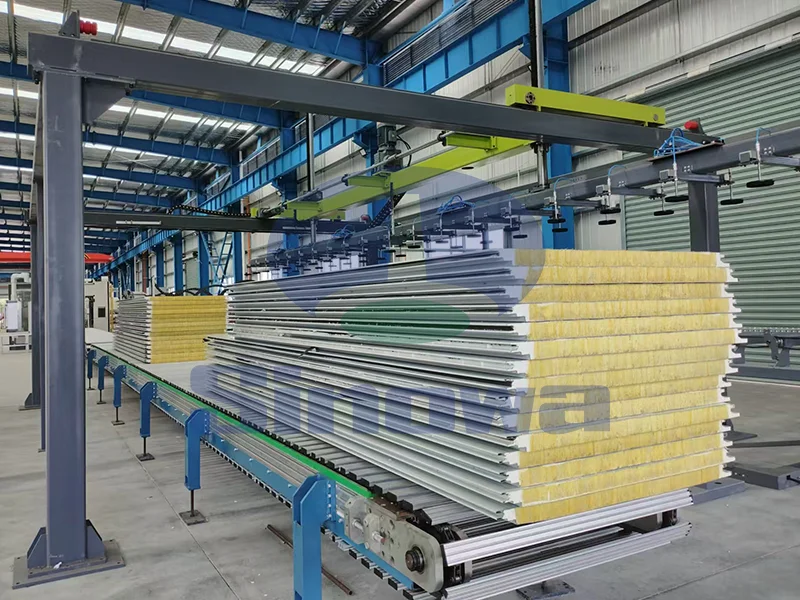
Glass wool sandwich panel production lines can be divided into different types according to various classification standards, mainly including classification according to the degree of automation, classification according to the type of surface material, and classification according to the production scale. According to the degree of automation, they can be divided into fully automatic production lines and semi-automatic production lines. Fully automatic production lines are equipped with complete automated equipment and control systems, which can realize the entire production process from raw material input to finished product packaging without manual intervention, except for regular inspection and maintenance by operators. This type of production line has high production efficiency, good product quality stability, and is suitable for large-scale mass production. Semi-automatic production lines require a certain amount of manual operation in some links, such as manual feeding of glass wool, manual adjustment of equipment parameters, or manual packaging of finished products. This type of production line has lower investment cost, more flexible operation, and is suitable for small-scale production or customized production needs, where the product specifications are diverse and the production volume is not large.
According to the type of surface material, glass wool sandwich panel production lines can be divided into color steel glass wool sandwich panel production lines, aluminum plate glass wool sandwich panel production lines, and other types. Color steel glass wool sandwich panel production lines are the most common type, which use color steel plates as surface materials. Color steel plates have the advantages of corrosion resistance, beautiful appearance, and high structural strength, making the produced sandwich panels suitable for various building and industrial applications. Aluminum plate glass wool sandwich panel production lines use aluminum plates as surface materials, which are lightweight, corrosion-resistant, and have good thermal conductivity, suitable for applications with high requirements for weight and corrosion resistance, such as shipbuilding, automobile manufacturing, and aerospace fields. According to the production scale, glass wool sandwich panel production lines can be divided into large-scale production lines, medium-scale production lines, and small-scale production lines. Large-scale production lines have high production capacity, usually with an annual production capacity of more than 500,000 square meters, and are suitable for large manufacturers with large market demand. Medium-scale production lines have an annual production capacity of 200,000 to 500,000 square meters, which are suitable for medium-sized manufacturers that balance production volume and product diversity. Small-scale production lines have an annual production capacity of less than 200,000 square meters, which are suitable for small manufacturers or start-ups with limited investment and small production needs.
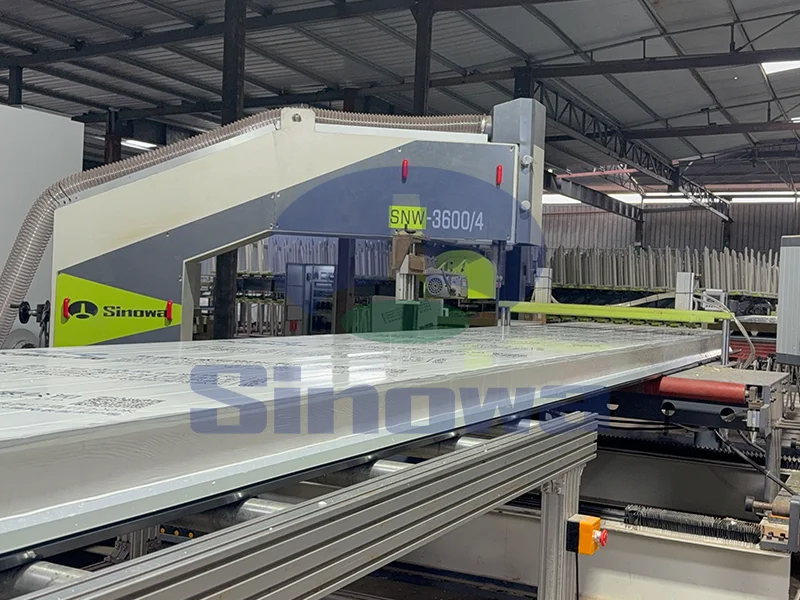
The application scope of glass wool sandwich panel production lines is very wide, covering various fields such as construction, industrial manufacturing, transportation, and home appliances, which is closely related to the excellent performance of glass wool sandwich panels. In the construction field, glass wool sandwich panels produced by the production line are widely used in the walls, roofs, and floors of industrial plants, warehouses, cold storage, residential buildings, commercial buildings, and other buildings. Due to their excellent thermal insulation performance, they can effectively reduce the energy consumption of buildings, save heating and air conditioning costs, and improve the comfort of the indoor environment. At the same time, glass wool sandwich panels have good fire resistance and sound absorption performance, which can improve the fire safety of buildings and reduce noise pollution. In industrial plants and warehouses, glass wool sandwich panels are used to build walls and roofs, which can not only insulate heat and sound but also have high structural strength, bearing a certain load, and adapting to the harsh working environment of industrial sites. In cold storage, glass wool sandwich panels have excellent thermal insulation performance, which can maintain a stable low temperature environment, reduce the energy consumption of refrigeration equipment, and ensure the quality of stored goods.
In the industrial manufacturing field, glass wool sandwich panels produced by the production line are used in the insulation and sound insulation of industrial equipment, such as boilers, pipelines, and generators. The glass wool core material has good thermal insulation performance, which can reduce the heat loss of equipment, improve the efficiency of equipment operation, and extend the service life of equipment. At the same time, the sound absorption performance of glass wool can reduce the noise generated by the operation of equipment, improving the working environment of the workshop. In addition, glass wool sandwich panels are also used in the manufacturing of clean rooms, which are widely used in the electronics, medicine, food, and other industries. The clean room requires a high degree of air purification and temperature and humidity control, and glass wool sandwich panels have good airtightness and thermal insulation performance, which can meet the requirements of clean room construction.
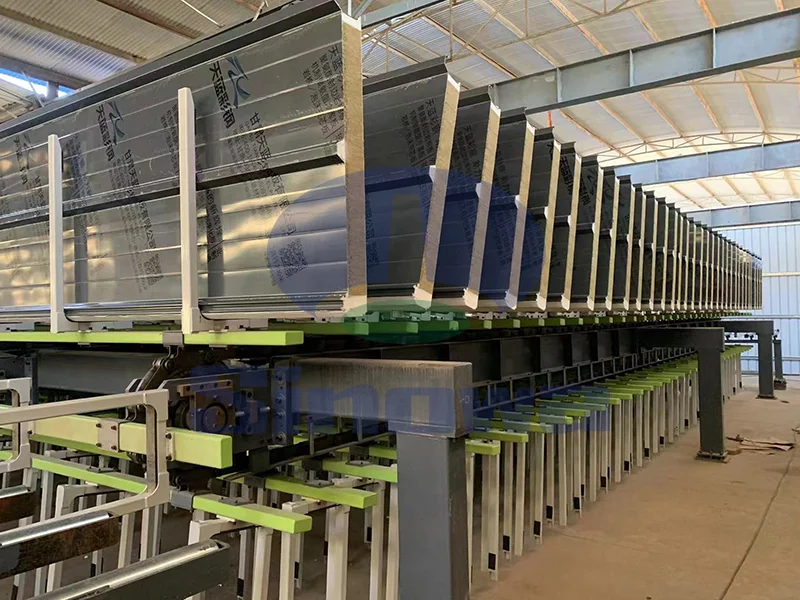
In the transportation field, glass wool sandwich panels are used in the interior decoration and insulation of vehicles such as trains, ships, and automobiles. In trains and ships, glass wool sandwich panels are used to build interior walls and ceilings, which can insulate heat and sound, improving the comfort of passengers. At the same time, the lightweight characteristics of glass wool sandwich panels can reduce the weight of the vehicle, reducing energy consumption during transportation. In automobiles, glass wool sandwich panels are used in the insulation and sound insulation of the car body, which can reduce the noise inside the car and improve the driving experience. In addition, glass wool sandwich panels are also used in the packaging of transportation, such as the packaging of precision instruments and fragile goods, which can play a role in shock absorption and protection, avoiding damage to the goods during transportation.
In the home appliance field, glass wool sandwich panels are used as insulation materials for household appliances such as refrigerators, freezers, and air conditioners. The excellent thermal insulation performance of glass wool can reduce the energy consumption of household appliances, improve their energy efficiency, and extend their service life. For example, in refrigerators and freezers, glass wool sandwich panels are used in the inner liner and door body, which can effectively maintain the low temperature inside the refrigerator, reducing the frequency of compressor operation and saving electricity. In air conditioners, glass wool sandwich panels are used in the shell and pipeline insulation, which can reduce the heat loss of the refrigerant, improving the cooling and heating efficiency of the air conditioner.
With the increasing awareness of environmental protection and the promotion of energy-saving and emission reduction policies around the world, the market demand for glass wool sandwich panels, as an environmentally friendly and energy-saving building material, is constantly growing, which also promotes the continuous development and upgrading of glass wool sandwich panel production lines. In the future, the production line will be more intelligent, adopting advanced technologies such as artificial intelligence and the Internet of Things to realize real-time monitoring, intelligent adjustment, and remote maintenance of the production process, further improving production efficiency and product quality. At the same time, the production line will be more energy-saving and environmentally friendly, adopting more advanced waste recycling technologies and energy-saving equipment to reduce energy consumption and environmental pollution. In addition, with the diversification of market demand, the production line will be more flexible, able to produce more types and specifications of glass wool sandwich panels to meet the personalized needs of different customers. The development of glass wool sandwich panel production lines will not only promote the development of the glass wool sandwich panel industry but also provide strong support for the sustainable development of the construction, industrial manufacturing, and other industries.
« Glass Wool Sandwich Panel Production Line » Update Date: 2026/4/15
URL: https://m.sinowa.cn/blog/glass-wool-sandwich-panel-production-line.html
Polyurethane Glass Wool Sandwich Panel Production Line
2023-12-30PU Glass Wool Sandwich Panel Production Line
2023-12-30
A pu sandwich panel line stands as a highly efficient and automated production solution dedicated to manufacturing high-performance insulated panels, playing a vital role in modern construction and industrial engineering sectors. This integrated production system streamlines the entire manufacturing process, starting with the uncoiling and leveling of outer facing materials, which are carefully treated to ensure flat, smooth surfaces free of defects and suitable for subsequent bonding. Next comes the core production step: precise mixing and uniform distribution of polyurethane raw materials, where specialized equipment controls the ratio and flow rate strictly to guarantee consistent foam density and stable bonding performance between the core and facings. The pu sandwich panel machine features a controlled curing and forming system that maintains stable temperature and pressure conditions, allowing the polyurethane foam to fully expand, solidify and bond tightly with the upper and lower layers, forming a rigid, durable sandwich structure. Post-forming, the panels go through accurate cutting and finishing processes to meet diverse size specifications demanded by different projects. Designed for continuous operation, this pu sandwich panel production line boosts manufacturing efficiency remarkably while ensuring uniform product quality across batches, reducing manual errors and material waste effectively. The finished PU sandwich panels deliver outstanding thermal insulation, sound absorption and structural strength, making them widely applicable in building roofs, walls, cold storage facilities and industrial workshops, adapting to various environmental and functional needs with reliable performance and long service life.