- Home
- Sandwich Panel Line
- Roll Forming Machine
- CZ Purlin Roll Forming Machine
- Door Window Curtain Partition Roll Forming Machine
- Gutter Roll Forming Machine
- Clean Partition Panel Machine
- Corrugated Panel Roll Forming Machine
- Double Layer Roof Roll Forming Machine
- High Speed Keel Roll Forming Machine
- Light Steel-Frame Structure Production Line
- C Channel Roll Forming Machine
- Insulated Panels
- Steel Profiles
- About
- Contact
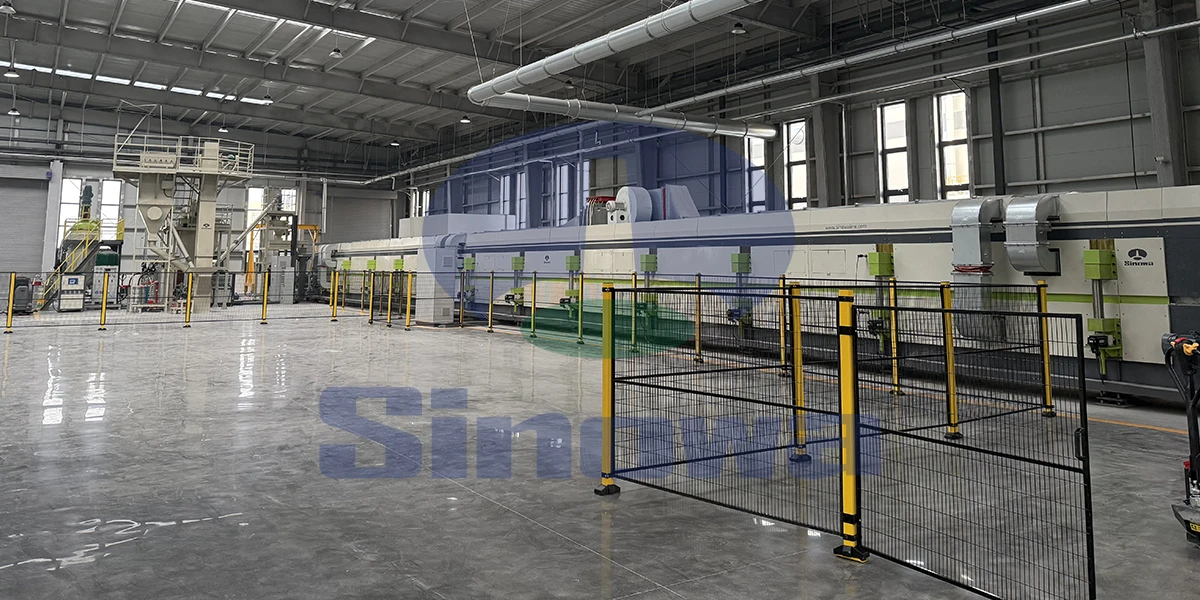
Insulated Board Production Line
Sinowa is a insulated board production line supplier from china, design and custom-made insulated board production line, know more about insulated board production line, pls contact us, we will contact you as soon as possible!
The insulated board production line stands as a cornerstone of modern industrial manufacturing, dedicated to transforming raw materials into high-performance insulated boards that serve as critical components across countless sectors. This integrated production system combines mechanical engineering, material science, and automated control technology, streamlining the entire manufacturing process from raw material input to finished product output. Unlike fragmented production equipment, a complete insulated board production line operates as a cohesive unit, with each segment working in tandem to ensure consistency, efficiency, and quality throughout the manufacturing lifecycle. Its design and functionality are tailored to meet the evolving demands of thermal insulation, structural stability, and durability, making it an indispensable asset in the global push for energy efficiency and sustainable construction and industrial practices.
Continuous Insulation Panel Production Line of the PU and phenolic aldehyde surface has diversified and multifunctional production characteristics, which may produce products with different specifications such as PU, PF, PIR, etc. The surface material may be aluminum foil, colored steel, cement base cloth, kraft paper, non-woven fabrics, etc. The products are widely applied to such occasions as construction, decoration, pipeline ventilation, subway construction, etc. The Insulated Panel Machine of soft layer insulation board is able to continuously and efficiently produce high-quality PU and Phenolic insulation boards.
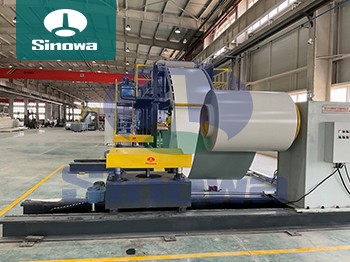
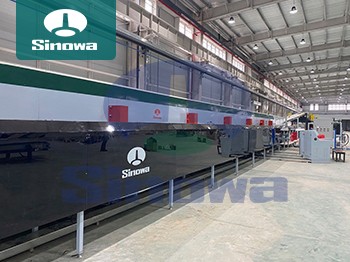
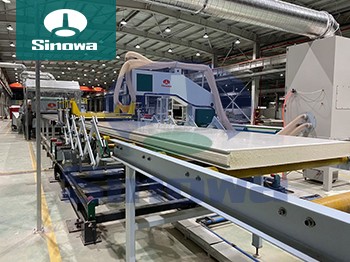
Sinowa is a well-known manufacturer and technical service provider of high-end PU Sandwich Panel Machines and various high-performance Cold Roll Forming Machine in China. Our main products include polyurethane double-sided color steel Sandwich Panel Production Line, polyurethane and phenolic soft facing insulation panel production line and high-efficiency roll forming lines.
Sinowa is committed to the development and manufacturing of high-end and high-efficiency Sandwich Panel Lines. Our production lines are leading the way in efficiency, automatic control, human-computer interaction, environmental protection and energy consumption. Using system integration and bus control technology, it realizes the automatic integrated linkage control of the entire production line, and can achieve remote interactive communication, which has the world-class level and a comprehensive leading high-performance production line in the market.
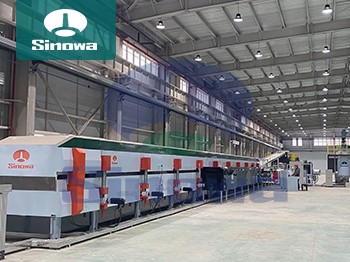
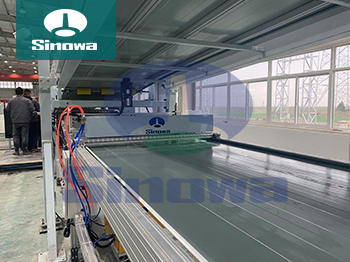
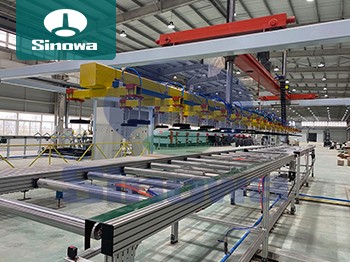
For more than ten years, we have never deliver two same lines to our client, there are all the crystallization of continuous improvement, we have been trying to surpass ourselves, create better products to serve our customers, and also accumulate our brand value, become a unique Chinese enterprise, we are no longer synonymous with low price and mediocre quality.
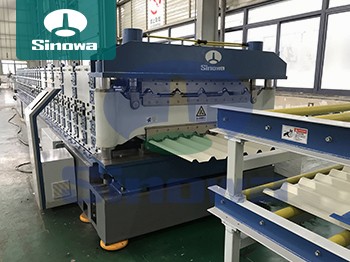
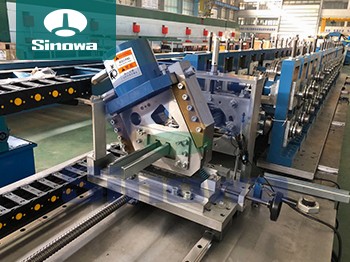
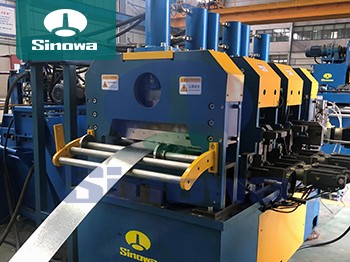
Since 2014, we have established our Cold Forming Machine design and manufacturing department, started our R&D and production of high-end cold forming equipment. Base on our innovative and high-end and efficient product concepts,In just a few years, we have created our own impressive achievements in this field. Whether ordinary construction products of Roll Forming Machine, or precision steel pipe equipment, elevator profile equipment, automotive profile equipment, precision door and window profile equipment, we are the leader of Chinese equipment with high efficiency, high quality and beautiful appearance design.
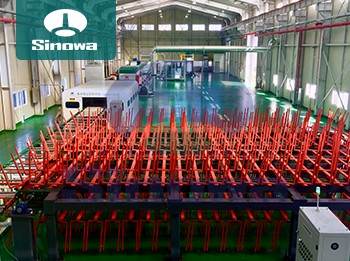
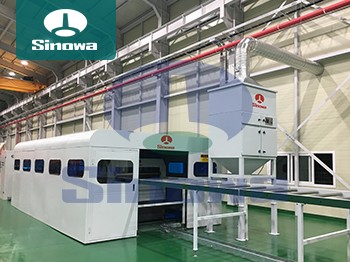
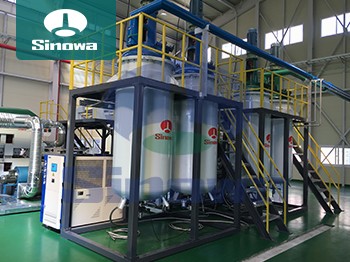
For more than ten years, relying on our innovative manufacturing concept and excellence in quality, reliable and trustworthy service to customers, we cooperate with customers all over the world, exported products to Canada, South Korea, Israel, Australia, the Middle East and other more than 20 countries and regions. contributed to building energy conservation and low-carbon production and have won widespread praise.
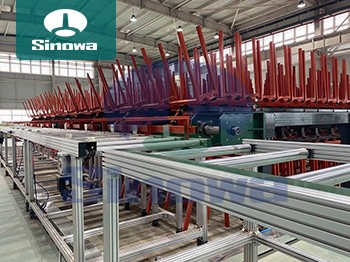
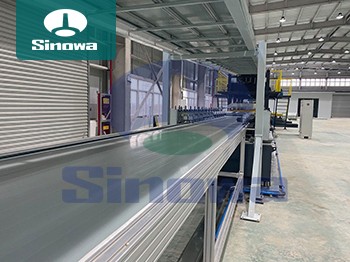
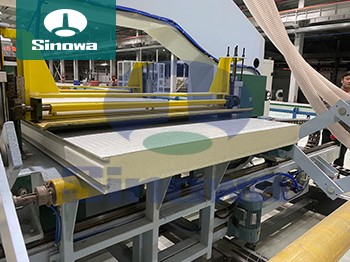
Sinowa has invested outstanding efforts in both the Continuous Insulated PU Sandwich Panel Production Line and the Roll Forming Line, This is why our products are more efficiency, quality, automatic control technology, environmental protection, energy consumption indicators and the appearance and safety protection are comprehensively leading, Some subversive design changes in many major technical points,these major innovations make our products excellent in price/performance and user experience.
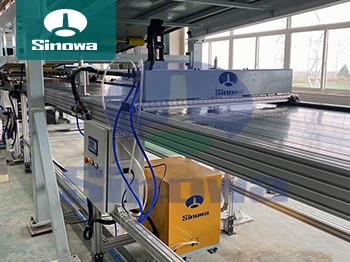
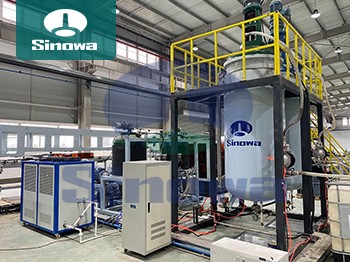
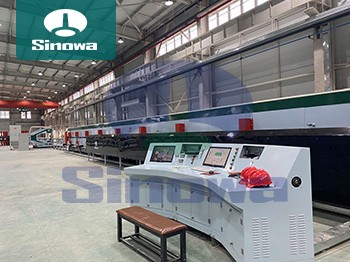
We always position our PU Sandwich Panel Line in a very high standard, strictly optimize every design for more progress. Our continuous innovation, continuous improvement of the technical design principles make us improved product updates and always pay attention to high efficiency, energy saving and stability, reduce customer worries, become their reliable business partners.
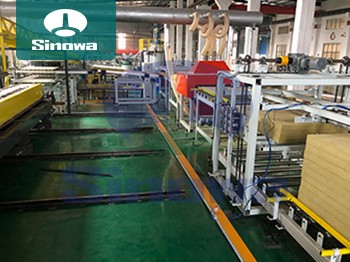
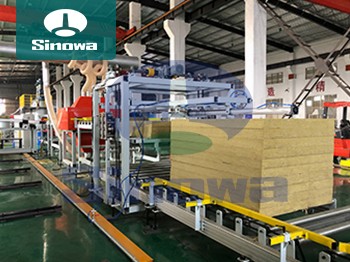
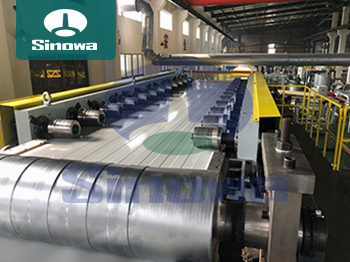
Sinowa Engineering Technology Research Center has always focused on technology research and development. we achieved a large number of scientific research results and unique patented process technology in related product research and development t every year, we continuously improve our products to have high precision and high stability in practical applications, and provide high quality for customers all over the world. Excellent technical personnel, continuous R&D investment and the technical concept of "continuous innovation and continuous improvement" are the strong guarantee for Sinowa to stand out from competitors.
Our focus is not on cost, we always pay attention to the quality of the product and how to do it better!
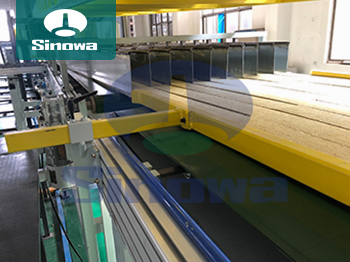
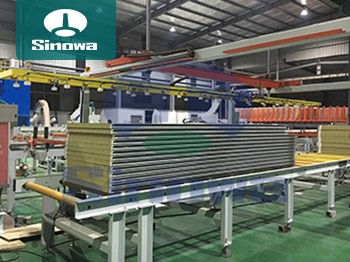
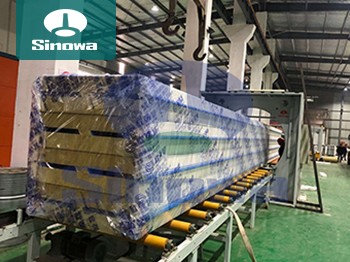
Production process control is a core part of implementing product planning and implementing quality control, which we establish A full range of production management processes and product logistics systems. We firmly believe that production without control and rules will only produce garbage products, so we pay more attention to first-class production control training while establishing a first-class production workshop, strictly follow the 5S management concept, establish systems and standards, ensure that our Sandwich Panel Machines are qualified throughout the process, achieve the technical goals of the company's products to achieve our brand value.
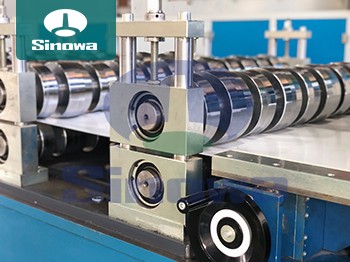
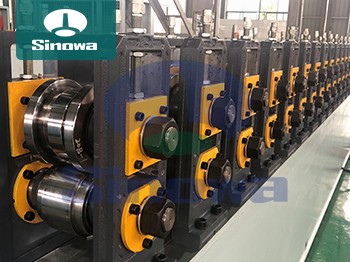
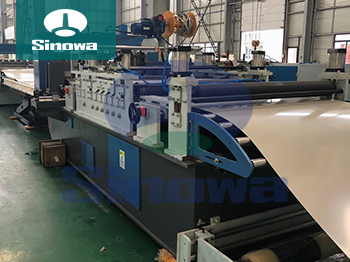
Sinowa has a very comprehensive quality control system, has a group of professional quality control personnel, familiar with almost all testing methods and standards in the field of machining, established a complete mechanical and chemical laboratory with which can fully control all quality links and ensure that all data are accurate, timely optional and available.
Relying on our good Sandwich Panel Machine quality and trustworthy service, our products are exported to more than a dozen countries in the world, and the service field continues to expand, winning more and more praise. Every customer will be our best friend!
At its core, the structure of an insulated board production line is a meticulously engineered assembly of interconnected modules, each fulfilling a distinct and vital role in the production workflow. The foundational framework of the line is built around heavy-duty steel framing, engineered to withstand the mechanical stress of continuous operation, maintain dimensional stability, and support the weight of processing equipment and raw materials. This robust base prevents deformation during high-speed production and ensures the alignment of all processing components, which is critical for producing insulated boards with uniform thickness and flatness. Moving from the initial material handling stage to final finishing, the line typically comprises six core functional sections: raw material preparation and metering, mixing and blending, forming and curing, precision cutting, surface treatment, and product stacking and packaging.
The raw material preparation and metering section serves as the starting point of the production process, tasked with handling, sorting, and accurately dosing the diverse raw materials used in insulated board manufacturing. These materials vary widely depending on the board type, ranging from polymer resins, foaming agents, and reinforcing fibers to inorganic fillers, bonding agents, and flame retardants. This module is equipped with automated silos, conveyor feeders, and precision weighing systems that eliminate human error in material proportioning, ensuring each batch of raw materials adheres to strict formulation standards. Moisture control devices and screening mechanisms are also integrated here to remove impurities and adjust material humidity, preventing defects such as uneven foaming, cracking, or poor bonding in the final product. By standardizing raw material quality at the outset, this section lays the groundwork for consistent board performance across every production run.
Following material preparation, the mixing and blending section takes center stage, where raw materials are combined into a homogeneous mixture ready for forming. This module features high-efficiency mixers—including planetary mixers, screw mixers, and high-shear dispersers—designed to handle different material viscosities and compositions. For foam-based insulated boards, the mixing process is particularly critical, as it involves incorporating foaming agents to create a uniform cellular structure that defines the board’s thermal insulation properties. The mixing equipment operates under controlled temperature and pressure conditions, with automated sensors monitoring mixing speed, duration, and temperature in real time. This precise control ensures that all ingredients are evenly dispersed, avoiding agglomeration or stratification that could compromise the board’s structural integrity and insulation efficiency. Once mixing is complete, the uniform slurry or foam mixture is transferred seamlessly to the forming section via enclosed conveying systems, minimizing material exposure to external contaminants.
The forming and curing section represents the heart of the insulated board production line, where the mixed material is shaped into a continuous board profile and chemically or thermally cured to achieve its final solid state. This module features customized forming molds, continuous laminating machines, or extrusion systems, depending on the type of insulated board being produced. For rigid foam insulated boards, the mixture is poured into a continuous forming table or extruded through a die, where it expands and takes shape under controlled conditions. Curing processes vary by material: thermosetting materials rely on heated curing chambers to trigger cross-linking reactions, while foam materials cure through ambient cooling or low-temperature drying. The curing environment is tightly regulated, with precise control over temperature gradients, humidity levels, and curing time to ensure the board develops optimal density, hardness, and dimensional stability. This stage directly determines the core physical properties of the insulated board, including its compressive strength, thermal conductivity, and resistance to warping.
After curing, the semi-finished insulated board enters the precision cutting section, where it is trimmed to standardized or custom dimensions to meet market requirements. This section is equipped with high-precision cutting tools, such as circular saws, CNC cutting machines, and hot wire cutters, capable of achieving tight dimensional tolerances and clean, burr-free edges. Automated positioning systems and laser guidance technology ensure accurate cutting, reducing material waste and ensuring consistency across every board. The cutting speed is synchronized with the line’s production pace to maintain workflow continuity, and dust collection systems are integrated to remove cutting debris, maintaining a clean working environment and preserving product quality. Whether cutting standard-sized boards for large-scale construction projects or custom panels for specialized industrial applications, this section delivers the versatility needed to cater to diverse market demands.
The surface treatment and finishing section enhances the practical performance and aesthetic appeal of the insulated board, adding functional layers that extend its service life and expand its usability. Common surface treatment processes include sanding, laminating, coating, and edge sealing, each tailored to address specific application needs. Sanding smooths rough surfaces for better adhesion in subsequent installation; laminating bonds protective facers such as aluminum foil, kraft paper, or fiber-reinforced fabric to the board surface, boosting moisture resistance, fire resistance, and mechanical strength; coating applies protective layers to enhance weatherability and stain resistance; and edge sealing prevents moisture penetration that could degrade insulation performance over time. This module operates with high flexibility, allowing manufacturers to adjust surface treatments based on end-use requirements without disrupting the overall production flow.
The final stacking and packaging section completes the production process, automating the handling, sorting, and packaging of finished insulated boards to streamline storage and transportation. Robotic stacking arms, conveyor belts, and automated packaging machines work in unison to stack boards neatly, wrap them in protective film, and label them for identification. This automation reduces manual labor, minimizes the risk of product damage during handling, and optimizes packaging density for efficient logistics. The entire section is designed to integrate seamlessly with the preceding processing stages, ensuring a fully automated, uninterrupted production flow from start to finish.
The performance of an insulated board production line is defined by a set of core metrics that determine its efficiency, product quality, and operational reliability, all of which are shaped by its structural design and technological configuration. Production capacity stands as a key performance indicator, reflecting the line’s output volume per unit time. Modern production lines range from semi-automated systems suited for small-batch, customized production to fully automated high-speed lines capable of mass production, with output levels tailored to match market demand and factory scale. High-capacity lines feature optimized workflow design, reduced idle time between processing stages, and enhanced equipment durability to support continuous operation, making them ideal for large-scale manufacturers serving global markets.
Energy efficiency is another critical performance attribute, influencing both operational costs and environmental sustainability. Advanced insulated board production lines integrate energy-saving technologies such as variable frequency drives, heat recovery systems, and insulated processing chambers to minimize power and heat consumption. These innovations reduce energy waste during mixing, curing, and conveying, lowering the carbon footprint of production while cutting long-term operational expenses. Additionally, the line’s energy efficiency is complemented by low material waste rates, achieved through precision metering, accurate cutting, and closed-loop material recycling systems that reclaim and reuse excess raw materials, further boosting economic and environmental performance.
Operational stability and product consistency are hallmarks of a high-performance insulated board production line. Equipped with intelligent control systems—including PLC (Programmable Logic Controller) panels, real-time monitoring sensors, and automated feedback loops—the line can self-regulate processing parameters, detect anomalies, and make instantaneous adjustments to maintain stable production. This reduces downtime caused by equipment malfunctions and ensures that every finished board meets uniform quality standards, with consistent thickness, density, thermal insulation performance, and mechanical strength. The durability of the line’s components, from wear-resistant mixing blades to corrosion-resistant framing, also contributes to long-term operational stability, extending the equipment’s service life and reducing maintenance frequency.
Adaptability is a vital performance feature that allows the production line to cater to diverse insulated board types and market needs. Modern lines are designed with modular structures, enabling manufacturers to switch between different material formulations, board thicknesses, and surface treatments with minimal retooling and downtime. This flexibility is invaluable in a dynamic market, allowing producers to respond quickly to shifting demand for specialized insulated boards without investing in separate production equipment. Whether adjusting for higher fire resistance, improved thermal insulation, or enhanced structural load-bearing capacity, the line’s adaptability ensures it remains versatile and future-proof.
Insulated board production lines are categorized into distinct types based on the materials they process, the production technology they employ, and the performance characteristics of the boards they manufacture, each tailored to specific application scenarios and performance requirements. The most common classification is based on the core insulation material, with the primary types including polystyrene foam insulated board production lines, polyurethane foam insulated board production lines, phenolic foam insulated board production lines, and inorganic mineral wool insulated board production lines.
Polystyrene foam insulated board production lines, which produce expanded polystyrene (EPS) and extruded polystyrene (XPS) boards, are among the most widely used due to their cost-effectiveness and versatile performance. EPS board production lines utilize steam expansion and molding technology, creating lightweight boards with good thermal insulation and shock absorption properties; these lines are characterized by simple operation, low energy consumption, and high production efficiency. XPS board production lines, by contrast, employ continuous extrusion technology, forming boards with a dense closed-cell structure that delivers exceptional compressive strength, low water absorption, and long-lasting thermal stability. These lines are more technologically complex but produce boards with superior durability, making them suitable for high-load and moisture-prone environments.
Polyurethane (PU) and polyisocyanurate (PIR) insulated board production lines manufacture high-performance foam boards renowned for their exceptional thermal insulation efficiency—far superior to polystyrene boards—along with strong bonding capabilities and moderate fire resistance. These lines feature advanced mixing and continuous lamination technology, capable of producing sandwich-style insulated boards with various facing materials, such as metal sheets, fiberboard, or plasterboard. The production process requires precise control over chemical mixing ratios and curing conditions, resulting in boards that offer an optimal balance of thermal performance and structural strength, ideal for energy-efficient construction and cold chain applications.
Phenolic foam insulated board production lines specialize in producing boards with outstanding fire safety performance, including low flammability, low smoke emission, and high temperature resistance. These lines use specialized phenolic resin formulations and controlled curing processes to create boards that maintain structural integrity under extreme heat, making them a top choice for fire-critical applications. While the production process is more demanding and the boards are slightly more brittle, their unrivaled fire resistance makes them indispensable in public buildings, high-rise constructions, and industrial facilities with strict fire safety standards.
Inorganic mineral wool insulated board production lines, which process basalt, slag, or glass fibers into rigid insulated boards, prioritize non-combustibility, acoustic insulation, and high-temperature resistance. These lines feature fiber spinning, bonding, pressing, and curing stages, producing boards that are inorganic, odorless, and highly resistant to fire and heat. Unlike foam-based boards, mineral wool boards offer excellent sound absorption properties in addition to thermal insulation, making them suitable for dual-purpose thermal and acoustic insulation needs. The production lines are designed to handle fibrous materials safely, with dust control systems to ensure a healthy operating environment.
Beyond material-based classification, insulated board production lines can also be categorized by automation level: semi-automated lines, which require partial manual intervention for material handling and parameter adjustment, and fully automated lines, which operate with minimal human input, from raw material feeding to finished product packaging. Fully automated lines integrate AI-driven control systems and IoT sensors for remote monitoring and predictive maintenance, maximizing efficiency and reducing labor costs, while semi-automated lines offer a cost-effective solution for small and medium-sized manufacturers with lower production volumes.
The applications of insulated boards manufactured by these production lines are extensive, spanning construction, cold chain logistics, industrial manufacturing, transportation, and renewable energy sectors, driven by their core thermal insulation, energy-saving, and protective properties. In the construction industry, insulated boards are the most widely used building insulation materials, applied to exterior walls, roofs, floors, and foundations to reduce heat transfer between indoor and outdoor environments. This significantly cuts energy consumption for heating and cooling, improves indoor thermal comfort, and aligns with global green building standards. Different board types cater to diverse construction needs: EPS boards are ideal for residential wall insulation, XPS boards excel in basement and roof insulation due to their moisture resistance, PU boards deliver high-efficiency insulation for modern energy-saving buildings, and mineral wool boards provide fire-safe insulation for high-rises and public structures.
The cold chain logistics industry relies heavily on insulated boards to maintain stable low-temperature environments for the storage and transportation of perishable goods, including food, pharmaceuticals, and biological samples. Insulated boards are used to construct cold storage warehouses, refrigerated trucks, insulated containers, and display cabinets, leveraging their low thermal conductivity to minimize cold air loss and reduce energy consumption of refrigeration equipment. Boards produced by PU and XPS production lines are particularly favored in this sector, as their closed-cell structure resists moisture penetration and maintains consistent insulation performance even in high-humidity cold chain environments, ensuring the quality and safety of temperature-sensitive goods throughout the supply chain.
In industrial manufacturing, insulated boards serve as critical thermal insulation and fire protection materials for industrial equipment, pipelines, and workshops. They insulate high-temperature machinery and pipelines to prevent heat loss, protect workers from burns, and maintain stable operating temperatures for industrial processes. In high-temperature industrial settings, phenolic and mineral wool boards are preferred for their ability to withstand extreme heat and inhibit flame spread, enhancing workplace safety and energy efficiency. Additionally, insulated boards are used in industrial workshop partitioning to create temperature-controlled zones, improving working conditions and reducing overall energy usage.
The transportation sector also benefits immensely from insulated board applications, where lightweight, high-efficiency insulation is essential for vehicle and vessel energy efficiency. Insulated boards are integrated into the bodywork of refrigerated vehicles, trains, ships, and aircraft to maintain stable internal temperatures, reduce HVAC load, and lower fuel or energy consumption. Their lightweight nature helps reduce the overall weight of transportation equipment, further boosting energy efficiency, while their structural rigidity adds a degree of mechanical protection. For electric vehicles, insulated boards also provide thermal insulation for battery compartments, helping maintain optimal battery operating temperatures and extending battery life.
In the renewable energy sector, insulated boards play a supporting role in enhancing the efficiency of solar and wind energy systems. They are used as insulation materials for solar thermal collectors, preventing heat loss and improving heat collection efficiency, and as protective insulation for wind turbine components, shielding against temperature fluctuations and environmental damage. As the global focus on renewable energy and energy conservation intensifies, the demand for high-performance insulated boards and advanced production lines continues to rise, driving further innovation in production line technology and material science.
In summary, the insulated board production line is a sophisticated, multifunctional manufacturing system that combines robust structural design, reliable performance, diverse typology, and wide-ranging applications to meet the global demand for energy-efficient insulation materials. Its structural modularity ensures seamless workflow integration, while its performance metrics—including capacity, efficiency, stability, and adaptability—define its industrial value. The variety of production line types caters to different material and performance needs, producing insulated boards that are integral to construction sustainability, cold chain integrity, industrial safety, and transportation efficiency. As technology advances and global energy conservation efforts intensify, the insulated board production line will continue to evolve, with enhanced automation, greener production processes, and improved product performance, solidifying its role as a key driver of energy efficiency and sustainable development across industries.
« Insulated Board Production Line » Update Date: 2026/3/11
Tags:
URL: https://m.sinowa.cn/blog/insulated-board-production-line.html
A pu sandwich panel line stands as a highly efficient and automated production solution dedicated to manufacturing high-performance insulated panels, playing a vital role in modern construction and industrial engineering sectors. This integrated production system streamlines the entire manufacturing process, starting with the uncoiling and leveling of outer facing materials, which are carefully treated to ensure flat, smooth surfaces free of defects and suitable for subsequent bonding. Next comes the core production step: precise mixing and uniform distribution of polyurethane raw materials, where specialized equipment controls the ratio and flow rate strictly to guarantee consistent foam density and stable bonding performance between the core and facings. The pu sandwich panel machine features a controlled curing and forming system that maintains stable temperature and pressure conditions, allowing the polyurethane foam to fully expand, solidify and bond tightly with the upper and lower layers, forming a rigid, durable sandwich structure. Post-forming, the panels go through accurate cutting and finishing processes to meet diverse size specifications demanded by different projects. Designed for continuous operation, this pu sandwich panel production line boosts manufacturing efficiency remarkably while ensuring uniform product quality across batches, reducing manual errors and material waste effectively. The finished PU sandwich panels deliver outstanding thermal insulation, sound absorption and structural strength, making them widely applicable in building roofs, walls, cold storage facilities and industrial workshops, adapting to various environmental and functional needs with reliable performance and long service life.