- Home
- Sandwich Panel Line
- Roll Forming Machine
- CZ Purlin Roll Forming Machine
- Door Window Curtain Partition Roll Forming Machine
- Gutter Roll Forming Machine
- Clean Partition Panel Machine
- Corrugated Panel Roll Forming Machine
- Double Layer Roof Roll Forming Machine
- High Speed Keel Roll Forming Machine
- Light Steel-Frame Structure Production Line
- C Channel Roll Forming Machine
- Insulated Panels
- Steel Profiles
- About
- Contact
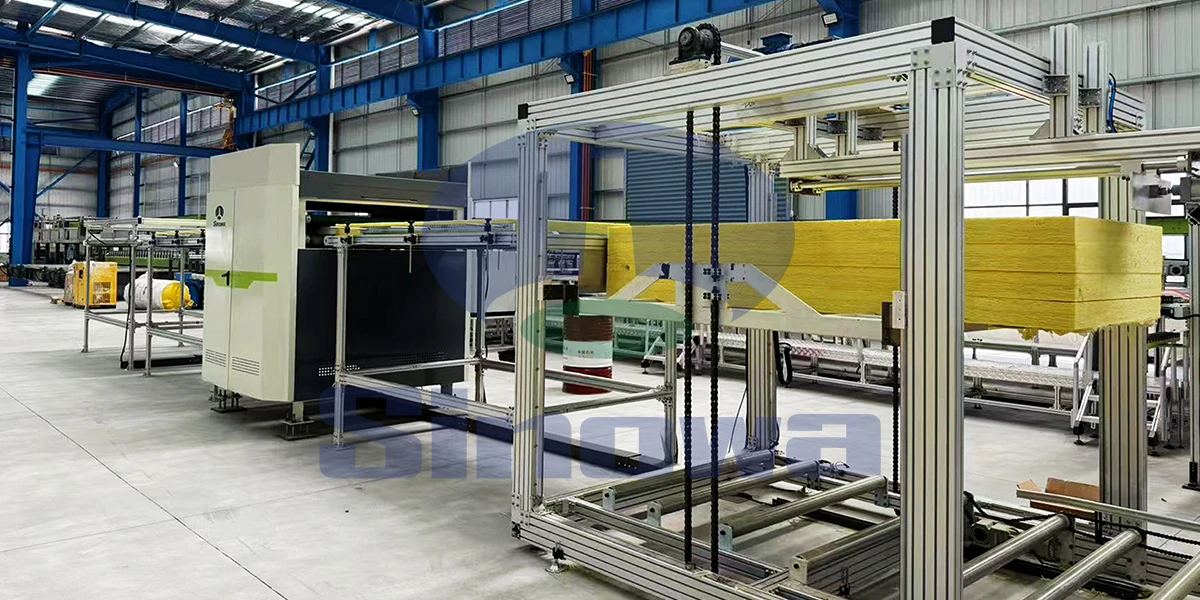
Mineral Wool Board Production Line
Sinowa is a mineral wool board production line supplier from china, design and custom-made mineral wool board production line, know more about mineral wool board production line, pls contact us, we will contact you as soon as possible!
Mineral wool board, a versatile inorganic fibrous building and industrial material, has become a staple in modern construction, industrial insulation, and acoustic engineering due to its exceptional functional properties and sustainable production logic. Behind the consistent quality and standardized output of mineral wool boards lies a highly integrated, automated production line that combines high-temperature processing, fiber forming, mechanical pressing, and precision finishing, with each structural component working in tandem to shape the material’s core performance traits. This production ecosystem not only defines the physical and chemical characteristics of the final boards but also dictates their classification criteria and scope of application, creating a closed loop between manufacturing technology, material performance, and practical usage. Unlike fragmented manual production, the full-scale mineral wool board production line operates as a unified system, optimizing raw material utilization, reducing energy waste, and ensuring uniformity in product specifications, making it the cornerstone of large-scale, reliable mineral wool board manufacturing.
The Rock Wool Panel Line includes cement mortar cloth (cement-based cloth) anti-rolling pressure for up and down bidirectional anti-rolling, polyurethane drenching area, up and down bidirectional drenching area which is fully automatic, vertical silk rock wool sliver area, composite board lamination, automatic lifting which can be adjust the required thickness of the insulation board. The Rockwool Panel Machine is used for building exterior wall insulation, fire isolation belt, structural insulation integration, strong bonding performance, fireproof, waterproof, and anti-falling. This Mineral Wool Sandwich Panel Line solves the difficulty of the previous construction of ordinary rock wool board and it is difficult for workers to find the drawbacks.
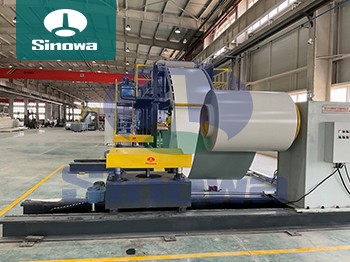
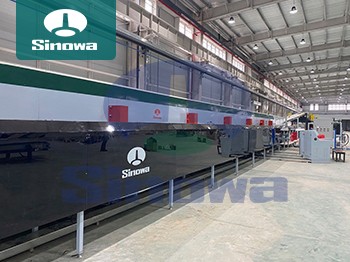
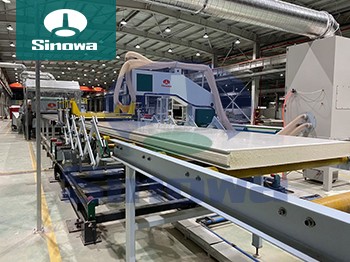
Sinowa is a well-known manufacturer and technical service provider of high-end PU Sandwich Panel Machines and various high-performance Cold Roll Forming Machine in China. Our main products include polyurethane double-sided color steel Sandwich Panel Production Line, polyurethane and phenolic soft facing insulation panel production line and high-efficiency roll forming lines.
Sinowa is committed to the development and manufacturing of high-end and high-efficiency Sandwich Panel Lines. Our production lines are leading the way in efficiency, automatic control, human-computer interaction, environmental protection and energy consumption. Using system integration and bus control technology, it realizes the automatic integrated linkage control of the entire production line, and can achieve remote interactive communication, which has the world-class level and a comprehensive leading high-performance production line in the market.
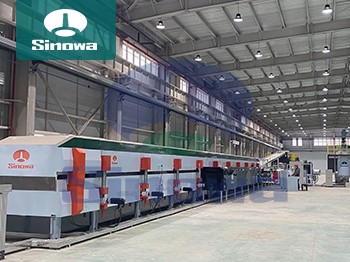
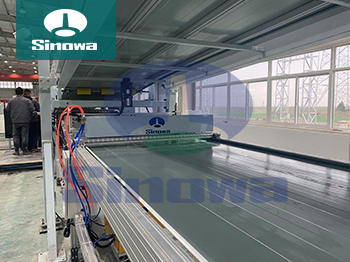
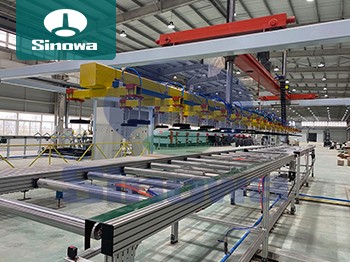
For more than ten years, we have never deliver two same lines to our client, there are all the crystallization of continuous improvement, we have been trying to surpass ourselves, create better products to serve our customers, and also accumulate our brand value, become a unique Chinese enterprise, we are no longer synonymous with low price and mediocre quality.
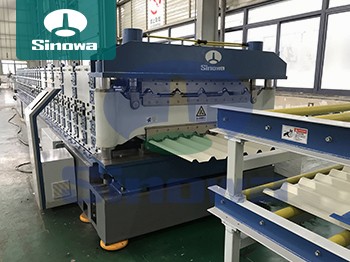
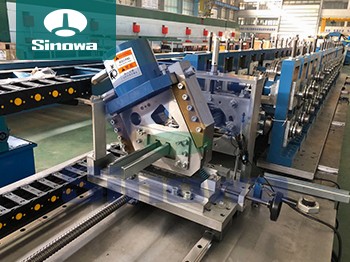
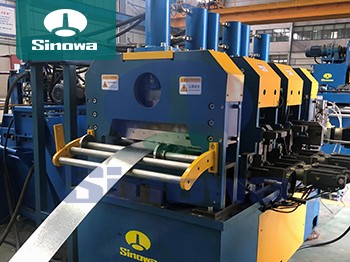
Since 2014, we have established our Cold Forming Machine design and manufacturing department, started our R&D and production of high-end cold forming equipment. Base on our innovative and high-end and efficient product concepts,In just a few years, we have created our own impressive achievements in this field. Whether ordinary construction products of Roll Forming Machine, or precision steel pipe equipment, elevator profile equipment, automotive profile equipment, precision door and window profile equipment, we are the leader of Chinese equipment with high efficiency, high quality and beautiful appearance design.
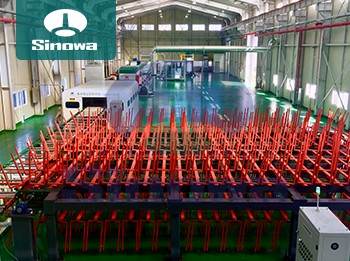
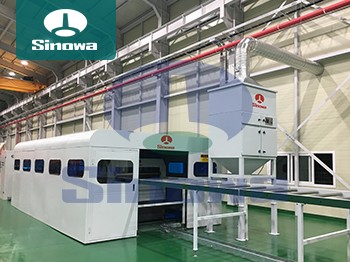
For more than ten years, relying on our innovative manufacturing concept and excellence in quality, reliable and trustworthy service to customers, we cooperate with customers all over the world, exported products to Canada, South Korea, Israel, Australia, the Middle East and other more than 20 countries and regions. contributed to building energy conservation and low-carbon production and have won widespread praise.
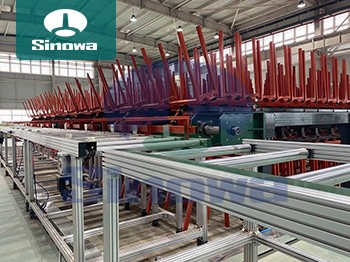
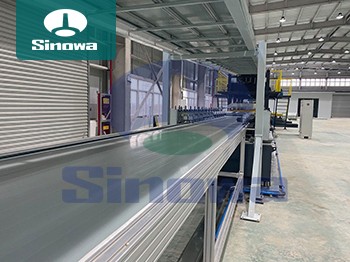
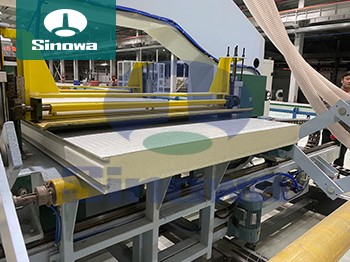
Sinowa has invested outstanding efforts in both the Continuous Insulated PU Sandwich Panel Production Line and the Roll Forming Line, This is why our products are more efficiency, quality, automatic control technology, environmental protection, energy consumption indicators and the appearance and safety protection are comprehensively leading, Some subversive design changes in many major technical points,these major innovations make our products excellent in price/performance and user experience.
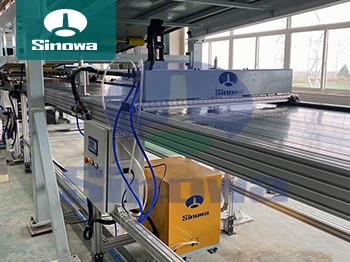
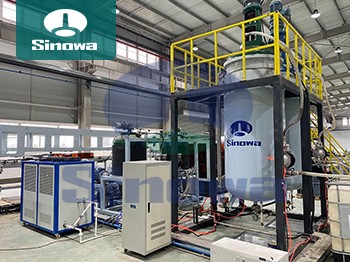
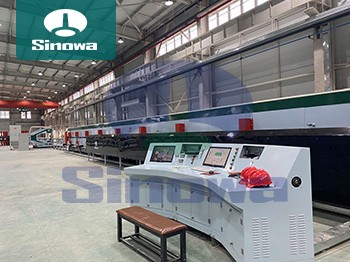
We always position our PU Sandwich Panel Line in a very high standard, strictly optimize every design for more progress. Our continuous innovation, continuous improvement of the technical design principles make us improved product updates and always pay attention to high efficiency, energy saving and stability, reduce customer worries, become their reliable business partners.
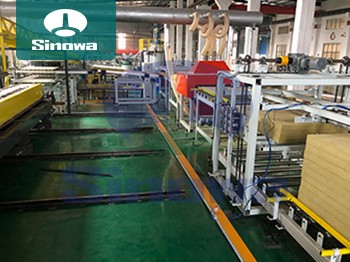
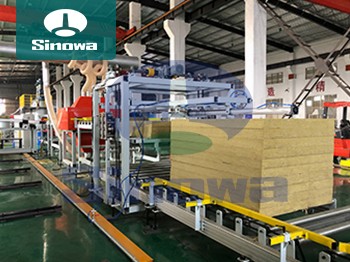
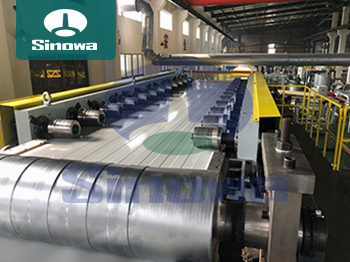
Sinowa Engineering Technology Research Center has always focused on technology research and development. we achieved a large number of scientific research results and unique patented process technology in related product research and development t every year, we continuously improve our products to have high precision and high stability in practical applications, and provide high quality for customers all over the world. Excellent technical personnel, continuous R&D investment and the technical concept of "continuous innovation and continuous improvement" are the strong guarantee for Sinowa to stand out from competitors.
Our focus is not on cost, we always pay attention to the quality of the product and how to do it better!
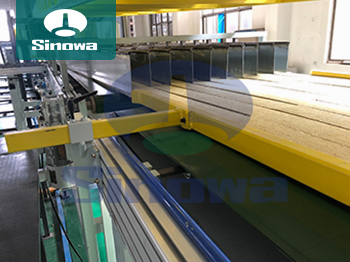
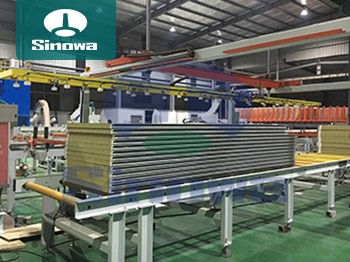
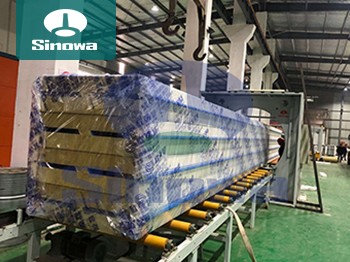
Production process control is a core part of implementing product planning and implementing quality control, which we establish A full range of production management processes and product logistics systems. We firmly believe that production without control and rules will only produce garbage products, so we pay more attention to first-class production control training while establishing a first-class production workshop, strictly follow the 5S management concept, establish systems and standards, ensure that our Sandwich Panel Machines are qualified throughout the process, achieve the technical goals of the company's products to achieve our brand value.
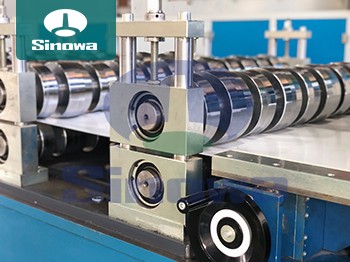
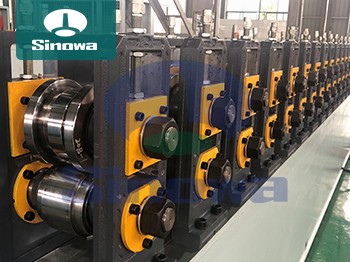
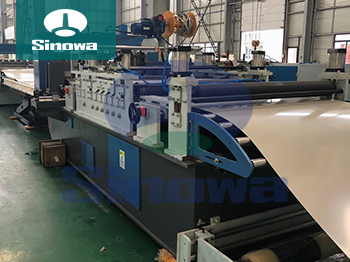
Sinowa has a very comprehensive quality control system, has a group of professional quality control personnel, familiar with almost all testing methods and standards in the field of machining, established a complete mechanical and chemical laboratory with which can fully control all quality links and ensure that all data are accurate, timely optional and available.
Relying on our good Sandwich Panel Machine quality and trustworthy service, our products are exported to more than a dozen countries in the world, and the service field continues to expand, winning more and more praise. Every customer will be our best friend!
The structural framework of a mineral wool board production line is a sequential, modular system designed to convert raw mineral materials into finished, dimensionally stable boards, with each module serving a distinct and irreplaceable role in the production chain. At the initial stage, the raw material handling and proportioning system lays the groundwork for product quality, consisting of automated feeding equipment, precise metering devices, and mixing units. The primary raw materials for mineral wool typically include natural volcanic rocks such as basalt, industrial mineral slags, and auxiliary additives, all of which are screened, weighed, and blended in strict ratios to ensure consistent chemical composition across batches. This automated proportioning eliminates human error in material mixing, a critical factor in maintaining stable fiber quality and board performance in subsequent processes. Following this is the high-temperature melting module, the core thermal processing unit of the entire line, which houses a sealed high-temperature furnace capable of reaching temperatures exceeding 1400°C. The blended raw materials are fed into the furnace continuously, where they are heated into a uniform molten liquid, with the sealed design preventing heat loss and controlling exhaust emissions to align with eco-friendly production standards. The molten mineral slurry is then transferred to the fiber forming system, where centrifugal spinning or high-pressure blowing technology is employed to transform the viscous liquid into fine, interwoven mineral fibers, typically with a diameter ranging from 4 to 7 microns. This fiber formation process is pivotal, as the fineness, uniformity, and tensile strength of the fibers directly impact the board’s density, compressive resistance, and insulation capabilities.
After fiber formation, the production line moves into the mat forming and binder application stage, where loose mineral fibers are collected and layered into a continuous, even fiber mat on a moving conveyor belt. Automated spraying systems deposit a controlled amount of thermosetting resin binder onto the fiber mat, ensuring the binder penetrates evenly between fibers without over-saturation or uneven distribution. This binder acts as a bonding agent, holding the fibers together during subsequent pressing and curing to form a rigid, cohesive board structure. Next, the wet fiber mat enters the pressing and curing module, a dual-stage system that combines mechanical compression and thermal curing. First, the mat passes through a series of pressure rollers to compress loose fibers into a dense semi-finished slab, adjusting thickness and density to meet targeted product specifications. The compressed slab then moves through a high-temperature curing oven, where controlled heat triggers resin polymerization, solidifying the fiber-binder matrix and enhancing the board’s structural stability, dimensional rigidity, and durability. The curing process is carefully calibrated for temperature and duration to avoid over-curing that could embrittle fibers or under-curing that would weaken bond strength. Following curing, the hardened board proceeds to the precision finishing and cutting module, equipped with CNC cutting tools, edge trimming equipment, and surface treatment units. These machines cut the continuous board into standard or custom dimensions, trim rough edges for seamless installation, and apply surface treatments to boost moisture resistance or aesthetic adaptability, with tight dimensional tolerances to ensure consistency across every finished board. The final module is the quality inspection and packaging system, which conducts non-destructive checks for density uniformity, surface defects, and dimensional accuracy before packaging the qualified boards for storage and distribution, completing the full production cycle.
The inherent performance properties of mineral wool boards are directly derived from the production line’s processing technology and the material’s inorganic fibrous structure, setting it apart from organic insulation and building materials with a suite of durable, functional advantages. Foremost among these is exceptional thermal insulation performance, driven by the board’s porous fibrous structure that traps vast amounts of stationary air within its internal gaps. Air is a poor conductor of heat, so this structure drastically reduces heat transfer through conduction, convection, and radiation, resulting in an extremely low thermal conductivity coefficient. This makes mineral wool boards highly effective at retaining indoor heat in cold climates and blocking external heat in warm environments, making them a top choice for energy-efficient building design. Equally notable is their non-combustible and fire-resistant performance; as inorganic mineral materials, mineral wool boards are completely non-flammable, resisting high temperatures without melting, dripping, or releasing toxic fumes. They maintain structural integrity under extreme heat, acting as a reliable fire barrier to slow flame spread and compartmentalize fires in buildings and industrial facilities, a critical safety attribute in high-risk construction and industrial settings.
Beyond thermal and fire resistance, mineral wool boards offer superior acoustic absorption and noise reduction capabilities, thanks to their open porous fiber structure. When sound waves strike the board surface, they penetrate the internal pores and vibrate against the fine fibers, converting acoustic energy into thermal energy that dissipates gradually. This effectively reduces reverberation, echoes, and airborne noise transmission, making the material ideal for creating quiet, acoustically comfortable spaces in both residential and commercial projects. Additionally, mineral wool boards exhibit strong chemical stability and weather resistance, resisting corrosion, mold growth, and insect infestation. Unlike organic materials that degrade over time from moisture or biological activity, they retain structural and functional integrity in humid, alkaline, or acidic environments, with minimal shrinkage, swelling, or warping under fluctuating temperature and humidity conditions. This dimensional stability ensures long-term performance without compromising insulation, acoustic, or structural properties. Mechanically, the boards offer reliable compressive strength and load-bearing capacity, especially denser variants, enabling them to withstand moderate mechanical stress, installation pressure, and minor impacts without cracking or deformation. They are also lightweight and easy to process—cuttable, drillable, and installable with standard hardware—reducing construction complexity and labor time, while their inorganic composition makes them chemically inert and safe for occupied spaces with no harmful volatile emissions.
Mineral wool boards are categorized into distinct types based on production process adjustments, density variations, surface treatments, and functional enhancements, each tailored to specific performance needs and application scenarios, with classifications rooted in the production line’s customizable modules. Standard density mineral wool boards are the most common variant, produced with moderate pressing pressure and curing parameters, balancing general insulation, acoustic absorption, and affordability for everyday construction and industrial use. They feature a balanced density profile, sufficient for routine thermal and acoustic needs, and are widely adopted in mainstream projects due to their versatile performance and ease of installation. High-density mineral wool boards are manufactured with increased pressing force and optimized fiber bonding, resulting in a compact, rigid structure with higher compressive strength and enhanced durability. Designed for heavy-duty applications requiring superior load resistance and thermal stability, they excel in high-temperature industrial environments and structural building components where standard boards lack sufficient rigidity.
Moisture-resistant mineral wool boards are engineered with hydrophobic additives integrated during production or specialized surface coatings, modifying the fibrous structure to repel water and reduce water absorption. This modification preserves insulation and structural performance in humid environments, preventing moisture-induced degradation, mold, and heat loss. Acoustic-grade mineral wool boards feature a tailored porous structure, often with adjusted fiber fineness and pore distribution, to maximize sound absorption across mid-to-high frequency ranges, making them ideal for noise-critical spaces. Composite mineral wool boards are produced by bonding the core mineral wool panel with lightweight facing materials (such as fiberglass veils or breathable films) during the finishing stage, enhancing surface toughness, tear resistance, and installation stability without sacrificing core insulation or fire performance. These composite variants simplify installation, improve surface finish, and extend service life in demanding applications, with each type’s unique properties directly shaped by targeted adjustments to the production line’s proportioning, pressing, curing, and finishing modules.
The diverse performance and classification of mineral wool boards translate to extensive cross-sector applications, spanning building construction, industrial engineering, transportation, and acoustic optimization, solidifying their status as a multi-purpose functional material. In the building and construction sector, they are a premier choice for external wall insulation systems, installed on exterior walls to reduce heat transfer, cut HVAC energy consumption, and improve indoor thermal comfort while acting as a fire barrier to enhance building fire safety. For roofing systems, they serve as durable insulation and waterproofing underlays, withstanding roof temperature fluctuations and mechanical stress to maintain long-term thermal efficiency. In interior construction, they are used for partition wall infills, ceiling panels, and floating floor underlays, providing acoustic insulation to reduce noise transfer between rooms and create quiet living and working spaces, suitable for residential buildings, offices, schools, hospitals, and shopping malls.
In industrial settings, mineral wool boards are indispensable for high-temperature equipment insulation, covering boilers, pipelines, furnaces, and thermal reactors to trap heat, improve energy efficiency, and protect workers from surface burns. Their non-combustible, heat-stable properties make them ideal for industrial fire protection and thermal compartmentalization, safeguarding facilities in petrochemical, power generation, metallurgical, and manufacturing industries. In transportation and marine engineering, they are used for insulation and fire protection in ship bulkheads, vehicle compartments, and railway carriage interiors, leveraging their lightweight, fire-resistant, and thermal insulation traits to meet strict safety and efficiency standards. For specialized acoustic engineering, they are the material of choice for concert halls, recording studios, auditoriums, and industrial noise reduction zones, fine-tuning acoustic environments and mitigating excessive noise pollution. Additionally, they are used in HVAC duct insulation, fire door core filling, and thermal break components, with their adaptability stemming from the production line’s ability to customize specifications—density, thickness, size, and surface treatment—to match unique project requirements.
The synergy between the mineral wool board production line’s structural design, material performance, product classification, and real-world applications underscores the material’s enduring value in modern engineering and construction. The automated, modular production structure ensures consistent, scalable output, while the inherent fibrous composition delivers unrivaled thermal, fire, acoustic, and chemical resistance. Diverse product types address niche performance demands, expanding usability across residential, commercial, industrial, and specialized sectors. As global demand for energy-efficient, fire-safe, and sustainable building materials rises, the mineral wool board production line continues to evolve with technological advancements—refining processing efficiency, enhancing product performance, and expanding customization—reinforcing mineral wool boards as a critical, irreplaceable material in building energy conservation, industrial thermal management, and environmental noise control. This integration of manufacturing innovation and material functionality ensures mineral wool boards remain a preferred solution for current and future construction and industrial challenges, balancing performance, sustainability, and practicality across countless applications.
« Mineral Wool Board Production Line » Update Date: 2026/3/11
Tags:
URL: https://m.sinowa.cn/blog/mineral-wool-board-production-line.html
A pu sandwich panel line stands as a highly efficient and automated production solution dedicated to manufacturing high-performance insulated panels, playing a vital role in modern construction and industrial engineering sectors. This integrated production system streamlines the entire manufacturing process, starting with the uncoiling and leveling of outer facing materials, which are carefully treated to ensure flat, smooth surfaces free of defects and suitable for subsequent bonding. Next comes the core production step: precise mixing and uniform distribution of polyurethane raw materials, where specialized equipment controls the ratio and flow rate strictly to guarantee consistent foam density and stable bonding performance between the core and facings. The pu sandwich panel machine features a controlled curing and forming system that maintains stable temperature and pressure conditions, allowing the polyurethane foam to fully expand, solidify and bond tightly with the upper and lower layers, forming a rigid, durable sandwich structure. Post-forming, the panels go through accurate cutting and finishing processes to meet diverse size specifications demanded by different projects. Designed for continuous operation, this pu sandwich panel production line boosts manufacturing efficiency remarkably while ensuring uniform product quality across batches, reducing manual errors and material waste effectively. The finished PU sandwich panels deliver outstanding thermal insulation, sound absorption and structural strength, making them widely applicable in building roofs, walls, cold storage facilities and industrial workshops, adapting to various environmental and functional needs with reliable performance and long service life.