- Home
- Sandwich Panel Line
- Roll Forming Machine
- CZ Purlin Roll Forming Machine
- Door Window Curtain Partition Roll Forming Machine
- Gutter Roll Forming Machine
- Clean Partition Panel Machine
- Corrugated Panel Roll Forming Machine
- Double Layer Roof Roll Forming Machine
- High Speed Keel Roll Forming Machine
- Light Steel-Frame Structure Production Line
- C Channel Roll Forming Machine
- Insulated Panels
- Steel Profiles
- About
- Contact
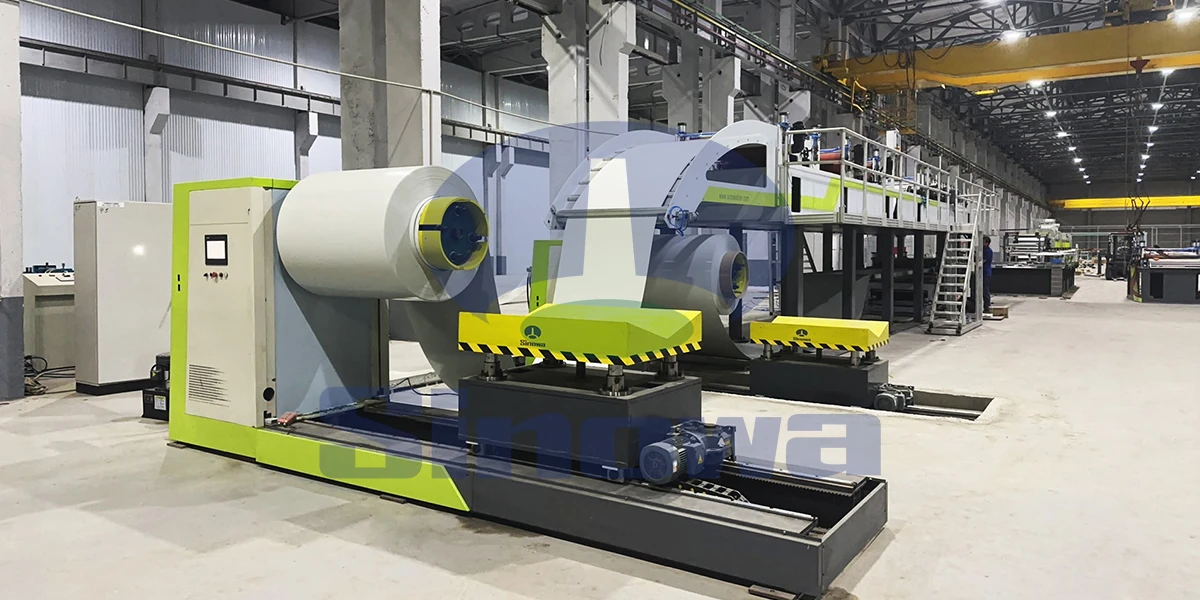
Sandwich Panel Production Line
Sinowa is a supplier and manufacturer of Sandwich Panel Production Line in china, customization on demand width a reasonable price.
The sandwich panel production line stands as a highly integrated, automated manufacturing system tailored for the mass production of composite sandwich panels, which are engineered with a dual-layer outer facing and a lightweight core material bonded together to form a single, high-performance structural unit. Unlike fragmented manual production processes, this continuous production line streamlines every stage of panel manufacturing into a seamless workflow, ensuring consistent quality, uniform dimensional accuracy, and efficient output that meets the demands of modern construction, industrial, and logistical sectors. At its core, the production line is designed to transform raw materials—including metal coils, insulation foams, and adhesive compounds—into finished sandwich panels with tailored structural and functional properties, eliminating material waste, reducing labor input, and enhancing overall production stability. The structural design of the line is meticulously crafted to accommodate diverse material combinations and panel specifications, making it a versatile solution for producing panels that cater to a wide spectrum of performance requirements and application scenarios.
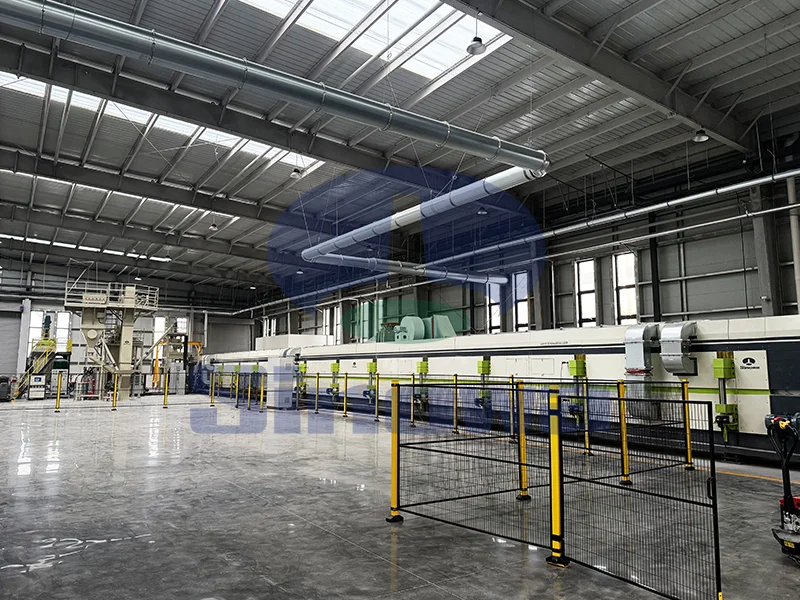
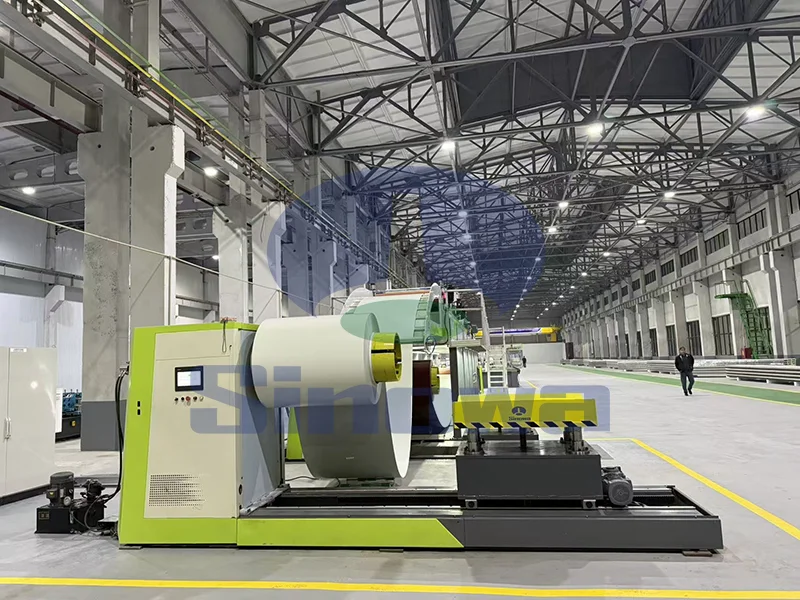
In terms of structural composition, the sandwich panel production line is a modular assembly of interconnected workstations, each serving a distinct purpose in the manufacturing process, with all modules synchronized to operate in tandem for uninterrupted production. The foundational module is the uncoiling and leveling station, which handles raw material coils—typically thin metal sheets such as galvanized steel, aluminum alloy, or color-coated steel—by unwinding them and passing them through precision leveling rollers to eliminate surface warping and ensure flatness, a critical prerequisite for uniform bonding and panel integrity. Following this, the roll forming station shapes the leveled metal sheets into predefined profiles, ranging from flat sheets for wall panels to corrugated or trapezoidal profiles for roof panels, with adjustable rollers to accommodate different thicknesses, widths, and contour designs. This station is engineered to maintain tight dimensional tolerances, ensuring that the outer facings fit perfectly with the core material during the lamination stage.
Moving along the production line, the core material feeding and adhesive application station marks the next key phase, where the core material is precisely positioned between the two outer facings and high-strength structural adhesives are evenly applied to the contact surfaces. The design of this station prioritizes uniform adhesive distribution, preventing uneven bonding, air bubbles, or weak spots that could compromise the panel’s structural stability. For foam core materials, such as polyurethane or polystyrene, the line may integrate a foaming and injection module that generates the core material in situ, ensuring full contact with the outer facings and a dense, void-free core structure. For rigid core materials like mineral wool or glass wool, the station features automated cutting and laying mechanisms to place pre-cut core blocks or rolls accurately, maintaining consistent core density and thickness across the entire panel length.
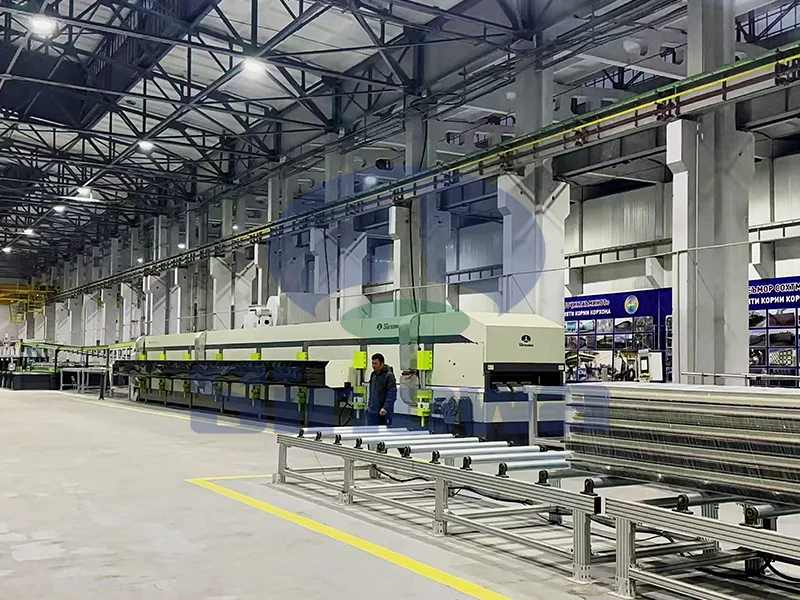
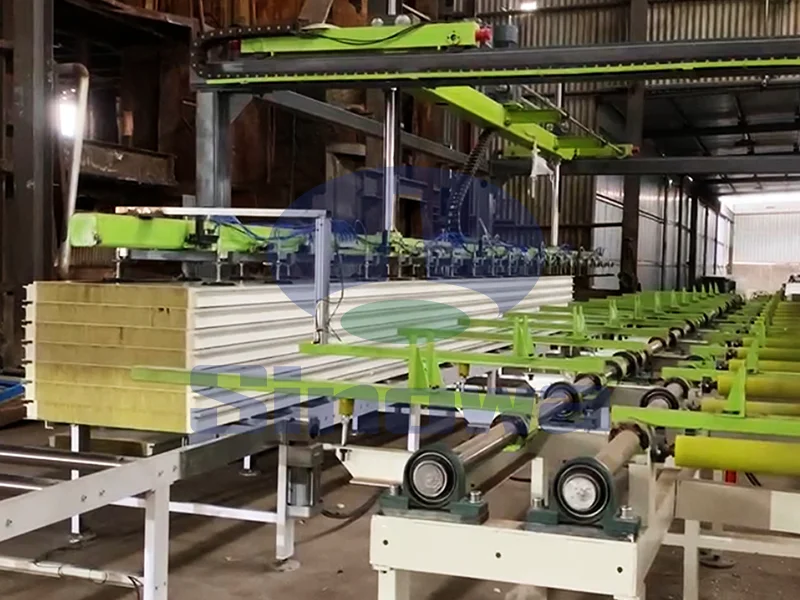
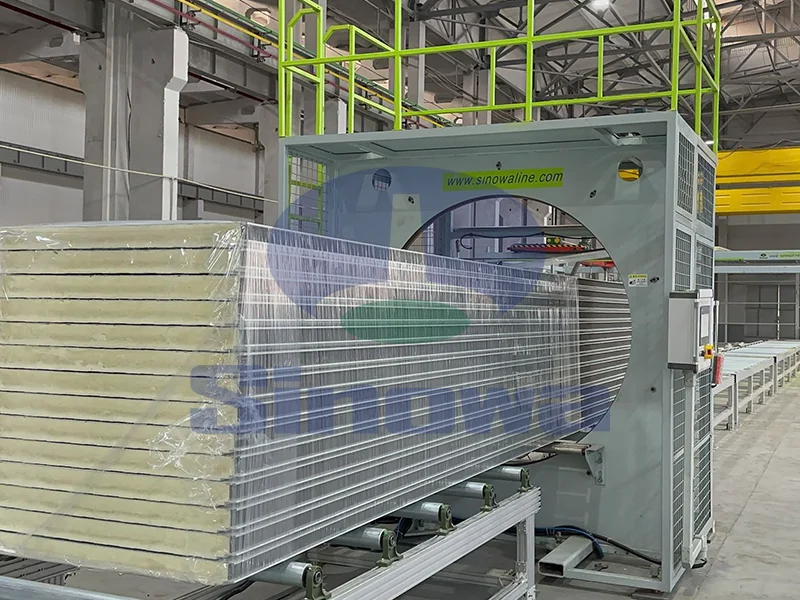
The compounding and curing station is the heart of the sandwich panel production line, where the layered assembly of outer facings and core material is subjected to controlled pressure and temperature to facilitate rapid, thorough adhesive curing. This module utilizes a continuous press system with adjustable pressure settings, applying uniform force across the panel surface to bond the three layers into a rigid, monolithic structure. The temperature control system is calibrated to match the curing requirements of the adhesive and core material, avoiding overheating that could damage the core or underheating that leads to incomplete bonding. After curing, the panels proceed to the precision cutting and trimming station, which uses automated cutting tools to slice the continuous panel strip into custom lengths, trim excess edges, and create precise cutouts for fittings or connections as needed. The final module is the stacking and packaging station, where finished panels are sorted, stacked gently to prevent surface damage, and prepared for storage or transportation, completing the full production cycle.
Beyond its structural layout, the performance of the sandwich panel production line is defined by a set of core attributes that directly impact the quality and efficiency of panel manufacturing, as well as the final properties of the sandwich panels themselves. One of the most prominent performance features is high operational automation, with most modern lines equipped with intelligent control systems that monitor and regulate every production parameter—including line speed, pressure, temperature, adhesive flow, and cutting dimensions—with minimal manual intervention. This automation not only reduces human error but also maintains consistent production quality across large batches, ensuring that every panel meets the specified structural and dimensional standards. The line also boasts strong adaptability, with modular components that can be reconfigured or adjusted to produce different types of sandwich panels, switch between core materials, or modify panel specifications without extensive downtime, making it suitable for both large-scale standardized production and small-batch customized orders.
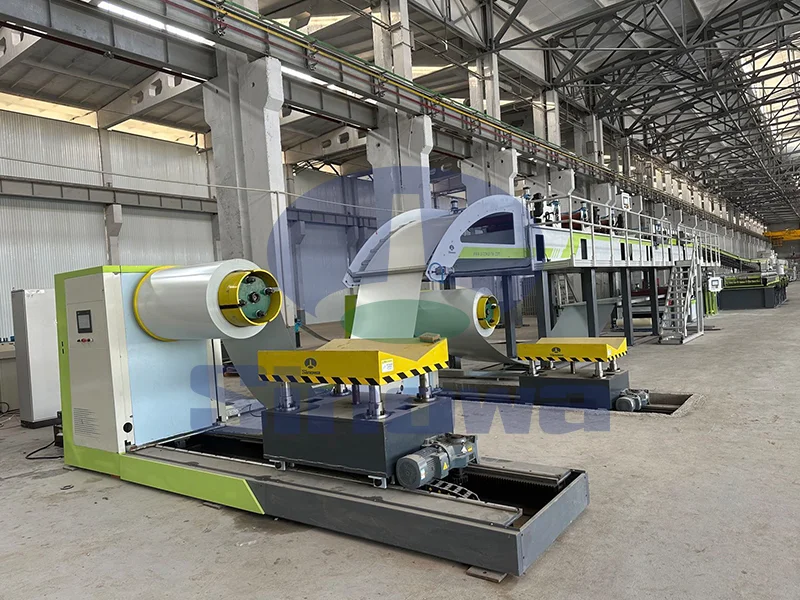
Production efficiency is another key performance metric, with continuous operation capabilities that enable high output rates compared to batch production methods. The synchronized workflow of the line minimizes idle time between stations, allowing for the continuous production of long panels with smooth surfaces and uniform properties. Additionally, the production line delivers exceptional bonding stability and structural uniformity, as the controlled pressure, temperature, and adhesive application processes create a strong, permanent bond between the outer facings and core material. This uniform bonding translates to consistent mechanical performance in the finished panels, including reliable load-bearing capacity, resistance to bending and warping, and long-term dimensional stability. The line is also designed for durable, low-maintenance operation, with robust, wear-resistant components that withstand continuous use, reducing downtime for repairs and maintenance and supporting long-term, reliable production.
The performance of the production line directly shapes the inherent properties of the sandwich panels it produces, which in turn determine their suitability for various applications. Sandwich panels manufactured on these lines exhibit a unique combination of lightweight construction and high structural strength, a result of the synergistic design where the rigid outer facings resist bending and tensile forces, while the core material absorbs shear forces and adds bulk without excessive weight. This high strength-to-weight ratio makes the panels easy to transport, handle, and install, while still providing reliable structural support for buildings and enclosures. Thermal insulation is another standout performance trait, with foam and mineral wool cores delivering low thermal conductivity, effectively minimizing heat transfer between the interior and exterior of a structure. This insulation capability reduces energy consumption for heating and cooling, making the panels a sustainable choice for energy-efficient construction.
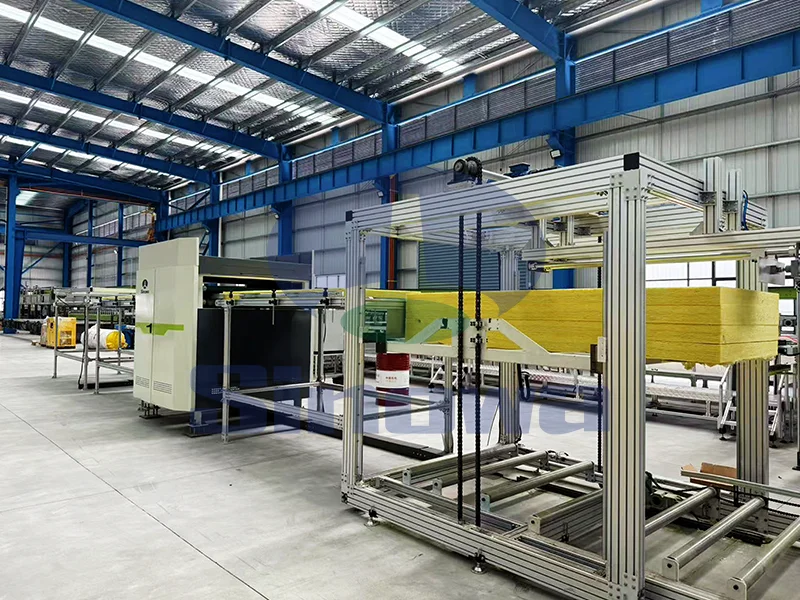
Additional performance properties of the finished panels include sound insulation, moisture resistance, and weather durability, depending on the core and facing materials used. Dense core materials like mineral wool provide excellent sound absorption, reducing noise transmission and creating quieter indoor environments, while metal facings with protective coatings resist corrosion, UV damage, and moisture penetration, ensuring the panels maintain their performance and appearance in harsh environmental conditions. Some panels also offer fire-resistant properties, with non-combustible mineral wool cores or flame-retardant foam cores that slow the spread of fire and enhance structural safety in high-risk settings. Collectively, these performance features make sandwich panels a versatile alternative to traditional building materials, offering a cost-effective, durable, and multi-functional solution for diverse construction and industrial needs.
Sandwich panel production lines are categorized primarily based on the type of core material they are designed to process, as the core material is the primary determinant of the panel’s insulation, fire resistance, strength, and application suitability. Each category of production line is engineered with specialized modules to handle the unique characteristics of the corresponding core material, ensuring optimal production quality and panel performance. The most common types include production lines for polyurethane (PUR) sandwich panels, expanded polystyrene (EPS) sandwich panels, mineral wool (rock wool) sandwich panels, and glass wool sandwich panels, each serving distinct market needs and performance requirements.
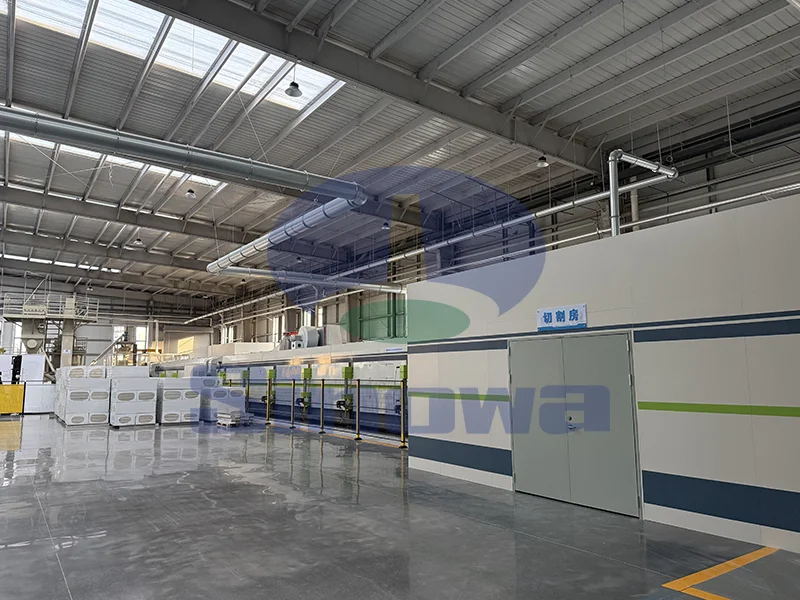
Polyurethane sandwich panel production lines are engineered for processing closed-cell polyurethane foam cores, which offer exceptional thermal insulation efficiency with extremely low thermal conductivity. These lines feature integrated foaming and injection systems that generate the polyurethane core in real time between the outer facings, creating a dense, compact core with excellent bonding strength to the metal facings. PUR sandwich panels produced on these lines are lightweight, highly insulating, and resistant to moisture absorption, making them ideal for applications where superior thermal efficiency is a top priority. The production lines are designed to control the foaming process precisely, regulating core density, thickness, and curing rate to produce panels with consistent insulation and structural properties, suitable for both wall and roof applications.
Expanded polystyrene sandwich panel production lines are optimized for handling rigid EPS foam cores, a lightweight and cost-effective core material with good thermal insulation and structural rigidity. These lines feature automated core feeding and cutting modules that handle pre-formed EPS boards, ensuring accurate positioning and smooth lamination with the outer metal facings. EPS sandwich panels are lighter than many other types, offering easy handling and installation, and are well-suited for temporary structures, low-load-bearing applications, and projects with budget constraints. The production lines are relatively simple in design compared to PUR lines, with lower operational complexity, making them a popular choice for small to medium-scale manufacturers producing panels for general construction use.
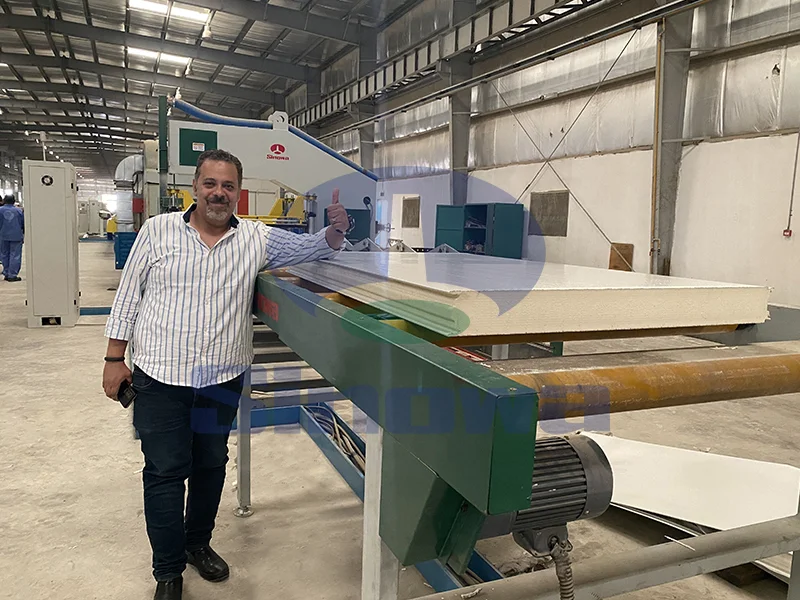
Mineral wool sandwich panel production lines are specialized for processing non-combustible mineral wool cores, which excel in fire resistance, sound insulation, and high-temperature stability. These lines are equipped with gentle material handling systems to prevent breakage of the brittle mineral wool core, as well as precise laying mechanisms to ensure uniform core density and thickness. Mineral wool sandwich panels are classified as non-combustible, making them essential for applications requiring strict fire safety standards, and they also offer superior sound absorption, making them ideal for noise-sensitive environments. The production lines are designed to maintain the integrity of the mineral wool core during bonding and curing, preserving its fire-resistant and acoustic properties while ensuring a strong bond with the outer facings.
Glass wool sandwich panel production lines are tailored for glass wool cores, which combine lightweight properties with good thermal insulation and sound absorption. Similar to mineral wool lines, these production lines feature careful handling mechanisms to protect the delicate glass wool core, with adjustable pressure settings to avoid compressing the core and compromising its insulating performance. Glass wool panels are lightweight, flexible, and resistant to mold and mildew, making them suitable for interior partition walls, ceiling panels, and applications where moisture resistance and acoustic comfort are important. Beyond these primary types, specialized production lines also exist for processing alternative core materials, such as phenolic foam or honeycomb cores, catering to niche applications with unique performance demands, such as high-strength aerospace components or corrosion-resistant industrial enclosures.
The versatility of sandwich panels, enabled by the diverse capabilities of their production lines, translates to a vast array of applications across construction, logistics, industry, transportation, and specialized sectors, with each type of panel tailored to meet the specific needs of its intended use. In the construction industry, sandwich panels are one of the most widely used prefabricated building materials, deployed extensively for industrial and commercial buildings, including warehouses, manufacturing plants, workshops, and distribution centers. The panels’ lightweight nature reduces the structural load on building foundations, while their quick-installation design accelerates construction timelines significantly compared to traditional brick-and-mortar or concrete construction. For industrial facilities, mineral wool panels provide fire resistance and sound insulation, creating safe, quiet working environments, while PUR panels offer superior thermal insulation for temperature-controlled industrial spaces.
In the cold chain and logistics sector, sandwich panels are indispensable for constructing cold storage warehouses, refrigerated transport containers, freezer rooms, and temperature-controlled distribution centers. The exceptional thermal insulation of PUR and EPS panels maintains stable low temperatures inside these structures, preventing heat ingress and reducing energy consumption for refrigeration, making them critical for preserving perishable goods such as food, pharmaceuticals, and agricultural products. The smooth, easy-to-clean surfaces of the metal-faced panels also support hygienic storage conditions, complying with strict standards for food and pharmaceutical storage. Additionally, the panels’ structural strength ensures the integrity of cold storage enclosures, even in large-scale, high-bay warehouse designs.
Public and commercial construction projects also rely heavily on sandwich panels, with applications spanning airport terminals, exhibition halls, sports stadiums, shopping malls, and office buildings. The panels can be produced with a variety of surface finishes and colors, enhancing the aesthetic appeal of public structures while providing durable, low-maintenance exterior cladding and roof systems. For public facilities requiring acoustic comfort, such as schools, hospitals, and concert halls, mineral wool and glass wool panels reduce noise pollution, creating quiet, functional indoor spaces. In healthcare settings, the smooth, non-porous surfaces of sandwich panels inhibit bacterial growth and facilitate easy sanitization, making them suitable for hospital wards, operating rooms, and clean rooms.
The transportation and automotive industry utilizes lightweight sandwich panels for manufacturing vehicle bodies, shipping containers, railway carriage partitions, and marine vessel interiors. The high strength-to-weight ratio of the panels reduces the overall weight of transportation equipment, improving fuel efficiency and load capacity, while their durability withstands the vibrations, impacts, and environmental stresses associated with transit. Corrosion-resistant metal facings make the panels ideal for marine and coastal transportation applications, resisting salt spray and moisture damage. In the modular construction sector, sandwich panels are the primary material for prefabricated portable buildings, including site offices, construction dormitories, emergency shelters, and temporary housing, thanks to their quick assembly, portability, and all-weather performance.
Specialized industrial applications further highlight the adaptability of sandwich panels, with uses in clean rooms for electronics manufacturing, chemical storage facilities, agricultural greenhouses, and renewable energy structures. For electronics clean rooms, anti-static coated panels prevent electrostatic discharge that could damage sensitive components, while airtight bonding maintains controlled indoor environments. In agricultural settings, insulated sandwich panels regulate temperature and humidity in greenhouses and livestock barns, supporting optimal growing and breeding conditions. For renewable energy projects, the panels are used to construct enclosures for solar power stations and wind turbine facilities, providing weather protection and thermal insulation for critical equipment. As sustainable construction practices gain traction worldwide, the demand for efficient, high-performance sandwich panel production lines continues to grow, driven by the panels’ ability to balance functionality, durability, and energy efficiency across an ever-expanding range of applications.
In summary, the sandwich panel production line is a sophisticated, purpose-built manufacturing system that combines robust structural design, reliable operational performance, and flexible adaptability to produce high-quality composite panels tailored to diverse industrial and construction needs. Its modular structure ensures seamless production flow, while its automated capabilities guarantee consistent panel quality and efficient output. The different types of production lines, categorized by core material, enable the manufacturing of panels with distinct performance profiles, from highly insulating PUR panels to fire-resistant mineral wool panels. This diversity, in turn, unlocks countless applications across key sectors, making sandwich panels a cornerstone of modern, efficient, and sustainable building and manufacturing practices. As technology advances, the sandwich panel production line continues to evolve, with enhanced automation, improved material compatibility, and optimized performance, further solidifying its role as a vital asset in the global production of high-performance composite building materials.
« Sandwich Panel Production Line » Update Date: 2026/4/15
URL: https://m.sinowa.cn/blog/sandwich-panel-production-line.html
Color Steel Plate Sandwich Panel Production Line
2026-08-06The color steel plate sandwich panel production line is a highly integrated, continuous automated manufacturing system designed for the mass production of composite building panels with multi-functional performance. This …Automatic Sandwich Panel Production Line Manufacturer
2026-08-06Automatic sandwich panel production lines have become indispensable core equipment in the modern building material manufacturing industry, driving the standardized, efficient and intelligent development of thermal insulat…Automatic PU Sandwich Panel Production Line Supplier
2026-08-06The automatic PU sandwich panel production line is an integrated and intelligent manufacturing system dedicated to the continuous production of high-performance polyurethane composite sandwich panels, serving as a core eq…Rock Wool Sandwich Panel Production Line Factory
2026-07-27Rock wool sandwich panel production lines represent advanced integrated manufacturing systems dedicated to the automated and continuous production of high-performance composite building panels. Combining mechanical transm…Polyurethane Foam Sandwich Panel Production Line
2026-07-27Polyurethane foam sandwich panel production line is a highly integrated, automated industrial manufacturing system dedicated to the mass production of high-performance composite sandwich panels. It integrates mechanical t…PIR Sandwich Panel Production Line Manufacturer
2026-07-27PIR sandwich panel production lines represent advanced integrated industrial systems designed for the continuous and automated manufacturing of high-performance polyisocyanurate composite panels, which are widely utilized…Rockwool Sandwich Panel Production Line From China
2026-07-10The continuous evolution of modern construction and industrial insulation industries has driven the rapid upgrading of composite panel manufacturing equipment, among which the rockwool sandwich panel production line devel…Insulated PU Sandwich Panel Production Line
2026-07-10The insulated PU sandwich panel production line represents a sophisticated, fully integrated continuous manufacturing system designed to produce high-performance composite panels widely applied in modern construction, ind…Phenolic Sandwich Panel Production Line
2026-05-25The phenolic sandwich panel production line represents a sophisticated and integrated manufacturing system dedicated to the continuous fabrication of high-performance composite building panels, which consist of rigid phen…Polyurethane Sandwich Panel Production Line In China
2026-05-25The construction and industrial insulation sectors across the globe have witnessed steady transformation over the past two decades, with lightweight, high-insulation, and durable building materials gradually replacing tra…
A pu sandwich panel line stands as a highly efficient and automated production solution dedicated to manufacturing high-performance insulated panels, playing a vital role in modern construction and industrial engineering sectors. This integrated production system streamlines the entire manufacturing process, starting with the uncoiling and leveling of outer facing materials, which are carefully treated to ensure flat, smooth surfaces free of defects and suitable for subsequent bonding. Next comes the core production step: precise mixing and uniform distribution of polyurethane raw materials, where specialized equipment controls the ratio and flow rate strictly to guarantee consistent foam density and stable bonding performance between the core and facings. The pu sandwich panel machine features a controlled curing and forming system that maintains stable temperature and pressure conditions, allowing the polyurethane foam to fully expand, solidify and bond tightly with the upper and lower layers, forming a rigid, durable sandwich structure. Post-forming, the panels go through accurate cutting and finishing processes to meet diverse size specifications demanded by different projects. Designed for continuous operation, this pu sandwich panel production line boosts manufacturing efficiency remarkably while ensuring uniform product quality across batches, reducing manual errors and material waste effectively. The finished PU sandwich panels deliver outstanding thermal insulation, sound absorption and structural strength, making them widely applicable in building roofs, walls, cold storage facilities and industrial workshops, adapting to various environmental and functional needs with reliable performance and long service life.