- Home
- Sandwich Panel Line
- Roll Forming Machine
- CZ Purlin Roll Forming Machine
- Door Window Curtain Partition Roll Forming Machine
- Gutter Roll Forming Machine
- Clean Partition Panel Machine
- Corrugated Panel Roll Forming Machine
- Double Layer Roof Roll Forming Machine
- High Speed Keel Roll Forming Machine
- Light Steel-Frame Structure Production Line
- C Channel Roll Forming Machine
- Insulated Panels
- Steel Profiles
- About
- Contact
PU Sandwich Panel Machine For House
Sinowa is a pu sandwich panel machine supplier from china, design and custom-made pu sandwich panel machine, know more about pu sandwich panel machine for house, pls contact us, we will contact you as soon as possible!
In the modern construction industry, the pursuit of efficiency, energy conservation, and durability has driven the continuous innovation of building materials and production equipment. Among them, PU sandwich panels have become a preferred choice for house construction due to their excellent thermal insulation, lightweight structure, and strong durability, and the PU sandwich panel machine, as the core equipment for producing these panels, plays an irreplaceable role in promoting the modernization of house construction. This advanced equipment integrates mechanical engineering, electrical control, hydraulic system, and chemical reaction technology, realizing the continuous and automated production of high-quality PU sandwich panels, which not only improves production efficiency but also ensures the stability and consistency of product quality, providing strong support for the construction of various types of houses, from residential buildings to temporary shelters, from rural dwellings to urban affordable housing.
Sinowa dedicated to the research and development of high-end and high-efficiency Sandwich Panel Production Line, Sinowa is comprehensively taking the leading position in terms of efficiency, automation control level, HMI, environment protection and energy consumption, with subversive designs made in some critical technological fields to procure exceptional cost performance and customer-friendly experience for the entire production line. The adoption of system integration technology and bus control technology accomplishes the full automatization of integrated and coordinated control of the entire production line with accessible remote interactive communication. Ranking the first-class level in the world, it is currently the PU Sandwich Panel Machine in the market taking a comprehensive lead in high performance.
Sinowa is a well-known manufacturer and technical service provider of high-end PU Sandwich Panel Machines and various high-performance Cold Roll Forming Machine in China. Our main products include polyurethane double-sided color steel Sandwich Panel Production Line, polyurethane and phenolic soft facing insulation panel production line and high-efficiency roll forming lines.
Sinowa is committed to the development and manufacturing of high-end and high-efficiency Sandwich Panel Lines. Our production lines are leading the way in efficiency, automatic control, human-computer interaction, environmental protection and energy consumption. Using system integration and bus control technology, it realizes the automatic integrated linkage control of the entire production line, and can achieve remote interactive communication, which has the world-class level and a comprehensive leading high-performance production line in the market.
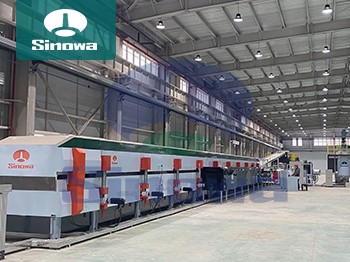
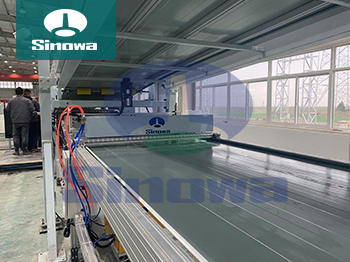
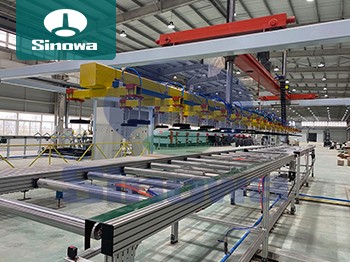
For more than ten years, we have never deliver two same lines to our client, there are all the crystallization of continuous improvement, we have been trying to surpass ourselves, create better products to serve our customers, and also accumulate our brand value, become a unique Chinese enterprise, we are no longer synonymous with low price and mediocre quality.
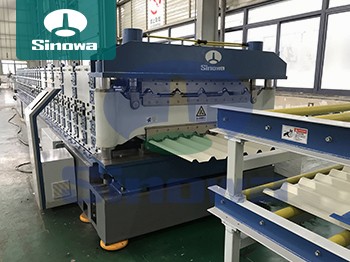
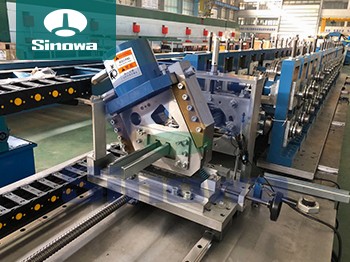
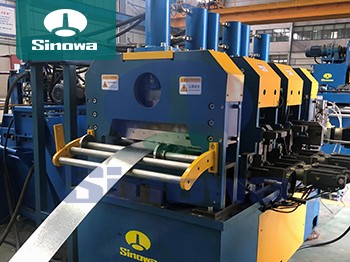
Since 2014, we have established our Cold Forming Machine design and manufacturing department, started our R&D and production of high-end cold forming equipment. Base on our innovative and high-end and efficient product concepts,In just a few years, we have created our own impressive achievements in this field. Whether ordinary construction products of Roll Forming Machine, or precision steel pipe equipment, elevator profile equipment, automotive profile equipment, precision door and window profile equipment, we are the leader of Chinese equipment with high efficiency, high quality and beautiful appearance design.
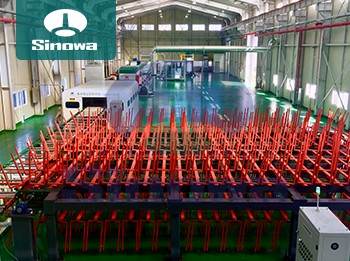
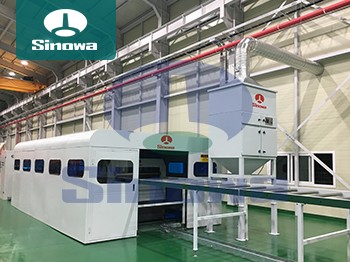
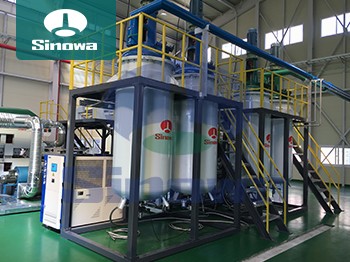
For more than ten years, relying on our innovative manufacturing concept and excellence in quality, reliable and trustworthy service to customers, we cooperate with customers all over the world, exported products to Canada, South Korea, Israel, Australia, the Middle East and other more than 20 countries and regions. contributed to building energy conservation and low-carbon production and have won widespread praise.
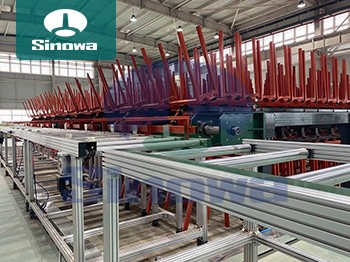
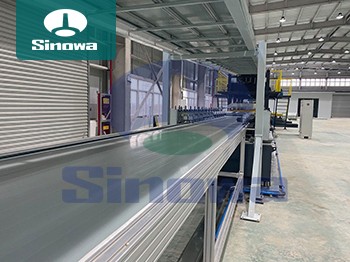
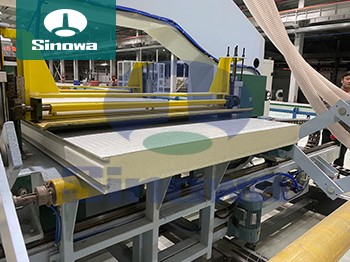
Sinowa has invested outstanding efforts in both the Continuous Insulated PU Sandwich Panel Production Line and the Roll Forming Line, This is why our products are more efficiency, quality, automatic control technology, environmental protection, energy consumption indicators and the appearance and safety protection are comprehensively leading, Some subversive design changes in many major technical points,these major innovations make our products excellent in price/performance and user experience.
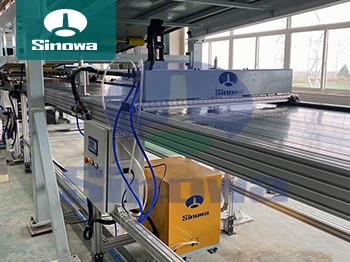
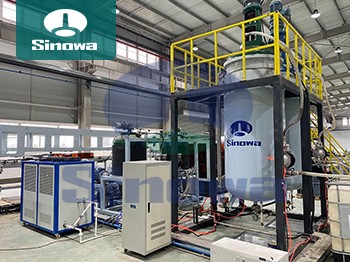
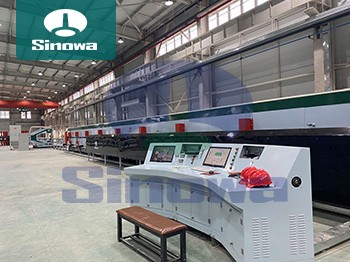
We always position our PU Sandwich Panel Line in a very high standard, strictly optimize every design for more progress. Our continuous innovation, continuous improvement of the technical design principles make us improved product updates and always pay attention to high efficiency, energy saving and stability, reduce customer worries, become their reliable business partners.
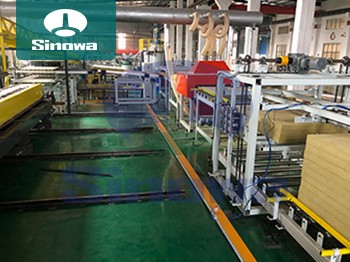
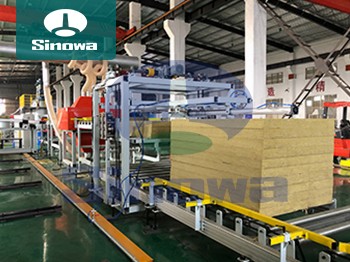
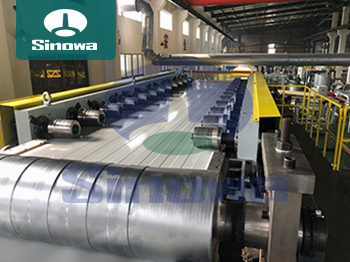
Sinowa Engineering Technology Research Center has always focused on technology research and development. we achieved a large number of scientific research results and unique patented process technology in related product research and development t every year, we continuously improve our products to have high precision and high stability in practical applications, and provide high quality for customers all over the world. Excellent technical personnel, continuous R&D investment and the technical concept of "continuous innovation and continuous improvement" are the strong guarantee for Sinowa to stand out from competitors.
Our focus is not on cost, we always pay attention to the quality of the product and how to do it better!
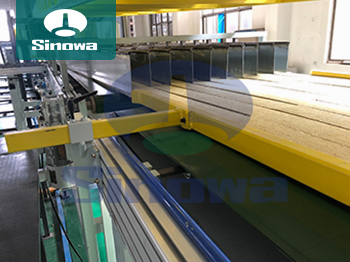
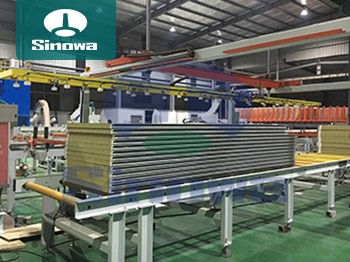
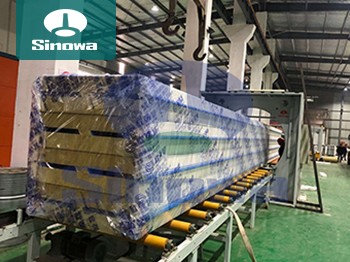
Production process control is a core part of implementing product planning and implementing quality control, which we establish A full range of production management processes and product logistics systems. We firmly believe that production without control and rules will only produce garbage products, so we pay more attention to first-class production control training while establishing a first-class production workshop, strictly follow the 5S management concept, establish systems and standards, ensure that our Sandwich Panel Machines are qualified throughout the process, achieve the technical goals of the company's products to achieve our brand value.
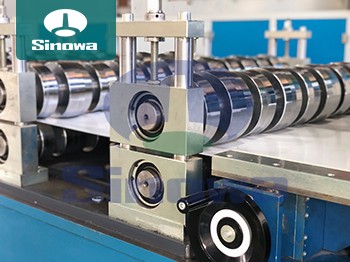
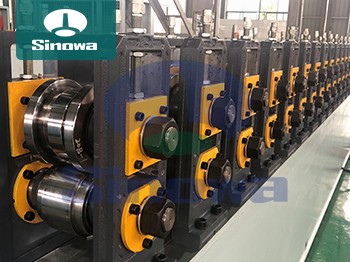
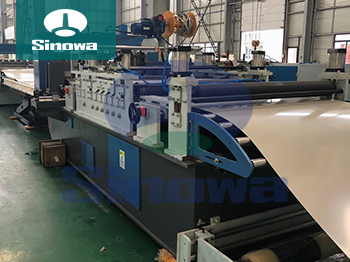
Sinowa has a very comprehensive quality control system, has a group of professional quality control personnel, familiar with almost all testing methods and standards in the field of machining, established a complete mechanical and chemical laboratory with which can fully control all quality links and ensure that all data are accurate, timely optional and available.
Relying on our good Sandwich Panel Machine quality and trustworthy service, our products are exported to more than a dozen countries in the world, and the service field continues to expand, winning more and more praise. Every customer will be our best friend!
PU sandwich panels used for houses are composite building materials composed of a rigid polyurethane (PU) foam core sandwiched between two layers of structural facing materials, such as metal sheets, fiberglass, or cement boards. The PU foam core is known for its superior thermal insulation, sound insulation, and waterproof performance, while the outer facing materials provide structural strength and resistance to weather conditions, making the panels suitable for both wall and roof applications in house construction. Unlike traditional building materials that require complex on-site processing, PU sandwich panels produced by specialized machines can be directly transported to the construction site for rapid assembly, greatly shortening the construction period and reducing labor costs. This modular and prefabricated production method has gradually replaced the traditional on-site pouring and bricklaying methods, becoming a new trend in modern house construction.
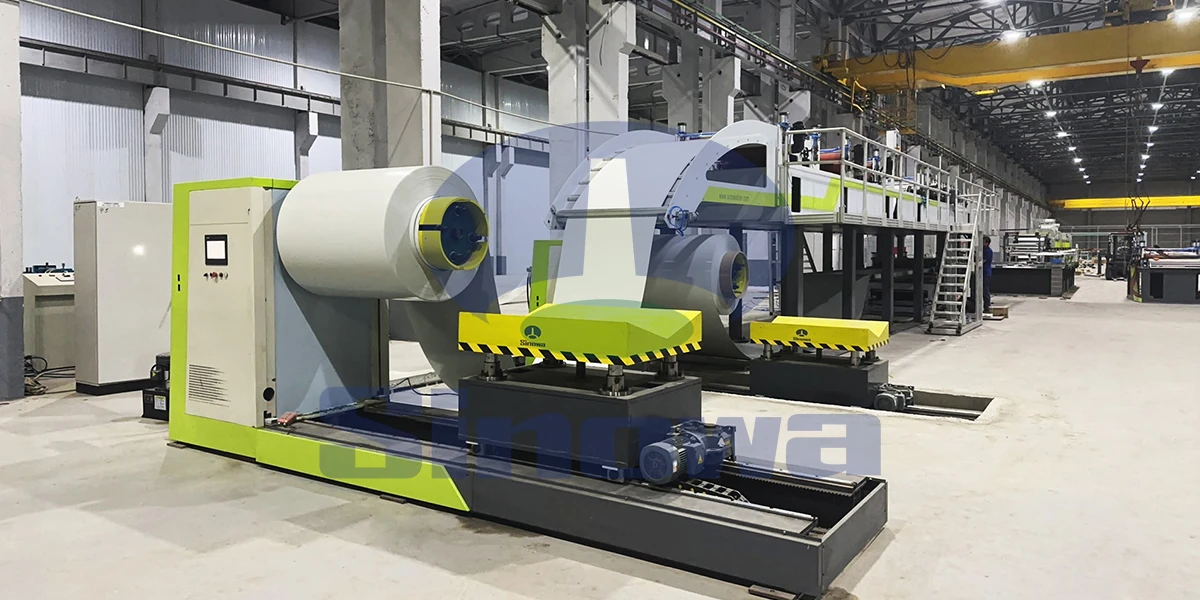
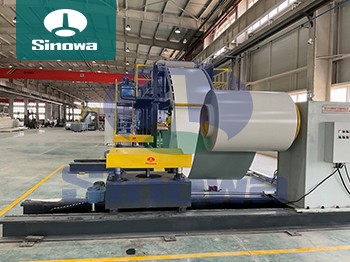
The PU sandwich panel machine is designed to realize the continuous and automated production of these composite panels, integrating multiple functional modules to complete the entire production process from raw material preparation to finished product stacking. The main components of the machine usually include decoilers, roll forming systems, pre-heating devices, PU high-pressure foaming systems, double-belt conveyor systems, cutting systems, stacking systems, and cooling conveyor systems. Each module cooperates closely to ensure the smooth operation of the production line and the high quality of the final products. The decoiler is responsible for uncoiling the coiled facing materials, such as galvanized steel or aluminum sheets, and feeding them into the subsequent processing links stably. The roll forming system processes the facing materials into the required shape and size through a series of rolling stands, ensuring the flatness and structural stability of the panels. The pre-heating device adjusts the temperature of the facing materials to the optimal range for bonding with the PU foam core, enhancing the adhesion between the layers and improving the overall structural integrity of the sandwich panels.
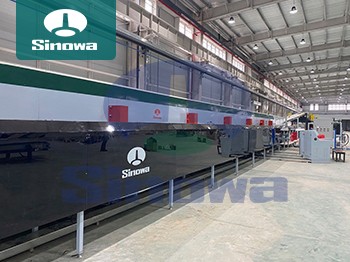
The core part of the PU sandwich panel machine is the PU high-pressure foaming system, which is responsible for mixing and foaming the raw materials of the PU foam core. The PU foam is formed by the chemical reaction of polyol, isocyanate, foaming agent, catalyst, and other additives. These raw materials are stored in separate tanks and transported to a high-pressure metering system, which accurately controls the proportion of each component according to the required specifications of the PU core. The precise metering of raw materials is crucial, as it directly affects the density, thermal insulation performance, and structural strength of the foam core. After mixing, the liquid PU mixture is injected between the two layers of facing materials through a high-pressure spraying device, and then undergoes a chemical reaction to expand and solidify, forming a uniform and dense foam core that is tightly bonded to the facing materials. The double-belt conveyor system transports the composite panels during the foaming and solidification process, and the double-belt heating system maintains a stable temperature to ensure the full solidification of the PU foam, avoiding problems such as uneven foaming or insufficient bonding.
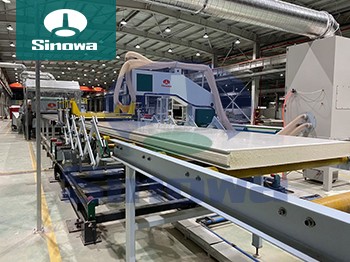
After the foaming and solidification process, the composite panels are transported to the cutting system, which cuts the continuous panels into fixed lengths according to the preset specifications. The cutting system usually adopts a non-stop cutting method, which can realize continuous production without interrupting the operation of the production line, greatly improving production efficiency. The cutting process is controlled by a computer system, ensuring the accuracy of the cutting length and the flatness of the cutting surface. After cutting, the finished panels are transported to the stacking system, which automatically arranges and stacks the panels, reducing manual intervention and improving the efficiency of product storage and transportation. The cooling conveyor system is responsible for cooling the finished panels to room temperature before stacking, ensuring that the panels maintain their shape and performance and avoiding deformation due to high temperature.
One of the most significant advantages of the PU sandwich panel machine for house construction is its high degree of automation. The entire production line adopts a full computer integrated control system, integrating digital servo technology, frequency conversion vector technology, and hydraulic control technology, realizing the integrated connection, centralized control, and centralized management of all modules. Operators only need to input the required production parameters, such as panel thickness, length, and foam density, through the human-machine interaction interface, and the machine can complete the entire production process automatically. This not only reduces the number of operators required for the production line—usually only 7 to 8 trained professionals are needed to operate the entire line—but also reduces the impact of human factors on product quality, ensuring that each batch of panels has consistent performance and specifications. The high automation level also reduces labor intensity, improves work efficiency, and lowers production costs for enterprises engaged in panel production.
Another important advantage of the PU sandwich panel machine is its strong flexibility and adaptability, which can meet the diverse needs of house construction. The machine can be adjusted according to the requirements of different house types and construction scenarios, producing panels of different thicknesses, widths, and surface styles. For example, for low-rise residential buildings, lightweight and thin panels can be produced to reduce the load on the building structure; for houses in cold regions, thicker panels with higher density foam cores can be produced to enhance thermal insulation performance; for houses with special aesthetic requirements, panels with different surface colors and textures can be produced by changing the facing materials or processing techniques. In addition, the machine is compatible with various facing materials, such as steel, aluminum, and cement boards, allowing manufacturers to choose the most suitable materials according to the actual needs of house construction, further expanding the application scope of PU sandwich panels.
The PU sandwich panels produced by the machine have excellent performance, which makes them widely used in various types of house construction. In terms of thermal insulation, the PU foam core has a very low thermal conductivity, which can effectively block the transfer of heat between the inside and outside of the house, maintaining a stable indoor temperature. This not only improves the comfort of the house but also reduces energy consumption for heating and cooling, helping to achieve energy conservation and environmental protection goals. Compared with traditional building materials such as brick and concrete, PU sandwich panels can reduce indoor energy consumption by 30% or more, which is of great significance in the context of global energy conservation and emission reduction. In terms of structural strength, although the panels are lightweight, they have high compressive and tensile strength, which can provide reliable structural support for the house. The combination of the facing materials and the foam core makes the panels resistant to wind, rain, and other harsh weather conditions, ensuring the durability and service life of the house.
Sound insulation is another important performance advantage of PU sandwich panels produced by the machine. The dense PU foam core can effectively absorb sound waves, reducing the transmission of noise from the outside to the inside of the house and creating a quiet and comfortable living environment. This is particularly important for houses located in noisy areas, such as near roads or commercial districts. In addition, PU sandwich panels have good waterproof and moisture-proof performance. The PU foam core is inherently waterproof, and the tight bonding between the foam core and the facing materials can prevent water from seeping into the interior of the panels, avoiding problems such as mold growth and structural damage caused by moisture. This makes the panels suitable for use in humid areas or houses with high waterproof requirements, such as bathrooms and kitchens.
In the construction of houses, the use of PU sandwich panels produced by the PU sandwich panel machine can greatly shorten the construction period. Traditional house construction usually requires on-site bricklaying, plastering, and thermal insulation construction, which is time-consuming and labor-intensive. In contrast, PU sandwich panels are prefabricated in the factory, and the construction site only needs to assemble the panels through simple splicing and fixing. For a residential building of the same size, the construction period using PU sandwich panels can be shortened by 40% or more compared with traditional methods. This not only reduces the cost of construction equipment rental and management but also allows the house to be put into use earlier, bringing economic benefits to the construction party and the owner.
The application of the PU sandwich panel machine also contributes to the sustainable development of the construction industry. The raw materials used in the production of PU sandwich panels can be recycled and reused to a certain extent, reducing the waste of resources. In addition, the energy-saving performance of the panels can reduce the consumption of fossil fuels for heating and cooling, reducing carbon emissions and environmental pollution. The machine itself also adopts energy-saving design, optimizing the power consumption of each module, reducing energy waste during the production process. With the increasing emphasis on environmental protection and sustainable development, the PU sandwich panel machine and its products will play a more important role in the future house construction industry.
Proper operation and maintenance of the PU sandwich panel machine are crucial to ensure its stable operation and long service life. Before the machine is put into operation, operators should carefully read the operation manual, master the working principle and operation steps of the machine, and conduct pre-operation inspections to ensure that all components are in good condition. During the operation process, operators should closely monitor the operation status of the machine, promptly find and handle any abnormalities, such as vibrations, abnormal noises, or material jams. Regular maintenance of the machine is also necessary, including cleaning the equipment, checking the tightness of bolts, lubricating moving parts, and replacing worn components. This can not only ensure the stable performance of the machine but also extend its service life, reducing the cost of equipment maintenance and replacement.
In rural areas, the PU sandwich panel machine has brought new opportunities for house construction. Rural houses often have the characteristics of simple structure, short construction period, and low cost requirements, and PU sandwich panels just meet these needs. The lightweight panels are easy to transport and install, which is suitable for rural areas with inconvenient transportation. The thermal insulation and waterproof performance of the panels can improve the living conditions of rural residents, reducing the impact of harsh weather on the house. In addition, the low production cost of PU sandwich panels makes them affordable for rural residents, helping to promote the renovation of rural houses and improve the quality of rural housing.
In urban areas, the PU sandwich panel machine is widely used in the construction of affordable housing, temporary shelters, and modular houses. Affordable housing requires cost control and rapid construction, and PU sandwich panels can meet both requirements, helping to solve the housing problem of low-income groups. Temporary shelters, such as those used for disaster relief or construction site dormitories, require rapid deployment and good performance, and PU sandwich panels produced by the machine are an ideal choice due to their quick assembly and excellent durability. Modular houses, which are becoming increasingly popular in urban areas, rely on prefabricated panels produced by the PU sandwich panel machine to realize rapid assembly and disassembly, improving the flexibility and reusability of the house.
With the continuous development of the construction industry, the PU sandwich panel machine is also constantly being upgraded and improved. New technologies, such as intelligent control and remote monitoring, are being integrated into the machine, making the production process more intelligent and efficient. The improvement of foaming technology and raw material formula also makes the performance of PU sandwich panels better, such as higher thermal insulation, stronger fire resistance, and longer service life. In the future, with the continuous advancement of technology and the increasing demand for energy-saving and environmentally friendly buildings, the PU sandwich panel machine will play a more important role in house construction, promoting the transformation and upgrading of the construction industry and creating a more comfortable, energy-saving, and durable living environment for people.
In conclusion, the PU sandwich panel machine is an indispensable piece of equipment in modern house construction. Its high automation, strong flexibility, and efficient production capacity ensure the stable quality and high efficiency of PU sandwich panels, which have become an important material for house construction due to their excellent thermal insulation, sound insulation, waterproof, and structural performance. The application of the machine not only shortens the construction period, reduces labor costs, and improves construction efficiency but also contributes to energy conservation, environmental protection, and sustainable development. Whether in rural or urban areas, whether for residential buildings or temporary shelters, the PU sandwich panel machine and its products have brought new vitality to the construction industry, and will continue to play an important role in the future development of house construction, helping to build a better living environment for people.
« PU Sandwich Panel Machine For House » Update Date: 2026/3/2
Tags: Continuous PU Sandwich Panel Machine , PU Sandwich Panel Machine ,
URL: https://m.sinowa.cn/blog/pu-sandwich-panel-machine-for-house.html
A pu sandwich panel line stands as a highly efficient and automated production solution dedicated to manufacturing high-performance insulated panels, playing a vital role in modern construction and industrial engineering sectors. This integrated production system streamlines the entire manufacturing process, starting with the uncoiling and leveling of outer facing materials, which are carefully treated to ensure flat, smooth surfaces free of defects and suitable for subsequent bonding. Next comes the core production step: precise mixing and uniform distribution of polyurethane raw materials, where specialized equipment controls the ratio and flow rate strictly to guarantee consistent foam density and stable bonding performance between the core and facings. The pu sandwich panel machine features a controlled curing and forming system that maintains stable temperature and pressure conditions, allowing the polyurethane foam to fully expand, solidify and bond tightly with the upper and lower layers, forming a rigid, durable sandwich structure. Post-forming, the panels go through accurate cutting and finishing processes to meet diverse size specifications demanded by different projects. Designed for continuous operation, this pu sandwich panel production line boosts manufacturing efficiency remarkably while ensuring uniform product quality across batches, reducing manual errors and material waste effectively. The finished PU sandwich panels deliver outstanding thermal insulation, sound absorption and structural strength, making them widely applicable in building roofs, walls, cold storage facilities and industrial workshops, adapting to various environmental and functional needs with reliable performance and long service life.