- Home
- Sandwich Panel Line
- Roll Forming Machine
- CZ Purlin Roll Forming Machine
- Door Window Curtain Partition Roll Forming Machine
- Gutter Roll Forming Machine
- Clean Partition Panel Machine
- Corrugated Panel Roll Forming Machine
- Double Layer Roof Roll Forming Machine
- High Speed Keel Roll Forming Machine
- Light Steel-Frame Structure Production Line
- C Channel Roll Forming Machine
- Insulated Panels
- Steel Profiles
- About
- Contact
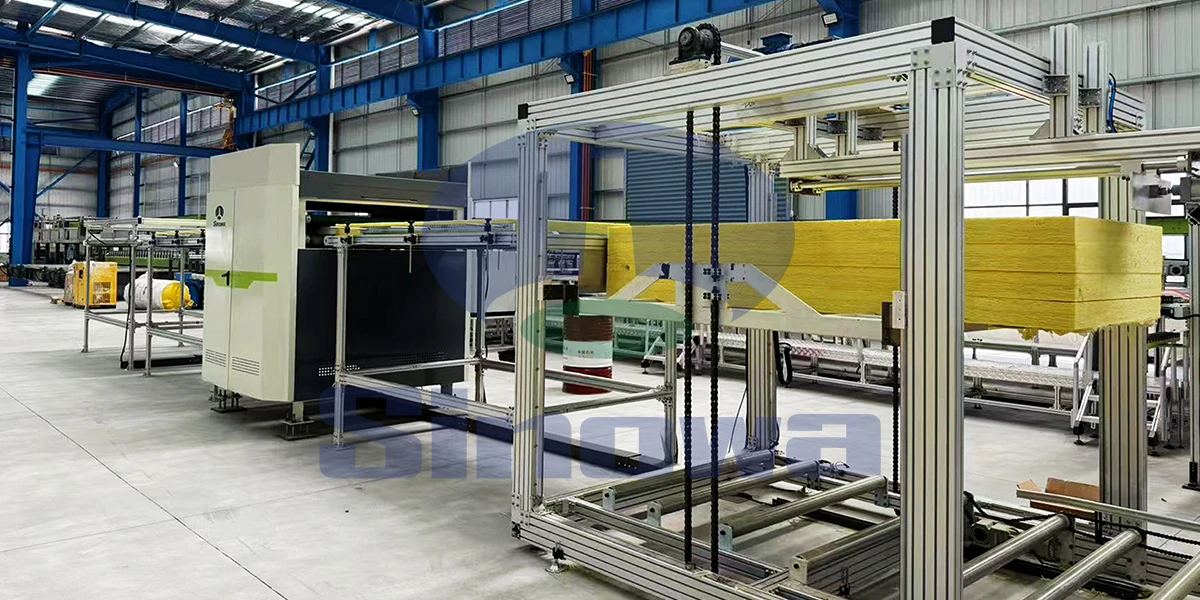
Rock Wool Sandwich Panel Line
Sinowa is a supplier and manufacturer of Rock Wool Sandwich Panel Line in china, customization on demand width a reasonable price.
In the modern construction and building materials sector, the rock wool sandwich panel line stands as a pivotal production system that delivers high-performance composite panels tailored for diverse structural and functional demands. Unlike traditional single-layer building materials, rock wool sandwich panels integrate a robust core material with durable outer facings, merging multiple advantageous properties into a single, versatile product, and the dedicated production line ensures consistent quality, precise molding, and scalable output to meet the evolving needs of residential, commercial, industrial, and specialized construction projects.
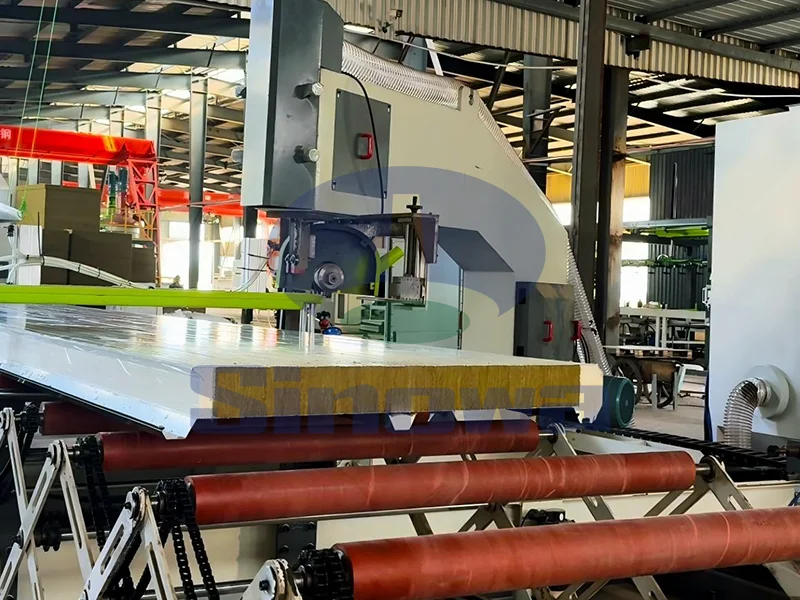
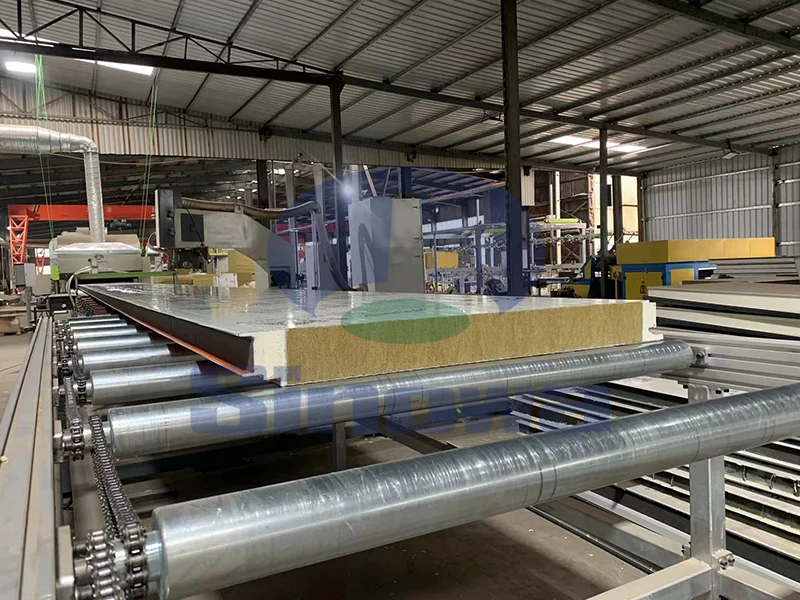
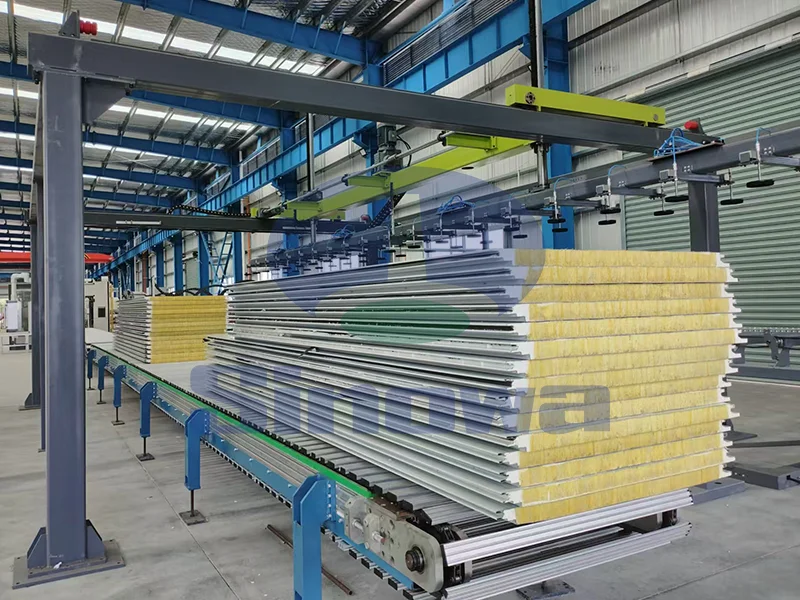
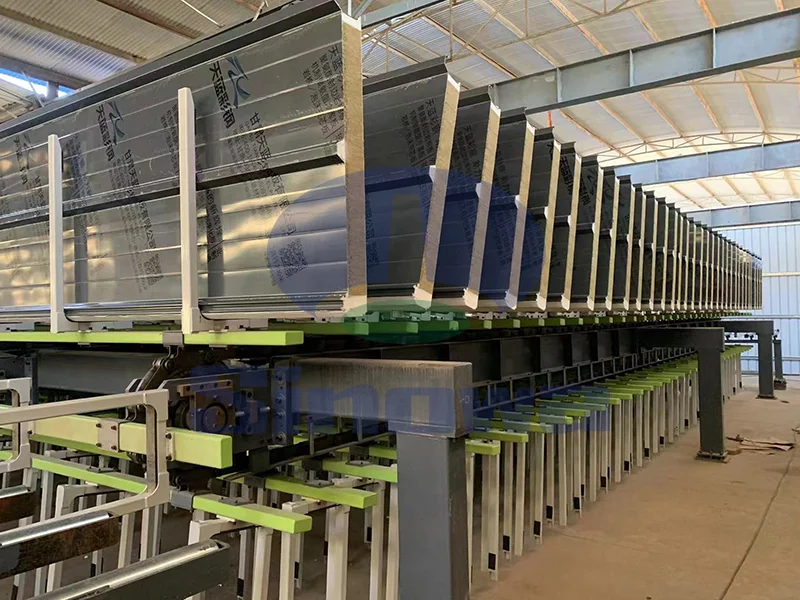
To begin with the structural composition of the rockwool sandwich panel line, it is a fully integrated, modular manufacturing system that streamlines the entire production process from raw material handling to finished panel packaging, with each component working in tandem to uphold dimensional accuracy, material bonding strength, and production efficiency. The line typically comprises several core functional segments, starting with the raw material preparation unit, which manages the processing and feeding of rock wool core materials and metal facing sheets. Rock wool, the primary core material, is derived from natural volcanic rock processed into high-density, fibrous insulation blocks, and this unit ensures the rock wool is cut, trimmed, and positioned uniformly to avoid gaps or uneven density across the panel core. The metal facing treatment section follows, where thin steel or aluminum sheets undergo leveling, deburring, and surface pre-treatment to enhance adhesion with the rock wool core; this step is critical for eliminating surface contaminants that could compromise the long-term bonding between the core and facings. Next is the composite forming and laminating unit, the heart of the production line, where the pre-treated rock wool core is sandwiched between the two outer metal facings under controlled temperature and pressure. This unit employs precision pressing mechanisms to create a tight, monolithic bond between the three layers, eliminating voids and ensuring the panel maintains structural integrity under mechanical stress. Subsequent segments include the precision cutting and sizing unit, which trims the continuous panel sheets into custom lengths and widths per project requirements, the curing and cooling unit that stabilizes the panel structure and solidifies the adhesive bonds, and the final inspection and packaging unit that checks for surface defects, dimensional deviations, and core uniformity before the panels are prepared for storage and transportation. The modular design of the production line allows for flexible adjustments, enabling manufacturers to modify panel thickness, core density, and facing specifications with minimal downtime, catering to a wide spectrum of project-specific needs without overhauling the entire system.
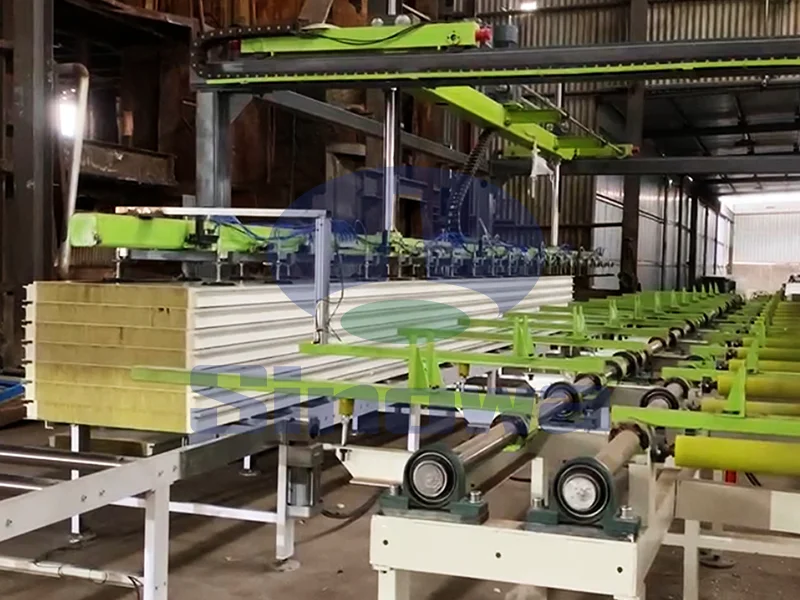
The exceptional performance of rock wool sandwich panels, a direct result of the precise manufacturing process enabled by the dedicated production line, is what distinguishes these panels from other composite building materials, encompassing thermal insulation, fire resistance, acoustic attenuation, structural stability, and weather durability. One of the most prominent performance features is superior thermal insulation, driven by the unique fibrous structure of the rock wool core. The intertwined mineral fibers create countless tiny air pockets within the core, which significantly impede the transfer of heat and cold, making the panels highly effective at maintaining stable indoor temperatures. This thermal efficiency reduces energy consumption for heating and cooling in enclosed spaces, aligning with global trends toward energy-efficient and sustainable construction. Equally notable is the inherent fire resistance of rock wool sandwich panels; as a non-combustible mineral-based material, rock wool does not ignite, release toxic fumes, or contribute to flame spread when exposed to high temperatures or open flames. The dense core acts as a natural fire barrier, slowing the propagation of fire and providing valuable evacuation time in buildings, a critical safety attribute for high-occupancy and industrial structures. Beyond thermal and fire performance, these panels offer excellent acoustic insulation capabilities, absorbing airborne sound waves and reducing impact noise transmission between spaces. The fibrous rock wool core dampens sound vibrations, creating quieter indoor environments, which is invaluable for buildings requiring sound control such as offices, educational facilities, and residential complexes. Structurally, rock wool sandwich panels exhibit remarkable rigidity and load-bearing capacity despite their relatively lightweight composition. The bonded sandwich structure distributes weight evenly across the panel surface, enabling the panels to withstand wind loads, snow accumulation, and minor mechanical impacts without warping, cracking, or deforming. Additionally, the metal outer facings provide protection against moisture penetration, UV radiation, and corrosion, ensuring the panels retain their performance and appearance even in harsh environmental conditions, from humid coastal regions to cold, high-altitude areas. The combination of these performance traits makes rock wool sandwich panels a multifunctional solution that addresses both structural and comfort-related requirements in construction projects.
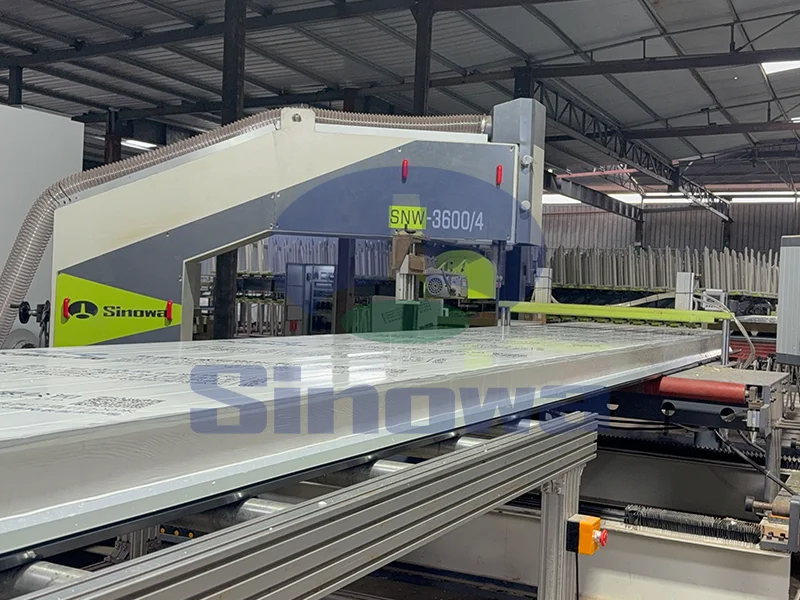
Rock wool sandwich panels manufactured by the specialized production line are categorized into distinct types based on structural design, facing materials, core specifications, and intended application scenarios, each engineered to optimize performance for specific use cases. The most common classification is based on panel function, dividing panels into wall panels, roof panels, and partition panels, each with tailored structural features. Wall panels are designed with enhanced lateral strength and weather-resistant facings, optimized for vertical installation on building exteriors and interiors; they feature smooth or textured surface finishes to balance aesthetic appeal and protective performance, with consistent thickness to ensure uniform insulation and structural support across wall surfaces. Roof panels, by contrast, are engineered with higher load-bearing capacity and water-shedding profiles, often incorporating slight ribbing or corrugation to channel rainwater and snowmelt away from the roof surface, preventing water accumulation and structural damage. These panels prioritize compressive strength to withstand overhead loads and environmental stressors, making them ideal for flat and low-slope roof systems. Partition panels are lightweight yet sturdy, focused on interior space division, with enhanced acoustic insulation to create separate, soundproofed areas within a building; they are easy to install and modify, offering flexibility for interior layout adjustments. Another classification is based on core density and thickness, with low-density, medium-density, and high-density core variants available. Low-density panels are lightweight and cost-effective, suitable for non-load-bearing interior applications where basic insulation and sound control are needed. Medium-density panels strike a balance between weight and performance, serving as a versatile option for both interior and exterior wall systems in standard commercial and residential buildings. High-density panels feature a compacted rock wool core with maximum structural rigidity and fire resistance, designed for heavy-duty industrial applications, high-rise buildings, and structures with stringent safety and load-bearing requirements. Panels can also be categorized by outer facing materials, with galvanized steel facings offering exceptional durability and corrosion resistance, aluminum facings providing lightweight versatility and aesthetic flexibility, and colored coated facings adding decorative value while maintaining protective properties. Each type is produced with precision on the rock wool sandwich panel line, with adjustable production parameters ensuring that every variant meets the required performance thresholds for its intended use.
The versatility of rock wool sandwich panels, enabled by their robust performance and diverse types, translates to an extensive range of applications across the construction industry, spanning industrial, commercial, residential, and specialized sectors. In the industrial sector, these panels are widely used for the construction of factories, warehouses, logistics centers, and manufacturing facilities. The non-combustible core and high structural strength make them suitable for industrial buildings that house heavy machinery, store flammable materials, or require consistent temperature control, while the quick-installation design reduces construction timelines and minimizes operational downtime for industrial projects. For commercial construction, rock wool sandwich panels are a top choice for shopping malls, office buildings, hotels, and retail spaces, offering a blend of aesthetic versatility, thermal efficiency, and fire safety. The panels’ smooth finishes and customizable facing options enhance the visual appeal of commercial exteriors and interiors, while their acoustic insulation properties create comfortable, productive work and customer environments. In residential construction, they are used for low-rise and mid-rise residential buildings, prefabricated homes, and residential extensions, providing energy-efficient insulation, soundproofing, and fire protection for living spaces. The lightweight nature of the panels reduces the overall structural load of residential buildings, simplifying foundation design and construction. Specialized construction projects also rely heavily on rock wool sandwich panels, including cold storage facilities, clean rooms, laboratories, and healthcare facilities. Cold storage warehouses benefit from the panels’ exceptional thermal insulation, which maintains low, stable temperatures required for perishable goods storage, minimizing energy waste and preserving product quality. Clean rooms and laboratories use these panels for their smooth, non-porous surfaces that resist dust accumulation and are easy to sanitize, coupled with reliable insulation to maintain controlled environmental conditions. Healthcare facilities such as hospitals and clinics prioritize the panels’ fire resistance and acoustic insulation, ensuring patient safety and creating quiet, hygienic medical environments. Additionally, rock wool sandwich panels are used for temporary construction projects, emergency shelters, and modular buildings, thanks to their portability, quick assembly, and durable performance in temporary settings. Even in infrastructure projects, such as noise barriers along highways and industrial enclosures, the panels’ acoustic absorption and weather resistance make them an effective solution for reducing noise pollution and protecting equipment.
Beyond these core applications, the adaptability of rock wool sandwich panels continues to expand as construction practices evolve, with the advanced production line supporting ongoing innovations in panel design and performance. Manufacturers can fine-tune core composition, facing thickness, and panel dimensions to meet the unique demands of niche projects, from eco-friendly green buildings to extreme-environment structures. The integration of the rock wool sandwich panel line into modern building material production not only ensures consistent quality and scalability but also drives the development of more sustainable, efficient, and safe construction solutions. Unlike fragile or single-purpose building materials, rock wool sandwich panels deliver long-term value by combining multiple critical performance features, reducing the need for separate insulation, fireproofing, and structural materials, and streamlining the construction process. As the global construction industry increasingly prioritizes energy efficiency, safety, and sustainability, the demand for high-quality rock wool sandwich panels produced by dedicated production lines continues to rise, solidifying their role as an indispensable component in contemporary building design and engineering.
In summary, the rock wool sandwich panel line is a sophisticated manufacturing system that enables the production of high-performance composite panels with exceptional structural, thermal, fire-resistant, and acoustic properties. The line’s modular, integrated structure ensures precise, efficient production of diverse panel types, each tailored to specific functional and application needs, from wall and roof systems to specialized industrial and commercial solutions. The finished panels’ unique combination of durability, insulation, safety, and versatility makes them suitable for an unparalleled range of construction scenarios, addressing the core needs of modern building projects while supporting sustainable and efficient construction practices. As a cornerstone of the composite building materials industry, rock wool sandwich panels and their dedicated production line continue to shape the future of construction, offering reliable, high-value solutions that balance performance, practicality, and adaptability for years to come.
« Rock Wool Sandwich Panel Line » Update Date: 2026/4/14
URL: https://m.sinowa.cn/blog/rock-wool-sandwich-panel-line.html
Polyurethane Rock Wool Sandwich Panel Line
2026-03-11In the modern construction and industrial engineering sectors, composite sandwich panels have emerged as indispensable building materials, and the polyurethane rock wool sandwich panel stands out prominently among them, t…Edge Sealing Rock Wool Sandwich Panel Line
2026-03-09The edge sealing rock wool sandwich panel line stands as a pivotal production system in the modern construction and building materials industry, engineered to manufacture high-performance composite panels that merge struc…Foam Rock Wool Sandwich Panel Line
2025-12-01Insulation Rock Wool Sandwich Panel Line
2025-12-01Polyurethane Edge Sealing Rock Wool Sandwich Panel Line
2025-05-29Polyurethane Fireproof Rock Wool Sandwich Panel Line
2025-03-24Socket Type Rock Wool Sandwich Panel Line
2024-10-07Fireproof Rock Wool Sandwich Panel Line
2024-09-20PU Rock Wool Sandwich Panel Lines
2024-06-06Rock Wool Sandwich Panel Line Made In China
2024-03-06
A pu sandwich panel line stands as a highly efficient and automated production solution dedicated to manufacturing high-performance insulated panels, playing a vital role in modern construction and industrial engineering sectors. This integrated production system streamlines the entire manufacturing process, starting with the uncoiling and leveling of outer facing materials, which are carefully treated to ensure flat, smooth surfaces free of defects and suitable for subsequent bonding. Next comes the core production step: precise mixing and uniform distribution of polyurethane raw materials, where specialized equipment controls the ratio and flow rate strictly to guarantee consistent foam density and stable bonding performance between the core and facings. The pu sandwich panel machine features a controlled curing and forming system that maintains stable temperature and pressure conditions, allowing the polyurethane foam to fully expand, solidify and bond tightly with the upper and lower layers, forming a rigid, durable sandwich structure. Post-forming, the panels go through accurate cutting and finishing processes to meet diverse size specifications demanded by different projects. Designed for continuous operation, this pu sandwich panel production line boosts manufacturing efficiency remarkably while ensuring uniform product quality across batches, reducing manual errors and material waste effectively. The finished PU sandwich panels deliver outstanding thermal insulation, sound absorption and structural strength, making them widely applicable in building roofs, walls, cold storage facilities and industrial workshops, adapting to various environmental and functional needs with reliable performance and long service life.