- Home
- Sandwich Panel Line
- Roll Forming Machine
- CZ Purlin Roll Forming Machine
- Door Window Curtain Partition Roll Forming Machine
- Gutter Roll Forming Machine
- Clean Partition Panel Machine
- Corrugated Panel Roll Forming Machine
- Double Layer Roof Roll Forming Machine
- High Speed Keel Roll Forming Machine
- Light Steel-Frame Structure Production Line
- C Channel Roll Forming Machine
- Insulated Panels
- Steel Profiles
- About
- Contact
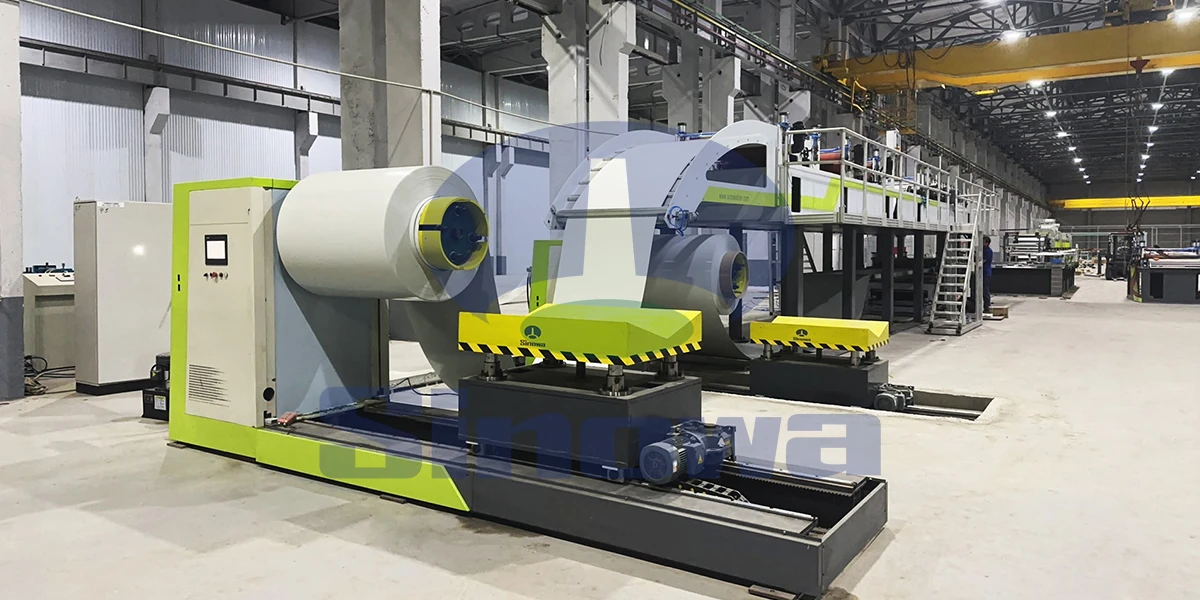
Thermal Insulation Sandwich Panel Line
Sinowa is a thermal insulation sandwich panel line supplier from china, design and custom-made thermal insulation sandwich panel line, know more about thermal insulation sandwich panel line, pls contact us, we will contact you as soon as possible!
In the realm of modern construction and industrial engineering, thermal insulation sandwich panels have emerged as a cornerstone material, revolutionizing building efficiency, structural resilience, and functional versatility. The thermal insulation sandwich panel line, as the core production system for manufacturing these panels, integrates sophisticated engineering, precise processing, and material science to deliver high-quality, consistent products tailored to diverse operational and construction needs. Unlike traditional building materials that often require layered assembly and separate insulation installation, these prefabricated sandwich panels streamline construction workflows, enhance thermal regulation, and boost structural stability, making them indispensable across residential, commercial, industrial, and specialized sectors.
Sinowa dedicated to the research and development of high-end and high-efficiency Sandwich Panel Production Line, Sinowa is comprehensively taking the leading position in terms of efficiency, automation control level, HMI, environment protection and energy consumption, with subversive designs made in some critical technological fields to procure exceptional cost performance and customer-friendly experience for the entire production line. The adoption of system integration technology and bus control technology accomplishes the full automatization of integrated and coordinated control of the entire production line with accessible remote interactive communication. Ranking the first-class level in the world, it is currently the PU Sandwich Panel Machine in the market taking a comprehensive lead in high performance.
Sinowa is a well-known manufacturer and technical service provider of high-end PU Sandwich Panel Machines and various high-performance Cold Roll Forming Machine in China. Our main products include polyurethane double-sided color steel Sandwich Panel Production Line, polyurethane and phenolic soft facing insulation panel production line and high-efficiency roll forming lines.
Sinowa is committed to the development and manufacturing of high-end and high-efficiency Sandwich Panel Lines. Our production lines are leading the way in efficiency, automatic control, human-computer interaction, environmental protection and energy consumption. Using system integration and bus control technology, it realizes the automatic integrated linkage control of the entire production line, and can achieve remote interactive communication, which has the world-class level and a comprehensive leading high-performance production line in the market.
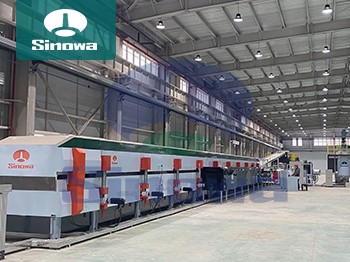
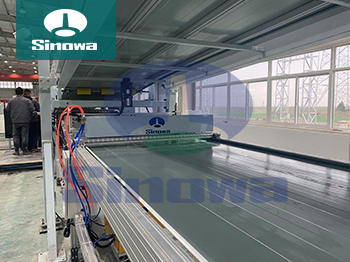
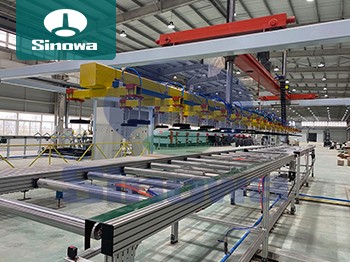
For more than ten years, we have never deliver two same lines to our client, there are all the crystallization of continuous improvement, we have been trying to surpass ourselves, create better products to serve our customers, and also accumulate our brand value, become a unique Chinese enterprise, we are no longer synonymous with low price and mediocre quality.
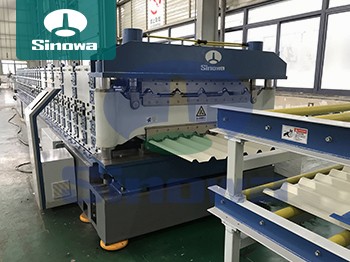
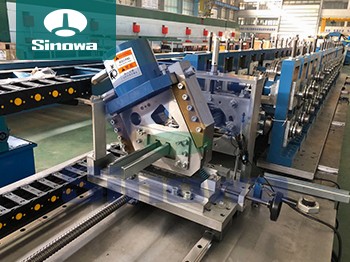
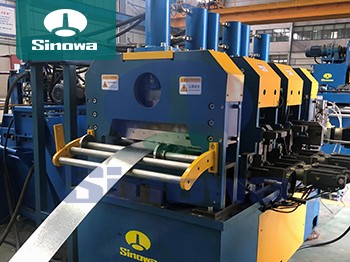
Since 2014, we have established our Cold Forming Machine design and manufacturing department, started our R&D and production of high-end cold forming equipment. Base on our innovative and high-end and efficient product concepts,In just a few years, we have created our own impressive achievements in this field. Whether ordinary construction products of Roll Forming Machine, or precision steel pipe equipment, elevator profile equipment, automotive profile equipment, precision door and window profile equipment, we are the leader of Chinese equipment with high efficiency, high quality and beautiful appearance design.
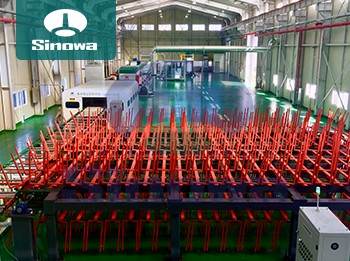
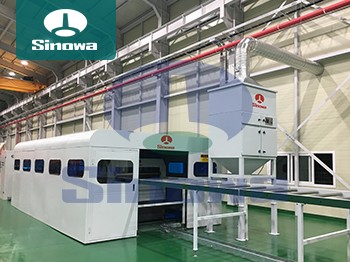
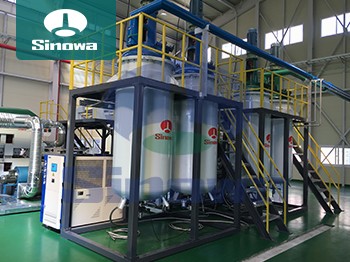
For more than ten years, relying on our innovative manufacturing concept and excellence in quality, reliable and trustworthy service to customers, we cooperate with customers all over the world, exported products to Canada, South Korea, Israel, Australia, the Middle East and other more than 20 countries and regions. contributed to building energy conservation and low-carbon production and have won widespread praise.
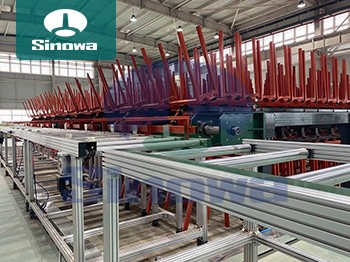
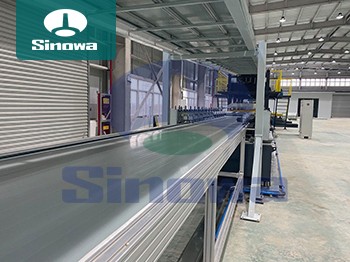
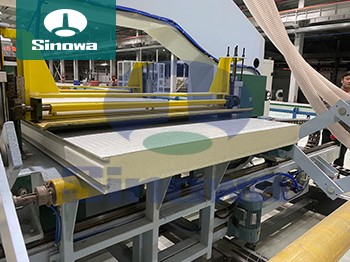
Sinowa has invested outstanding efforts in both the Continuous Insulated PU Sandwich Panel Production Line and the Roll Forming Line, This is why our products are more efficiency, quality, automatic control technology, environmental protection, energy consumption indicators and the appearance and safety protection are comprehensively leading, Some subversive design changes in many major technical points,these major innovations make our products excellent in price/performance and user experience.
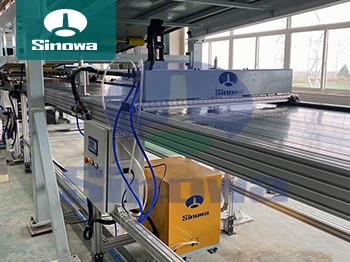
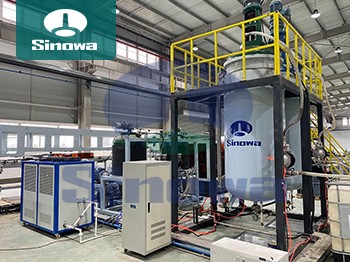
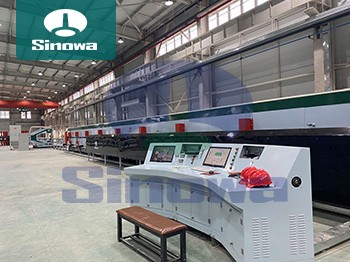
We always position our PU Sandwich Panel Line in a very high standard, strictly optimize every design for more progress. Our continuous innovation, continuous improvement of the technical design principles make us improved product updates and always pay attention to high efficiency, energy saving and stability, reduce customer worries, become their reliable business partners.
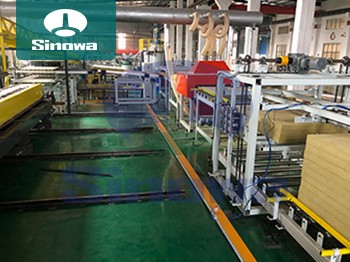
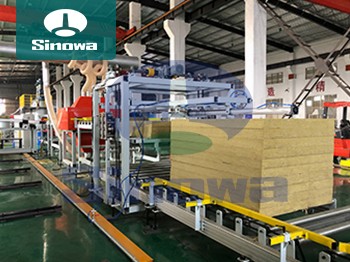
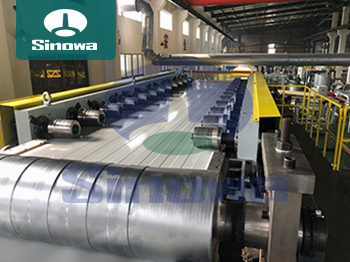
Sinowa Engineering Technology Research Center has always focused on technology research and development. we achieved a large number of scientific research results and unique patented process technology in related product research and development t every year, we continuously improve our products to have high precision and high stability in practical applications, and provide high quality for customers all over the world. Excellent technical personnel, continuous R&D investment and the technical concept of "continuous innovation and continuous improvement" are the strong guarantee for Sinowa to stand out from competitors.
Our focus is not on cost, we always pay attention to the quality of the product and how to do it better!
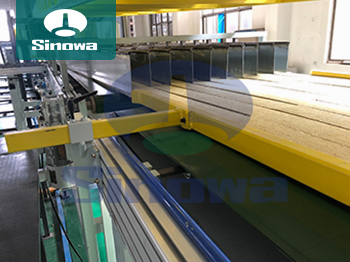
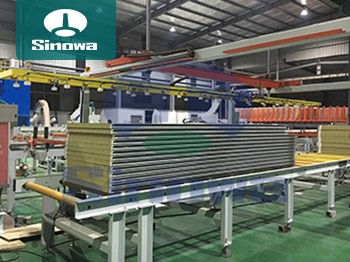
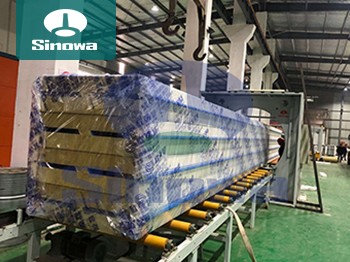
Production process control is a core part of implementing product planning and implementing quality control, which we establish A full range of production management processes and product logistics systems. We firmly believe that production without control and rules will only produce garbage products, so we pay more attention to first-class production control training while establishing a first-class production workshop, strictly follow the 5S management concept, establish systems and standards, ensure that our Sandwich Panel Machines are qualified throughout the process, achieve the technical goals of the company's products to achieve our brand value.
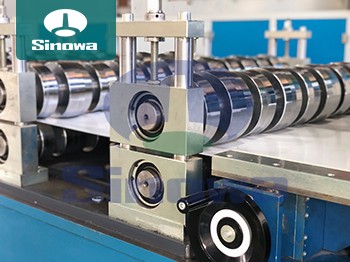
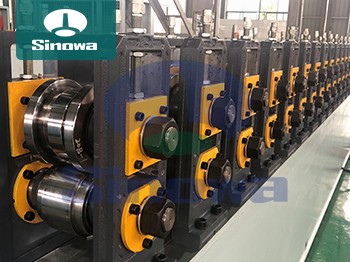
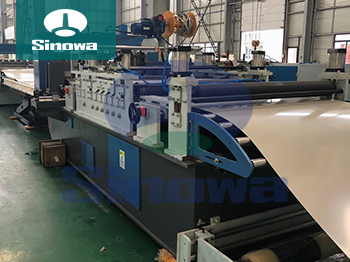
Sinowa has a very comprehensive quality control system, has a group of professional quality control personnel, familiar with almost all testing methods and standards in the field of machining, established a complete mechanical and chemical laboratory with which can fully control all quality links and ensure that all data are accurate, timely optional and available.
Relying on our good Sandwich Panel Machine quality and trustworthy service, our products are exported to more than a dozen countries in the world, and the service field continues to expand, winning more and more praise. Every customer will be our best friend!
At its core, a thermal insulation sandwich panel is a composite structural component, and the production line is engineered to fabricate this layered structure with unwavering precision and uniformity. The fundamental structure of the panel consists of three integral parts: two rigid outer facing layers and a lightweight, insulating core material bonded seamlessly between them. The production line orchestrates every stage of this fabrication process, starting from material feeding and surface treatment to core foaming or shaping, adhesive bonding, pressing, curing, cutting, and final profiling. Each segment of the production line is calibrated to maintain consistent thickness, bonding strength, and dimensional accuracy, ensuring that every finished panel adheres to strict structural standards. The outer facing layers, typically crafted from durable metal sheets such as galvanized steel or aluminum, serve as the protective and load-bearing shell of the panel; these layers are processed to resist corrosion, impact, and environmental wear, while also providing a smooth, customizable surface for aesthetic and functional purposes. The central core, the heart of the panel’s insulation performance, is manufactured to be lightweight yet structurally supportive, with a closed-cell or fibrous internal structure that minimizes heat transfer and maximizes thermal resistance. The bonding process facilitated by the production line is critical: specialized adhesives are applied evenly to create a permanent, robust bond between the facings and core, eliminating gaps or delamination that could compromise structural integrity and insulation efficiency. This layered, bonded structure is not only lightweight but also inherently strong, distributing mechanical stress evenly across the panel surface and enabling it to withstand external pressures such as wind loads, snow loads, and minor impacts without deformation.
The performance characteristics of thermal insulation sandwich panels, shaped meticulously by the design and operation of the production line, are what set them apart from conventional building materials, with thermal efficiency, structural durability, weather resistance, and acoustic insulation standing out as the most prominent traits. Foremost among these is exceptional thermal insulation performance, a defining feature that addresses the global demand for energy-efficient construction. The core materials used in the panels possess extremely low thermal conductivity, meaning they act as a highly effective barrier to heat flow, preventing unwanted heat gain in warm climates and heat loss in cold environments. This thermal stability drastically reduces the energy consumption of heating, ventilation, and air conditioning (HVAC) systems in buildings, creating consistent indoor temperatures and lowering long-term operational costs. Beyond thermal efficiency, the panels exhibit remarkable structural performance despite their lightweight composition. The combination of rigid outer facings and a dense, supportive core grants the panels high flexural strength and load-bearing capacity, allowing them to function as both structural and insulating elements in walls, roofs, and partitions. This dual functionality reduces the need for additional structural supports, simplifying building designs and cutting down on construction materials and labor. Weather resistance is another key performance metric, enhanced by the production line’s surface treatment and sealing processes. The panels are engineered to repel moisture, resist UV radiation, and withstand extreme temperature fluctuations, preventing water penetration, mold growth, and material degradation over time. This weatherproofing ensures long service life, even in harsh outdoor environments such as coastal areas, high-altitude regions, or industrial zones with harsh atmospheric conditions. Additionally, the composite structure of the panels delivers reliable acoustic insulation, absorbing and dampening sound transmission between interior and exterior spaces or between separate rooms. This makes them ideal for environments where noise reduction is a priority, from busy industrial facilities to quiet commercial offices and residential buildings.
Thermal insulation sandwich panels are available in a diverse range of varieties, each distinguished by its core material, which directly dictates its performance profile, suitability for specific environments, and functional applications. The production line is designed to accommodate these different core materials, with adjustable processing parameters to ensure optimal fabrication for each type. One of the most widely used varieties features a rigid polyurethane (PUR) foam core, renowned for its superior thermal insulation properties and lightweight nature. PUR core panels offer exceptional thermal resistance, making them perfect for applications where maximum energy efficiency is required, while their lightweight composition eases transportation and installation. A close variant is the polyisocyanurate (PIR) foam core panel, which retains the excellent thermal performance of PUR but boasts enhanced fire resistance and dimensional stability, making it a preferred choice for projects with heightened safety requirements. Expanded polystyrene (EPS) core panels represent a cost-effective, versatile option, offering reliable thermal insulation and good structural rigidity at a more accessible price point; these panels are widely used in general construction and temporary structures, where basic insulation and structural support are needed without specialized high-performance features. For applications demanding top-tier fire safety and acoustic insulation, mineral wool or rock wool core panels are the optimal selection. These inorganic, non-combustible cores deliver exceptional fire resistance, slowing the spread of flames and reducing smoke emission in the event of a fire, while also providing superior sound dampening. They are highly durable, resistant to high temperatures, and ideal for industrial facilities, public buildings, and high-risk environments where fire safety is non-negotiable. Another specialized variety is the extruded polystyrene (XPS) core panel, which offers enhanced compressive strength and moisture resistance compared to EPS, making it suitable for heavy-load applications and damp environments such as cold storage facilities and underground structures. Each variety maintains the core sandwich panel structure but is tailored via the production line to meet unique performance demands, ensuring that there is a suitable panel type for every construction and industrial need.
The versatility of thermal insulation sandwich panels, coupled with their exceptional performance, has led to their widespread adoption across an extensive array of industries and construction projects, spanning residential, commercial, industrial, agricultural, and specialized sectors. In the realm of commercial and industrial construction, these panels are a staple for building warehouses, manufacturing plants, logistics centers, and commercial workshops. Their quick installation capabilities accelerate project timelines significantly compared to traditional brick-and-concrete construction, while their thermal insulation and structural strength create durable, energy-efficient workspaces that protect equipment, inventory, and personnel. The panels are used for both exterior wall cladding and roof systems, providing a complete envelope solution that enhances building performance and reduces maintenance needs. In the cold chain and food storage industry, thermal insulation sandwich panels are indispensable for constructing cold storage warehouses, refrigerated rooms, blast freezers, and temperature-controlled processing facilities. The superior thermal barrier provided by PUR, PIR, or XPS core panels maintains consistent low temperatures, preventing temperature fluctuations that could spoil perishable goods, reducing refrigeration energy consumption, and ensuring compliance with strict food safety standards. These panels also create airtight, moisture-resistant environments that preserve product quality and extend shelf life.
Residential construction has increasingly embraced thermal insulation sandwich panels, particularly for prefabricated homes, modular housing, and residential extensions. The lightweight nature of the panels reduces foundation loads, while their excellent thermal insulation creates comfortable, energy-efficient living spaces with lower heating and cooling costs. The smooth, customizable outer facings allow for a range of architectural designs, blending functionality with aesthetic appeal, and the quick assembly of panel-based structures speeds up home construction, making them a viable solution for affordable and sustainable housing projects. Agricultural construction is another key application area, with the panels used to build livestock barns, poultry houses, greenhouses, and agricultural storage facilities. The thermal regulation properties maintain stable internal temperatures suitable for animal rearing and crop cultivation, while the moisture-resistant and easy-to-clean surfaces support hygienic agricultural operations. The panels’ durability also withstands the harsh conditions often present in agricultural settings, including exposure to fertilizers, livestock waste, and extreme weather.
Specialized sectors also rely heavily on thermal insulation sandwich panels for their unique performance benefits. In the pharmaceutical and electronics industries, the panels are used to construct cleanrooms and controlled-environment facilities, where their airtight, dust-resistant structure maintains sterile, temperature-stable conditions critical for manufacturing sensitive products. The transportation industry utilizes these panels for fabricating refrigerated truck bodies, shipping containers, and insulated rail cars, enabling the safe transport of temperature-sensitive goods such as food, pharmaceuticals, and chemicals across long distances. Public infrastructure projects, including schools, hospitals, sports facilities, and public transit hubs, also incorporate these panels for their fire resistance, acoustic insulation, and quick installation, creating safe, functional public spaces that meet strict performance and safety requirements. Even in temporary construction scenarios, such as disaster relief shelters, on-site construction offices, and event venues, the panels shine due to their portability, easy assembly, and reliable insulation, providing comfortable, durable temporary structures in a fraction of the time required for traditional builds.
The thermal insulation sandwich panel line stands as a testament to the integration of advanced manufacturing and material science, enabling the mass production of high-performance, versatile building materials that redefine modern construction standards. The carefully engineered structure of the panels, forged by precision production processes, delivers a unique combination of thermal efficiency, structural strength, durability, and adaptability that few traditional materials can match. The diverse range of core material varieties ensures that these panels can be customized to meet the specific demands of every project, from energy-efficient residential homes to high-safety industrial facilities and temperature-critical cold storage units. As global focus on sustainable construction, energy conservation, and efficient building practices continues to intensify, the demand for thermal insulation sandwich panels will only grow, driven by their ability to balance performance, practicality, and long-term value. Whether in large-scale industrial developments, commercial constructions, residential projects, or specialized applications, these panels remain a top-tier solution, embodying the future of efficient, resilient, and adaptable building design and engineering.
« Thermal Insulation Sandwich Panel Line » Update Date: 2026/3/6
Tags:
URL: https://m.sinowa.cn/blog/thermal-insulation-sandwich-panel-line.html
A pu sandwich panel line stands as a highly efficient and automated production solution dedicated to manufacturing high-performance insulated panels, playing a vital role in modern construction and industrial engineering sectors. This integrated production system streamlines the entire manufacturing process, starting with the uncoiling and leveling of outer facing materials, which are carefully treated to ensure flat, smooth surfaces free of defects and suitable for subsequent bonding. Next comes the core production step: precise mixing and uniform distribution of polyurethane raw materials, where specialized equipment controls the ratio and flow rate strictly to guarantee consistent foam density and stable bonding performance between the core and facings. The pu sandwich panel machine features a controlled curing and forming system that maintains stable temperature and pressure conditions, allowing the polyurethane foam to fully expand, solidify and bond tightly with the upper and lower layers, forming a rigid, durable sandwich structure. Post-forming, the panels go through accurate cutting and finishing processes to meet diverse size specifications demanded by different projects. Designed for continuous operation, this pu sandwich panel production line boosts manufacturing efficiency remarkably while ensuring uniform product quality across batches, reducing manual errors and material waste effectively. The finished PU sandwich panels deliver outstanding thermal insulation, sound absorption and structural strength, making them widely applicable in building roofs, walls, cold storage facilities and industrial workshops, adapting to various environmental and functional needs with reliable performance and long service life.