- Home
- Sandwich Panel Line
- Roll Forming Machine
- CZ Purlin Roll Forming Machine
- Door Window Curtain Partition Roll Forming Machine
- Gutter Roll Forming Machine
- Clean Partition Panel Machine
- Corrugated Panel Roll Forming Machine
- Double Layer Roof Roll Forming Machine
- High Speed Keel Roll Forming Machine
- Light Steel-Frame Structure Production Line
- C Channel Roll Forming Machine
- Insulated Panels
- Steel Profiles
- About
- Contact
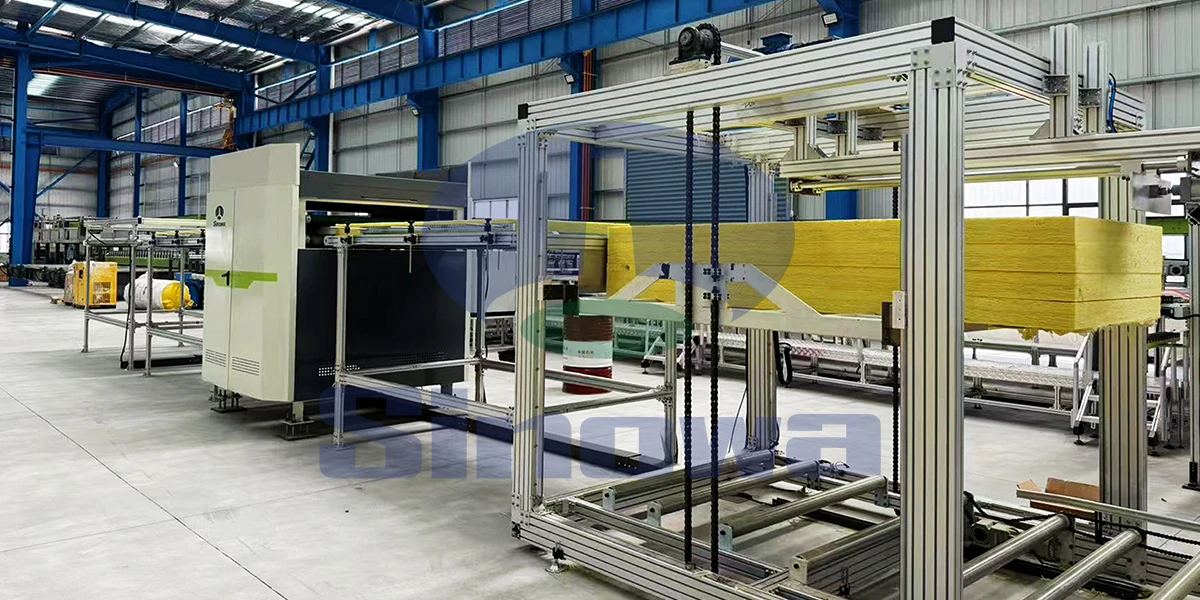
Mineral Wool Sandwich Panel Production Line Design
Sinowa is a mineral wool sandwich panel production line supplier from china, design and custom-made mineral wool sandwich panel production line, know more about mineral wool sandwich panel production line design, pls contact us, we will contact you as soon as possible!
The design of a mineral wool sandwich panel production line stands as a critical engineering endeavor that bridges material science, automated manufacturing, and industrial efficiency, catering to the surging demand for high-performance building materials across residential, commercial, and industrial construction sectors. Mineral wool sandwich panels, distinguished by their exceptional thermal insulation, fire resistance, sound absorption, and structural stability, have emerged as a preferred choice for modern construction projects seeking sustainable, durable, and energy-efficient solutions. Unlike traditional building materials that often require complex on-site fabrication and layered installation, these composite panels integrate rigid outer facings with a dense mineral wool core, streamlining construction timelines and enhancing overall building performance. A well-crafted production line design is the cornerstone of delivering consistent, high-quality panels at scale, balancing operational efficiency, material utilization, safety protocols, and adaptability to diverse product specifications. Every element of the line, from raw material handling to final product finishing, must be meticulously engineered to eliminate bottlenecks, reduce waste, and uphold uniform product standards, making the design process a holistic blend of technical precision and practical industrial application.
The Rock Wool Panel Line includes cement mortar cloth (cement-based cloth) anti-rolling pressure for up and down bidirectional anti-rolling, polyurethane drenching area, up and down bidirectional drenching area which is fully automatic, vertical silk rock wool sliver area, composite board lamination, automatic lifting which can be adjust the required thickness of the insulation board. The Rockwool Panel Machine is used for building exterior wall insulation, fire isolation belt, structural insulation integration, strong bonding performance, fireproof, waterproof, and anti-falling. This Mineral Wool Sandwich Panel Line solves the difficulty of the previous construction of ordinary rock wool board and it is difficult for workers to find the drawbacks.
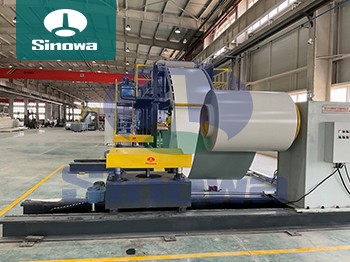
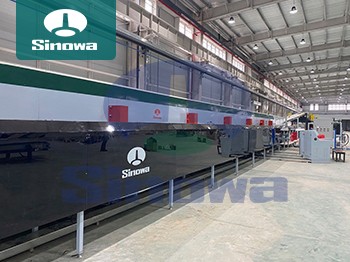
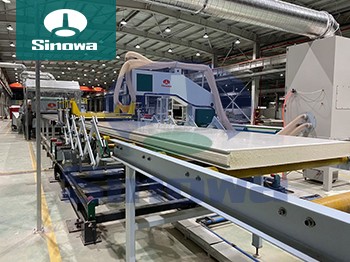
Sinowa is a well-known manufacturer and technical service provider of high-end PU Sandwich Panel Machines and various high-performance Cold Roll Forming Machine in China. Our main products include polyurethane double-sided color steel Sandwich Panel Production Line, polyurethane and phenolic soft facing insulation panel production line and high-efficiency roll forming lines.
Sinowa is committed to the development and manufacturing of high-end and high-efficiency Sandwich Panel Lines. Our production lines are leading the way in efficiency, automatic control, human-computer interaction, environmental protection and energy consumption. Using system integration and bus control technology, it realizes the automatic integrated linkage control of the entire production line, and can achieve remote interactive communication, which has the world-class level and a comprehensive leading high-performance production line in the market.
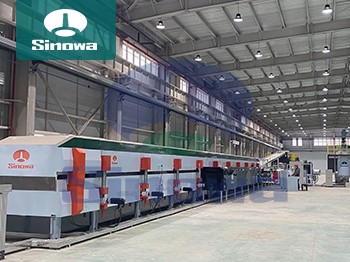
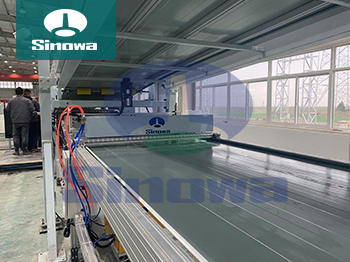
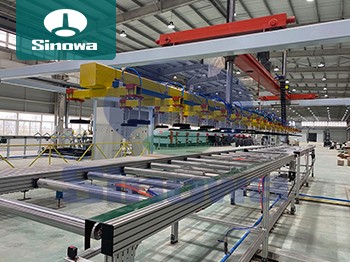
For more than ten years, we have never deliver two same lines to our client, there are all the crystallization of continuous improvement, we have been trying to surpass ourselves, create better products to serve our customers, and also accumulate our brand value, become a unique Chinese enterprise, we are no longer synonymous with low price and mediocre quality.
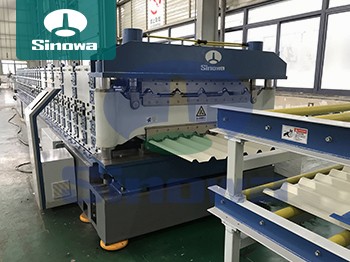
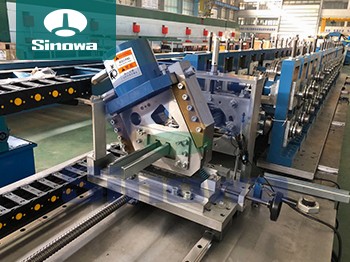
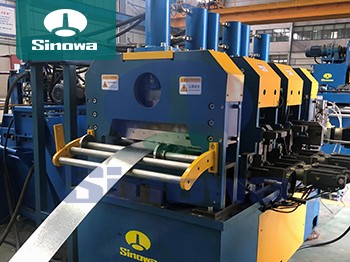
Since 2014, we have established our Cold Forming Machine design and manufacturing department, started our R&D and production of high-end cold forming equipment. Base on our innovative and high-end and efficient product concepts,In just a few years, we have created our own impressive achievements in this field. Whether ordinary construction products of Roll Forming Machine, or precision steel pipe equipment, elevator profile equipment, automotive profile equipment, precision door and window profile equipment, we are the leader of Chinese equipment with high efficiency, high quality and beautiful appearance design.
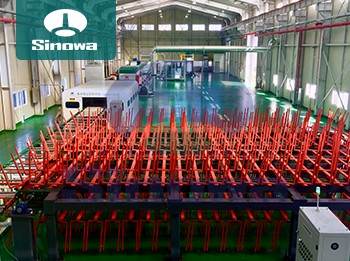
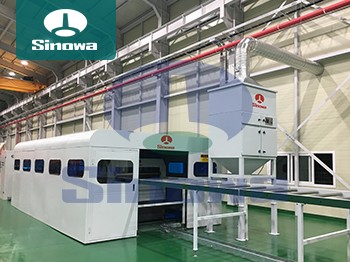
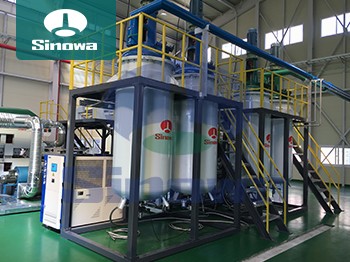
For more than ten years, relying on our innovative manufacturing concept and excellence in quality, reliable and trustworthy service to customers, we cooperate with customers all over the world, exported products to Canada, South Korea, Israel, Australia, the Middle East and other more than 20 countries and regions. contributed to building energy conservation and low-carbon production and have won widespread praise.
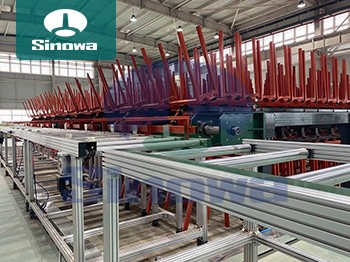
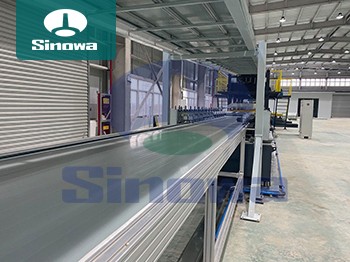
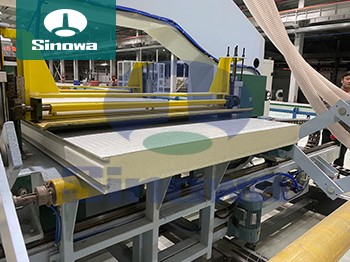
Sinowa has invested outstanding efforts in both the Continuous Insulated PU Sandwich Panel Production Line and the Roll Forming Line, This is why our products are more efficiency, quality, automatic control technology, environmental protection, energy consumption indicators and the appearance and safety protection are comprehensively leading, Some subversive design changes in many major technical points,these major innovations make our products excellent in price/performance and user experience.
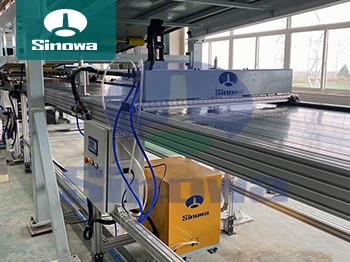
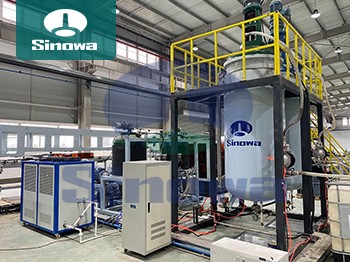
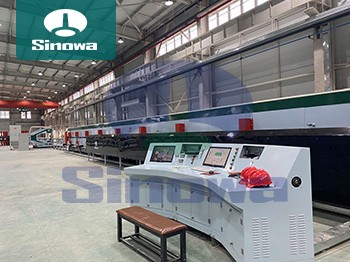
We always position our PU Sandwich Panel Line in a very high standard, strictly optimize every design for more progress. Our continuous innovation, continuous improvement of the technical design principles make us improved product updates and always pay attention to high efficiency, energy saving and stability, reduce customer worries, become their reliable business partners.
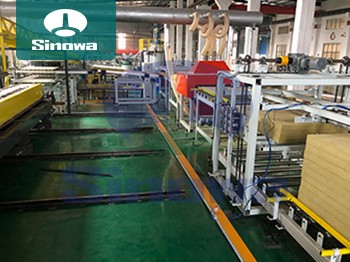
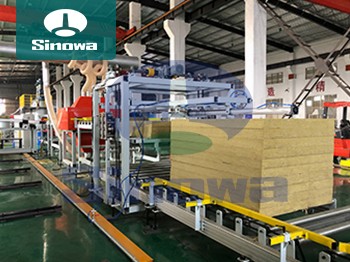
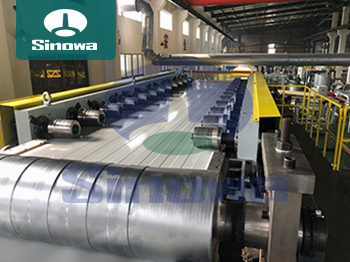
Sinowa Engineering Technology Research Center has always focused on technology research and development. we achieved a large number of scientific research results and unique patented process technology in related product research and development t every year, we continuously improve our products to have high precision and high stability in practical applications, and provide high quality for customers all over the world. Excellent technical personnel, continuous R&D investment and the technical concept of "continuous innovation and continuous improvement" are the strong guarantee for Sinowa to stand out from competitors.
Our focus is not on cost, we always pay attention to the quality of the product and how to do it better!
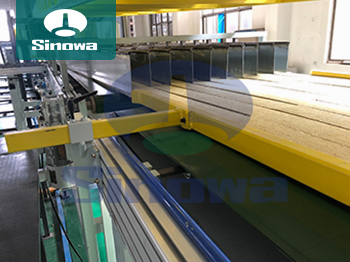
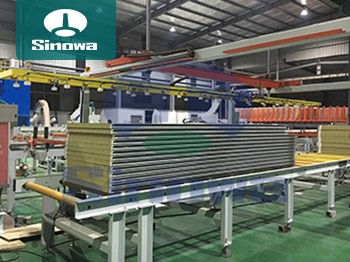
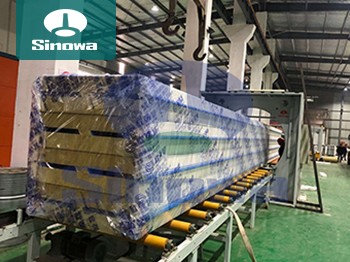
Production process control is a core part of implementing product planning and implementing quality control, which we establish A full range of production management processes and product logistics systems. We firmly believe that production without control and rules will only produce garbage products, so we pay more attention to first-class production control training while establishing a first-class production workshop, strictly follow the 5S management concept, establish systems and standards, ensure that our Sandwich Panel Machines are qualified throughout the process, achieve the technical goals of the company's products to achieve our brand value.
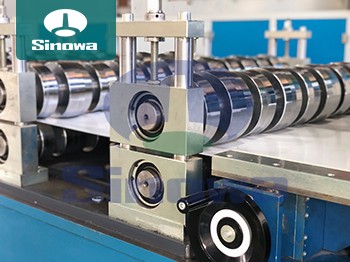
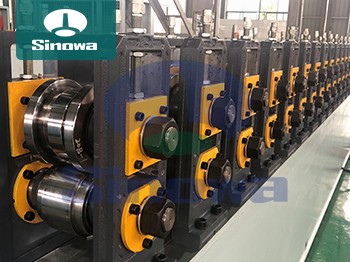
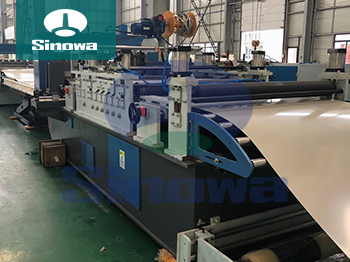
Sinowa has a very comprehensive quality control system, has a group of professional quality control personnel, familiar with almost all testing methods and standards in the field of machining, established a complete mechanical and chemical laboratory with which can fully control all quality links and ensure that all data are accurate, timely optional and available.
Relying on our good Sandwich Panel Machine quality and trustworthy service, our products are exported to more than a dozen countries in the world, and the service field continues to expand, winning more and more praise. Every customer will be our best friend!
At the core of effective mineral wool sandwich panel production line design lies a deep understanding of the material properties of mineral wool and the mechanical requirements of sandwich panel formation. Mineral wool, typically derived from molten volcanic rock or slag processed into fine, interlocking fibers, offers inherent non-combustibility, low thermal conductivity, and high compressive strength—traits that define the performance of the final sandwich panel. The production line must be tailored to handle these fibrous materials gently yet efficiently, preventing fiber breakage, compaction inconsistencies, or contamination that could compromise panel integrity. Simultaneously, the line must accommodate the processing of outer facing materials, most commonly coated metal sheets, which serve as the structural skeleton of the panel, providing rigidity, weather resistance, and aesthetic appeal. The design must reconcile the distinct handling needs of these two core materials: the delicate, fibrous mineral wool core and the rigid, formable metal facings, ensuring seamless integration without compromising the unique properties of either component. This dual-material focus dictates the layout, machinery selection, and process flow of the entire production line, laying the groundwork for a functional, reliable manufacturing system.
The spatial layout of the production line is a foundational design consideration, optimized for linear process flow, minimal material handling, and compliance with industrial safety and space constraints. A well-designed line follows a continuous, unidirectional workflow, starting with raw material storage and feeding, progressing through core preparation, facing forming, adhesive application, lamination, curing, cutting, and finishing, and concluding with product inspection and packaging. This linear arrangement minimizes material transfer distances, reduces manual intervention, and mitigates the risk of material damage or production delays. The layout is divided into distinct functional zones, each dedicated to a specific production stage, with clear separation of high-traffic operational areas, equipment maintenance zones, and material storage bays to enhance workflow efficiency and workplace safety. Adequate clearance is allocated for machinery operation, maintenance access, and emergency egress, while ventilation and dust extraction systems are integrated into the layout to address the fine particulate matter generated during mineral wool processing, maintaining a clean, safe working environment. The overall footprint of the line is calibrated to balance production capacity with available factory space, with modular design elements incorporated to allow for future expansion or reconfiguration without disrupting core operations.
Raw material handling and feeding systems form the initial phase of the production line, designed to ensure a steady, controlled supply of mineral wool cores and metal facing coils without interruptions. For metal facing materials, automated decoiling systems are employed to unwind coated steel or aluminum coils smoothly, with tension control mechanisms to prevent sheet deformation, wrinkling, or surface scratching. These systems are equipped with leveling units to flatten any minor irregularities in the metal sheets, ensuring a uniform surface for subsequent forming and bonding. Precision slitting attachments may be integrated to trim the metal sheets to the exact width required for different panel specifications, eliminating excess material and optimizing raw material usage. For mineral wool cores, dedicated feeding mechanisms are designed to handle rigid mineral wool boards or semi-flexible batts, with positioning systems that align the core material precisely with the metal facings to maintain consistent panel thickness and core centering. Specialized conveying equipment, fitted with non-abrasive surfaces, transports the mineral wool cores gently to prevent fiber compaction or breakage, while storage buffers are incorporated to sustain continuous production during brief material changeovers. The feeding systems are synchronized with downstream processes via automated control systems, ensuring that raw materials are delivered at a rate matched to the line’s operating speed, avoiding bottlenecks or material backups.
The facing forming and surface preparation stage is a pivotal design component, shaping the metal facings into the required profiles and preparing surfaces for optimal bonding with the mineral wool core. Roll forming machines, engineered with precision-machined rollers and adjustable tooling, transform flat metal sheets into profiled facings, such as trapezoidal, corrugated, or flat profiles, catering to diverse wall and roof panel applications. The roll forming units are designed for quick tooling changes, enabling the production line to switch between different panel profiles efficiently to meet varying market demands. Prior to bonding, the contact surfaces of the metal facings undergo controlled surface treatment to enhance adhesive adhesion, removing surface contaminants, oils, or loose coatings that could weaken the bond between the facing and core. This treatment is carried out in a closed, controlled section of the line to maintain consistency, with monitoring systems to verify surface readiness. Heating modules may be integrated into this stage to bring the metal facings to an optimal temperature for adhesive activation, accelerating the curing process and improving bond strength without compromising the structural integrity of the mineral wool core. The entire forming and preparation process is calibrated to maintain tight dimensional tolerances, ensuring that the facings fit seamlessly with the mineral wool core and that finished panels meet strict dimensional standards.
Adhesive application and core bonding represent the most critical phase of the production line, where the design directly impacts the structural integrity and performance of the mineral wool sandwich panels. The adhesive application system is engineered to deliver a uniform, controlled layer of bonding agent across the entire contact surface of the metal facings and mineral wool core, avoiding uneven coverage, excess adhesive buildup, or insufficient bonding that could lead to panel delamination. Precision spray or roller application mechanisms are employed, with adjustable flow rates and coverage widths to adapt to different panel thicknesses and sizes. The design prioritizes adhesive efficiency, minimizing waste while ensuring full contact between the facing and core materials, and incorporates closed-loop recycling for excess adhesive where feasible to reduce material costs and environmental impact. Following adhesive application, the mineral wool core is precisely positioned between the upper and lower metal facings in a controlled lamination chamber, where uniform pressure is applied to compress the composite layers and eliminate air gaps. The pressure and duration of lamination are carefully calibrated to suit the density and thickness of the mineral wool core, preventing over-compaction that would reduce insulation performance or under-compaction that would compromise bond strength. This stage is designed to maintain a stable operating environment, with temperature and humidity controls to preserve adhesive properties and ensure consistent curing across all panels.
Curing and consolidation systems are integrated downstream of the lamination stage, designed to facilitate complete adhesive curing and lock in the structural stability of the sandwich panels. The curing section typically consists of a controlled-temperature conveyor oven or a series of heated pressing zones, where the laminated panels are transported at a steady pace to ensure uniform curing without overheating. The design of the curing system balances curing speed with panel quality; rapid curing is prioritized to boost production efficiency, but temperature gradients are carefully managed to prevent thermal stress on the mineral wool core or warping of the metal facings. For thicker or high-density panels, extended curing zones may be incorporated to ensure full adhesive penetration and cross-linking, while air circulation systems within the curing area distribute heat evenly, eliminating cold spots that could result in incomplete curing. Post-curing, the panels pass through a cooling zone to bring them to ambient temperature, preventing residual heat from affecting dimensional stability or causing adhesive degradation during subsequent handling. This seamless transition from lamination to curing to cooling is critical for maintaining consistent panel quality, with conveyor speeds synchronized across all stages to sustain a continuous production flow and prevent panel stacking or jamming.
Precision cutting and finishing systems complete the formative stages of the production line, transforming the continuous laminated panel strips into finished products of specified lengths and dimensions. High-precision cutting equipment, such as flying saws or shear cutters, is integrated into the line to perform on-the-fly cutting without halting production, maximizing operational uptime and efficiency. These cutting units are equipped with digital positioning systems that allow operators to input exact panel lengths, with automated adjustments to accommodate different product specifications, ensuring tight cutting tolerances and minimal material waste. Edge trimming attachments may be added to refine panel edges, remove burrs from the metal facings, and create uniform edge profiles for seamless on-site installation. Dust extraction systems are paired with the cutting and trimming equipment to capture mineral wool fibers and metal shavings, maintaining a clean work area and preventing particulate contamination of finished panels. Following cutting, the panels may pass through a light finishing stage, including surface cleaning and minor defect inspection, to ensure that each panel meets visual and structural quality standards before moving to the final inspection and packaging phase.
Automation and control systems form the central nervous system of the mineral wool sandwich panel production line, unifying all operational stages into a cohesive, efficient manufacturing process. A centralized programmable logic controller (PLC) system monitors and regulates every aspect of the line, from raw material feeding speed and roll forming pressure to adhesive flow rate, curing temperature, and cutting precision. Human-machine interface (HMI) terminals provide operators with real-time visibility into production metrics, including line speed, material usage, operational temperature, and production counts, enabling intuitive control and quick adjustments to process parameters. The control system is designed for synchronization across all machinery, ensuring that each stage operates in harmony to maintain a steady production flow and avoid disruptions. Integrated diagnostic tools monitor equipment performance, detecting anomalies such as material jams, adhesive flow issues, or mechanical wear, and triggering alerts to prevent unplanned downtime. Automated quality check modules may be integrated into the control framework, conducting non-destructive tests for panel thickness, bond integrity, and dimensional accuracy, with automated rejection of non-conforming panels to uphold overall product quality. This high level of automation reduces reliance on manual labor, minimizes human error, and enhances repeatability, ensuring that every panel produced meets consistent performance and dimensional standards.
Safety and operational sustainability are non-negotiable elements of production line design, woven into every mechanical and process-related decision. Physical safety barriers are installed around high-speed moving parts, cutting equipment, and heated curing zones to protect operators from injury, while emergency stop mechanisms are strategically placed throughout the line for immediate shutdown in case of hazards. Dust and fume extraction systems are engineered to meet industrial air quality standards, capturing fine mineral wool fibers and adhesive vapors to safeguard worker respiratory health and prevent environmental emissions. Energy efficiency is a key design focus, with energy-saving components such as variable frequency drives for motors, insulated curing ovens to reduce heat loss, and low-power lighting and control systems integrated to minimize energy consumption. Waste reduction strategies are embedded into the line design, including scrap recycling systems for excess metal and mineral wool, adhesive recovery systems, and optimized cutting patterns to minimize offcuts. The design also prioritizes equipment durability and ease of maintenance, with accessible components, self-lubricating mechanisms, and modular machinery that simplifies part replacement and routine upkeep, extending the service life of the production line and reducing long-term operational costs.
Adaptability and scalability are vital considerations in modern mineral wool sandwich panel production line design, ensuring the line can evolve alongside market demands and technological advancements. Modular machinery layouts allow for the integration of additional stations, such as specialized surface coating units, custom profiling tools, or automated packaging lines, to expand product offerings without a complete overhaul of the existing system. The control system is designed with software upgradability, enabling the integration of new automation features, data analytics tools, or process optimization algorithms as manufacturing technology advances. The line is engineered to accommodate a wide range of panel specifications, including varying thicknesses, widths, lengths, and facing materials, allowing manufacturers to cater to niche construction applications alongside standard panel production. This adaptability ensures that the production line remains viable and competitive over its operational lifespan, capable of responding to shifts in building material regulations, consumer preferences, and industry trends without significant capital reinvestment.
In the final stages of production line design, rigorous testing and process validation are conducted to refine operational parameters and ensure consistent, high-quality output. Trial production runs are carried out to identify and resolve bottlenecks, fine-tune machinery settings, and verify that all process stages operate in sync. Performance tests are conducted on finished panels to assess thermal insulation efficiency, fire resistance, structural strength, and bond durability, validating that the line design meets the intended performance benchmarks. Operator training protocols are integrated into the design framework, ensuring that production staff can proficiently operate the automated systems, perform routine maintenance, and address minor operational issues. Post-commissioning, ongoing process monitoring and optimization are supported by the line’s data capture capabilities, allowing manufacturers to analyze production metrics, identify areas for efficiency gains, and refine processes over time.
In summary, the design of a mineral wool sandwich panel production line is a comprehensive, multi-faceted engineering challenge that demands expertise in material processing, automated manufacturing, safety engineering, and industrial efficiency. A successful design harmonizes seamless process flow, precision machinery, intelligent automation, and sustainable operational practices to deliver high-quality mineral wool sandwich panels consistently at scale. By prioritizing material integrity, dimensional accuracy, workplace safety, and adaptability, the production line becomes a resilient asset that supports the growing demand for high-performance building materials, aligning with global trends toward energy-efficient, sustainable construction. Every design decision, from spatial layout and machinery selection to control system integration and maintenance planning, contributes to the line’s overall functionality, reliability, and long-term value, solidifying its role as a critical pillar of modern composite building material manufacturing.
« Mineral Wool Sandwich Panel Production Line Design » Update Date: 2026/3/9
Tags:
URL: https://m.sinowa.cn/blog/mineral-wool-sandwich-panel-production-line-design.html
A pu sandwich panel line stands as a highly efficient and automated production solution dedicated to manufacturing high-performance insulated panels, playing a vital role in modern construction and industrial engineering sectors. This integrated production system streamlines the entire manufacturing process, starting with the uncoiling and leveling of outer facing materials, which are carefully treated to ensure flat, smooth surfaces free of defects and suitable for subsequent bonding. Next comes the core production step: precise mixing and uniform distribution of polyurethane raw materials, where specialized equipment controls the ratio and flow rate strictly to guarantee consistent foam density and stable bonding performance between the core and facings. The pu sandwich panel machine features a controlled curing and forming system that maintains stable temperature and pressure conditions, allowing the polyurethane foam to fully expand, solidify and bond tightly with the upper and lower layers, forming a rigid, durable sandwich structure. Post-forming, the panels go through accurate cutting and finishing processes to meet diverse size specifications demanded by different projects. Designed for continuous operation, this pu sandwich panel production line boosts manufacturing efficiency remarkably while ensuring uniform product quality across batches, reducing manual errors and material waste effectively. The finished PU sandwich panels deliver outstanding thermal insulation, sound absorption and structural strength, making them widely applicable in building roofs, walls, cold storage facilities and industrial workshops, adapting to various environmental and functional needs with reliable performance and long service life.