- Home
- Sandwich Panel Line
- Roll Forming Machine
- CZ Purlin Roll Forming Machine
- Door Window Curtain Partition Roll Forming Machine
- Gutter Roll Forming Machine
- Clean Partition Panel Machine
- Corrugated Panel Roll Forming Machine
- Double Layer Roof Roll Forming Machine
- High Speed Keel Roll Forming Machine
- Light Steel-Frame Structure Production Line
- C Channel Roll Forming Machine
- Insulated Panels
- Steel Profiles
- About
- Contact
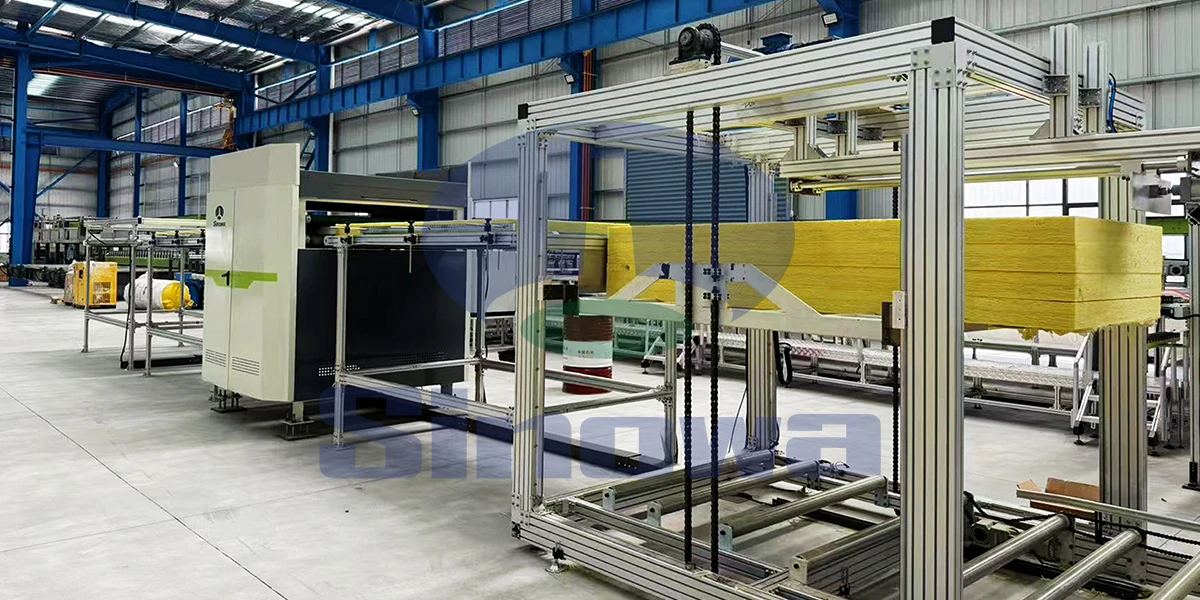
Rock Wool Sandwich Panel Production Line Supplier
Sinowa is a rock wool sandwich panel production line supplier from china, design and custom-made rock wool sandwich panel production line, know more about rock wool sandwich panel production line supplier, pls contact us, we will contact you as soon as possible!
In the rapidly evolving modern construction industry, the demand for efficient, safe, and sustainable building materials has driven continuous innovation in production technology. Among these materials, rock wool sandwich panels have gained widespread recognition for their exceptional fire resistance, thermal insulation, sound absorption, and structural stability, making them indispensable in a wide range of construction scenarios, from industrial warehouses and commercial buildings to prefabricated residences and public facilities. Behind these high-performance panels lies a sophisticated and integrated manufacturing system—the rock wool sandwich panel production line, a core equipment that combines mechanical engineering, electrical control, hydraulic systems, and material processing technology to realize automated, high-efficiency, and consistent production. This production line serves as a cornerstone of the modern prefabrication industry, enabling the mass production of high-quality rock wool sandwich panels that meet the rigorous requirements of contemporary construction projects.
The Rock Wool Panel Line includes cement mortar cloth (cement-based cloth) anti-rolling pressure for up and down bidirectional anti-rolling, polyurethane drenching area, up and down bidirectional drenching area which is fully automatic, vertical silk rock wool sliver area, composite board lamination, automatic lifting which can be adjust the required thickness of the insulation board. The Rockwool Panel Machine is used for building exterior wall insulation, fire isolation belt, structural insulation integration, strong bonding performance, fireproof, waterproof, and anti-falling. This Mineral Wool Sandwich Panel Line solves the difficulty of the previous construction of ordinary rock wool board and it is difficult for workers to find the drawbacks.
Sinowa is a well-known manufacturer and technical service provider of high-end PU Sandwich Panel Machines and various high-performance Cold Roll Forming Machine in China. Our main products include polyurethane double-sided color steel Sandwich Panel Production Line, polyurethane and phenolic soft facing insulation panel production line and high-efficiency roll forming lines.
Sinowa is committed to the development and manufacturing of high-end and high-efficiency Sandwich Panel Lines. Our production lines are leading the way in efficiency, automatic control, human-computer interaction, environmental protection and energy consumption. Using system integration and bus control technology, it realizes the automatic integrated linkage control of the entire production line, and can achieve remote interactive communication, which has the world-class level and a comprehensive leading high-performance production line in the market.
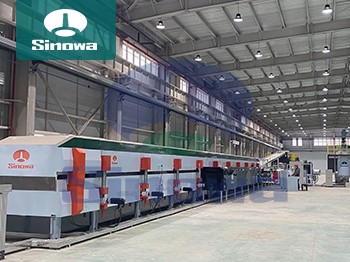
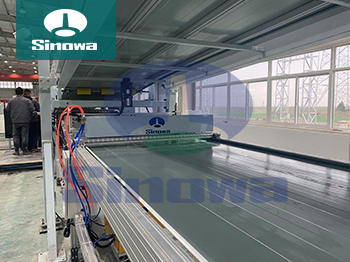
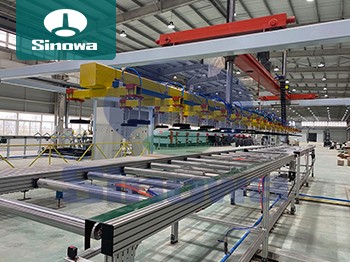
For more than ten years, we have never deliver two same lines to our client, there are all the crystallization of continuous improvement, we have been trying to surpass ourselves, create better products to serve our customers, and also accumulate our brand value, become a unique Chinese enterprise, we are no longer synonymous with low price and mediocre quality.
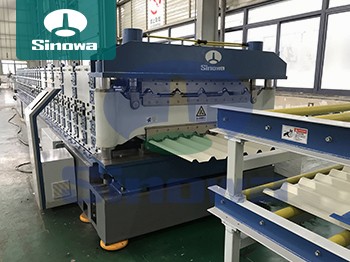
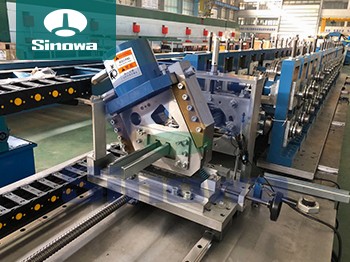
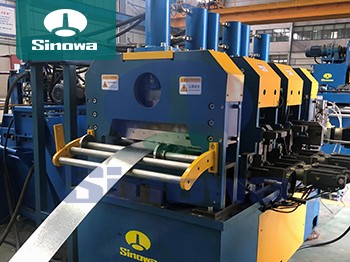
Since 2014, we have established our Cold Forming Machine design and manufacturing department, started our R&D and production of high-end cold forming equipment. Base on our innovative and high-end and efficient product concepts,In just a few years, we have created our own impressive achievements in this field. Whether ordinary construction products of Roll Forming Machine, or precision steel pipe equipment, elevator profile equipment, automotive profile equipment, precision door and window profile equipment, we are the leader of Chinese equipment with high efficiency, high quality and beautiful appearance design.
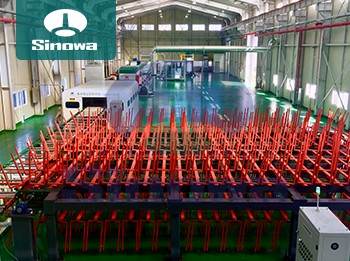
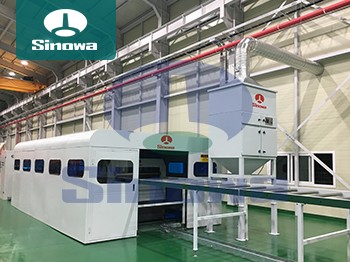
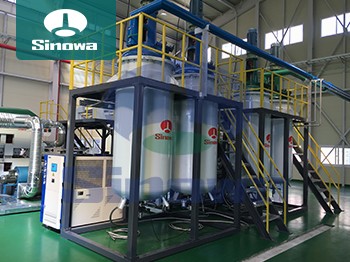
For more than ten years, relying on our innovative manufacturing concept and excellence in quality, reliable and trustworthy service to customers, we cooperate with customers all over the world, exported products to Canada, South Korea, Israel, Australia, the Middle East and other more than 20 countries and regions. contributed to building energy conservation and low-carbon production and have won widespread praise.
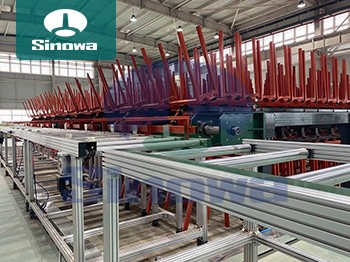
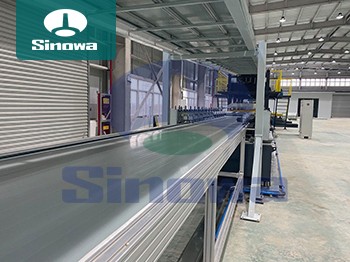
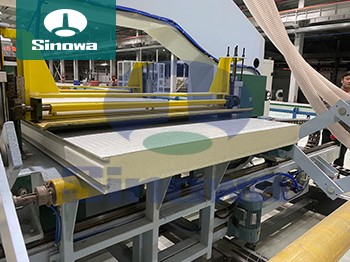
Sinowa has invested outstanding efforts in both the Continuous Insulated PU Sandwich Panel Production Line and the Roll Forming Line, This is why our products are more efficiency, quality, automatic control technology, environmental protection, energy consumption indicators and the appearance and safety protection are comprehensively leading, Some subversive design changes in many major technical points,these major innovations make our products excellent in price/performance and user experience.
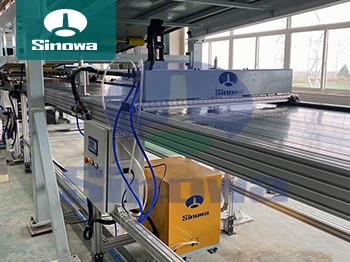
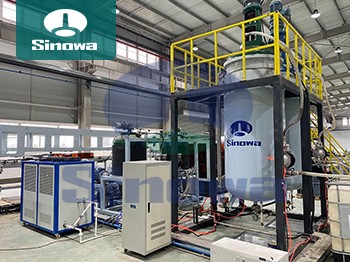
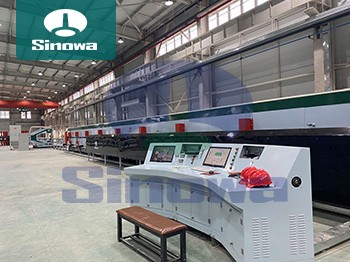
We always position our PU Sandwich Panel Line in a very high standard, strictly optimize every design for more progress. Our continuous innovation, continuous improvement of the technical design principles make us improved product updates and always pay attention to high efficiency, energy saving and stability, reduce customer worries, become their reliable business partners.
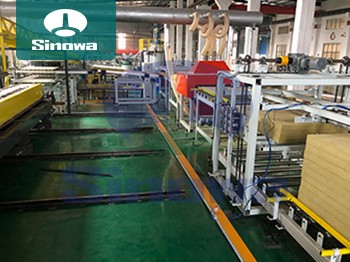
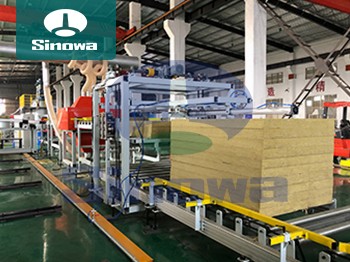
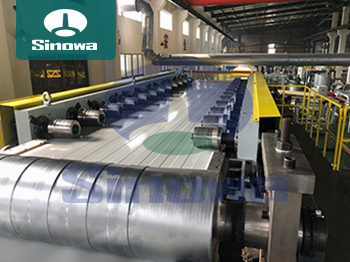
Sinowa Engineering Technology Research Center has always focused on technology research and development. we achieved a large number of scientific research results and unique patented process technology in related product research and development t every year, we continuously improve our products to have high precision and high stability in practical applications, and provide high quality for customers all over the world. Excellent technical personnel, continuous R&D investment and the technical concept of "continuous innovation and continuous improvement" are the strong guarantee for Sinowa to stand out from competitors.
Our focus is not on cost, we always pay attention to the quality of the product and how to do it better!
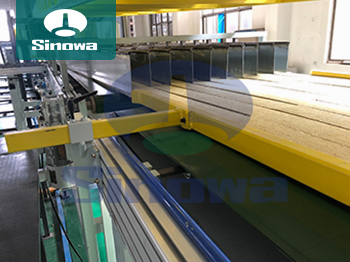
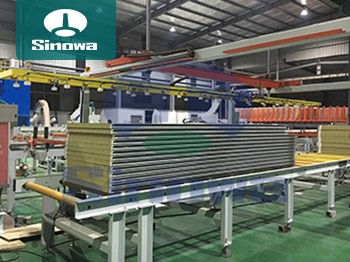
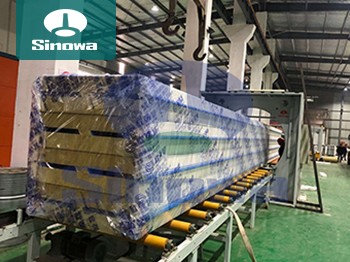
Production process control is a core part of implementing product planning and implementing quality control, which we establish A full range of production management processes and product logistics systems. We firmly believe that production without control and rules will only produce garbage products, so we pay more attention to first-class production control training while establishing a first-class production workshop, strictly follow the 5S management concept, establish systems and standards, ensure that our Sandwich Panel Machines are qualified throughout the process, achieve the technical goals of the company's products to achieve our brand value.
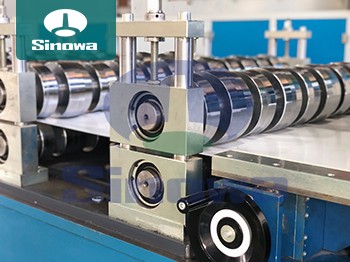
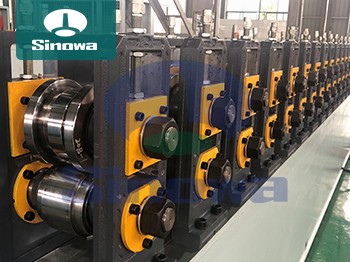
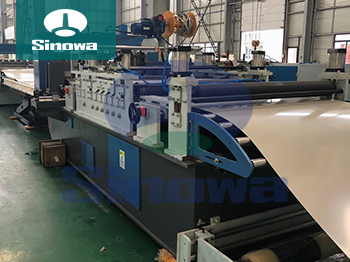
Sinowa has a very comprehensive quality control system, has a group of professional quality control personnel, familiar with almost all testing methods and standards in the field of machining, established a complete mechanical and chemical laboratory with which can fully control all quality links and ensure that all data are accurate, timely optional and available.
Relying on our good Sandwich Panel Machine quality and trustworthy service, our products are exported to more than a dozen countries in the world, and the service field continues to expand, winning more and more praise. Every customer will be our best friend!
The rock wool sandwich panel production line is a modular system composed of several interconnected units, each performing a specific function in the manufacturing process, from raw material feeding to the final stacking of finished panels. Each unit is engineered to work in perfect synchronization, ensuring a seamless flow of materials and processes that maximizes efficiency and reduces production downtime. These components work together to transform raw materials—primarily metal coils for the surface layers and rock wool slabs for the core—into finished sandwich panels with consistent quality and performance. The modular design of the production line also allows for remarkable flexibility, enabling operators to adjust parameters, replace components, and customize the production process to accommodate different panel specifications, such as varying thicknesses, widths, and surface profiles, which is crucial for adapting to the diverse design requirements of different construction projects.
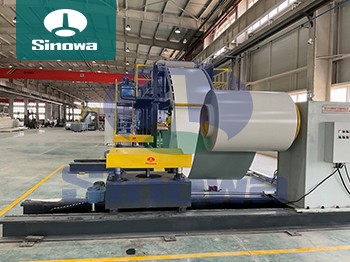
The production process of the rock wool sandwich panel production line is a continuous and automated workflow that minimizes human intervention and ensures product consistency. It typically begins with the uncoiling of surface materials, which are usually metal coils such as color steel sheets or aluminum sheets. The uncoiling unit, equipped with hydraulic control and automatic centering functions, ensures stable and uniform feeding of the metal coils, preventing deviations that could affect the subsequent forming quality. This stability is particularly crucial because the surface materials serve as both the structural support and protective layer of the sandwich panels, requiring consistent flatness and dimensional accuracy from the initial stage. After uncoiling, the metal sheets enter the roll forming unit, a key part of shaping the surface profile. The roll forming process uses a series of sequentially arranged rollers to gradually bend the flat metal sheets into the desired cross-sectional shape, such as corrugated, trapezoidal, or other customized profiles. The rollers are designed with precise contours, and the forming speed is adjustable to match different material thicknesses and profile complexities. Advanced production lines adopt a cassette-type or rail-wheel design for the roll forming unit, allowing for quick replacement of roller sets to produce different types of panels, thereby enhancing production flexibility.
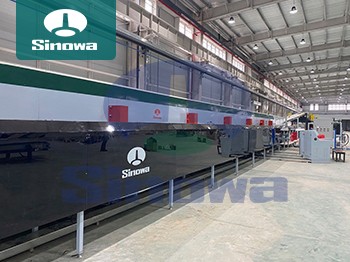
Following the roll forming process, the metal sheets proceed to the preheating stage. Preheating is a critical step that ensures the surface of the metal sheets reaches the optimal temperature for adhesive bonding, improving the adhesion between the surface layers and the rock wool core. The preheating unit typically uses hot air circulation heating, with a steplessly adjustable temperature control system that maintains the temperature within a precise range, ensuring consistent bonding quality across all panels. After preheating, the metal sheets move to the adhesive application unit, where a uniform layer of adhesive is sprayed onto the inner surface of the sheets. The adhesive application system is equipped with precise dosing controls, allowing for adjustable glue spray weight to meet different bonding requirements. Common adhesive types used include two-component or three-component systems, which offer strong bonding strength and excellent durability, ensuring the long-term structural integrity of the sandwich panels.
Parallel to the processing of surface materials, the rock wool core undergoes a series of specialized treatments to ensure it meets the required performance standards. The rock wool system, a key component of the production line, includes a storing elevator, slitting machine, longitudinal conveying device, 90-degree turning device, arraying device, edge milling machine, and dust suction machine. First, large rock wool slabs are lifted and transported to the slitting machine, which cuts them into strips of specified widths. The slitting machine is equipped with precision rolling blades driven by an AC asynchronous motor, with a tool spacing adjuster that allows for flexible adjustment of strip widths according to production requirements. Common strip thicknesses range from 50 mm to 250 mm, with a slitting gap controlled to approximately 3.3 mm to ensure clean, smooth cuts and reduce material waste. After slitting, the rock wool strips are transferred to a 90-degree turning device, which reorients the strips so that their fiber direction is vertical. This vertical fiber orientation significantly enhances the structural strength and load-bearing capacity of the final sandwich panels by distributing stress more evenly.
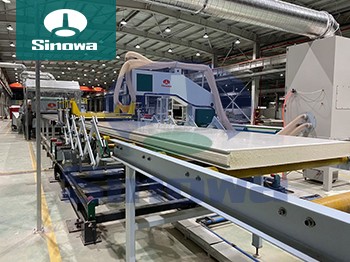
Once the rock wool strips are prepared, they are conveyed to the core filling unit, where they are carefully placed between the upper and lower preprocessed metal sheets. The core filling process is automated to ensure uniform distribution of the rock wool core, preventing gaps or unevenness that could compromise the panel’s performance. After core filling, the composite structure enters the double belt conveyor system, which applies consistent pressure and temperature to facilitate the curing of the adhesive. The double belt conveyor is equipped with a heating device that maintains a stable temperature, accelerating the adhesive curing process and ensuring strong bonding between the surface layers and the core. The length of the double belt conveyor is designed to accommodate the gelation time of different adhesives, ensuring that the adhesive is fully cured before the panels move to the next stage.
After curing, the composite panels proceed to the cutting system, where they are cut to the preset length using an automatic tracking band saw. The cutting process is performed without stopping the production line, ensuring continuous operation and high production efficiency. The cutting system is equipped with precise positioning controls, ensuring that the panels are cut to the exact length required, with clean and smooth edges. Following cutting, the panels are conveyed to the cooling system, where they are cooled via rollers or air jets to solidify the bond and reach a handling temperature. Cooling is a critical step that prevents deformation of the panels and ensures their dimensional stability.
Once cooled, the finished panels are transferred to the stacking system, where they are automatically stacked using suction cups or robotic arms. The stacking system is designed to handle the panels gently to prevent damage, and it can be adjusted to stack panels of different sizes and thicknesses. Some production lines also include a packaging system, which wraps the stacked panels in protective film to prevent scratches and damage during transportation and storage. Throughout the entire production process, a centralized control system monitors and coordinates the operation of all units. This control system, typically based on PLC (Programmable Logic Controller) technology, allows operators to monitor the production process in real time, adjust parameters, and handle abnormal situations promptly. The human-machine interface provides a user-friendly platform for operators to input production parameters, view production data, and troubleshoot issues, ensuring the smooth operation of the production line.
One of the key advantages of the rock wool sandwich panel production line is its high level of automation, which significantly reduces the need for manual intervention and minimizes human errors. Modern production lines can be operated by a small team of 5 to 8 operators, reducing labor costs and improving production efficiency. The production speed of the line can be adjusted according to the complexity of the panel specifications, typically ranging from 2 to 10 meters per minute, with an annual output of up to 800,000 square meters or more, depending on the line configuration and production hours. This high production capacity makes the production line suitable for large-scale construction projects that require a steady supply of high-quality rock wool sandwich panels.
Another notable advantage of the rock wool sandwich panel production line is its flexibility and adaptability. The line can be adjusted to produce a wide range of panel specifications, including different thicknesses (from 50 mm to 200 mm or more), widths (up to 1000 mm or more), and surface profiles. This flexibility allows the production line to meet the diverse needs of different construction projects, from industrial workshops that require thick, fire-resistant panels to high-rise buildings that focus on lightweight and energy efficiency. Additionally, the production line can be customized to produce panels with different surface finishes, such as different colors or decorative films, to meet the aesthetic requirements of various construction projects.
The performance of the rock wool sandwich panels produced by these lines is closely related to the advanced processes and components of the production line. Rock wool, a non-combustible inorganic mineral fiber material, offers excellent thermal insulation, fire resistance, and sound absorption properties. The panels produced by the production line have a fire resistance rating that can withstand high temperatures up to 600 ℃ or more, and they do not release toxic gases when exposed to fire, making them a safe choice for construction projects. The thermal insulation properties of the panels help reduce energy consumption in buildings, lowering heating and cooling costs and contributing to environmental sustainability. Additionally, the panels have excellent sound absorption capabilities, reducing noise transmission and creating a more comfortable indoor environment.
The applications of rock wool sandwich panels produced by these production lines are diverse and widespread. In the construction industry, they are commonly used for external walls, internal partitions, roofs, and ceilings of industrial warehouses, commercial buildings, prefabricated houses, and public facilities. They are also suitable for use in cold storage facilities, where their excellent thermal insulation properties help maintain stable internal temperatures. In addition, rock wool sandwich panels are used in the automotive industry, shipbuilding industry, and other fields that require fire resistance and thermal insulation. The versatility of these panels makes the rock wool sandwich panel production line a valuable investment for manufacturers looking to serve a wide range of markets.
In addition to their performance and flexibility, modern rock wool sandwich panel production lines are also designed with environmental sustainability in mind. The production process minimizes material waste, with the slitting and cutting systems designed to reduce scrap. Many production lines also include dust suction machines to collect dust generated during the rock wool processing, improving the working environment and reducing environmental pollution. Additionally, the adhesives used in the production process are often eco-friendly, with low volatile organic compound (VOC) emissions, ensuring compliance with environmental standards.
The reliability and durability of the rock wool sandwich panel production line are also key factors that make it a preferred choice for manufacturers. The line is constructed with high-quality materials and components, ensuring long-term stable operation with minimal maintenance. The modular design makes it easy to maintain and repair, with individual units that can be replaced or upgraded without disrupting the entire production process. This reliability ensures that manufacturers can meet production deadlines and maintain consistent product quality, enhancing their competitiveness in the market.
As the construction industry continues to evolve, the demand for high-quality, efficient, and sustainable building materials is expected to grow. The rock wool sandwich panel production line is well-positioned to meet this demand, with its advanced technology, high automation, and flexibility. Manufacturers that invest in these production lines can benefit from increased production efficiency, reduced costs, and the ability to produce high-performance panels that meet the diverse needs of modern construction projects. Whether for large-scale industrial projects or small-scale residential developments, the rock wool sandwich panel production line provides a reliable and efficient solution for the mass production of high-quality rock wool sandwich panels.
In conclusion, the rock wool sandwich panel production line is a sophisticated and essential piece of equipment in the modern construction materials industry. Its integrated design, high automation, and flexibility enable the efficient production of high-performance rock wool sandwich panels that offer excellent fire resistance, thermal insulation, and sound absorption. With its ability to adapt to diverse production requirements and its focus on environmental sustainability, the production line plays a crucial role in promoting the modernization and sustainability of the construction industry. As the demand for sustainable building materials continues to rise, the rock wool sandwich panel production line will remain a key component in the production of high-quality construction materials, supporting the development of safer, more efficient, and more sustainable buildings around the world.
« Rock Wool Sandwich Panel Production Line Supplier » Update Date: 2026/4/15
URL: https://m.sinowa.cn/blog/rock-wool-sandwich-panel-production-line-supplier.html
A pu sandwich panel line stands as a highly efficient and automated production solution dedicated to manufacturing high-performance insulated panels, playing a vital role in modern construction and industrial engineering sectors. This integrated production system streamlines the entire manufacturing process, starting with the uncoiling and leveling of outer facing materials, which are carefully treated to ensure flat, smooth surfaces free of defects and suitable for subsequent bonding. Next comes the core production step: precise mixing and uniform distribution of polyurethane raw materials, where specialized equipment controls the ratio and flow rate strictly to guarantee consistent foam density and stable bonding performance between the core and facings. The pu sandwich panel machine features a controlled curing and forming system that maintains stable temperature and pressure conditions, allowing the polyurethane foam to fully expand, solidify and bond tightly with the upper and lower layers, forming a rigid, durable sandwich structure. Post-forming, the panels go through accurate cutting and finishing processes to meet diverse size specifications demanded by different projects. Designed for continuous operation, this pu sandwich panel production line boosts manufacturing efficiency remarkably while ensuring uniform product quality across batches, reducing manual errors and material waste effectively. The finished PU sandwich panels deliver outstanding thermal insulation, sound absorption and structural strength, making them widely applicable in building roofs, walls, cold storage facilities and industrial workshops, adapting to various environmental and functional needs with reliable performance and long service life.