- Home
- Sandwich Panel Line
- Roll Forming Machine
- CZ Purlin Roll Forming Machine
- Door Window Curtain Partition Roll Forming Machine
- Gutter Roll Forming Machine
- Clean Partition Panel Machine
- Corrugated Panel Roll Forming Machine
- Double Layer Roof Roll Forming Machine
- High Speed Keel Roll Forming Machine
- Light Steel-Frame Structure Production Line
- C Channel Roll Forming Machine
- Insulated Panels
- Steel Profiles
- About
- Contact
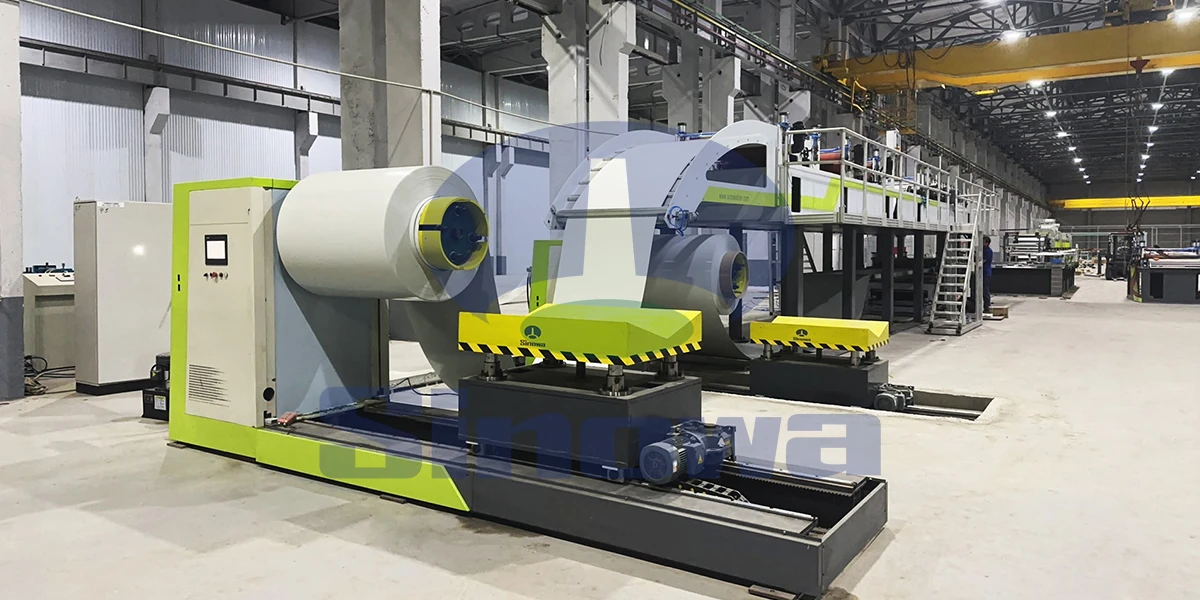
Sandwich Panel Equipment
Sinowa is a sandwich panel equipment supplier from china, design and custom-made sandwich panel equipment, know more about sandwich panel equipment, pls contact us, we will contact you as soon as possible!
Sandwich panel equipment refers to a series of mechanical systems and tools designed for the production, processing, and handling of sandwich panels, which are composite structures consisting of two thin, rigid face sheets bonded to a lightweight core material. These equipment systems play a crucial role in modern manufacturing and construction industries, as they enable the efficient, precise, and consistent production of sandwich panels with diverse properties to meet various application needs. The structure of sandwich panel equipment is carefully engineered to integrate multiple functional units, each contributing to the overall efficiency and quality of the production process, while its performance characteristics determine the reliability, precision, and productivity of the equipment. Different types of sandwich panel equipment are developed to accommodate various core materials, face sheet materials, and production scales, and their applications span a wide range of industries, from construction and cold storage to transportation and industrial manufacturing.
Sinowa dedicated to the research and development of high-end and high-efficiency Sandwich Panel Production Line, Sinowa is comprehensively taking the leading position in terms of efficiency, automation control level, HMI, environment protection and energy consumption, with subversive designs made in some critical technological fields to procure exceptional cost performance and customer-friendly experience for the entire production line. The adoption of system integration technology and bus control technology accomplishes the full automatization of integrated and coordinated control of the entire production line with accessible remote interactive communication. Ranking the first-class level in the world, it is currently the PU Sandwich Panel Machine in the market taking a comprehensive lead in high performance.
Sinowa is a well-known manufacturer and technical service provider of high-end PU Sandwich Panel Machines and various high-performance Cold Roll Forming Machine in China. Our main products include polyurethane double-sided color steel Sandwich Panel Production Line, polyurethane and phenolic soft facing insulation panel production line and high-efficiency roll forming lines.
Sinowa is committed to the development and manufacturing of high-end and high-efficiency Sandwich Panel Lines. Our production lines are leading the way in efficiency, automatic control, human-computer interaction, environmental protection and energy consumption. Using system integration and bus control technology, it realizes the automatic integrated linkage control of the entire production line, and can achieve remote interactive communication, which has the world-class level and a comprehensive leading high-performance production line in the market.
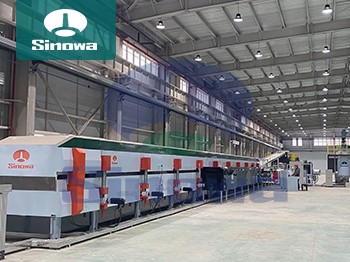
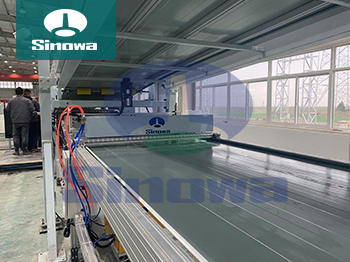
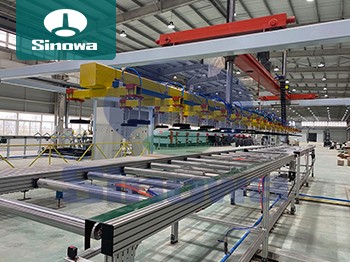
For more than ten years, we have never deliver two same lines to our client, there are all the crystallization of continuous improvement, we have been trying to surpass ourselves, create better products to serve our customers, and also accumulate our brand value, become a unique Chinese enterprise, we are no longer synonymous with low price and mediocre quality.
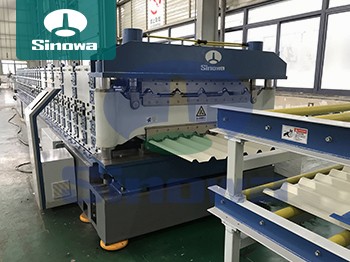
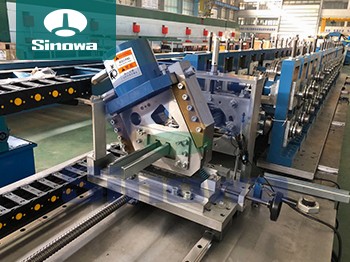
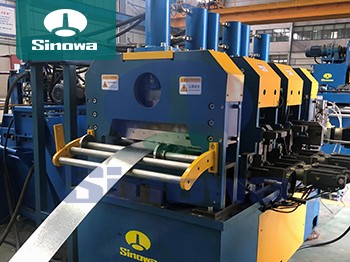
Since 2014, we have established our Cold Forming Machine design and manufacturing department, started our R&D and production of high-end cold forming equipment. Base on our innovative and high-end and efficient product concepts,In just a few years, we have created our own impressive achievements in this field. Whether ordinary construction products of Roll Forming Machine, or precision steel pipe equipment, elevator profile equipment, automotive profile equipment, precision door and window profile equipment, we are the leader of Chinese equipment with high efficiency, high quality and beautiful appearance design.
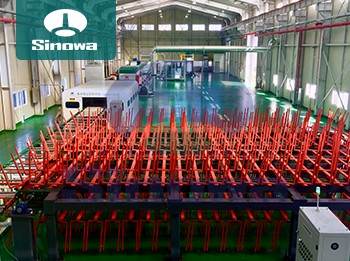
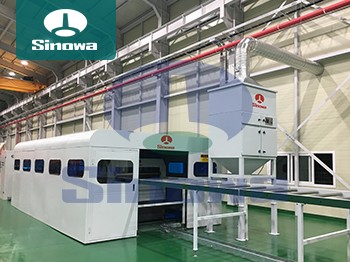
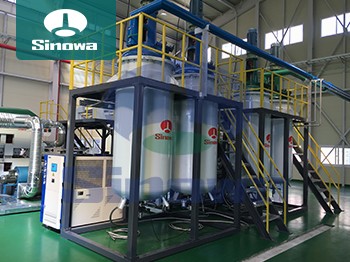
For more than ten years, relying on our innovative manufacturing concept and excellence in quality, reliable and trustworthy service to customers, we cooperate with customers all over the world, exported products to Canada, South Korea, Israel, Australia, the Middle East and other more than 20 countries and regions. contributed to building energy conservation and low-carbon production and have won widespread praise.
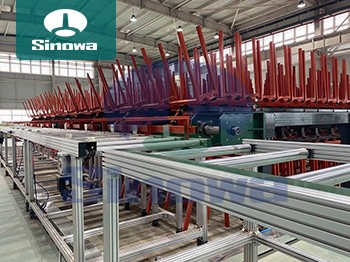
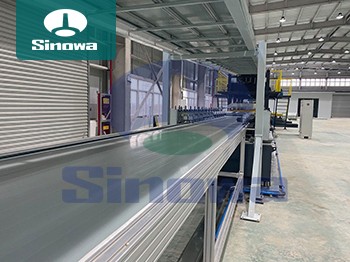
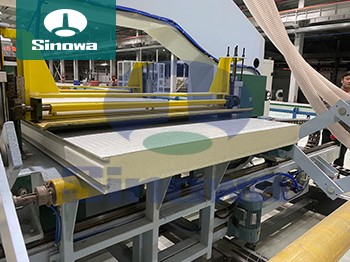
Sinowa has invested outstanding efforts in both the Continuous Insulated PU Sandwich Panel Production Line and the Roll Forming Line, This is why our products are more efficiency, quality, automatic control technology, environmental protection, energy consumption indicators and the appearance and safety protection are comprehensively leading, Some subversive design changes in many major technical points,these major innovations make our products excellent in price/performance and user experience.
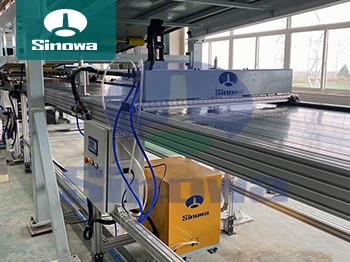
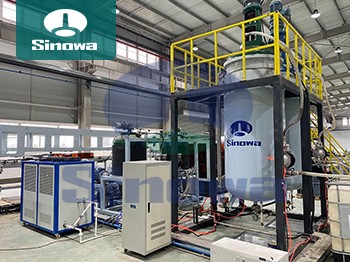
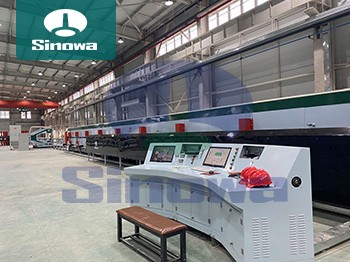
We always position our PU Sandwich Panel Line in a very high standard, strictly optimize every design for more progress. Our continuous innovation, continuous improvement of the technical design principles make us improved product updates and always pay attention to high efficiency, energy saving and stability, reduce customer worries, become their reliable business partners.
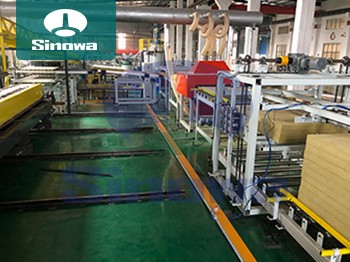
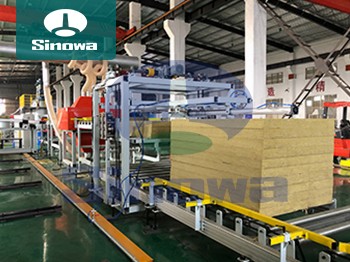
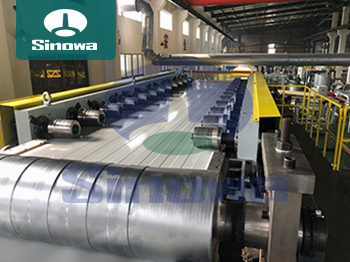
Sinowa Engineering Technology Research Center has always focused on technology research and development. we achieved a large number of scientific research results and unique patented process technology in related product research and development t every year, we continuously improve our products to have high precision and high stability in practical applications, and provide high quality for customers all over the world. Excellent technical personnel, continuous R&D investment and the technical concept of "continuous innovation and continuous improvement" are the strong guarantee for Sinowa to stand out from competitors.
Our focus is not on cost, we always pay attention to the quality of the product and how to do it better!
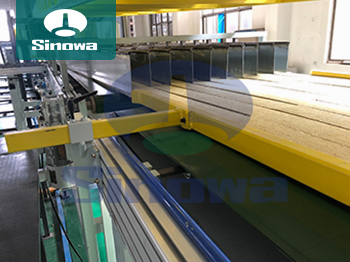
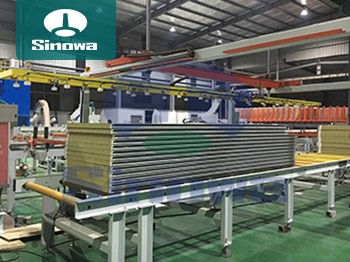
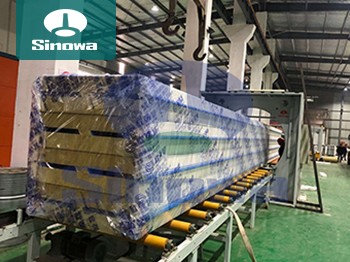
Production process control is a core part of implementing product planning and implementing quality control, which we establish A full range of production management processes and product logistics systems. We firmly believe that production without control and rules will only produce garbage products, so we pay more attention to first-class production control training while establishing a first-class production workshop, strictly follow the 5S management concept, establish systems and standards, ensure that our Sandwich Panel Machines are qualified throughout the process, achieve the technical goals of the company's products to achieve our brand value.
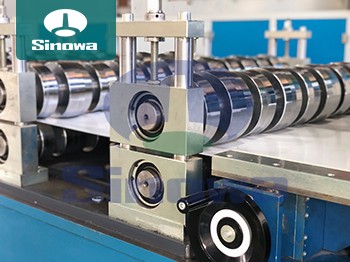
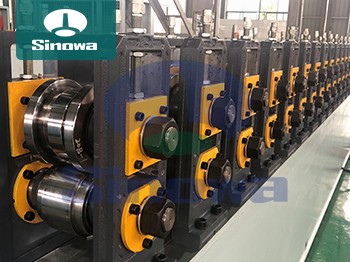
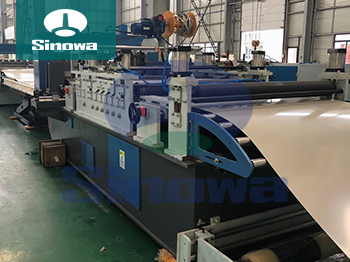
Sinowa has a very comprehensive quality control system, has a group of professional quality control personnel, familiar with almost all testing methods and standards in the field of machining, established a complete mechanical and chemical laboratory with which can fully control all quality links and ensure that all data are accurate, timely optional and available.
Relying on our good Sandwich Panel Machine quality and trustworthy service, our products are exported to more than a dozen countries in the world, and the service field continues to expand, winning more and more praise. Every customer will be our best friend!
The structure of sandwich panel equipment is typically composed of several key functional units that work together in a coordinated manner to complete the entire production process of sandwich panels. At the starting point of the production line, the uncoiling system is responsible for holding and feeding metal coils—commonly used as face sheets—into the subsequent processing units. This system usually includes hydraulic or mechanical decoilers that ensure smooth and controlled uncoiling, accommodating various coil sizes and weights to maintain a steady production flow. The uncoiling unit may also be equipped with automatic coil connecting systems, allowing two coils to be joined without stopping the production line, thereby improving efficiency and reducing downtime. Following the uncoiling system, the roll forming machine shapes the metal face sheets into the desired profile, with upper and lower forming groups that can be adjusted to produce different surface textures and edge designs. The roll forming process is critical for ensuring the flatness and structural integrity of the face sheets, which directly affects the final quality of the sandwich panels.
After the face sheets are formed, they move to the preheating section, where they are heated to a specific temperature to optimize the bonding between the face sheets and the core material. This preheating step is essential for enhancing the adhesion strength and ensuring a uniform bond across the entire surface of the panel. The core material processing unit is another key component of the equipment structure, which varies depending on the type of core material being used. For foam cores such as polyurethane (PU), polyisocyanurate (PIR), or expanded polystyrene (EPS), the equipment includes a foaming system that mixes and injects the foam materials between the two face sheets. This system often features multi-component dosing units to ensure precise mixing ratios, which directly impact the insulation and mechanical properties of the core. For mineral wool cores, the equipment is equipped with a fiber feeding and laminating system that distributes the mineral wool evenly and bonds it to the face sheets under heat and pressure.
The bonding and pressing unit is the heart of the sandwich panel equipment, responsible for combining the face sheets and core material into a single, integrated composite panel. This unit typically includes a double belt conveyor system that applies uniform pressure and temperature to the panel as it moves through the production line, ensuring that the bond between the face sheets and core is strong and consistent. The double belt design is often modular, allowing for adjustments in length and pressure to accommodate different panel thicknesses and material combinations. After the bonding process, the cutting system trims the sandwich panels to the desired length and width, using precision cutting tools such as band saws or CNC-controlled cutting machines to ensure accurate dimensions and clean edges. Some advanced equipment also includes edge profiling units that shape the edges of the panels for easier installation and better structural performance. Finally, the handling and packaging system transports the finished panels to a cooling area to prevent deformation, then stacks and wraps them for storage and transportation, often using automatic wrapping machines that provide dust-proof and moisture-proof protection.
The performance of sandwich panel equipment is determined by a combination of precision, efficiency, stability, and flexibility, all of which are critical for meeting the demands of modern production. Precision is one of the most important performance characteristics, as it ensures that the sandwich panels are produced with consistent dimensions, flatness, and bond strength. High-precision equipment typically features advanced control systems, such as PLC (Programmable Logic Controller) and CNC (Computer Numerical Control) technology, which allow for precise adjustment of processing parameters such as temperature, pressure, and speed. These control systems also enable the equipment to maintain consistent performance over long production runs, reducing the occurrence of defects and ensuring uniform product quality. The repetition accuracy of the equipment is also a key factor, particularly in large-scale production, where consistent results are essential for meeting project deadlines and quality standards.
Efficiency is another vital performance attribute of sandwich panel equipment, as it directly impacts production capacity and operational costs. High-efficiency equipment is designed to minimize downtime and maximize output, with features such as automatic coil changing, continuous production capabilities, and quick setup times. The production speed of the equipment varies depending on the type and configuration, but advanced continuous production lines can achieve speeds of up to 15 meters per minute, with an annual production capacity of over 2,000,000 square meters. Efficiency is also enhanced by the integration of multiple functional units into a single, seamless production line, eliminating the need for manual transfer of materials between different machines. Additionally, energy efficiency is an increasingly important performance consideration, with modern equipment designed to reduce energy consumption through optimized heating systems, efficient motor controls, and waste reduction measures.
Stability and reliability are essential for ensuring long-term operational performance of sandwich panel equipment. The equipment must be able to withstand the rigors of continuous industrial use, with sturdy structural components that resist wear and tear. High-quality hydraulic and mechanical components are used to ensure smooth operation, while advanced monitoring systems detect potential issues such as material jams, temperature fluctuations, or pressure deviations, allowing for timely maintenance and minimizing downtime. The stability of the equipment also ensures that the production process remains consistent, even when processing different types of materials or panel configurations. Flexibility is another key performance characteristic, as it allows the equipment to adapt to different production requirements, such as varying panel thicknesses, core materials, and face sheet profiles. Modular design is often used to enhance flexibility, allowing operators to add or remove functional units as needed, or adjust processing parameters to accommodate new product specifications.
Sandwich panel equipment can be classified into several types based on the production process, core material, and functional purpose, each designed to meet specific application needs. One of the most common types is the continuous sandwich panel production line, which is designed for large-scale, high-volume production of sandwich panels. This type of equipment operates continuously, with materials fed into one end and finished panels exiting the other, making it ideal for industrial applications where large quantities of panels are required. Continuous production lines are typically used for producing panels with foam cores such as PU, PIR, or EPS, and can be configured to handle various face sheet materials including galvanized steel, aluminum, and fiber-reinforced plastic (FRP).
Discontinuous sandwich panel production lines, also known as batch production lines, are another type of equipment designed for smaller production volumes or custom panel specifications. This type of equipment operates in batches, with each batch of panels processed through a series of separate stations, making it more flexible for producing custom-sized panels or panels with unique configurations. Discontinuous lines are often used for producing panels with mineral wool cores or other specialty core materials, and are suitable for small to medium-sized manufacturing facilities or workshops.
Cutting equipment is a specialized type of sandwich panel equipment designed specifically for trimming and shaping finished sandwich panels. There are several subtypes of cutting equipment, including manual cutting machines, automatic cutting machines, portable cutting machines, tabletop cutting machines, and hot wire cutting machines. Manual cutting machines are simple, portable, and ideal for small-scale or on-site cutting tasks, requiring no electricity and being easy to transport. Automatic cutting machines, on the other hand, are designed for high-volume industrial production, featuring CNC controls for precise dimensional control and high-speed cutting capabilities. Portable cutting machines are lightweight and versatile, suitable for on-site construction and field modifications, while tabletop cutting machines are compact and ideal for small workshops or light-duty use. Hot wire cutting machines use thermal precision to make clean cuts in foam core panels, ensuring minimal material waste and smooth edges.
Hydraulic press equipment is another important type of sandwich panel equipment, used for bonding face sheets and core materials under high pressure. Hydraulic presses for sandwich panels come in several models, including four-column presses, frame presses, hydraulic shop presses, hydraulic C-presses, and deck carve presses. Four-column presses ensure uniform pressure distribution across the panel, making them ideal for producing high-quality panels with consistent bond strength. Frame presses are suitable for low-tonnage operations such as straightening, bending, and punching, while hydraulic shop presses are designed for general-purpose pressing tasks in workshops. Hydraulic C-presses offer greater workspace and clearance, making them suitable for shearing, punching, and stamping operations, while deck carve presses use both hydraulic and pneumatic systems to create decorative patterns on panel surfaces.
Wrapping equipment is a specialized type of sandwich panel equipment used for packaging finished panels to protect them during storage and transportation. Sandwich panel wrapping machines, also known as horizontal wrapping machines, use a vertical rotary system to wrap packaging material around the panels, creating a secure, spiral-shaped package that is dust-proof and moisture-proof. These machines can be fully automated, reducing labor intensity and improving packaging quality, and are suitable for packaging various long-shaped goods including sandwich panels, plastic profiles, and aluminum materials.
The applications of sandwich panel equipment are closely linked to the applications of the sandwich panels they produce, spanning a wide range of industries and sectors. In the construction industry, sandwich panel equipment plays a critical role in producing panels for building envelopes, including exterior walls, roofs, and partitions. These panels are valued for their lightweight, high strength, and excellent insulation properties, making them ideal for use in industrial buildings, office buildings, shopping malls, hotels, and residential properties. Sandwich panel equipment is also widely used in the production of panels for modular construction, such as prefabricated containers, movable houses, and temporary shelters, where rapid assembly and portability are essential. The equipment enables the efficient production of modular components that can be easily transported and assembled on-site, reducing construction time and costs.
The cold storage and refrigeration industry is another major application area for sandwich panel equipment. Sandwich panels produced by this equipment are used to construct cold storage facilities, freezers, refrigerated warehouses, and refrigerated trucks, as they offer excellent thermal insulation properties that help maintain stable internal temperatures. Equipment designed for producing panels with PU or PIR cores is particularly suitable for this industry, as these core materials have low thermal conductivity and excellent temperature control capabilities. The precision and efficiency of the equipment ensure that the panels meet the strict insulation requirements of cold storage applications, helping to reduce energy consumption and maintain product quality.
Industrial manufacturing facilities also rely heavily on sandwich panel equipment for producing panels used in workshops, warehouses, logistics centers, and industrial sectional doors. These panels provide a combination of structural strength, insulation, and sound absorption, creating a comfortable and efficient working environment. The equipment can be configured to produce panels with fire-resistant cores such as mineral wool, making them suitable for use in industrial facilities where fire safety is a priority. Additionally, sandwich panel equipment is used in the production of panels for industrial equipment enclosures, providing protection against dust, moisture, and noise.
The agricultural industry is another emerging application area for sandwich panel equipment. The equipment is used to produce panels for agricultural buildings such as greenhouses, poultry houses, farm storage facilities, and livestock barns. These panels provide insulation to maintain optimal temperatures for crops and livestock, improving productivity and energy efficiency. The lightweight and easy-to-install nature of the panels also makes them ideal for agricultural applications, where rapid construction and low maintenance are important considerations.
In the transportation industry, sandwich panel equipment is used to produce panels for the interior and exterior of vehicles, including buses, trains, and recreational vehicles (RVs). The lightweight nature of sandwich panels helps reduce vehicle weight, improving fuel efficiency, while their structural strength and insulation properties enhance passenger comfort and safety. The equipment can produce panels with custom shapes and sizes to fit different vehicle designs, making it a versatile solution for automotive and transportation manufacturers.
Beyond these major industries, sandwich panel equipment also finds applications in specialized fields such as clean rooms, where panels with dust-proof and bacteria-resistant properties are required, and in the packaging industry, where lightweight and rigid sandwich panels are used for packaging materials. The flexibility and adaptability of sandwich panel equipment allow it to meet the unique needs of these specialized applications, making it a versatile and essential tool in modern manufacturing.
In conclusion, sandwich panel equipment is a sophisticated and versatile set of mechanical systems that plays a critical role in the production of high-quality sandwich panels. Its structure is composed of integrated functional units that work together to ensure efficient and precise production, while its performance characteristics of precision, efficiency, stability, and flexibility determine its effectiveness in various manufacturing environments. The different types of sandwich panel equipment, including continuous and discontinuous production lines, cutting equipment, hydraulic presses, and wrapping equipment, are designed to accommodate diverse production needs and core material types. The wide range of applications of sandwich panel equipment across construction, cold storage, industrial manufacturing, agriculture, transportation, and other sectors highlights its importance in modern industry. As demand for energy-efficient, lightweight, and high-performance building materials continues to grow, sandwich panel equipment will continue to evolve, incorporating advanced technologies to improve productivity, reduce energy consumption, and meet the changing needs of global markets.
« Sandwich Panel Equipment » Update Date: 2026/3/2
Tags:
URL: https://m.sinowa.cn/blog/sandwich-panel-equipment.html
A pu sandwich panel line stands as a highly efficient and automated production solution dedicated to manufacturing high-performance insulated panels, playing a vital role in modern construction and industrial engineering sectors. This integrated production system streamlines the entire manufacturing process, starting with the uncoiling and leveling of outer facing materials, which are carefully treated to ensure flat, smooth surfaces free of defects and suitable for subsequent bonding. Next comes the core production step: precise mixing and uniform distribution of polyurethane raw materials, where specialized equipment controls the ratio and flow rate strictly to guarantee consistent foam density and stable bonding performance between the core and facings. The pu sandwich panel machine features a controlled curing and forming system that maintains stable temperature and pressure conditions, allowing the polyurethane foam to fully expand, solidify and bond tightly with the upper and lower layers, forming a rigid, durable sandwich structure. Post-forming, the panels go through accurate cutting and finishing processes to meet diverse size specifications demanded by different projects. Designed for continuous operation, this pu sandwich panel production line boosts manufacturing efficiency remarkably while ensuring uniform product quality across batches, reducing manual errors and material waste effectively. The finished PU sandwich panels deliver outstanding thermal insulation, sound absorption and structural strength, making them widely applicable in building roofs, walls, cold storage facilities and industrial workshops, adapting to various environmental and functional needs with reliable performance and long service life.