- Home
- Sandwich Panel Line
- Roll Forming Machine
- CZ Purlin Roll Forming Machine
- Door Window Curtain Partition Roll Forming Machine
- Gutter Roll Forming Machine
- Clean Partition Panel Machine
- Corrugated Panel Roll Forming Machine
- Double Layer Roof Roll Forming Machine
- High Speed Keel Roll Forming Machine
- Light Steel-Frame Structure Production Line
- C Channel Roll Forming Machine
- Insulated Panels
- Steel Profiles
- About
- Contact
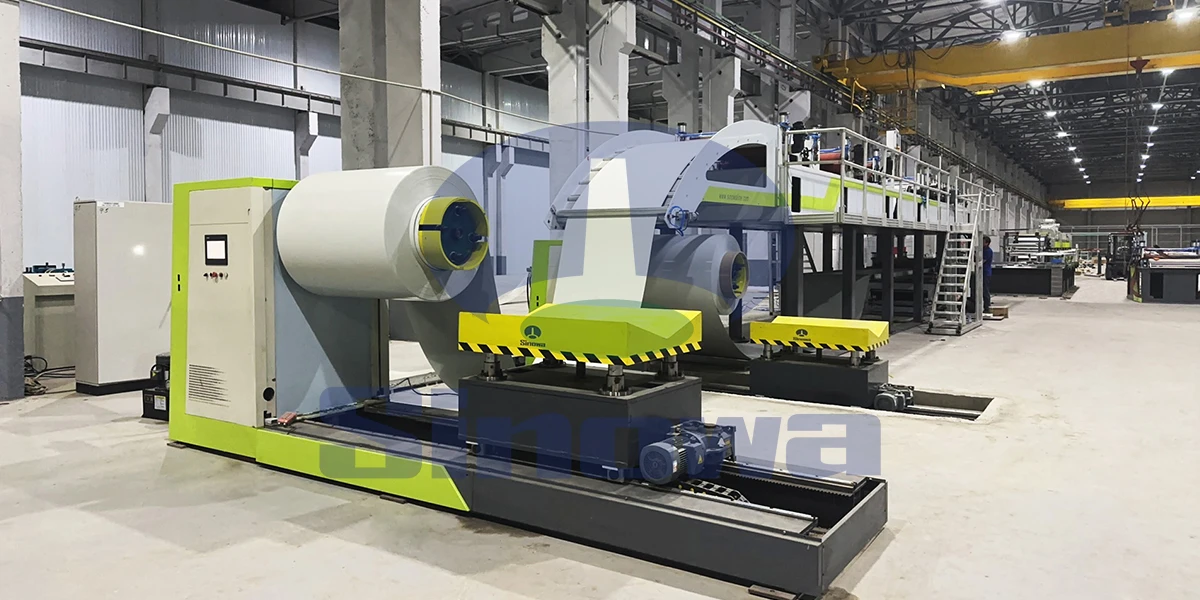
Sandwich Panel Machine For Sale
Sinowa is a sandwich panel machine supplier from china, design and custom-made sandwich panel machine, know more about sandwich panel machine for sale, pls contact us, we will contact you as soon as possible!
Sandwich panel machines occupy a quietly essential place in the modern industrial landscape, and yet they rarely attract the attention their role deserves. The product these machines turn out, a composite panel that sandwiches a lightweight insulating core between two rigid metal facings, has become the default building block for cold storage rooms, clean-room facilities, portable buildings, warehouse cladding, and countless other structures that need to be durable, thermally efficient, and fast to erect. Any facility manager or manufacturing entrepreneur who has ever watched a wall go up in hours rather than weeks understands why the machinery behind it matters. But the decision to buy such a machine, and the care that goes into choosing the right one, is a far more nuanced undertaking than the straightforward phrase for sale might suggest. It is a long-term investment in productive capacity, one that quietly determines the quality, speed, and versatility of everything the buyer will make for years to come.
Sinowa dedicated to the research and development of high-end and high-efficiency Sandwich Panel Production Line, Sinowa is comprehensively taking the leading position in terms of efficiency, automation control level, HMI, environment protection and energy consumption, with subversive designs made in some critical technological fields to procure exceptional cost performance and customer-friendly experience for the entire production line. The adoption of system integration technology and bus control technology accomplishes the full automatization of integrated and coordinated control of the entire production line with accessible remote interactive communication. Ranking the first-class level in the world, it is currently the PU Sandwich Panel Machine in the market taking a comprehensive lead in high performance.
Sinowa is a well-known manufacturer and technical service provider of high-end PU Sandwich Panel Machines and various high-performance Cold Roll Forming Machine in China. Our main products include polyurethane double-sided color steel Sandwich Panel Production Line, polyurethane and phenolic soft facing insulation panel production line and high-efficiency roll forming lines.
Sinowa is committed to the development and manufacturing of high-end and high-efficiency Sandwich Panel Lines. Our production lines are leading the way in efficiency, automatic control, human-computer interaction, environmental protection and energy consumption. Using system integration and bus control technology, it realizes the automatic integrated linkage control of the entire production line, and can achieve remote interactive communication, which has the world-class level and a comprehensive leading high-performance production line in the market.
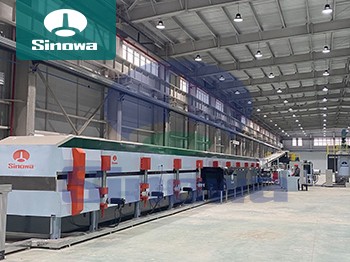
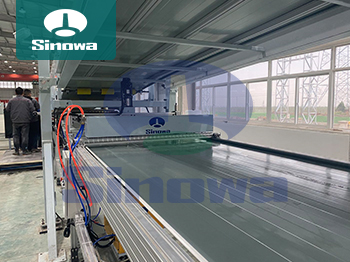
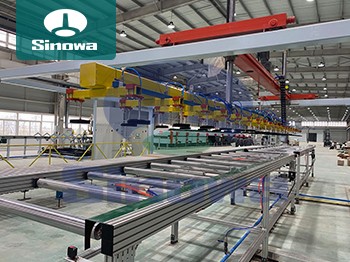
For more than ten years, we have never deliver two same lines to our client, there are all the crystallization of continuous improvement, we have been trying to surpass ourselves, create better products to serve our customers, and also accumulate our brand value, become a unique Chinese enterprise, we are no longer synonymous with low price and mediocre quality.
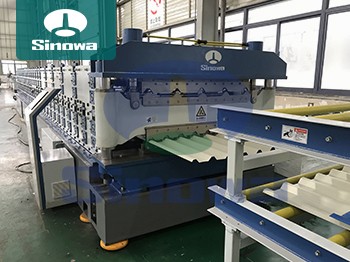
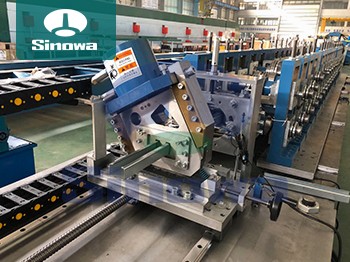
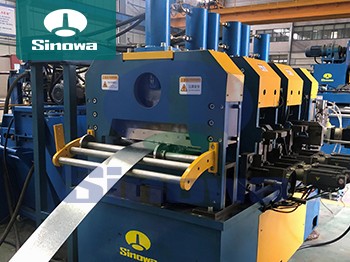
Since 2014, we have established our Cold Forming Machine design and manufacturing department, started our R&D and production of high-end cold forming equipment. Base on our innovative and high-end and efficient product concepts,In just a few years, we have created our own impressive achievements in this field. Whether ordinary construction products of Roll Forming Machine, or precision steel pipe equipment, elevator profile equipment, automotive profile equipment, precision door and window profile equipment, we are the leader of Chinese equipment with high efficiency, high quality and beautiful appearance design.
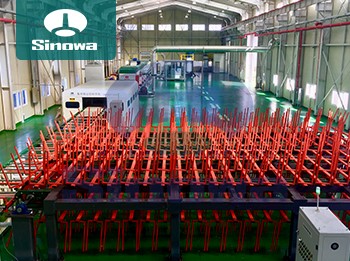
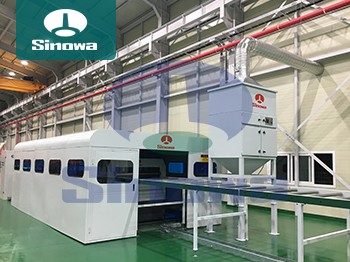
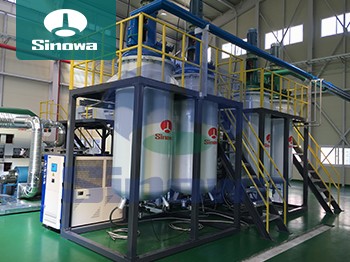
For more than ten years, relying on our innovative manufacturing concept and excellence in quality, reliable and trustworthy service to customers, we cooperate with customers all over the world, exported products to Canada, South Korea, Israel, Australia, the Middle East and other more than 20 countries and regions. contributed to building energy conservation and low-carbon production and have won widespread praise.
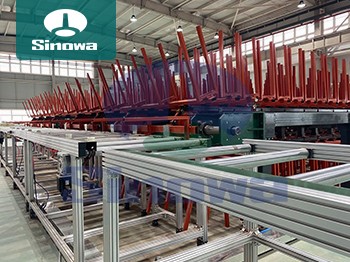
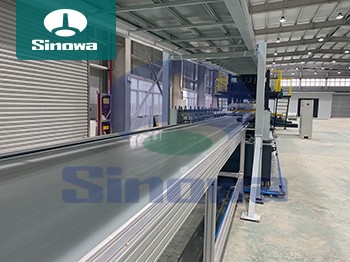
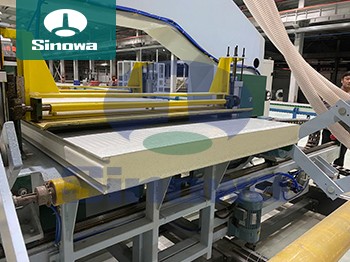
Sinowa has invested outstanding efforts in both the Continuous Insulated PU Sandwich Panel Production Line and the Roll Forming Line, This is why our products are more efficiency, quality, automatic control technology, environmental protection, energy consumption indicators and the appearance and safety protection are comprehensively leading, Some subversive design changes in many major technical points,these major innovations make our products excellent in price/performance and user experience.
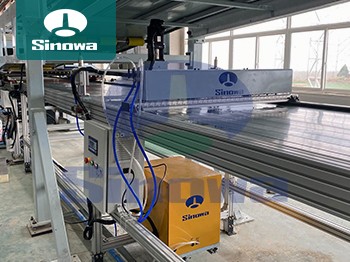
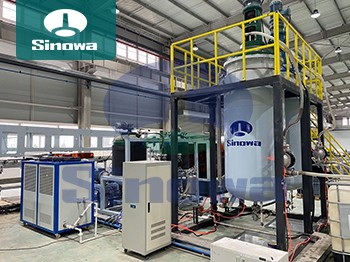
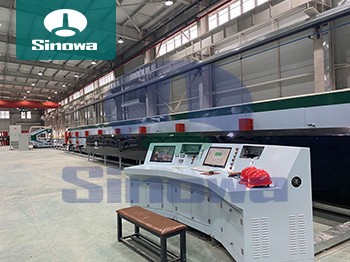
We always position our PU Sandwich Panel Line in a very high standard, strictly optimize every design for more progress. Our continuous innovation, continuous improvement of the technical design principles make us improved product updates and always pay attention to high efficiency, energy saving and stability, reduce customer worries, become their reliable business partners.
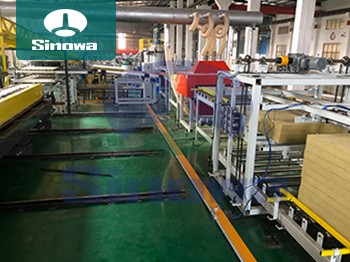
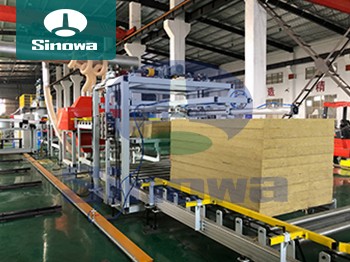
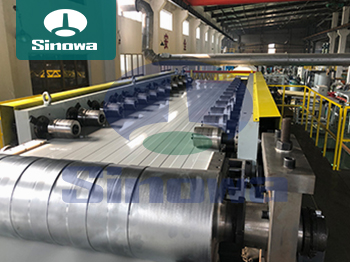
Sinowa Engineering Technology Research Center has always focused on technology research and development. we achieved a large number of scientific research results and unique patented process technology in related product research and development t every year, we continuously improve our products to have high precision and high stability in practical applications, and provide high quality for customers all over the world. Excellent technical personnel, continuous R&D investment and the technical concept of "continuous innovation and continuous improvement" are the strong guarantee for Sinowa to stand out from competitors.
Our focus is not on cost, we always pay attention to the quality of the product and how to do it better!
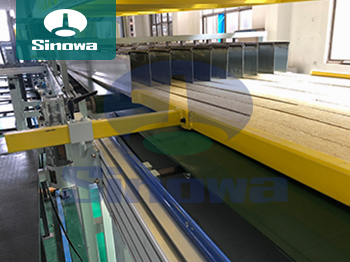
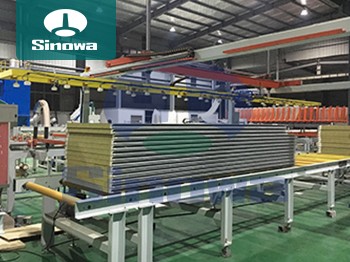
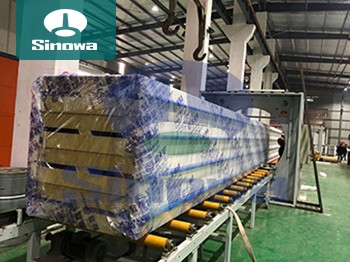
Production process control is a core part of implementing product planning and implementing quality control, which we establish A full range of production management processes and product logistics systems. We firmly believe that production without control and rules will only produce garbage products, so we pay more attention to first-class production control training while establishing a first-class production workshop, strictly follow the 5S management concept, establish systems and standards, ensure that our Sandwich Panel Machines are qualified throughout the process, achieve the technical goals of the company's products to achieve our brand value.
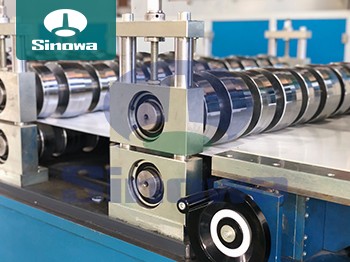
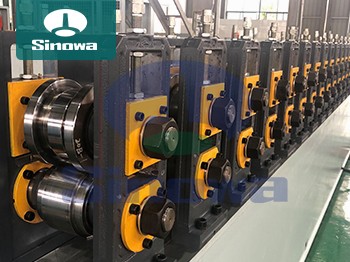
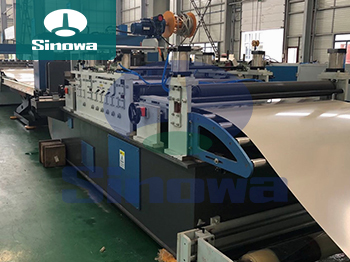
Sinowa has a very comprehensive quality control system, has a group of professional quality control personnel, familiar with almost all testing methods and standards in the field of machining, established a complete mechanical and chemical laboratory with which can fully control all quality links and ensure that all data are accurate, timely optional and available.
Relying on our good Sandwich Panel Machine quality and trustworthy service, our products are exported to more than a dozen countries in the world, and the service field continues to expand, winning more and more praise. Every customer will be our best friend!
Understanding what a sandwich panel machine actually does is the natural starting point. At its most fundamental level, the machine is a continuous production line that feeds steel coils through a series of stations that uncoil, straighten, profile, foam, bond, and finally cut the material into finished panels. The process begins with metal coil, typically supplied in large rolls, which is progressively shaped by a roll forming unit into the distinctive ribbed or flat profile that gives the outer face its rigidity and aesthetic character. Meanwhile, the core material, commonly a rigid polyurethane foam, is applied between the two metal skins, sometimes through a high-pressure injection process that fills the cavity with foam that expands and cures into place, and sometimes by bonding pre-formed core boards between the facings. The entire assembly is then pressed, heated, and held under carefully controlled conditions until the bond is strong and uniform, before being cut to length and stacked for shipment.
This description makes the machine sound straightforward, but the reality is that these lines are precision instruments whose performance depends on the alignment and coordination of many subsystems. The uncoiler must feed the steel at a perfectly consistent tension, because even a small fluctuation will produce wrinkles, misalignment, or a finished panel whose dimensions are subtly wrong. The roll forming stations must shape the metal with absolute repeatability, so that every panel matches the last one within tight tolerances. The heating and pressing section must maintain uniform temperature and pressure across the full width of the line, otherwise the foam will cure unevenly, producing panels with soft spots, poor insulation values, or a tendency to delaminate over time. And the cutting station must operate with precision to produce clean, square edges at exactly the right length, since a panel that is a few millimeters off will create problems for the crews who have to install it on site.
For anyone in the market for such equipment, the first question is not which brand to choose, but rather what the machine will be asked to do. The honest answer begins with volume. A small operation that produces a few hundred panels a month for local contractors has very different needs from a large industrial producer that runs the line around the clock to feed an export market. The same logic applies to the thickness and type of panels to be made. Some buyers need only thin panels for simple cladding, while others require thick structural panels for cold storage or freezer applications, and still others need a machine capable of switching between different cores, different metal gauges, and different profiles as orders change. A machine that is excellent for one of these purposes may be entirely wrong for another, which is why the smartest buyers begin by defining their production requirements in precise, quantified terms before they ever look at a specification sheet.
Speed is another dimension that deserves careful thought, and it is a classic case where more is not always better. A faster line can produce more panels per shift, which is attractive on its face, but speed usually comes with a larger physical footprint, higher energy consumption, more complex controls, and a greater need for skilled operators to keep everything running smoothly. A buyer who cannot consistently feed a high-speed line with raw materials and orders will find that the extra capacity sits idle, while still consuming capital and floor space. Conversely, a modestly slower line that is run efficiently and without downtime can often deliver better economics over the life of the investment than a flagship machine that is only ever used at a fraction of its potential. The right speed is the speed that matches the buyer's real demand, not the number that looks most impressive on paper.
Build quality is arguably the most important factor of all, because it determines how the machine will behave over the many years it is expected to operate. A well-built line is constructed from heavy, rigid steel frames that resist flexing and vibration, from durable gears and bearings that tolerate sustained load, and from electrical and hydraulic components that are easy to service and widely available when replacements are needed. The quality of these details is not always visible in a brochure, but it becomes obvious in the first year of hard use, when a poorly made machine begins to develop alignment drift, control faults, and small breakdowns that accumulate into significant downtime. The most experienced buyers therefore pay close attention not only to the headline specifications, but also to the provenance of the components, the reputation of the manufacturer for support, and the way the machine is assembled and tested before delivery.
Support and service deserve their own place in the decision, because a machine is only as good as the network that keeps it running. Even the finest equipment will occasionally need maintenance, adjustment, or spare parts, and the speed with which those needs are met can make the difference between a minor interruption and a costly stoppage. Buyers should think carefully about whether the seller can provide training for operators, whether spare parts are stocked locally or must be shipped from afar, whether a service engineer can visit quickly when something goes wrong, and whether the documentation is clear enough that in-house technicians can handle routine work. A slightly more expensive machine backed by excellent support is often a better investment than a cheaper one whose seller disappears after the sale.
The practical matter of installation is easy to overlook during the excitement of choosing equipment, yet it has a major bearing on how soon the line can start earning its keep. Sandwich panel lines are large, heavy, and sensitive to their surroundings. They need a solid, level floor that can support their weight and resist vibration, adequate clear height for the machinery and for the panels being produced, a reliable supply of power, and sometimes additional utilities such as compressed air or cooling water. The buyer must think about how the machine will be delivered, how it will be moved into the building, and how long installation and commissioning will take. The total time from order to full production is often considerably longer than buyers first imagine, and planning for that timeline is part of planning for the investment.
Safety is a consideration that should never be treated as an afterthought, because a panel line contains moving steel, high pressures, hot surfaces, and heavy loads, all of which demand respect. Guards, interlocks, emergency stops, and clear operating procedures are not optional extras but essential features of a responsible installation. Equally important is training, because even the safest machine becomes hazardous in the hands of an operator who does not understand its behavior, its warning signs, and its limits. Buyers should expect the supplier to provide thorough instruction and should build a culture of safety into the way the line is operated from the very first day. The cost of an accident, measured in injuries, downtime, and reputation, is far greater than the cost of doing this properly.
The economics of the purchase deserve frank discussion, because they are more complex than a simple price tag. The true cost of ownership includes the initial capital outlay, the cost of installation and commissioning, the ongoing consumption of electricity and consumables, the wages of the operators, the cost of maintenance and spare parts, and the cost of downtime when production stops unexpectedly. Against these costs must be set the revenue the machine generates, which depends on the volume of panels sold, the price they command, and the efficiency with which the line is run. A buyer who thinks only about the purchase price will often make a poor decision, while a buyer who models the full cost of ownership over a realistic horizon, and who compares machines on that basis, will usually arrive at a wiser choice even if it means paying more at the outset.
Financing is a related question that many buyers face, because a sandwich panel line represents a substantial outlay that may strain the resources of a growing business. Some buyers will pay in full from accumulated capital, while others will seek financing that spreads the cost over time and allows the machine to pay for itself from the revenue it generates. The right approach depends on the buyer's cash position, the expected cash flow from production, and the cost of money, and it is worth thinking through carefully before committing. There is also the question of the second-hand market, which offers a path for buyers with smaller budgets or more modest ambitions. A well-maintained used line can be an excellent value, provided the buyer inspects it thoroughly, understands its history, and accounts for the extra risk that comes with equipment that has already been in service.
The human element should not be underestimated in any of this. A panel line is operated, maintained, and managed by people, and their skill and experience will have more influence on the success of the investment than almost any specification on the data sheet. The best machine in the world will underperform in the hands of an unprepared crew, while a capable team can coax excellent results from equipment that is far from perfect. Buyers should therefore think about their people as part of the purchase: who will run the line, who will maintain it, what training they need, and how their skills will develop as production grows. This is not a side issue but a central one, and it should shape both the choice of equipment and the way the business prepares for its arrival.
The importance of spare parts and consumables is closely tied to this, because every machine depends on a steady supply of the items it wears out. Forming rollers, cutting blades, seals, filters, heating elements, and a host of other components all have finite lives, and the smooth running of the line depends on having the right parts on hand before they are needed. Buyers should confirm that parts are readily available, that the seller or an agent can supply them promptly, and that there is a sensible policy for stocking the most critical items locally. Nothing halts production faster than a line standing idle while the business waits days or weeks for a small component that should have been in the storeroom all along.
Quality control deserves its own emphasis, because the reputation of the buyer's own product depends on it. A good line is only a starting point; the buyer must establish procedures for checking panel dimensions, verifying the integrity of the foam bond, inspecting the finish of the metal surfaces, and confirming that every panel meets the standard the customer expects. This requires measurement equipment, a defined set of checks, and operators who understand why consistency matters. The best machines in the world cannot compensate for weak quality control, and the reverse is equally true: with sound procedures, even a modest line can produce panels that build a strong reputation in the market.
Environmental and regulatory considerations also enter the picture, and they are growing in importance year by year. The foam production process involves chemicals that must be handled, stored, and disposed of responsibly, and the energy the line consumes is a real cost in both financial and environmental terms. Buyers should think about the efficiency of the machine, the waste it produces, and how that waste is managed, because these factors affect both the economics of the operation and its standing in an increasingly attentive marketplace. A business that runs a clean, efficient, responsible operation is better positioned for the long term than one that cuts corners in ways that later come back to cost it dearly.
The question of growth and flexibility is the last piece of the puzzle, and it is easy to neglect when buying for the needs of today. Markets change, orders evolve, and products that seem exotic now may become mainstream before the machine has paid for itself. Buyers who choose a line with some flexibility, whether in the range of thicknesses it can produce, the profiles it can form, or the core materials it can handle, position themselves to adapt as circumstances shift. A machine that is only capable of today's product is a machine that may be obsolete before its useful life is over, while a more versatile line is a hedge against the future that costs little in the present.
In the end, buying a sandwich panel machine is not a simple transaction but the start of a relationship with a piece of equipment that will be part of the business for many years. The buyers who do best are those who approach it with clear requirements, realistic expectations, and a willingness to look beyond the surface of specifications and prices to the deeper questions of quality, support, people, and economics. A machine that is well chosen, well installed, and well run becomes not just a source of panels but a source of competitive advantage, quietly enabling the business to serve its customers reliably and grow on a foundation of consistent, high-quality production. For the buyer willing to do the homework, the rewards of that investment are substantial and long-lasting, and the choice, made carefully and deliberately, is one that pays dividends far into the future.
« Sandwich Panel Machine For Sale » Update Date: 2026/10/28
Tags: Continuous Polyurethane Sandwich Panel Machine , Rockwool Sandwich Panel Machine , Rock Wool Sandwich Panel Machine , Continuous PU Sandwich Panel Machine , Continuous Sandwich Panel Machines , PIR Sandwich Panel Machine , Polyurethane Sandwich Panel Machine , Sandwich Panel Machine , PU Sandwich Panel Machine ,
URL: https://m.sinowa.cn/blog/sandwich-panel-machine-for-sale.html
A pu sandwich panel line stands as a highly efficient and automated production solution dedicated to manufacturing high-performance insulated panels, playing a vital role in modern construction and industrial engineering sectors. This integrated production system streamlines the entire manufacturing process, starting with the uncoiling and leveling of outer facing materials, which are carefully treated to ensure flat, smooth surfaces free of defects and suitable for subsequent bonding. Next comes the core production step: precise mixing and uniform distribution of polyurethane raw materials, where specialized equipment controls the ratio and flow rate strictly to guarantee consistent foam density and stable bonding performance between the core and facings. The pu sandwich panel machine features a controlled curing and forming system that maintains stable temperature and pressure conditions, allowing the polyurethane foam to fully expand, solidify and bond tightly with the upper and lower layers, forming a rigid, durable sandwich structure. Post-forming, the panels go through accurate cutting and finishing processes to meet diverse size specifications demanded by different projects. Designed for continuous operation, this pu sandwich panel production line boosts manufacturing efficiency remarkably while ensuring uniform product quality across batches, reducing manual errors and material waste effectively. The finished PU sandwich panels deliver outstanding thermal insulation, sound absorption and structural strength, making them widely applicable in building roofs, walls, cold storage facilities and industrial workshops, adapting to various environmental and functional needs with reliable performance and long service life.