- Home
- Sandwich Panel Line
- Roll Forming Machine
- CZ Purlin Roll Forming Machine
- Door Window Curtain Partition Roll Forming Machine
- Gutter Roll Forming Machine
- Clean Partition Panel Machine
- Corrugated Panel Roll Forming Machine
- Double Layer Roof Roll Forming Machine
- High Speed Keel Roll Forming Machine
- Light Steel-Frame Structure Production Line
- C Channel Roll Forming Machine
- Insulated Panels
- Steel Profiles
- About
- Contact
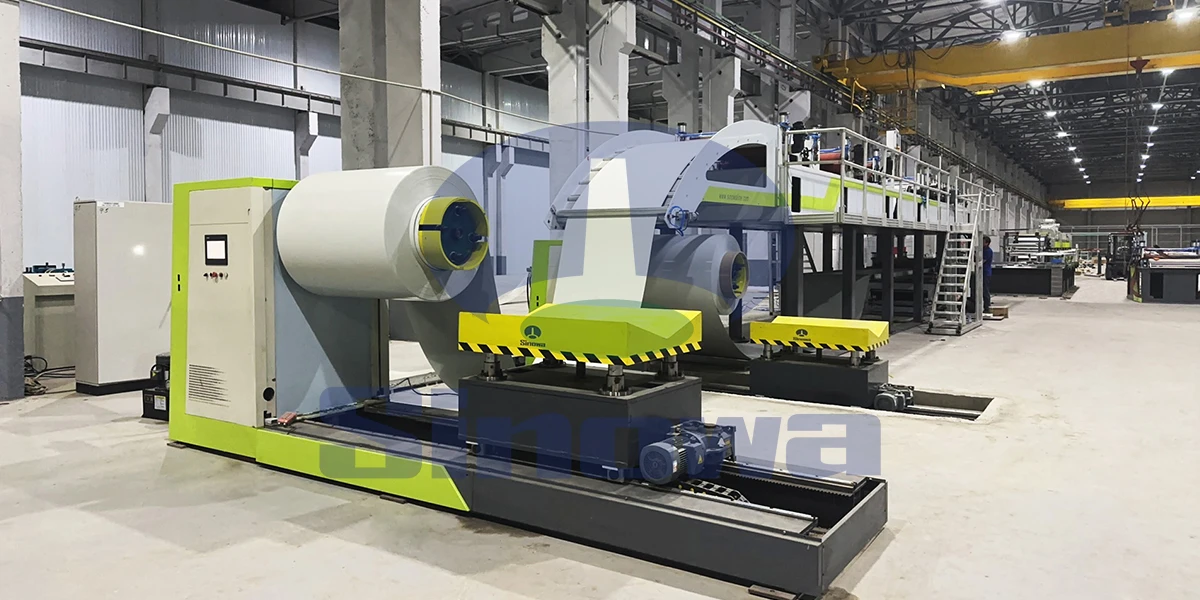
Sandwich Panel Machine Made In China
Sinowa is a sandwich panel machine supplier from china, design and custom-made sandwich panel machine, know more about sandwich panel machine made in china, pls contact us, we will contact you as soon as possible!
For decades, the sandwich panel machine has been the quiet workhorse behind cold storage warehouses, cleanrooms, modular housing, and countless industrial roofs and walls across the globe. If you have ever stood inside a refrigerated food distribution center, a pharmaceutical cleanroom, or a prefabricated office building that went up in a matter of days, you were surrounded by panels that almost certainly came off a production line built somewhere in China.
Sinowa dedicated to the research and development of high-end and high-efficiency Sandwich Panel Production Line, Sinowa is comprehensively taking the leading position in terms of efficiency, automation control level, HMI, environment protection and energy consumption, with subversive designs made in some critical technological fields to procure exceptional cost performance and customer-friendly experience for the entire production line. The adoption of system integration technology and bus control technology accomplishes the full automatization of integrated and coordinated control of the entire production line with accessible remote interactive communication. Ranking the first-class level in the world, it is currently the PU Sandwich Panel Machine in the market taking a comprehensive lead in high performance.
Sinowa is a well-known manufacturer and technical service provider of high-end PU Sandwich Panel Machines and various high-performance Cold Roll Forming Machine in China. Our main products include polyurethane double-sided color steel Sandwich Panel Production Line, polyurethane and phenolic soft facing insulation panel production line and high-efficiency roll forming lines.
Sinowa is committed to the development and manufacturing of high-end and high-efficiency Sandwich Panel Lines. Our production lines are leading the way in efficiency, automatic control, human-computer interaction, environmental protection and energy consumption. Using system integration and bus control technology, it realizes the automatic integrated linkage control of the entire production line, and can achieve remote interactive communication, which has the world-class level and a comprehensive leading high-performance production line in the market.
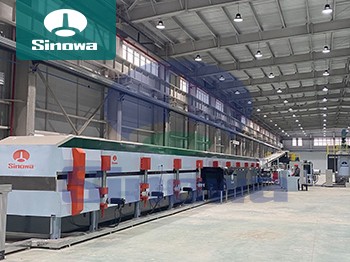
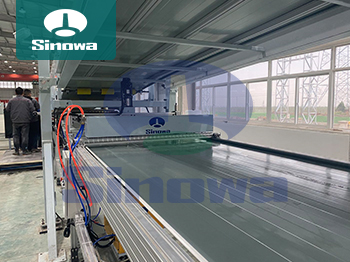
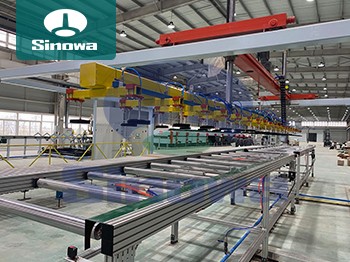
For more than ten years, we have never deliver two same lines to our client, there are all the crystallization of continuous improvement, we have been trying to surpass ourselves, create better products to serve our customers, and also accumulate our brand value, become a unique Chinese enterprise, we are no longer synonymous with low price and mediocre quality.
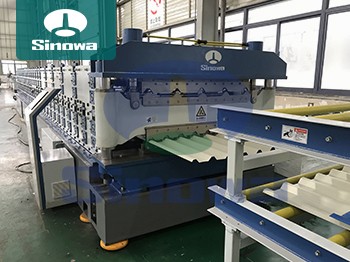
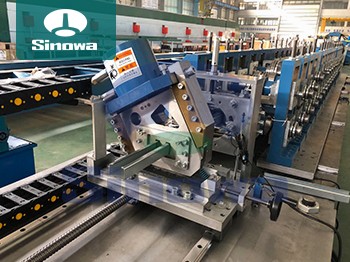
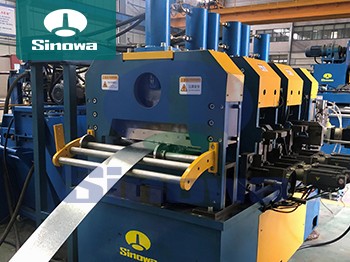
Since 2014, we have established our Cold Forming Machine design and manufacturing department, started our R&D and production of high-end cold forming equipment. Base on our innovative and high-end and efficient product concepts,In just a few years, we have created our own impressive achievements in this field. Whether ordinary construction products of Roll Forming Machine, or precision steel pipe equipment, elevator profile equipment, automotive profile equipment, precision door and window profile equipment, we are the leader of Chinese equipment with high efficiency, high quality and beautiful appearance design.
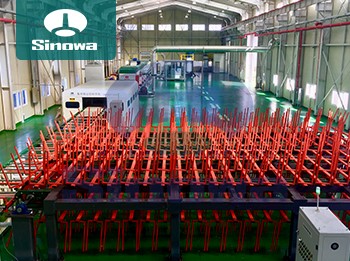
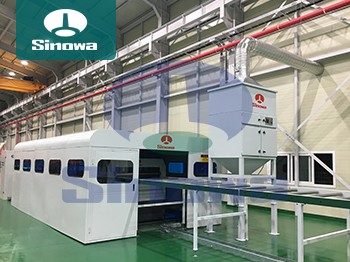
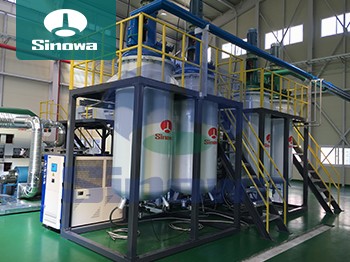
For more than ten years, relying on our innovative manufacturing concept and excellence in quality, reliable and trustworthy service to customers, we cooperate with customers all over the world, exported products to Canada, South Korea, Israel, Australia, the Middle East and other more than 20 countries and regions. contributed to building energy conservation and low-carbon production and have won widespread praise.
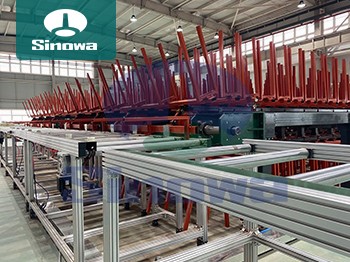
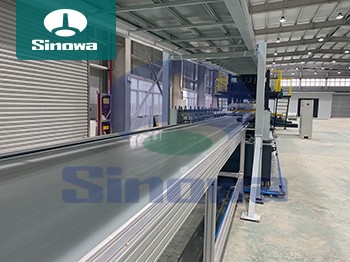
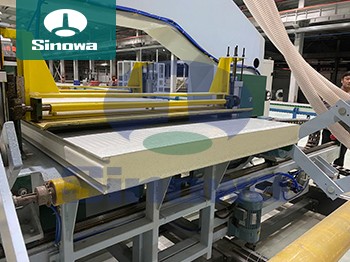
Sinowa has invested outstanding efforts in both the Continuous Insulated PU Sandwich Panel Production Line and the Roll Forming Line, This is why our products are more efficiency, quality, automatic control technology, environmental protection, energy consumption indicators and the appearance and safety protection are comprehensively leading, Some subversive design changes in many major technical points,these major innovations make our products excellent in price/performance and user experience.
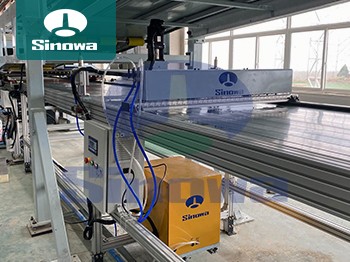
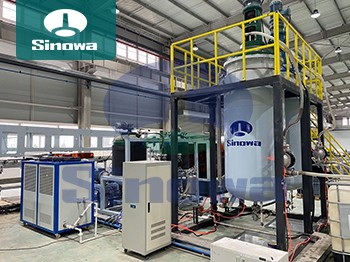
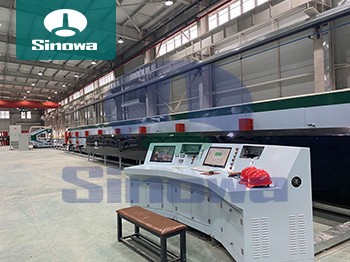
We always position our PU Sandwich Panel Line in a very high standard, strictly optimize every design for more progress. Our continuous innovation, continuous improvement of the technical design principles make us improved product updates and always pay attention to high efficiency, energy saving and stability, reduce customer worries, become their reliable business partners.
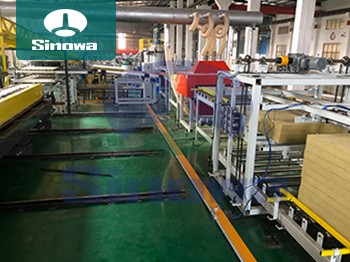
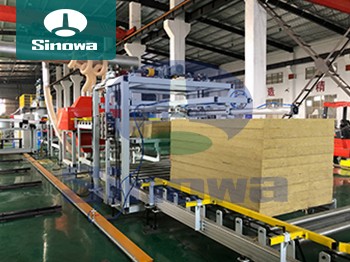
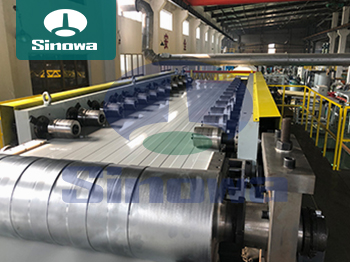
Sinowa Engineering Technology Research Center has always focused on technology research and development. we achieved a large number of scientific research results and unique patented process technology in related product research and development t every year, we continuously improve our products to have high precision and high stability in practical applications, and provide high quality for customers all over the world. Excellent technical personnel, continuous R&D investment and the technical concept of "continuous innovation and continuous improvement" are the strong guarantee for Sinowa to stand out from competitors.
Our focus is not on cost, we always pay attention to the quality of the product and how to do it better!
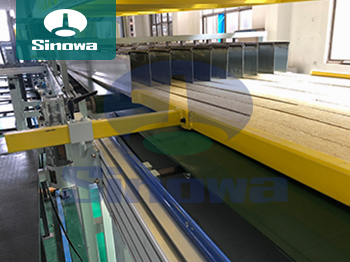
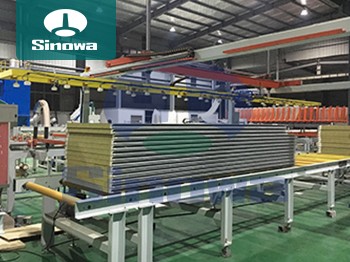
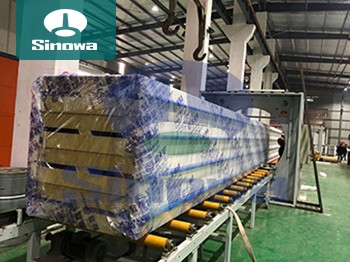
Production process control is a core part of implementing product planning and implementing quality control, which we establish A full range of production management processes and product logistics systems. We firmly believe that production without control and rules will only produce garbage products, so we pay more attention to first-class production control training while establishing a first-class production workshop, strictly follow the 5S management concept, establish systems and standards, ensure that our Sandwich Panel Machines are qualified throughout the process, achieve the technical goals of the company's products to achieve our brand value.
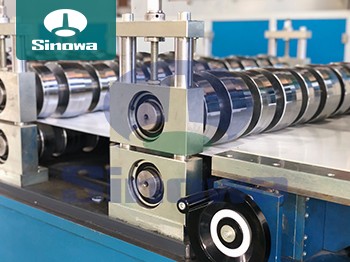
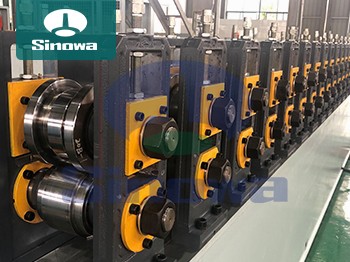
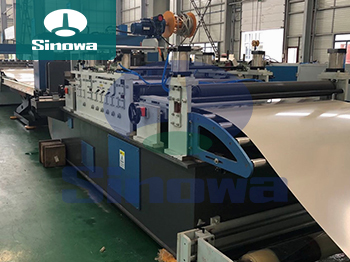
Sinowa has a very comprehensive quality control system, has a group of professional quality control personnel, familiar with almost all testing methods and standards in the field of machining, established a complete mechanical and chemical laboratory with which can fully control all quality links and ensure that all data are accurate, timely optional and available.
Relying on our good Sandwich Panel Machine quality and trustworthy service, our products are exported to more than a dozen countries in the world, and the service field continues to expand, winning more and more praise. Every customer will be our best friend!
The story of this machine is really the story of a manufacturing country growing up. In the early years, Chinese producers imported the core technology and assembled lines under license. The equipment was functional, but it belonged to someone else's blueprint. Over time, that changed. Domestic makers moved from copying to adapting, and from adapting to innovating. Today, the industry can point to a range of machines that are genuinely its own, designed in-house, built from domestically sourced components, and shipped to buyers on every continent.
What exactly is a sandwich panel machine? It is a continuous production line that takes two outer metal skins, typically galvanized steel or aluminum, and a core of insulating material, and fuses them into a single structural panel. The core may be polyurethane foam, mineral wool, or rock wool, and sometimes expanded polystyrene. The line uncoils the metal, profiles it through a series of forming rolls, applies the adhesive or foam, presses everything together under controlled temperature and pressure, and finally cuts the continuous sheet into panels of precise length. The whole operation is remarkably automated. A modern line can run for long stretches with only a handful of operators, monitoring digital controls while the machine does the heavy lifting.
The appeal of these machines to an international buyer is not difficult to understand. The first is cost. A Chinese-built line typically carries a price that undercuts comparable equipment from traditional manufacturing countries by a wide margin, often by a third or more. For a buyer in a market where capital is scarce, that difference is decisive. The second is delivery speed. Because the supporting ecosystem is concentrated, a manufacturer can often have a complete line assembled and ready for shipment within weeks of placing an order, rather than waiting months. The third is versatility. Modern lines are configurable. The same basic platform can be set up for different panel widths, different core materials, and different production speeds, which means a single investment can serve several product lines.
There are, of course, trade-offs that a serious buyer must weigh. The quality of a machine depends heavily on the details. Steel thickness, the precision of the forming rolls, the stability of the foam injection system, the reliability of the cutting unit, the quality of the electrical controls, and the care taken during assembly all determine how well the line performs and how long it lasts. The cheapest machine is rarely the best value. A sensible buyer looks not only at the sticker price but at the reputation of the builder, the robustness of the components, the availability of spare parts, and the quality of after-sales support.
This is where the industry's reputation has evolved. In the past, some low-end producers competed almost entirely on price, cutting corners on materials and support. That reputation, fairly or not, stuck to the whole category. The better producers, however, responded not by disputing the criticism but by improving. They invested in more precise machining, in more stable automation, and in genuine technical service. Today, the gap between the leading makers and the laggards is wide, and a buyer who does due diligence can find lines built to a standard that rivals anything available elsewhere.
One of the quiet advantages of buying Chinese equipment is the ecosystem that surrounds it. Almost every component of the machine, from the hydraulic system to the PLC controller to the forming rolls, can be sourced locally. This has two consequences that matter to an operator. First, it keeps the initial price down, because nothing is being imported at a premium. Second, it means spare parts are almost always available and relatively inexpensive. A panel factory running shifts around the clock cannot afford long downtimes, and the ability to get a replacement part shipped quickly is worth a great deal more than the small saving of buying elsewhere.
Installation and commissioning are another consideration. A responsible maker does not simply sell a machine and disappear. The better suppliers send a team to the buyer's site, supervise the installation, run the commissioning, train the local operators, and hand over the line in working condition. This service is often included in the price, and it is the point at which a good supplier separates itself from a poor one. For a first-time buyer, especially one in a country where the local technical base is still being built, this on-site support is not a convenience but a necessity.
The market itself is highly competitive, which works in the buyer's favor. With many producers chasing orders, margins are thin, and makers are under constant pressure to improve quality, shorten delivery times, and offer better service. This competition has driven real innovation. High-speed lines can now produce panels at rates that would have been unthinkable a decade ago. Foam systems have become more consistent and more environmentally considerate. Controls have moved from manual to fully digital, with remote monitoring and diagnostics that allow a supplier to troubleshoot a machine from halfway around the world.
For an international buyer, the decision is rarely about whether Chinese equipment can do the job. It can, and on any given day it is producing a large share of the panels that line the world's cold chains and building sites. The real decision is about choosing the right supplier within the category, and doing the homework that separates a durable, well-supported machine from a bargain that turns out to be expensive in the long run.
A practical approach for a serious buyer is straightforward. Start by asking about the machine's build quality, not its price. Ask what thickness of steel is used, what brand of controller, what quality of rolls. Ask for references and, if possible, arrange to visit a factory where the line is already running. Watch it work under load, not at a demo. Ask about spare parts, about response times, about what happens if something fails a year from now. The answers to these questions tell you more than any brochure.
It is also wise to think beyond the machine itself. The best investments come from a supplier that understands your application, your climate, and your market, and can configure the line accordingly. A machine that produces excellent panels for a temperate climate may need adjustment for extreme heat or cold. A line for mineral wool may differ in meaningful ways from one for polyurethane foam. A supplier that asks questions before selling is usually a supplier worth buying from.
There is, inevitably, a note of caution. Not every maker delivers what it promises, and the international buyer who is far from the factory has fewer easy remedies when things go wrong. Contracts should be clear about specifications, delivery, commissioning, training, and warranty. Payment terms should be structured so that a meaningful portion is tied to acceptance of the machine in working condition at the buyer's site. These are not signs of distrust; they are the professional framework within which a good transaction happens.
Yet the overall picture is an encouraging one. The sandwich panel machine made in China has moved from being a low-cost option to being a mainstream choice, trusted by builders, warehouse operators, and manufacturers around the world. It is a product of an ecosystem that has learned to compete on value rather than on price alone, and that understands that a machine which works reliably for years is a better advertisement than any marketing campaign.
For a growing economy, or for an established one looking to modernize its building and logistics infrastructure, the Chinese sandwich panel machine represents a practical, accessible route to high-quality panels at a scale and speed that few alternatives can match. It is not the only choice, and it is not automatically the best choice for every buyer. But for the buyer who does the homework, who looks past the price tag at the build quality and the support behind it, it is very often the right choice, and one that has helped put affordable, efficient buildings within reach of more people than ever before.
The machine itself is simple in concept and formidable in execution. It takes raw coils of steel and liquid foam and turns them into the walls and roofs that shelter food, medicine, machinery, and people. That transformation, reproduced reliably day after day, is what makes it worth understanding, worth comparing, and very often worth buying.
« Sandwich Panel Machine Made In China » Update Date: 2026/10/28
Tags: Continuous Polyurethane Sandwich Panel Machine , Rockwool Sandwich Panel Machine , Rock Wool Sandwich Panel Machine , Continuous PU Sandwich Panel Machine , Continuous Sandwich Panel Machines , PIR Sandwich Panel Machine , Polyurethane Sandwich Panel Machine , Sandwich Panel Machine , PU Sandwich Panel Machine ,
URL: https://m.sinowa.cn/blog/sandwich-panel-machine-made-in-china.html
A pu sandwich panel line stands as a highly efficient and automated production solution dedicated to manufacturing high-performance insulated panels, playing a vital role in modern construction and industrial engineering sectors. This integrated production system streamlines the entire manufacturing process, starting with the uncoiling and leveling of outer facing materials, which are carefully treated to ensure flat, smooth surfaces free of defects and suitable for subsequent bonding. Next comes the core production step: precise mixing and uniform distribution of polyurethane raw materials, where specialized equipment controls the ratio and flow rate strictly to guarantee consistent foam density and stable bonding performance between the core and facings. The pu sandwich panel machine features a controlled curing and forming system that maintains stable temperature and pressure conditions, allowing the polyurethane foam to fully expand, solidify and bond tightly with the upper and lower layers, forming a rigid, durable sandwich structure. Post-forming, the panels go through accurate cutting and finishing processes to meet diverse size specifications demanded by different projects. Designed for continuous operation, this pu sandwich panel production line boosts manufacturing efficiency remarkably while ensuring uniform product quality across batches, reducing manual errors and material waste effectively. The finished PU sandwich panels deliver outstanding thermal insulation, sound absorption and structural strength, making them widely applicable in building roofs, walls, cold storage facilities and industrial workshops, adapting to various environmental and functional needs with reliable performance and long service life.