- Home
- Sandwich Panel Line
- Roll Forming Machine
- CZ Purlin Roll Forming Machine
- Door Window Curtain Partition Roll Forming Machine
- Gutter Roll Forming Machine
- Clean Partition Panel Machine
- Corrugated Panel Roll Forming Machine
- Double Layer Roof Roll Forming Machine
- High Speed Keel Roll Forming Machine
- Light Steel-Frame Structure Production Line
- C Channel Roll Forming Machine
- Insulated Panels
- Steel Profiles
- About
- Contact
Sandwich Panel Machines
Sinowa is a sandwich panel machine supplier from china, design and custom-made sandwich panel machine, know more about sandwich panel machines, pls contact us, we will contact you as soon as possible!
Sandwich panel machines stand as core industrial equipment dedicated to the mass production of composite sandwich panels, which are multilayered building and industrial materials formed by bonding two outer face sheets with a lightweight core layer. These machines integrate mechanical, electrical, hydraulic and pneumatic systems, presenting a highly integrated and automated production solution that reshapes the manufacturing efficiency and quality standards of composite panels across global industries. Unlike single-function processing equipment, a complete sandwich panel machine system features a synergistic structural layout, with each component performing a unique role to ensure stable, continuous and high-precision production operations, laying a solid foundation for the final performance of sandwich panels and adapting to diverse production demands in different sectors.
Sinowa dedicated to the research and development of high-end and high-efficiency Sandwich Panel Production Line, Sinowa is comprehensively taking the leading position in terms of efficiency, automation control level, HMI, environment protection and energy consumption, with subversive designs made in some critical technological fields to procure exceptional cost performance and customer-friendly experience for the entire production line. The adoption of system integration technology and bus control technology accomplishes the full automatization of integrated and coordinated control of the entire production line with accessible remote interactive communication. Ranking the first-class level in the world, it is currently the PU Sandwich Panel Machine in the market taking a comprehensive lead in high performance.
Sinowa is a well-known manufacturer and technical service provider of high-end PU Sandwich Panel Machines and various high-performance Cold Roll Forming Machine in China. Our main products include polyurethane double-sided color steel Sandwich Panel Production Line, polyurethane and phenolic soft facing insulation panel production line and high-efficiency roll forming lines.
Sinowa is committed to the development and manufacturing of high-end and high-efficiency Sandwich Panel Lines. Our production lines are leading the way in efficiency, automatic control, human-computer interaction, environmental protection and energy consumption. Using system integration and bus control technology, it realizes the automatic integrated linkage control of the entire production line, and can achieve remote interactive communication, which has the world-class level and a comprehensive leading high-performance production line in the market.
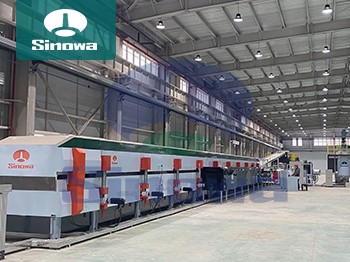
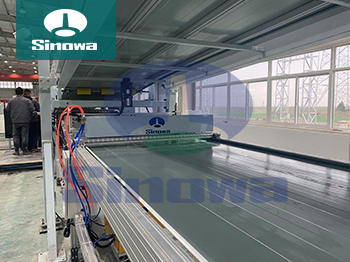
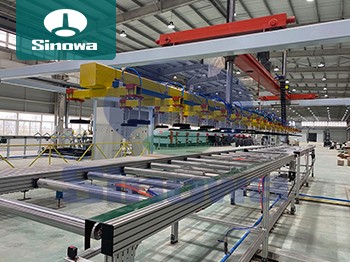
For more than ten years, we have never deliver two same lines to our client, there are all the crystallization of continuous improvement, we have been trying to surpass ourselves, create better products to serve our customers, and also accumulate our brand value, become a unique Chinese enterprise, we are no longer synonymous with low price and mediocre quality.
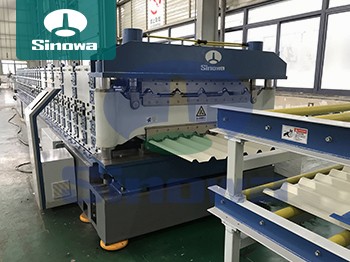
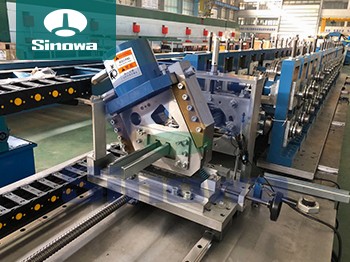
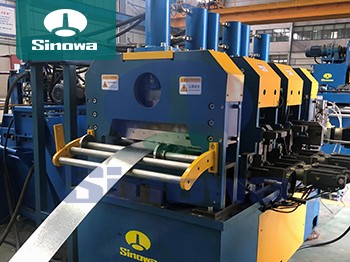
Since 2014, we have established our Cold Forming Machine design and manufacturing department, started our R&D and production of high-end cold forming equipment. Base on our innovative and high-end and efficient product concepts,In just a few years, we have created our own impressive achievements in this field. Whether ordinary construction products of Roll Forming Machine, or precision steel pipe equipment, elevator profile equipment, automotive profile equipment, precision door and window profile equipment, we are the leader of Chinese equipment with high efficiency, high quality and beautiful appearance design.
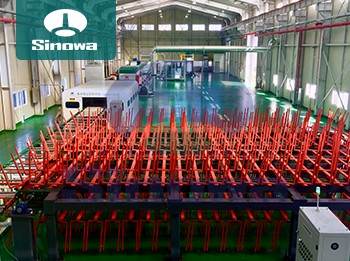
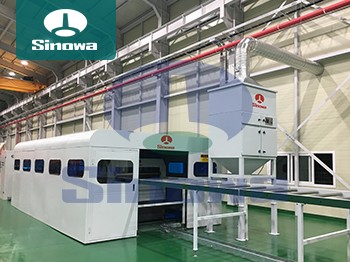
For more than ten years, relying on our innovative manufacturing concept and excellence in quality, reliable and trustworthy service to customers, we cooperate with customers all over the world, exported products to Canada, South Korea, Israel, Australia, the Middle East and other more than 20 countries and regions. contributed to building energy conservation and low-carbon production and have won widespread praise.
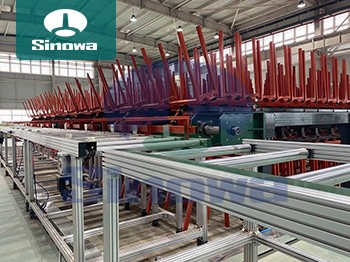
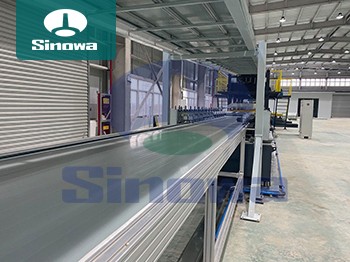
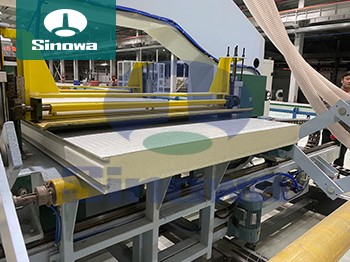
Sinowa has invested outstanding efforts in both the Continuous Insulated PU Sandwich Panel Production Line and the Roll Forming Line, This is why our products are more efficiency, quality, automatic control technology, environmental protection, energy consumption indicators and the appearance and safety protection are comprehensively leading, Some subversive design changes in many major technical points,these major innovations make our products excellent in price/performance and user experience.
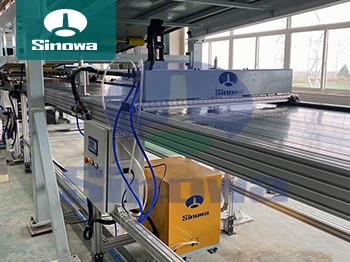
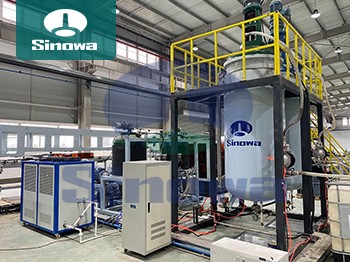
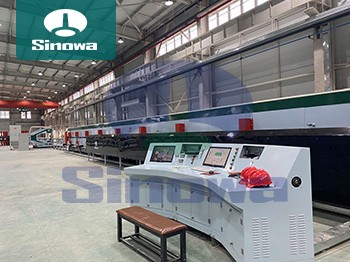
We always position our PU Sandwich Panel Line in a very high standard, strictly optimize every design for more progress. Our continuous innovation, continuous improvement of the technical design principles make us improved product updates and always pay attention to high efficiency, energy saving and stability, reduce customer worries, become their reliable business partners.
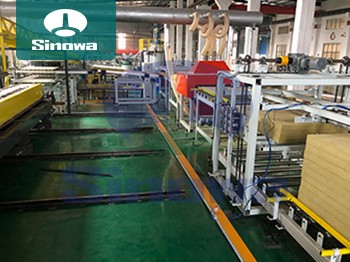
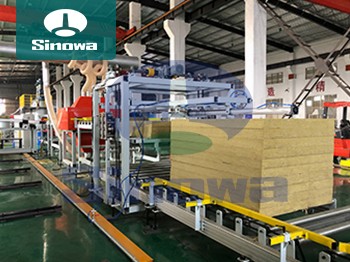
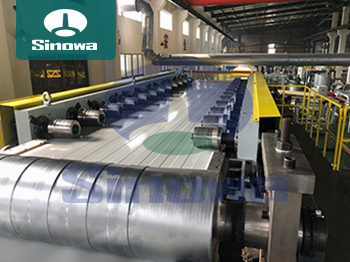
Sinowa Engineering Technology Research Center has always focused on technology research and development. we achieved a large number of scientific research results and unique patented process technology in related product research and development t every year, we continuously improve our products to have high precision and high stability in practical applications, and provide high quality for customers all over the world. Excellent technical personnel, continuous R&D investment and the technical concept of "continuous innovation and continuous improvement" are the strong guarantee for Sinowa to stand out from competitors.
Our focus is not on cost, we always pay attention to the quality of the product and how to do it better!
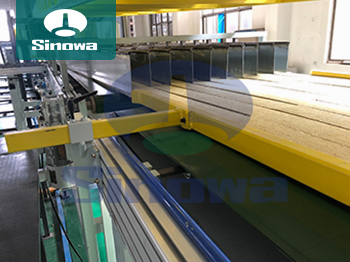
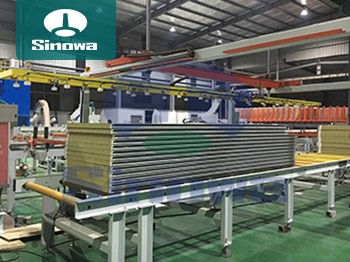
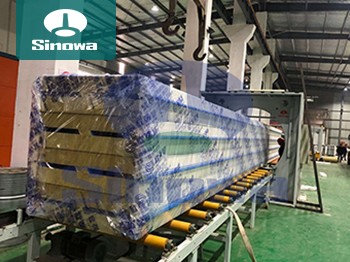
Production process control is a core part of implementing product planning and implementing quality control, which we establish A full range of production management processes and product logistics systems. We firmly believe that production without control and rules will only produce garbage products, so we pay more attention to first-class production control training while establishing a first-class production workshop, strictly follow the 5S management concept, establish systems and standards, ensure that our Sandwich Panel Machines are qualified throughout the process, achieve the technical goals of the company's products to achieve our brand value.
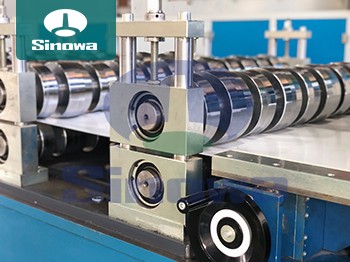
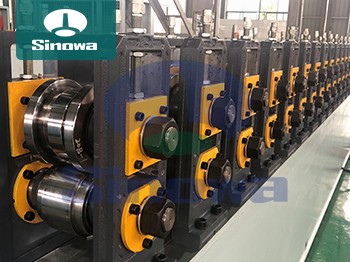
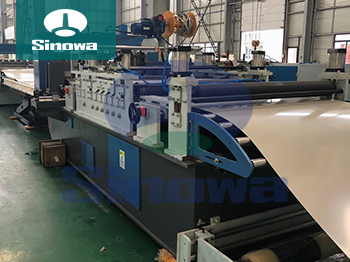
Sinowa has a very comprehensive quality control system, has a group of professional quality control personnel, familiar with almost all testing methods and standards in the field of machining, established a complete mechanical and chemical laboratory with which can fully control all quality links and ensure that all data are accurate, timely optional and available.
Relying on our good Sandwich Panel Machine quality and trustworthy service, our products are exported to more than a dozen countries in the world, and the service field continues to expand, winning more and more praise. Every customer will be our best friend!
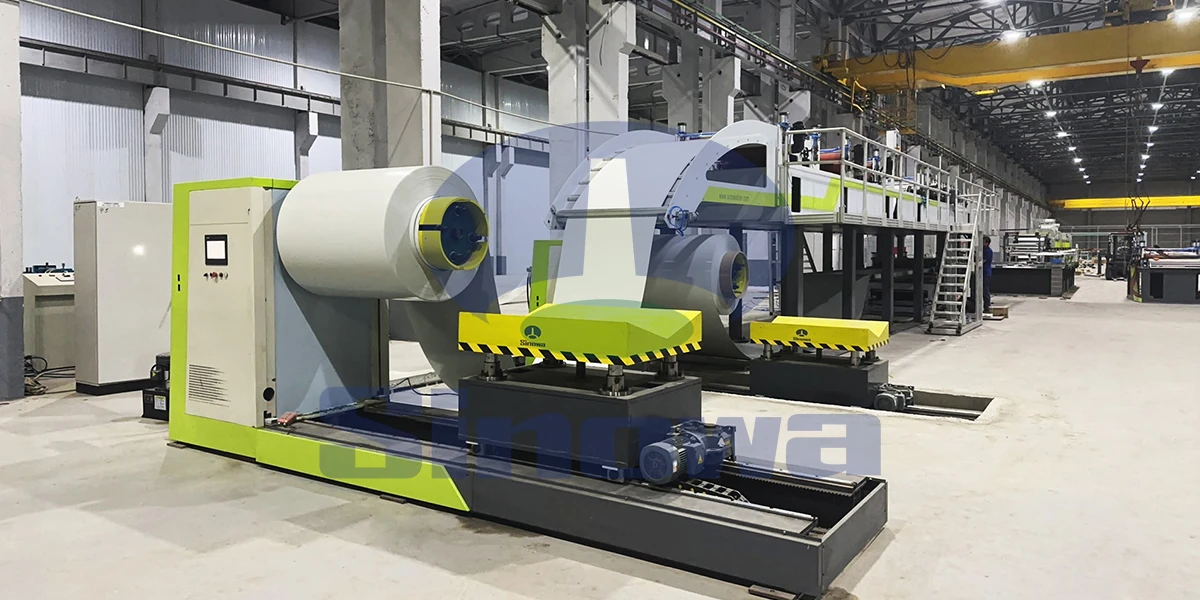
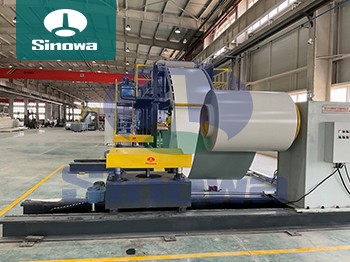
From the perspective of core structure, a standard sandwich panel machine consists of several interconnected functional modules, each designed to fulfill specific processing steps in a streamlined workflow. The first key module is the uncoiling and feeding system, which is responsible for unwinding raw material coils of face sheets—commonly metal sheets such as galvanized steel, aluminum alloy or colored steel, and occasionally non-metal materials like fiber-reinforced plastic—and conveying them steadily to subsequent processing units. This system is equipped with tension control devices and deviation correction mechanisms to maintain consistent feeding speed and alignment, preventing material wrinkling, misalignment or breakage during transmission, which is critical for ensuring the flatness and dimensional accuracy of the final panels. Following the uncoiling system is the profiling and forming unit, a core component that shapes the flat raw sheets into predetermined profiles through roll forming, stamping or bending processes. This unit features multiple sets of precision rollers and forming dies, which can be adjusted to produce panels with different cross-sectional shapes, such as trapezoidal, wave-shaped or flat panels, catering to varied structural and decorative requirements.
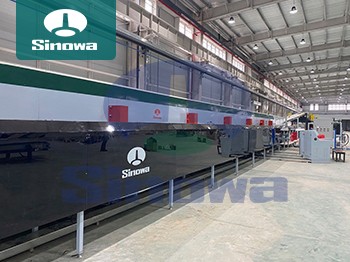
The central bonding and laminating module is the heart of the sandwich panel machine, where the outer face sheets and the core material are firmly combined into an integrated composite structure. This module includes a gluing system, a core material feeding mechanism and a high-pressure laminating device, working in tandem to achieve uniform adhesive coating, precise core material placement and tight bonding under controlled pressure and temperature. The gluing system adopts precision spraying or roller coating technology, ensuring that the adhesive is distributed evenly on the inner surface of the face sheets without leakage, accumulation or missing areas, which directly affects the bonding strength and durability of the sandwich panel. For different core materials, the laminating parameters such as pressure intensity, heating temperature and holding time can be flexibly adjusted to adapt to the physical and chemical properties of various cores, avoiding defects like delamination, bubbling or deformation. After the bonding process, the cooling and shaping unit follows, which rapidly cools the preliminarily formed sandwich panels to solidify the adhesive and stabilize the panel structure, eliminating internal stress and maintaining the dimensional stability of the panels during long-term use.
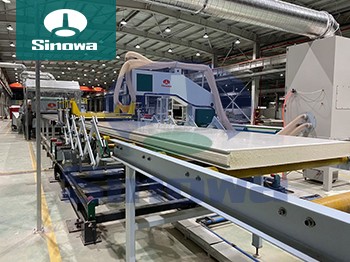
The final functional modules of the sandwich panel machine are the cutting, stacking and conveying systems, which complete the post-processing of finished panels. The cutting system adopts high-precision cutting tools, either saw cutting or hydraulic shearing, to cut the continuous panel strips into fixed lengths or custom sizes according to production requirements, with a small dimensional error to meet the precise assembly needs of engineering projects. The stacking and conveying system automatically collects, arranges and transports the cut finished panels, reducing manual handling, improving production efficiency and avoiding surface scratches or damages to the panels during transportation. In addition, the entire machine is equipped with an intelligent control system, usually a programmable logic controller (PLC) with a human-machine interface, which enables centralized control of all production parameters, including feeding speed, forming pressure, gluing amount, heating temperature and cutting length. Operators can set and adjust parameters conveniently, monitor the production process in real time, and quickly troubleshoot abnormal conditions, realizing high automation and intelligent operation of the whole production line.
In terms of performance, sandwich panel machines boast a range of outstanding characteristics that make them suitable for large-scale, high-quality industrial production. Firstly, they feature high production efficiency and continuous operation capability. The integrated modular design and automated control system allow the machine to run continuously for a long time without frequent shutdowns for adjustment, greatly improving the hourly and daily output compared with traditional manual or semi-automatic production methods. This high efficiency is particularly vital for large-scale construction projects and industrial manufacturing bases that demand a large quantity of sandwich panels in a short period. Secondly, the machines deliver exceptional processing precision and product consistency. The precision design of each functional module, combined with the intelligent control system, ensures that every finished panel has uniform thickness, accurate dimensions, consistent profile shape and stable bonding strength. There is no obvious difference between individual panels, which is essential for standardized assembly in construction and industrial applications, reducing on-site modification and waste of materials.
Thirdly, sandwich panel machines exhibit strong adaptability and flexibility, capable of processing a wide variety of raw materials and producing multiple types of sandwich panels. They can adapt to different thicknesses and materials of outer face sheets, as well as various core materials such as expanded polystyrene (EPS), polyurethane (PU), phenolic foam, mineral wool and rock wool. By simply adjusting the relevant parameters and replacing individual components like forming rollers or cutting tools, the same machine can switch between producing different specifications, thicknesses and styles of sandwich panels, meeting the diversified market demands without investing in multiple sets of special equipment, which significantly reduces the production cost and equipment investment for manufacturers. Fourthly, the machines feature stable operation and low failure rate. The key components are manufactured with high-strength materials and precision processing technology, with reasonable structural design to reduce mechanical wear and vibration during operation. Regular maintenance can keep the machine in good working condition for a long time, minimizing downtime caused by equipment failures and ensuring the continuity and stability of production.
Additionally, the operational performance of sandwich panel machines is optimized for ease of use and safety. The human-machine interface is designed to be intuitive and user-friendly, with clear parameter display and simple operation buttons, so that operators can quickly master the operation skills after basic training without professional and complex technical background. Meanwhile, the machines are equipped with comprehensive safety protection devices, including emergency stop buttons, safety guards, overload protection and alarm systems, which can promptly stop the machine and issue an alarm in case of misoperation, material jamming or equipment overload, protecting the personal safety of operators and preventing damage to the equipment itself. Furthermore, modern sandwich panel machines are designed with energy-saving and environmental protection in mind, adopting energy-efficient motors and heating systems to reduce power consumption during operation, and equipped with dust removal and waste recovery devices to minimize the emission of dust, waste gas and leftover materials, complying with the green production requirements of modern industry.
Sandwich panel machines can be classified into multiple types based on different classification criteria, such as core material type, production process, automation degree and application scope, each with unique structural features and applicable scenarios. The most common classification is based on the core material used for producing sandwich panels, which divides the machines into EPS sandwich panel machines, PU sandwich panel machines, mineral wool sandwich panel machines and phenolic foam sandwich panel machines. EPS sandwich panel machines are designed for producing panels with EPS foam core, which is lightweight, cost-effective and has good thermal insulation performance. These machines are relatively simple in structure, with low requirements for gluing and laminating parameters, suitable for mass production of conventional insulation panels for general construction. PU sandwich panel machines are specialized in manufacturing panels with PU or PIR foam core, which features better thermal insulation, waterproof and bonding performance than EPS. This type of machine is equipped with a professional foaming system and precise temperature control device to ensure the uniform foaming and solidification of PU material, making it ideal for high-standard insulation panels used in cold storage and constant-temperature workshops.
Mineral wool sandwich panel machines are developed for producing panels with mineral wool or rock wool core, which have excellent fire resistance, sound insulation and high-temperature resistance. Considering the brittle and easy-to-break characteristics of mineral wool core, these machines are equipped with a gentle core feeding mechanism and optimized laminating pressure to prevent core breakage during production, and the gluing system is designed to enhance the bonding force between the mineral wool core and metal face sheets. Phenolic foam sandwich panel machines target panels with phenolic foam core, which combines outstanding fire resistance, thermal insulation and environmental protection. The machine needs to adapt to the special foaming and bonding characteristics of phenolic foam, with strict control of temperature and pressure during the laminating process to avoid material cracking or poor bonding. Apart from core material-based classification, sandwich panel machines can also be divided into continuous production machines and discontinuous production machines according to the production process. Continuous production machines realize uninterrupted production from raw material feeding to finished panel output, with higher efficiency and suitable for large-scale batch production; discontinuous production machines operate in a single-cycle mode, with smaller size, lower investment and more flexible production, suitable for small and medium-sized manufacturers or customized small-batch production.
Based on automation degree, sandwich panel machines are categorized into fully automatic, semi-automatic and manual auxiliary machines. Fully automatic sandwich panel machines realize the whole process automation of uncoiling, forming, gluing, laminating, cooling, cutting and stacking, with only a small number of operators needed for parameter setting and routine inspection, representing the advanced level of current sandwich panel production technology. Semi-automatic machines require manual assistance in some links, such as manual core material placement or panel handling, with lower cost and easier maintenance, suitable for manufacturers with limited production scale and budget. Manual auxiliary machines are mainly composed of key processing units, relying heavily on manual operation for most processes, with simple structure and low investment, mainly used for small-batch trial production or simple panel processing. In addition, according to the application scope, there are general-purpose sandwich panel machines suitable for conventional construction panels and special-purpose machines for specific industries, such as cold storage panel machines, clean room panel machines and vehicle body panel machines, which are optimized in structure and parameters to meet the special performance requirements of corresponding fields.
The wide application of sandwich panel machines drives the popularization and application of sandwich panels in various industries, thanks to the high-quality panels they produce, which integrate the advantages of light weight, high strength, thermal insulation, sound insulation, fire resistance and easy installation. The most prominent application field is the construction industry, where sandwich panels produced by these machines are widely used in the construction of industrial workshops, warehouses, commercial buildings, prefabricated houses, temporary buildings and partition walls. As wall panels, roof panels and ceiling panels, they greatly shorten the construction period compared with traditional building materials, reduce the weight of building structures, lower the cost of foundation construction, and improve the thermal insulation and energy-saving effect of buildings, making them a preferred material for modern green and efficient construction. In the field of cold chain logistics and refrigeration engineering, sandwich panel machines produce high-performance PU or EPS insulation panels, which are used to construct cold storage warehouses, refrigerated trucks, constant-temperature workshops and fresh-keeping cabinets. These panels have excellent thermal insulation performance, effectively reducing heat exchange between the inside and outside, lowering energy consumption of refrigeration equipment and ensuring the stable storage temperature of perishable goods such as food, medicine and agricultural products.
In the industrial manufacturing sector, sandwich panel machines play a key role in producing panels for clean rooms, dust-free workshops and anti-corrosion workshops in electronics, pharmaceutical, food processing and other industries. The smooth, non-toxic and easy-to-clean surface of the panels, combined with good airtightness and thermal insulation, meets the strict environmental requirements of these industries, ensuring the stability of production environment and improving product quality. Meanwhile, in the transportation industry, the lightweight and high-strength sandwich panels produced by these machines are used to manufacture the body shells of refrigerated trucks, vans, recreational vehicles and ships, reducing the overall weight of transportation tools, improving load capacity and fuel efficiency, while enhancing the shock resistance and durability of the body. In the field of agricultural engineering, sandwich panels are applied to build greenhouses, breeding farms and grain warehouses, providing a constant-temperature, moisture-proof and durable space for agricultural production and storage, promoting the development of modern intensive agriculture.
Moreover, sandwich panel machines are also applied in the field of architectural decoration and renovation, producing decorative sandwich panels with diverse surface colors and textures, which are used for exterior wall decoration, interior partition and facade renovation of buildings. These panels not only have decorative effects but also enhance the thermal insulation and durability of building walls, realizing the integration of decoration and functionality. With the continuous development of global industrialization and urbanization, as well as the increasing emphasis on energy conservation, environmental protection and efficient construction, the demand for high-quality sandwich panels is rising year by year, which further promotes the technological upgrading and performance optimization of sandwich panel machines. Manufacturers are constantly improving the structural design, automation level and processing accuracy of the machines to adapt to the upgrading of core materials and the diversification of application scenarios, making sandwich panel machines play an increasingly important role in promoting the development of composite material manufacturing and related downstream industries.
In summary, the sandwich panel machine, with its reasonable structural design, stable and efficient performance, diverse types and wide applicability, has become an indispensable core equipment in the production of composite sandwich panels. Its structural integration ensures the smooth progress of each production link, its performance advantages guarantee the quality and efficiency of panel production, its classified design meets the differentiated production demands of different industries, and its wide application drives the innovation and development of multiple fields such as construction, cold chain, industry and transportation. As technology continues to advance, the sandwich panel machine will continue to evolve towards higher automation, intelligence, energy saving and environmental protection, further improving the production level of sandwich panels and creating greater value for the development of modern industry and construction industry, while continuously adapting to the changing market demands and promoting the sustainable development of the entire industrial chain.
« Sandwich Panel Machines » Update Date: 2026/3/6
Tags: Continuous Polyurethane Sandwich Panel Machine , Rockwool Sandwich Panel Machine , Rock Wool Sandwich Panel Machine , Continuous PU Sandwich Panel Machine , Continuous Sandwich Panel Machines , PIR Sandwich Panel Machine , Polyurethane Sandwich Panel Machine , Sandwich Panel Machine , PU Sandwich Panel Machine ,
URL: https://m.sinowa.cn/blog/sandwich-panel-machines.html
A pu sandwich panel line stands as a highly efficient and automated production solution dedicated to manufacturing high-performance insulated panels, playing a vital role in modern construction and industrial engineering sectors. This integrated production system streamlines the entire manufacturing process, starting with the uncoiling and leveling of outer facing materials, which are carefully treated to ensure flat, smooth surfaces free of defects and suitable for subsequent bonding. Next comes the core production step: precise mixing and uniform distribution of polyurethane raw materials, where specialized equipment controls the ratio and flow rate strictly to guarantee consistent foam density and stable bonding performance between the core and facings. The pu sandwich panel machine features a controlled curing and forming system that maintains stable temperature and pressure conditions, allowing the polyurethane foam to fully expand, solidify and bond tightly with the upper and lower layers, forming a rigid, durable sandwich structure. Post-forming, the panels go through accurate cutting and finishing processes to meet diverse size specifications demanded by different projects. Designed for continuous operation, this pu sandwich panel production line boosts manufacturing efficiency remarkably while ensuring uniform product quality across batches, reducing manual errors and material waste effectively. The finished PU sandwich panels deliver outstanding thermal insulation, sound absorption and structural strength, making them widely applicable in building roofs, walls, cold storage facilities and industrial workshops, adapting to various environmental and functional needs with reliable performance and long service life.